
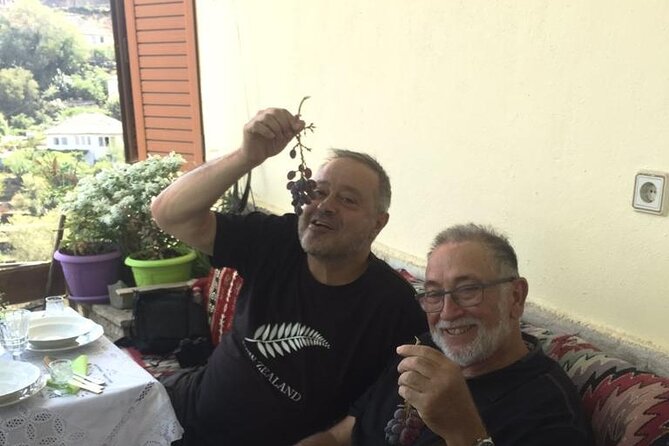
Reviewed · ALBANIAN COOKING EXPERIENCES
Vegetarian Cooking Class @Teta Marjeta
The best part of this class is not simply learning recipes. You walk from Cerciz Topulli Square into Pazar i Vjeter, one of Gjirokaster’s oldest neighborhoods, then enter Teta Marjeta’s home for a meal shaped by family cooking and local custom. She brings the personality, while an English translator helps you follow along.
I like the class for two clear reasons: the food is specific to Gjirokaster, especially the rice-based qifqi, and the small group limit of 10 keeps the setting personal. I also like that you sit down to eat what you prepared instead of leaving with a few hurried tastes.
The main consideration is language. Marjeta does not speak English, so translation is part of the experience rather than an optional extra. That works well, but if you want a fully English-led cooking lesson, this may feel less direct. The class also focuses on a set vegetarian menu, not a broad choice of dishes.
In This Review
- Key points at a glance
- Walking from Cerciz Topulli Square to Pazar i Vjeter
- Entering Marjeta’s kitchen
- The vegetarian menu: four flavors of Gjirokaster
- Qofte bobollaqe
- Qifqi
- Hasude
- Cooking with translation and conversation
- Eating what you made
- Why the home setting matters
- Price, timing, and what the $56.59 covers
- Who should book this class
- Should you book Vegetarian Cooking Class at Teta Marjeta?
- FAQ
- Where does the cooking class meet?
- Where does the activity finish?
- How long does the experience last?
- Is the class offered in English?
- What dishes will I prepare?
- Is food and drink included?
- What is the cancellation policy?
Key points at a glance
- Three local recipes: Prepare qofte bobollaqe, Gjirokaster’s qifqi, and the dessert hasude.
- A real home setting: Marjeta welcomes you into her house in the old Pazar i Vjeter neighborhood.
- English help is provided: An English translator stays with the group and explains Marjeta’s instructions.
- A meal, not just a lesson: Your cooking is served with seasonal salad and a choice of wine, raki, or a soft drink.
- Small groups: The experience accepts no more than 10 people, though a solo booking can feel especially personal.
- Take-home recipe: You receive the recipes so you can try the dishes again at home.
Walking from Cerciz Topulli Square to Pazar i Vjeter
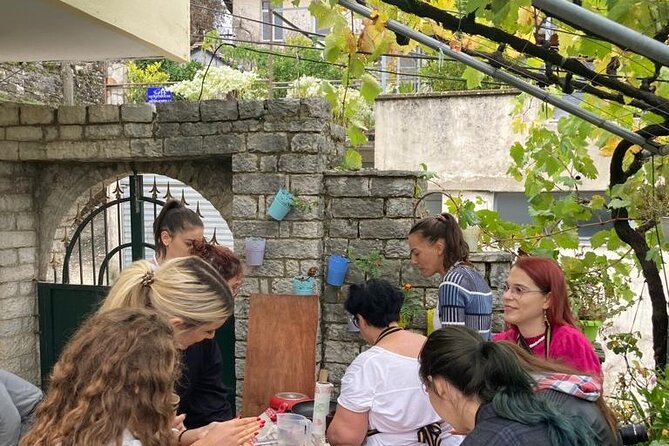
Your meeting point is at ATM34FR+V28 on Rruga Gjin Zenebisi, near Cerciz Topulli Square. From there, the group walks to Pazar i Vjeter, the old bazaar neighborhood. This short transition matters because the class does not begin as a detached activity in a restaurant kitchen. You move from the public center of town into the older part of Gjirokaster and then into a local home.
I like that arrangement. A cooking class can feel generic when it takes place in a purpose-built studio with no connection to the town around it. Here, the walk gives you a sense of place before the food work begins.
The experience lasts about two and a half hours. That is enough time for introductions, preparation, cooking, translation, and a relaxed meal, but it is still short enough to fit neatly into a day of seeing Gjirokaster. The activity ends back at the meeting point.
You should allow yourself to be ready at the stated meeting location rather than trying to find the home independently. The supplied meeting information names the starting point, and the walk to the house is part of the organized experience.
More albanian cooking experiences in Gjirokaster:
- Gjirokastër: Traditional Albanian Vegetarian Cooking Class
★ 4.4 · 17 reviews - Cooking Class
★ 4.5 · 12 reviews - Cook Like a Local – Authentic Cooking Class in Gjirokastra
★ 3.2 · 4 reviews
Entering Marjeta’s kitchen
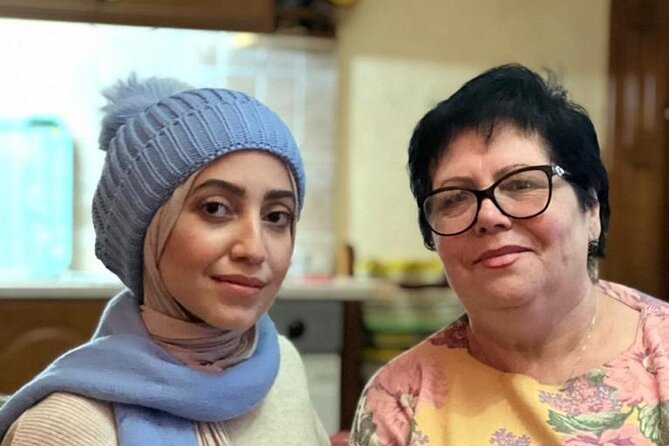
Teta Marjeta is the heart of the class. She opens her home to the group, shares her recipes, and leads the cooking. Her style is warm, playful, and full of character. One especially useful detail is that she does not speak English, but an English translator stays with the group to explain her instructions and answer questions.
That setup gives the class a different feel from a lesson taught by a professional chef in polished English. You are not only watching someone prepare food. You are working through a conversation between Marjeta’s Albanian cooking traditions and the translator’s explanations.
Klarissa is named as the translator in one of the personal accounts of the experience. She helped explain Marjeta’s Albanian, answered questions, and even took photographs during one class. The exact staff arrangement may vary, but you can expect English translation to be included.
Marjeta also serves a glass of raki produced by her husband. This is a small but meaningful touch. Raki is not just a drink added to the menu for tourists. Here, it connects the meal to the household hosting you. If you do not want alcohol, you can choose wine or a soft drink instead.
The vegetarian menu: four flavors of Gjirokaster
The class teaches three dishes, with seasonal salad already prepared for you. The menu is vegetarian from start to finish:
- Seasonal salad
- Qofte bobollaqe
- Qifqi
- Hasude
The salad is the simplest part of the meal, but it gives you something fresh to eat alongside the cooked dishes. Since it is prepared by Marjeta ahead of time, the hands-on work centers on the three recipes that carry the local character.
Qofte bobollaqe
Qofte bobollaqe is made mainly with yogurt. The name may sound like a familiar meatball-style dish to anyone who knows Balkan cooking, but this vegetarian version is one of the class’s more distinctive choices.
I like that the dish challenges the assumption that Albanian cooking lessons must center on grilled meat. You get to see how yogurt can form the main part of a savory dish, rather than appearing only as a side or sauce.
The supplied information does not give the full ingredient list or cooking method, so the lesson itself is where you will learn the details. That is useful for anyone who wants to recreate it later, since the recipe you cook is provided at the end.
A few more Gjirokaster trips to weigh up
- Tirana: Traditional Cooking Class with Wine & Raki Tasting
★ 5.0 · 284 reviews - Cooking Classes and Traditional food tasting in Tirana
★ 5.0 · 282 reviews - Traditional Albanian Cooking Class in Tirana & Raki Tasting
★ 5.0 · 266 reviews - Traditional Albanian Cooking Class in Tirana with Raki Tasting
★ 5.0 · 125 reviews
Qifqi
Qifqi is the major local specialty on the menu. It is made mainly with rice and is described as a dish found only in Gjirokaster. For a visitor interested in regional food, this is likely the most important recipe of the three.
Regional dishes often tell you more than a general national menu. Albania has many foods shared across the country and the wider Balkans, but qifqi gives this meal a direct link to Gjirokaster. You are not merely learning a standard rice dish. You are learning a preparation tied to this city.
The class format also makes qifqi easier to remember. You prepare it under Marjeta’s guidance, eat it soon afterward, and receive the recipe to take home. That combination of practice, taste, and written instructions is more useful than simply ordering it in a restaurant.
Hasude
Hasude is the dessert. The class description identifies it as the third recipe, but does not list its ingredients or method in advance. You will learn those details in the kitchen and then finish the meal with the result.
I appreciate the inclusion of dessert because it gives the class a proper beginning, middle, and end. You are not stopping after the savory dishes. You get to see how a vegetarian Albanian meal can move from salad to main courses and then to a sweet finish.
Cooking with translation and conversation
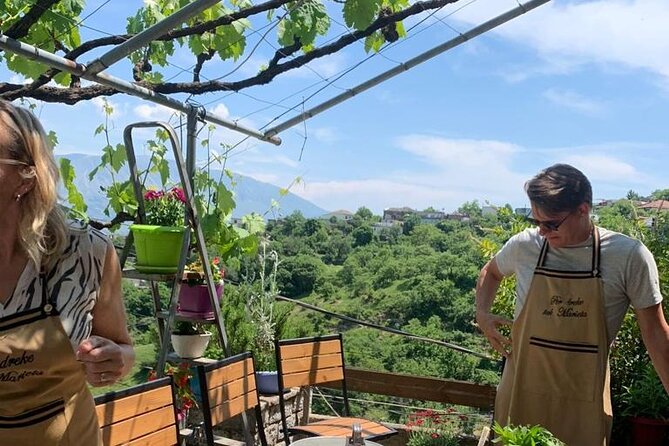
The translator changes the rhythm of the lesson. Instructions are delivered by Marjeta, then explained in English, so the class may move in short stages rather than as one uninterrupted lecture. For me, that is a fair trade for learning directly from the person whose recipes are being taught.
You should ask questions as you go. The translator is there to help explain the cooking and the conversation, and the small group size makes it easier to speak up. With a maximum of 10 participants, you are less likely to be lost at the back of a large demonstration.
A solo booking may feel especially personal. One person described having the class alone, with Marjeta and Klarissa, and coming away with a full dinner, leftovers, photographs, and a strong sense of having learned something. You cannot count on being the only participant, but the group cap gives the class room to feel friendly rather than crowded.
The social side is part of the design. After the cooking, you sit with Marjeta and the rest of the group to eat and talk. This is where the home setting pays off. The meal becomes a shared table rather than a quick end to a lesson.
Eating what you made
The class includes lunch, though some sessions may take place in the evening based on the schedule. The important point is that the meal is part of the experience, not an extra charge after the cooking.
Your dishes are served with the seasonal salad Marjeta has already prepared. You can pair the meal with a complimentary glass of wine, raki, or a soft drink. The choice is practical: you can enjoy the local homemade raki, select wine, or avoid alcohol without needing to purchase another drink.
The meal also gives you time to slow down. Cooking classes often become rushed when the final tasting is squeezed into the last few minutes. Here, the stated duration allows for a sit-down meal and conversation after the work is done.
You may also have leftovers, depending on the size of the group and the amount prepared. That was part of one particularly personal class experience, but it should not be treated as a guaranteed inclusion. The guaranteed take-home item is the recipe.
Why the home setting matters
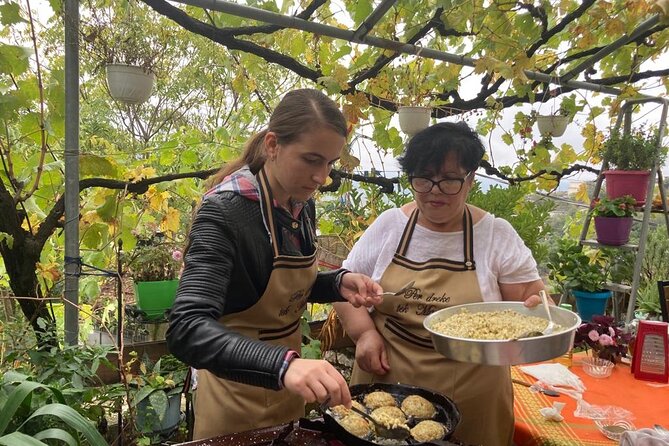
A home kitchen changes what you notice. In a restaurant, you usually see the finished dish and perhaps an open kitchen. At Marjeta’s home, you are presented with the person, the room, the family connection behind the raki, and the food she wants to teach.
I would choose this class for the sense of contact it offers. You get to meet a local cook, work with her recipes, and share a table in her home. The friendly, cheeky personality described by participants is not a minor detail. It is what keeps the language difference from becoming a barrier.
Still, you should know what kind of experience you are booking. This is not a technical chef-training course. You are not promised advanced knife skills, a long list of dishes, or a choice of several menus. It is a cultural cooking visit with three recipes, translation, and a shared meal.
That makes it a good fit for curious eaters, couples, friends, solo visitors, and anyone who wants a personal activity in Gjirokaster. It is also a strong choice for vegetarians, since the complete menu avoids meat rather than offering one token vegetarian substitute.
Price, timing, and what the $56.59 covers
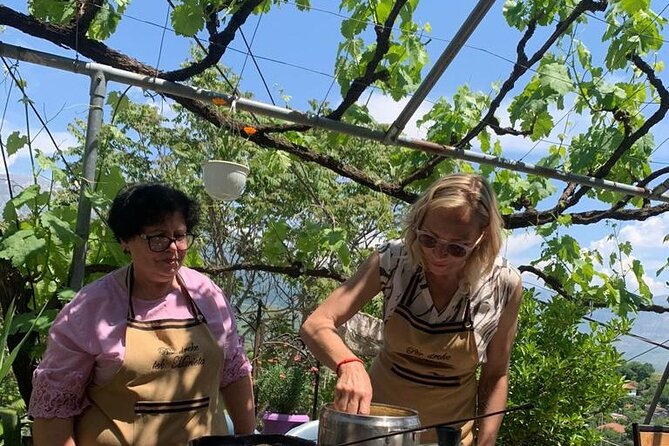
The price is $56.59 per person. That is not the cheapest way to eat in Gjirokaster, but the comparison should not be made with the cost of a restaurant plate alone.
Your fee covers about two and a half hours, the guided preparation of three dishes, the home visit, translation into English, the meal, a drink, and the recipe you take away. You are paying for time with Marjeta and for the chance to learn dishes that are difficult to understand from a menu alone.
The value is strongest if you want participation and conversation. If you only want to sample local food, a restaurant meal will probably cost less and take less time. If you want to cook, ask questions, and sit down with the person teaching you, the price is easier to justify.
The class is typically booked about six days ahead. That suggests you should avoid leaving it until the last moment if it is an important part of your Gjirokaster plans. Confirmation is provided when you book, and the experience accepts a maximum of 10 people.
You can cancel for a full refund up to 24 hours before the start time. Changes or cancellations inside that 24-hour window are not accepted for a refund. The local time in Gjirokaster controls the cut-off, and if the minimum number needed to run the class is not reached, you will be offered another date or experience, or a full refund.
Who should book this class
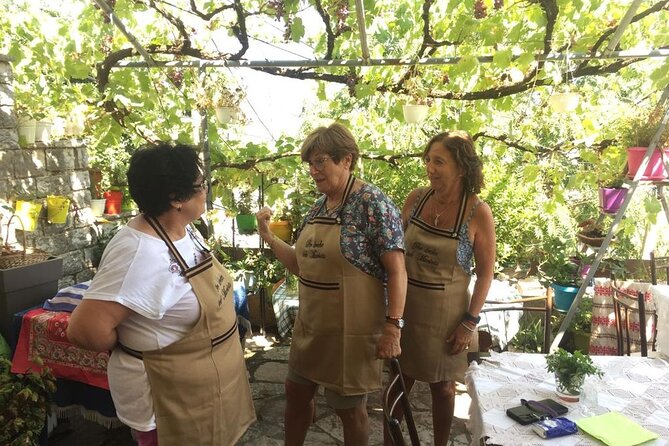
I would book it if you care about the connection between food and place. Qifqi gives you a recipe linked specifically with Gjirokaster, while qofte bobollaqe and hasude broaden the meal beyond the familiar dishes you might find throughout Albania.
It also suits you if you enjoy meeting local people more than watching a formal performance. Marjeta’s humor and personality are central to the visit, and the translator lets you take part in that exchange.
The class is a particularly good choice for:
- Vegetarians seeking a full local menu
- Solo visitors who like small, social activities
- Couples and friends looking for something to do together
- People who want a recipe to recreate at home
- Visitors who value a home meal over a restaurant setting
- Anyone comfortable with translation between Albanian and English
I would think twice if you want a fast, highly structured class conducted entirely in English. The translation works, but it naturally adds pauses and may make the lesson feel less direct. You should also choose another activity if you are looking for meat dishes, a large menu, or advanced culinary training.
Should you book Vegetarian Cooking Class at Teta Marjeta?
Yes, if you want a warm, personal introduction to Gjirokaster through food. The strongest reasons are the home setting, Marjeta’s lively character, the English translator, and qifqi, a rice dish tied specifically to the city.
At $56.59, it is best viewed as a cultural meal and cooking visit rather than a budget lunch. Book it several days ahead, arrive at Cerciz Topulli Square on time, and come ready to cook, ask questions, and share the table. If that sounds like your kind of afternoon or evening, this is one of the more personal food experiences you can choose in Gjirokaster.
FAQ
Where does the cooking class meet?
The class begins at ATM34FR+V28, Rruga Gjin Zenebisi, near Cerciz Topulli Square in Gjirokastër, Albania. The group then walks to Marjeta’s home in Pazar i Vjeter.
Where does the activity finish?
The activity ends back at the meeting point.
How long does the experience last?
The cooking class lasts approximately 2 hours and 30 minutes.
Is the class offered in English?
Yes. The experience is offered in English through an English translator. Marjeta herself does not speak English, according to the experience details.
What dishes will I prepare?
You will learn three vegetarian dishes: qofte bobollaqe, qifqi, and hasude. A seasonal salad is prepared for you as part of the meal.
Is food and drink included?
Lunch is included. The meal comes with a complimentary choice of wine, raki, or a soft drink.
What is the cancellation policy?
You can cancel at least 24 hours before the start time for a full refund. Cancellations or changes made less than 24 hours before the start time are not accepted for a refund.
More Workshops in Gjirokaster
- Gjirokaster: Wood Crafting Class
★ 5.0 · 16 reviews - Berat Cooking Class- Traditional Albanian Cooking Class /By Vato
★ 5.0 · 120 reviews - Savor Albanian Cuisine Cooking Class with Mama Nina Berat Castle
★ 5.0 · 55 reviews - Cooking Class in Berat Slow Food Community
★ 5.0 · 34 reviews
Just added around Gjirokaster
- Vlora, Llogara & Dhërmi: Albanian Riviera from Durres/Golem★ 4.9 · 7 reviews
- Walking Tour “The Old Bazaar, Cfake, Dunavat, Ali Pasha Bridge”★ 5.0 · 10 reviews
- Wood Crafting Experience in Gjirokastra★ 4.5 · 10 reviews
- Cooking Class★ 4.5 · 12 reviews
- Gjirokastra Private Half-Day Walking Tour★ 5.0 · 3 reviews
- Gjirokaster – The Stone City of UNESCO, Private Tour from Tirana★ 4.5 · 4 reviews
- Prepare Osa with Teta Marjeta★ 4.5 · 7 reviews
- Gjirokaster Walking Tour★ 5.0 · 4 reviews
Albanian Cooking Experiences, compared.
Traditional Cooking Class with Wine & Raki Tasting
Read our review →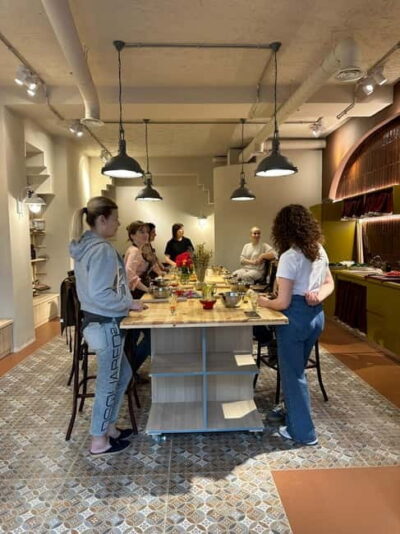
Traditional Albanian Cooking Class in Tirana & Raki Tasting
Read our review →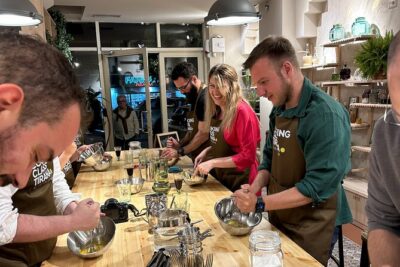
Traditional Albanian Cooking Class in Tirana with Raki Tasting
Read our review →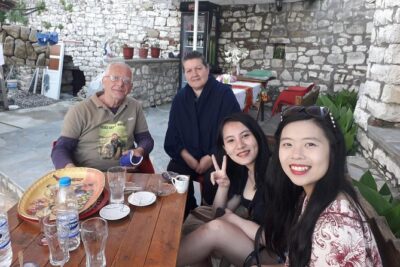
Berat Cooking Class- Traditional Albanian Cooking Class /By Vato
Read our review →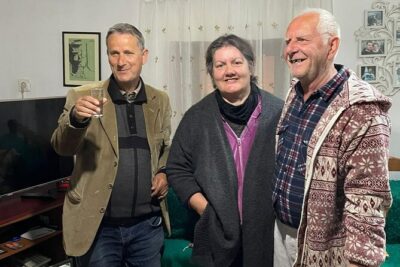
Savor Albanian Cuisine Cooking Class with Mama Nina Berat Castle
Read our review →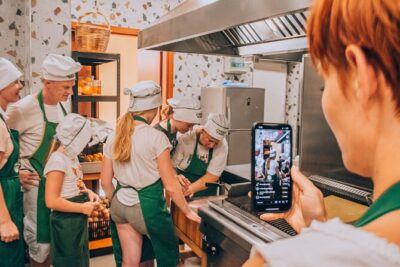
Tirana Cooking Class – Traditional Albanian Recipes
Read our review →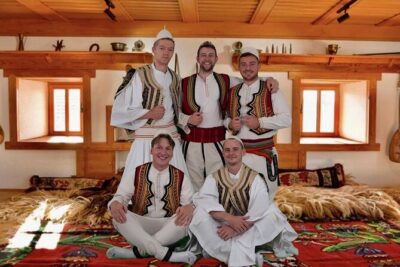
Tirana Photo Shoot in Traditional Albanian Costumes
Read our review →Browse the lists this tour appears in