
Reviewed · ALBANIAN COOKING EXPERIENCES
Traditional Albanian Cooking Class in Tirana & Raki Tasting
The best part of this Tirana experience is that you do not simply watch a chef cook. You make burek, pershesh, and sheqerpare yourself, then sit down to eat the meal with wine, raki, and a friendly group. I like the generous food and the way host Dervis links each recipe to Albanian customs. I also like that solo visitors are paired with others instead of being left on the edge of the group.
The one thing to consider is the steady flow of alcohol. Homemade wine is unlimited, and the raki tasting is part of the evening, so you will want to pace yourself. Four hours can also feel long if you want a quick demonstration rather than a social meal and cooking session.
In This Review
- Key points to know before booking
- Why Albanian food makes a good Tirana introduction
- Arriving to a warm kitchen and a clear plan
- Rolling burek dough with cottage cheese
- Making village chicken with pershesh
- Sheqerpare and the final sweet course
- Meze, jams, gliko, and food before dinner
- Homemade wine and a guided rakia tasting
- A social evening, not a silent cooking lesson
- How the four hours usually unfold
- Is $44 a fair price in Tirana?
- Who should book this Tirana cooking class?
- Booking details worth knowing
- Should you book it?
- FAQ
- How long does the Albanian cooking class last?
- How much does the experience cost?
- What dishes will I learn to cook?
- Are drinks included?
- What food is served besides the dishes we cook?
- Can dietary restrictions be accommodated?
- Is the class taught in English?
- Is the activity wheelchair accessible?
- Can I cancel for a refund?
- Can I reserve now and pay later?
Key points to know before booking
- Three hands-on Albanian dishes: Learn to prepare burek with cottage cheese, village chicken with pershesh, and sheqerpare cookies.
- Dervis brings the personality: Expect clear instructions, cultural stories, cooking tips, and plenty of humor.
- The meal goes beyond what you cook: Olives, peppers, cream cheese, bread, jams, gliko, and other meze arrive before and alongside the main dishes.
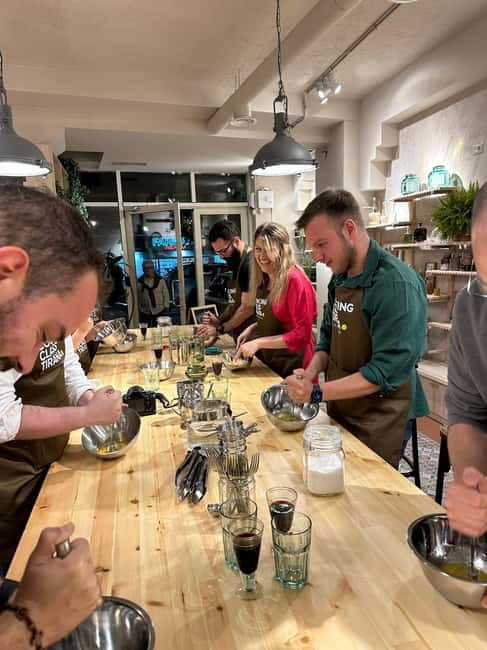
- Wine and raki shape the evening: Water and homemade wine are included, with a guided rakia tasting as part of the class.
- Dietary needs can be handled: Vegetarian, vegan, pescatarian, halal, and lactose-free requests are accepted when noted during booking.
- Good value at $44: Four hours of instruction, drinks, a full meal, cultural context, and a social evening make this more than a basic cooking lesson.
Why Albanian food makes a good Tirana introduction
Food is a practical way to get a first feel for Albania. You learn what people eat, how they welcome visitors, and why a meal is often treated as an act of generosity rather than a quick refueling stop.
This class focuses on familiar home-style dishes rather than restaurant showpieces. Burek gives you a lesson in dough, filling, and patience. Pershesh introduces the comforting combination of chicken and bread. Sheqerpare finishes the meal with a sweet, buttery-style cookie that is closely tied to traditional Albanian cooking.
I especially like the way the class connects food with small habits. Dervis explains points such as how to use olive oil and when to add salt. These details may sound modest, but they help turn a recipe into a piece of local knowledge you can remember and use at home.
The cooking also has a family-table feel. The class is run as a family business, and the goal is not to rush you through three recipes and send you out the door. You cook, snack, drink, talk, and eventually share the food together.
More Albanian Cooking Experiences in Tirana
- Tirana: Traditional Cooking Class with Wine & Raki Tasting
★ 5.0 · 284 reviews - Traditional Albanian Cooking Class in Tirana with Raki Tasting
★ 5.0 · 125 reviews - Berat Cooking Class- Traditional Albanian Cooking Class /By Vato
★ 5.0 · 120 reviews
Arriving to a warm kitchen and a clear plan
The four-hour session begins with a welcome from the chef and an introduction to the dishes. You get an outline of what you will make, along with stories about Albanian food and the role of fresh ingredients.
That opening matters. Albanian cooking can be unfamiliar if your reference points are pizza, pasta, or standard European cooking classes. A short explanation of the dishes gives you useful context before you start handling dough or seasoning meat.
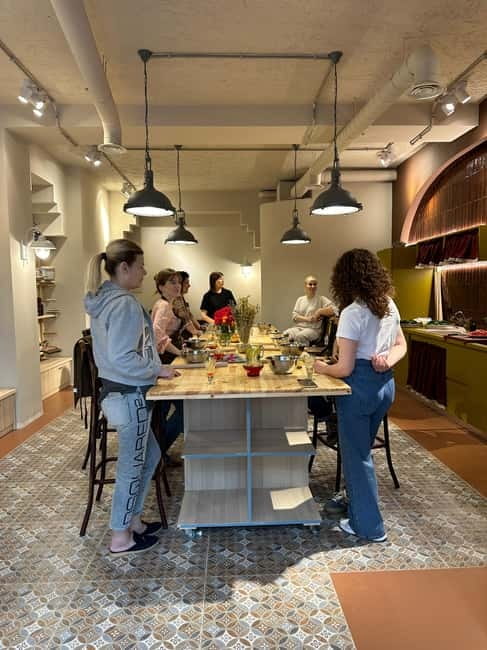
The room is described as warm and inviting, with a setup designed for group cooking. You should expect to work alongside other people rather than receive a private, one-to-one lesson. That makes the class social, but it also means the amount of individual attention can depend on the size and makeup of your group.
The pace appears to suit beginners. Instructions are given step by step, and the class is structured so you can follow along without needing advanced kitchen skills. You do not need to be a polished cook to take part. You do need to be ready to participate, ask questions, and share work space.
Rolling burek dough with cottage cheese
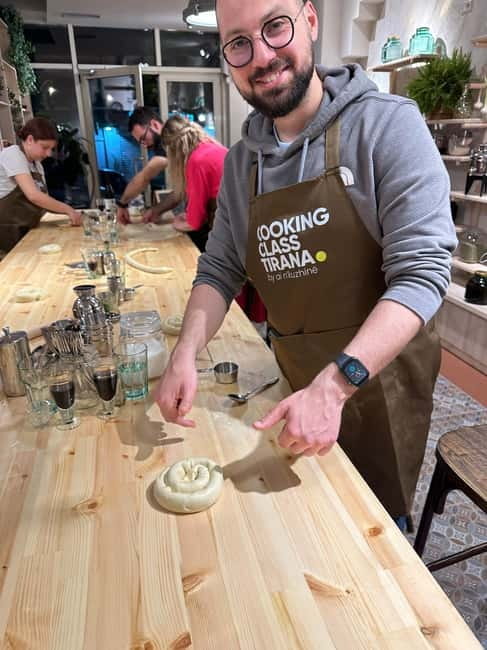
Burek is one of the most useful dishes to learn here because the technique is central to the food culture of the region. You will work with dough and a cottage cheese filling, learning how to roll and shape it under the chef’s direction.
This is the most hands-on part of the class. Dough can be fiddly, especially for beginners, but the group format takes some pressure off. You are learning a traditional method, not trying to produce a perfect pastry for a cooking exam.
The filling is simple, which lets the dough do the work. Once baked, the result is savory, crisp, and easy to understand as a home-cooked staple. I like that this dish gives you a skill you can try again after returning home. It is more useful than watching someone prepare an elaborate plate that you are unlikely to recreate.
If you have a dietary restriction, make it clear when you book. The provider says vegetarian, vegan, pescatarian, halal, and lactose-free diets can be accommodated, but the kitchen needs advance notice to adjust the ingredients.
Making village chicken with pershesh
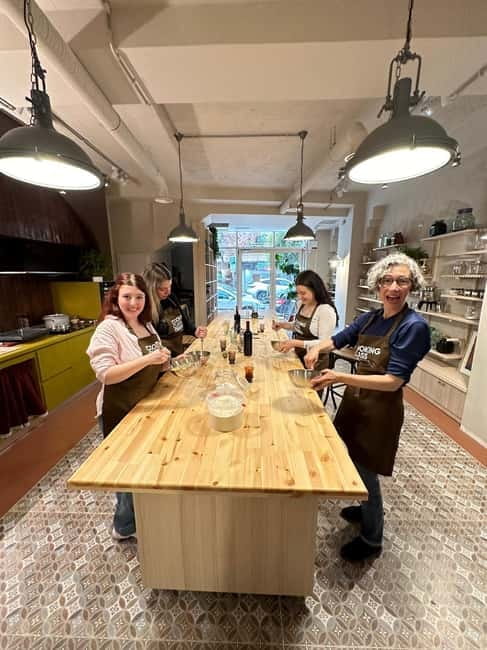
The main savory dish is village chicken with pershesh. You learn how to season the chicken properly and prepare the dish step by step, with the chef explaining the reasoning behind the method.
Pershesh is a good example of Albanian comfort food. Bread plays an important role, and the dish is hearty rather than delicate. You should arrive hungry, because this class does not stop at a small sample of what you cook.
Vegetarian substitutions are possible. One participant was served zucchini instead of chicken for the pershesh and kulac, showing that the kitchen can adapt the central dish rather than simply remove it from the menu. Still, you should not leave dietary planning until the day of the class. State your needs in the booking notes.
The cooking lesson is not only about ingredients. You also get practical advice on seasoning, oil, and preparation. Those small explanations are where the class gains value. You leave with a better sense of why the dish tastes the way it does, not just a list of steps.
Same coast, a completely different kind of day:
- From Tirana: Bovilla Lake & Gamti Mountain Hiking Day Trip
★ 4.9 · 4,397 reviews - From Tirana: Bovilla Lake & Gamti Mountain Hiking Tour
★ 4.9 · 3,003 reviews - From Tirana: Bovilla Lake & Gamti Mountain Viewpoint Hike
★ 4.8 · 2,053 reviews - Tirana/Durres/Golem: Saranda, Ksamil, Blue Eye Day Trip
★ 4.8 · 1,584 reviews
Sheqerpare and the final sweet course
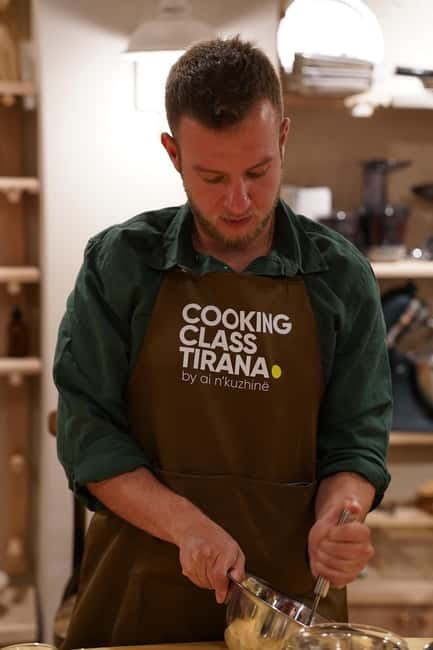
Sheqerpare is the traditional dessert on the sample menu. These small cookies are made during the class and served after the savory food.
The dessert adds a useful change of pace. After handling dough for burek and preparing the chicken dish, you get to see how Albanian cooking moves from filling, rustic food to a sweet finish. The class does not treat dessert as an afterthought.
The quantity of food is one of the most consistent strengths of this activity. Several participants found themselves too full to finish everything and were able to take extra dessert or leftovers home. That is a genuine reflection of the Albanian custom of feeding visitors generously.
I would not count on leftovers as a guaranteed takeaway, since portions and group size can vary. But you should plan on eating very well. Do not book this as a small tasting menu.
Meze, jams, gliko, and food before dinner
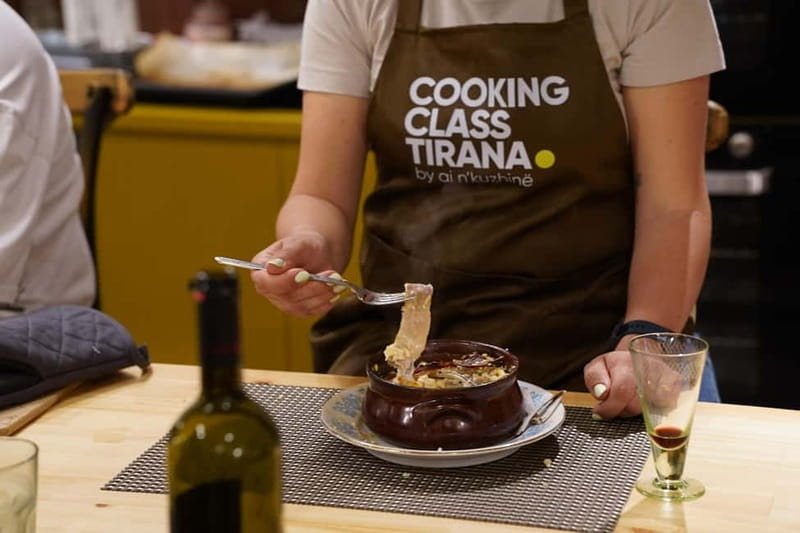
The dishes you cook are only part of the meal. The table also includes appetizers such as olives with oregano, fried peppers, cream cheese, and fresh bread.
You will also taste traditional Albanian jams and gliko, a sweet preserve made from fruit or other ingredients. These extras help you understand how a meal is built in a home setting. You are not waiting around hungry while the main dishes cook. Small plates keep the table active throughout the lesson.
This is one reason I see the $44 price as strong value. A cheaper cooking demonstration might teach one recipe and offer a small bite. Here, you receive instruction, several dishes, a full spread of appetizers, dessert, and drinks over four hours.
The abundance can also be the main drawback for people with small appetites. If you want a tightly controlled class with exact portions and a quick finish, this will feel more like a generous family meal than a formal culinary workshop.
Homemade wine and a guided rakia tasting
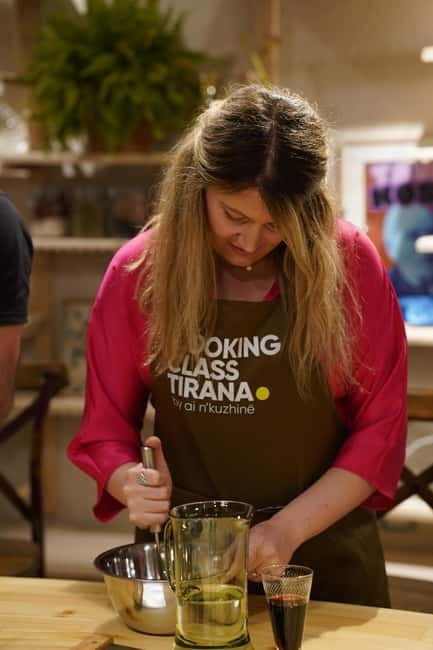
Water and homemade wine are included, and rakia tasting is part of the program. Rakia, also called raki or rakia in different spellings, is a strong fruit brandy widely associated with the Balkans. Here it is introduced as part of the food and hospitality setting.
The tasting is guided rather than presented as a free-for-all. That gives you a chance to understand the drink in context and try it as part of the Albanian meal. You do not need to be a spirits enthusiast to take part.
You should pace yourself. Unlimited wine sounds appealing, but four hours of cooking, eating, and drinking can catch up with you. Water is included, so use it. You can enjoy the social side without treating every pour as a challenge.
The drinks help break down awkwardness in a mixed group. People cook side by side, pass food, compare results, and talk while the evening develops. If you are traveling alone, this may be one of the easiest ways to meet people in Tirana without joining a standard sightseeing group.
A social evening, not a silent cooking lesson
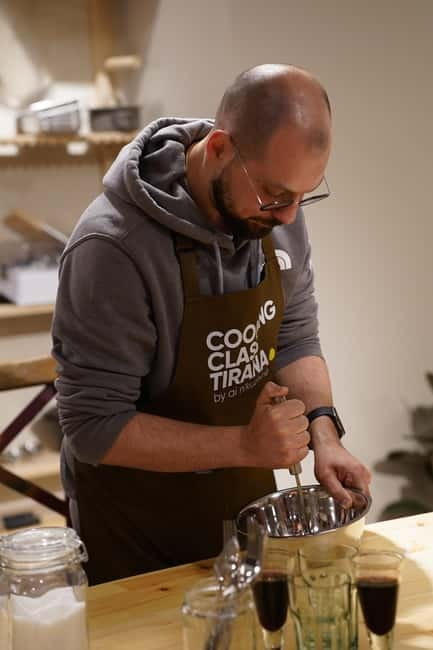
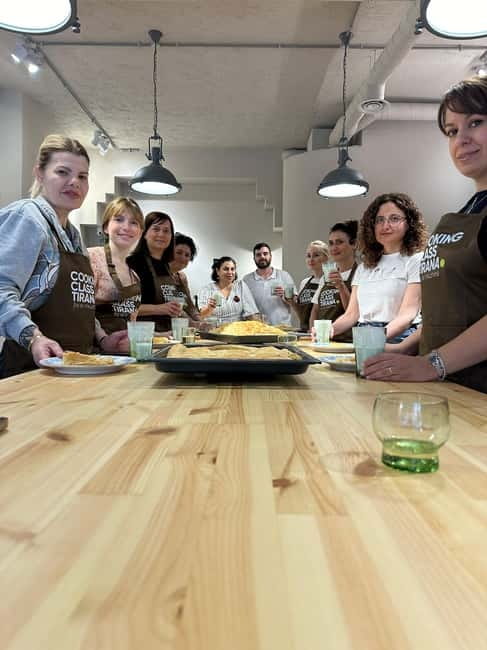
The class attracts people of different ages and nationalities. You may be paired with others if you arrive alone, which makes it easier to join the conversation and share tasks.
The host’s style is a major part of the experience. Dervis is described as funny, patient, energetic, and passionate about Albanian cooking. His teaching combines recipe instructions with stories about Albania, Tirana, food customs, and household etiquette.
Music, entertainment, and spontaneous dancing may also become part of the evening. This is not a promise of a staged performance. It is better understood as the kind of relaxed mood that can grow around a shared meal, wine, and raki.
I would book this for the social setting as much as for the recipes. If you want to keep to yourself, the group format may feel a little demanding. If you enjoy conversation and do not mind a lively room, it adds a lot.
How the four hours usually unfold
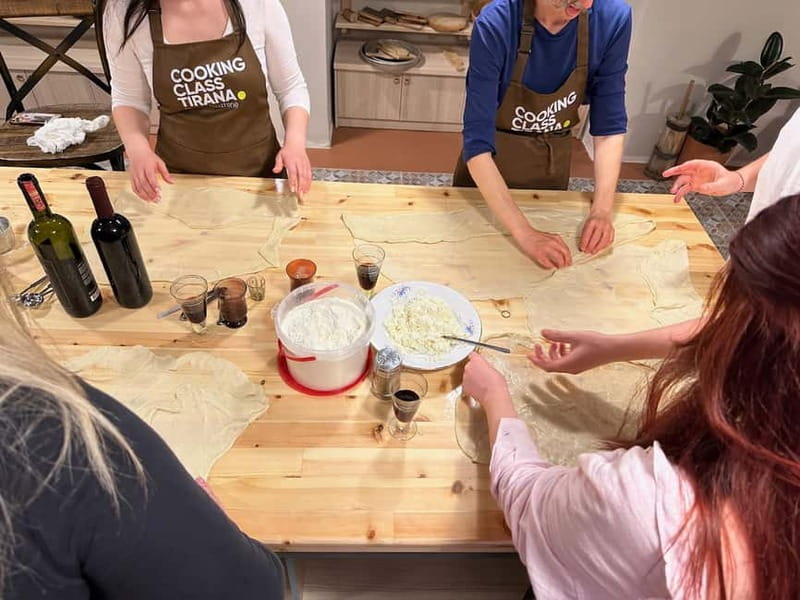
The precise starting time depends on availability, but the session lasts four hours. The flow is generally easy to understand:
- You arrive, meet the chef, and hear about the dishes and local food traditions.
- You help prepare the appetizers and begin working through the recipes.
- You roll and shape the burek dough, prepare the filling, and follow the steps for the chicken and pershesh.
- You make sheqerpare for dessert.
- You snack on meze, taste jams and gliko, drink wine, and try raki during the cooking.
- You sit together at a communal table and eat what the group has prepared.
- The evening may finish with music, dancing, extra conversation, or advice about places to visit and drink afterward.
This order can vary. The important point is that the class combines instruction and dining instead of separating them into a short lesson followed by a rushed meal.
Is $44 a fair price in Tirana?
At $44 per person, I consider this a good-value activity for Tirana. The price includes four hours, an English-speaking instructor, unlimited water and homemade wine, a raki tasting, appetizers, jams, gliko, the cooking lesson, and the meal.
You are also paying for access to a local host who can explain customs that you would not get from a menu. The cultural information is not an extra lecture added on top. It comes naturally while you cook and eat.
Value depends on what you want. If your main goal is to learn advanced professional technique, this is probably not the right class. The focus is traditional food, clear instruction, shared work, and hospitality.
For most visitors, the combination is stronger than the price suggests. You get dinner and an activity in one booking, and you may leave with recipes, new cooking ideas, and leftovers. That is especially useful on a first night in Tirana, when you want an easy way to meet people and start understanding the country.
Who should book this Tirana cooking class?
I would recommend it to:
- First-time visitors who want a friendly introduction to Albania.
- Solo visitors who would like a built-in social setting.
- Couples and families looking for an activity beyond city sightseeing.
- Beginner cooks who prefer clear, hands-on instruction.
- People interested in traditional food rather than modern restaurant cuisine.
- Anyone who enjoys a long communal meal with wine and local spirits.
It may be less suitable if you dislike group activities, avoid alcohol entirely, or want a short class with a strictly timed finish. You can likely choose not to drink, but wine and raki are central parts of the evening’s format.
The class is wheelchair accessible. Instruction is in English. Bigger groups can be arranged by contacting the provider, so it may work for a larger family or private party, though you should ask ahead about the exact setup.
Booking details worth knowing
The listed price is $44 per person. You can reserve now and pay later, which helps if your Tirana schedule is still changing. You can also cancel up to 24 hours in advance for a full refund.
Starting times vary, so check availability before planning dinner or an evening walk. Tell the provider about dietary restrictions when booking, including vegetarian, vegan, pescatarian, halal, or lactose-free needs.
I would also avoid eating a full meal beforehand. Appetizers arrive early, the cooking continues for several hours, and the final table is plentiful. Arrive ready to cook and hungry enough to enjoy the spread.
Should you book it?
Book this class if you want to meet people, learn a few practical Albanian recipes, and understand hospitality through food. Dervis and his team turn the evening into a generous shared meal, not just a demonstration.
The strongest reasons to go are the hands-on burek lesson, the amount of food, the cultural stories, and the relaxed group mood. The main cautions are the four-hour length, the social format, and the steady presence of wine and raki.
For a first or second night in Tirana, I think it is an especially smart choice. You get dinner, conversation, local context, and a few recipes to carry home. Just save room, pace the drinks, and expect to leave very full.
FAQ
How long does the Albanian cooking class last?
The activity lasts four hours.
How much does the experience cost?
The listed price is $44 per person.
What dishes will I learn to cook?
The sample menu includes village chicken with pershesh, burek with cottage cheese, and sheqerpare, a traditional dessert.
Are drinks included?
Yes. Unlimited water and homemade wine are included, along with a guided rakia tasting.
What food is served besides the dishes we cook?
The meal includes appetizers such as olives with oregano, fried peppers, cream cheese, and fresh bread. You will also taste traditional Albanian jams and gliko.
Can dietary restrictions be accommodated?
Yes. Vegetarian, vegan, pescatarian, halal, and lactose-free diets can be accommodated. State your requirements when booking.
Is the class taught in English?
Yes. The instructor language is English.
Is the activity wheelchair accessible?
Yes. The experience is listed as wheelchair accessible.
Can I cancel for a refund?
You can cancel up to 24 hours in advance for a full refund.
Can I reserve now and pay later?
Yes. The reserve now and pay later option lets you hold a place without paying on the day of booking.
More Food & Drink in Tirana
- Local food experience & walking tour of Tirana
★ 5.0 · 192 reviews - Best of Local Food & City Tour of Tirana – Food & Drinks Included
★ 5.0 · 160 reviews - Tirana: Local food experience & walking tour
★ 5.0 · 154 reviews - Durrës Countryside Vineyard Experience with Wine & Food Pairing
★ 5.0 · 125 reviews
More Cooking Classes in Tirana
- Cooking Classes and Traditional food tasting in Tirana
★ 5.0 · 282 reviews - Savor Albanian Cuisine Cooking Class with Mama Nina Berat Castle
★ 5.0 · 55 reviews - Cooking Class in Berat Slow Food Community
★ 5.0 · 34 reviews - Tirana Cooking Class – Traditional Albanian Recipes
★ 5.0 · 33 reviews
Just added around Tirana
- Zipline Tirana Adventure & Petrela Castle – With Transport★ 4.4 · 10 reviews
- Wine Tasting & Vineyards Escape near Tirana★ 4.9 · 8 reviews
- Wonderful Sunset and Dinner in the Castel Of Petrela★ 4.6 · 4 reviews
- Walking Tour in Tirana, Albania★ 3.7 · 28 reviews
- Vlora, Dhermi & Llogara Day Trip from Durrës or Golem★ 5.0 · 5 reviews
- From Tirana: Mount Dajti Adventure, Local Vibes & Cable Car opt★ 4.5 · 6 reviews
- Winetasting tour in Alpeta winery – Roshnik village by 1001 Albanian Adventures★ 5.0 · 26 reviews
- Day Tour to Petrela Castle and Zip Line Albania Adventure★ 5.0 · 10 reviews
Albanian Cooking Experiences, compared.
Traditional Cooking Class with Wine & Raki Tasting
Read our review →
Traditional Albanian Cooking Class in Tirana with Raki Tasting
Read our review →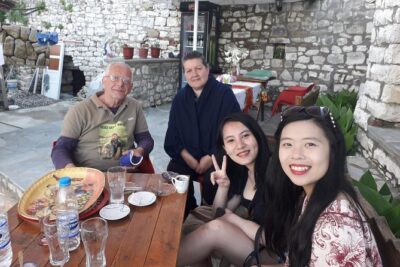
Berat Cooking Class- Traditional Albanian Cooking Class /By Vato
Read our review →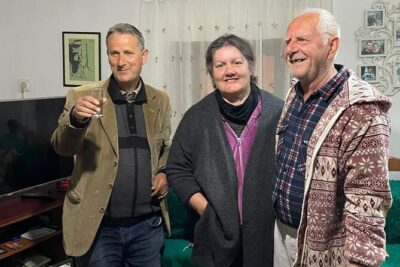
Savor Albanian Cuisine Cooking Class with Mama Nina Berat Castle
Read our review →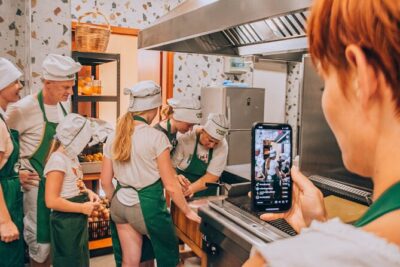
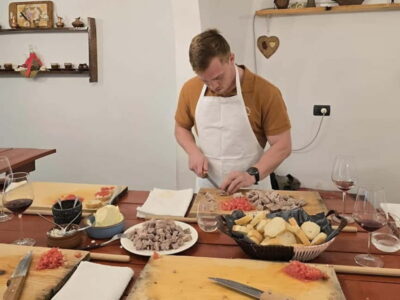
Tirana Cooking Class – Traditional Albanian Recipes
Read our review →
Tirana Photo Shoot in Traditional Albanian Costumes
Read our review →
Experience Blue Eye , Lekuresi Castle and Taste Traditional Albanian Wine
Read our review →Browse the lists this tour appears in