
Reviewed · WALKING TOURS
Walking Tour in Tirana, Albania
Tirana’s best story is not told by one monument. It is found in the way mosques, Catholic and Orthodox churches sit close together, while communist buildings, Ottoman traces, royal-era ministries, and modern stadiums share the same city center. This two-hour walk gives you a quick route through that mix, starting at Skanderbeg Square and ending back in the heart of town.
I like the low headline price of $17 and the choice of morning, midday, or evening departures. I also like the broad subject range: you get national symbols, public buildings, religious sites, and the Pyramid in one outing. The main caution is meeting the guide. The start is at Scanderbeg’s statue, but several people have missed the group, so arrive at least 10 minutes early and make sure you can identify your guide.
In This Review
- Key points to know before you book
- Why this walk is a useful first look at Tirana
- Starting under Scanderbeg’s statue
- The Clock Tower and the central boulevard
- Tirana Castle and the city’s older layers
- The Pyramid and the memory of communism
- Three faiths around the city center
- Mother Teresa Square and the southern end of the route
- The two-hour timing deserves a close look
- What the $17 price really means
- Who will get the most from this experience
- Practical tips for a smoother walk
- Should you book the Tirana walking tour?
- FAQ
- Where does the walking tour start?
- How long does the tour last?
- What languages does the guide speak?
- How much does the tour cost?
- What sights are included?
- Are religious sites part of the tour?
- Is Bunk’Art included in the price?
- How early should I arrive?
- Can I cancel the booking?
Key points to know before you book
- Religion is part of the route: Namazgah Mosque, Saint Paul Cathedral, and the Resurrection of Christ Orthodox Cathedral help explain Albania’s unusual record of religious coexistence.
- The tour covers central Tirana on foot: Expect city streets, squares, and a route between Skanderbeg Square and Mother Teresa Square.
- The opening square is the city’s history lesson: The National History Museum, Clock Tower, and Scanderbeg Statue introduce Albania’s national story.
- The Pyramid gives the communist period a physical presence: It is one of the tour’s most distinctive stops and helps connect past and present.
- The $17 price is symbolic: The guide may expect a further tip, so budget for the experience as a tip-based walk rather than a fixed-price sightseeing service.
- The meeting point needs care: The guide leaves at the exact start time, and unclear identification has caused missed departures.
Why this walk is a useful first look at Tirana
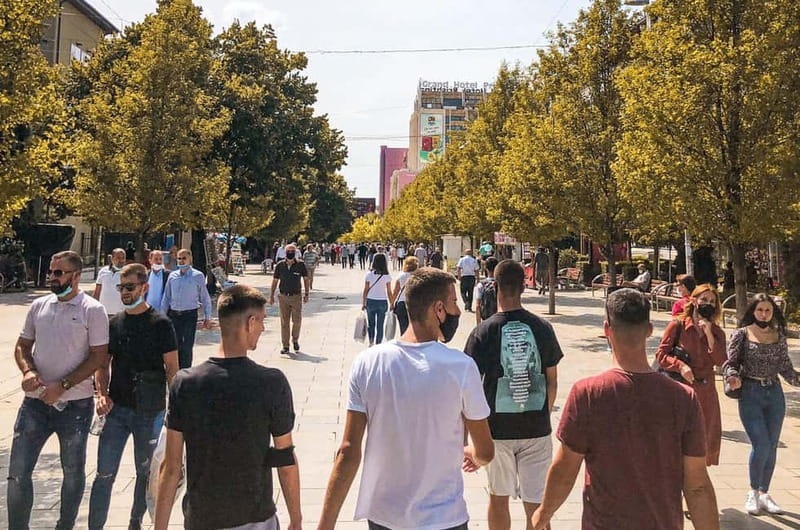
Tirana can feel hard to read at first. Its center brings together the name of Albania’s national hero, Ottoman religious traditions, communist architecture, new public works, and the institutions of the modern republic. A walking tour helps you connect those pieces instead of seeing them as unrelated buildings.
This route is especially useful on your first day. You will get a map in your head, learn the names of the main squares, and pass several places you may want to revisit on your own. At $17 per person, the cost is modest for a live guide over two hours, though the tip-based setup means the advertised price is not the whole social expectation.
The guiding quality can vary. Plum is specifically praised for being friendly, welcoming, and well informed, and another English-language booking describes the guide as excellent and very informed. At the same time, one rating says the guide spent too much time on phone calls, while another describes the walk as less informative than expected. I would book this as an accessible orientation walk, not as a specialist course in Albanian history.
A few more Tirana trips to weigh up
- Walking Tour of Tirana
★ 5.0 · 646 reviews - Tirana: Express Walking Tour with a Guide
★ 4.8 · 503 reviews - Tirana Center: Magic Walking Tour French/Italian/English Etc
★ 4.9 · 402 reviews
Starting under Scanderbeg’s statue
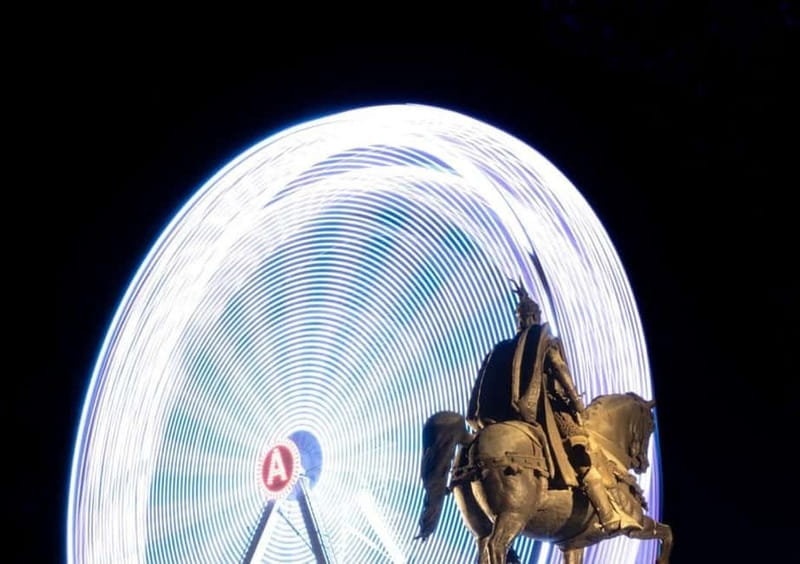
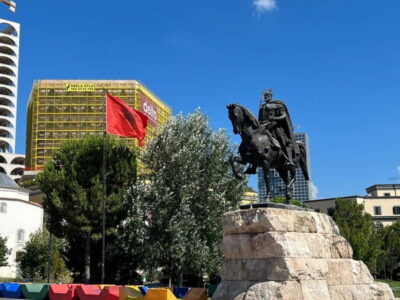
The group meets beside the statue of Scanderbeg, Albania’s national hero, in the middle of Skanderbeg Square. This is the right place to begin because the square is both a practical meeting point and the symbolic center of the capital.
Arrive 10 minutes early. The instructions say the guide leaves at the exact starting time, and finding a person in a large open square can be harder than it sounds. Keep your booking details ready and look for a guide who can clearly gather the group. This small bit of preparation matters here more than on many tours because missed meetings have been a real problem.
The square itself is a good opening scene. You will see Scanderbeg’s statue, the National History Museum, and the Clock Tower. The guide uses these points to explain Albania’s national identity and the different eras that shaped the country, from the Pelasgians and Illyrians through Roman and Byzantine rule, the Ottoman period, the Kingdom of Albania, communism, and the present democratic republic.
You should not expect a long museum visit during this walk. The National History Museum receives about 10 minutes of guided attention in the route, so the value is mainly in the introduction and outside context. If you want to examine its displays properly, plan a separate visit.
The Clock Tower and the central boulevard
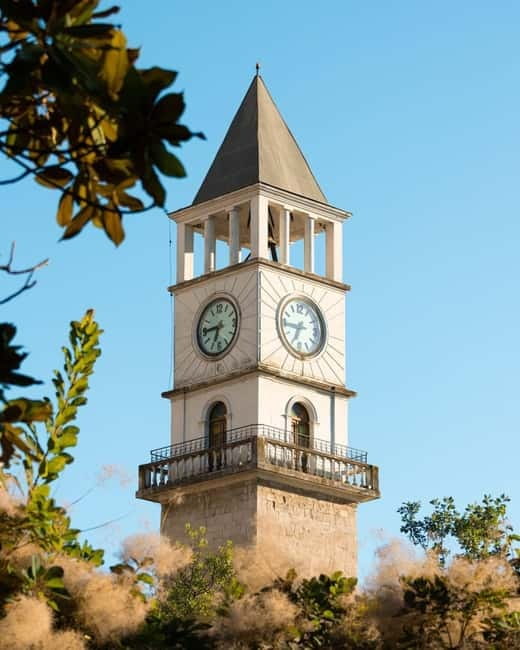
The Clock Tower adds an Ottoman-era note to a square that otherwise feels heavily shaped by the twentieth and twenty-first centuries. It is a compact stop, but it gives the guide a chance to explain how Tirana’s central area developed around older civic and religious traditions.
From here, the walk follows the main boulevard and passes important government buildings. You may see the ministries, the Prime Minister’s office, Parliament, and the Presidency. These are not all listed as long interior visits, so think of this part as an outdoor look at the capital’s political center.
I like this section because it shows how Tirana functions as Albania’s national stage. A guide can point out the difference between a historic monument and a modern state building, then place both in the same story. The route also gives you a better sense of the city’s scale than a quick taxi ride would.
The pace may feel brisk if the group is large or if you want to stop for photographs. This is a walking orientation, not a slow architectural study. Wear comfortable shoes and expect to remain on your feet.
Tirana Castle and the city’s older layers
Tirana Castle is included among the main sights connected with the tour, although the detailed stop schedule gives more exact time to Skanderbeg Square, the cathedral area, and Mother Teresa Square. Ask your guide how the castle fits into that day’s route and whether there is enough time for a proper look.
The castle is valuable because it helps balance the better-known communist and modern landmarks. Tirana is not only broad boulevards and twentieth-century public buildings. Older traces survive too, and a guide can help you notice what would otherwise look like an ordinary part of the city.
Do not assume that every listed sight receives the same amount of time. The experience is designed to show you many places in a short period. If Tirana Castle is your priority, confirm its exact treatment at the start.
Same coast, a completely different kind of day:
- From Tirana: Bovilla Lake & Gamti Mountain Hiking Day Trip
★ 4.9 · 4,397 reviews - From Tirana: Bovilla Lake & Gamti Mountain Hiking Tour
★ 4.9 · 3,003 reviews - From Tirana: Bovilla Lake & Gamti Mountain Viewpoint Hike
★ 4.8 · 2,053 reviews - Tirana/Durres/Golem: Saranda, Ksamil, Blue Eye Day Trip
★ 4.8 · 1,584 reviews
The Pyramid and the memory of communism
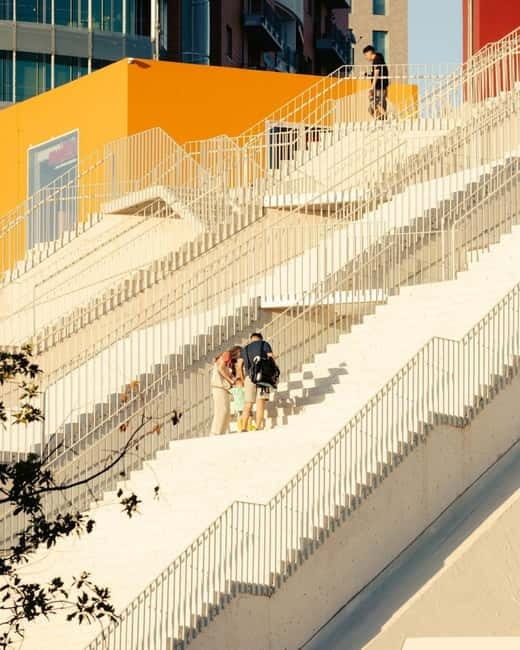
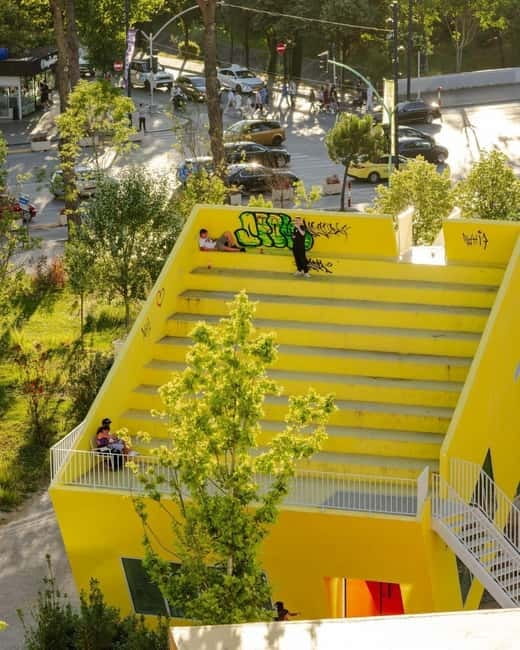
The Pyramid of Tirana is one of the route’s most memorable stops. Its unusual form makes it easy to recognize, but its importance comes from what it represents: the communist period and the way the city has had to live with, reinterpret, and reuse that past.
This is where the tour’s long historical sweep becomes more concrete. After hearing about ancient peoples, empires, Ottoman rule, and national independence, you reach a building tied to a much more recent and difficult chapter. The Pyramid also gives the walk a visual change from the formal square and government boulevard.
Your guide’s explanation matters here. The building is not simply an odd piece of architecture. It opens a discussion about Albania under communism and the shift to the democratic republic. Since the scheduled guided time across the Tirana district is limited, you may get a concise explanation rather than a detailed political lecture.
Three faiths around the city center
The religious part of the walk is its most distinctive theme. The route identifies Namazgah Mosque, Saint Paul Cathedral, and the Resurrection of Christ Orthodox Cathedral, using them to discuss the relationship between different faiths in Albania.
The detailed schedule gives about 10 minutes at the Orthodox Cathedral and another 10 minutes at Namazgah Mosque. Saint Paul Cathedral is also part of the religious-site coverage, though the exact amount of time there is not specified. These are short visits, so dress and behave respectfully, and do not expect a full guided tour of each interior.
For you, the main value is comparative. You see Islamic, Catholic, and Orthodox traditions within the same capital route. The guide can explain Albania’s stated tradition of religious coexistence and how that idea fits into the country’s wider story.
This part also makes the tour feel less like a checklist of monuments. The buildings are not only photogenic stops. Together, they offer a way to understand how religion fits into public life in Albania. If this subject interests you, stay close to the guide and ask questions while the group is at each site.
Mother Teresa Square and the southern end of the route
Mother Teresa Square marks a change in mood and setting. It is associated with cultural and educational institutions, including the University of Arts and the University of Engineering. The route also includes Italia Square and Arena Kombëtare, Tirana’s national stadium.
The schedule allows about 30 minutes at Mother Teresa Square, making it one of the longer stops. That gives you time to hear about the square, take photographs, and look at the surrounding buildings without rushing quite as much as at the Clock Tower or religious sites.
The square also connects the tour to Albania’s modern public identity. Mother Teresa is a globally known figure of Albanian heritage, and her name appears in a prominent civic space. The nearby universities and sports venue show a different side of Tirana from the historic center.
At Arena Kombëtare, the listed activity is free time for about 30 minutes. This may be welcome after the walking sections, especially if you want a short pause. It is worth clarifying with the guide whether the group returns directly to Skanderbeg Square after this stop or follows a slightly different path, since the stated duration and stop times do not line up perfectly.
The two-hour timing deserves a close look
The advertised duration is two hours, but the published stop estimates add up to more than two hours if taken literally. Skanderbeg Square receives 30 minutes, the district section another 30, Mother Teresa Square 30, Arena Kombëtare 30, and the shorter stops add more time.
That does not necessarily mean the tour will run late. Some times may overlap with walking, and the schedule may describe the full sequence rather than exact stop lengths. Still, you should leave room in your day, especially if you have a timed museum visit, airport transfer, or dinner reservation afterward.
The route is on foot through central Tirana. Anyone with mobility problems should consider the walking requirement carefully. The tour is not suitable for babies under one year or people over 95 according to the activity conditions, and the instructions specifically warn people with walking difficulties to take the itinerary into account.
Bring biodegradable sunscreen. There is no mention of transport, food, museum admission, or entry fees being included. Bunk’Art is an optional extra-cost museum rather than part of the included package, so treat that as a separate decision.
What the $17 price really means
The $17 charge is described as symbolic because the walk is based on tips. You pay the booking price, then the guide may wait for an additional tip. That structure is common for city walks, but you should understand it before you arrive.
The value depends on what you want. If you need a cheap, guided introduction to Tirana with flexible morning, midday, and evening options, the price is attractive. You cover major squares, political buildings, religious landmarks, the Pyramid, and the stadium area without arranging several separate visits.
If you want long explanations, museum interiors, or a tightly timed professional lecture, the value is less certain. The feedback attached to the experience gives an overall score of 3.7 out of 5 from 28 ratings, which points to an uneven service rather than a guaranteed standard. Several people highlight friendly, helpful guiding, while the low ratings focus on missed meeting arrangements, phone distractions, and limited information.
Free cancellation up to 24 hours before the start and reserve-now, pay-later booking make the commitment easier. Those policies help if your Tirana plans are still moving, but they do not solve the need to locate the guide on time.
Who will get the most from this experience
I would recommend this walk to first-time visitors who want a quick introduction before exploring Tirana independently. It also suits people who enjoy seeing many landmarks from the outside and learning how they fit together.
It is a good match for you if:
- You want a short central-city orientation.
- You are interested in Albania’s political and religious story.
- You prefer walking to arranging taxis between sights.
- You need a morning, midday, or evening departure.
- You are comfortable with a tip-based tour.
- You want to decide later whether to pay separately for Bunk’Art.
I would hesitate if your main goal is detailed museum interpretation or guaranteed meeting support. In that case, confirm the guide’s identification instructions before booking and arrive early. If you are assigned Plum, the available information points to a particularly friendly and capable guide, but guide quality is not presented as uniform across every departure.
Practical tips for a smoother walk
Wear shoes suitable for city walking and use sunscreen. The tour crosses open squares and follows a central urban route, so comfort matters more than formal clothing.
Arrive at Scanderbeg’s statue at least 10 minutes early. Do not wait until the listed start time to begin searching. If the group is not obvious, contact the tour office promptly rather than assuming the guide is delayed.
Keep your expectations realistic. The tour includes a lot: Scanderbeg Square, the National History Museum, Clock Tower, boulevard, state buildings, Pyramid, Mother Teresa Square, universities, Italia Square, Arena Kombëtare, and religious sites. The reward is breadth. The tradeoff is that each subject receives limited time.
Ask questions as you go. The tour’s value rises when you use the guide to connect the buildings rather than simply photograph them. Religion, communism, Scanderbeg, and the move to democracy are the themes most likely to give the route meaning.
Should you book the Tirana walking tour?
Book it if you want a low-cost first look at central Tirana and you value a guide who can connect several eras in one short walk. The religious coexistence theme, the Pyramid, and the sequence from Skanderbeg Square to Mother Teresa Square give the tour more substance than a basic monument checklist.
Skip it if you need a fully reliable meeting system, long museum visits, or consistently detailed commentary. If you do book, arrive early, confirm how to recognize the guide, keep the rest of your day flexible, and allow for a tip beyond the $17 price. Used as an orientation rather than a definitive history tour, it can be a sensible introduction to Albania’s capital.
FAQ
Where does the walking tour start?
The tour starts beside the statue of the national hero Scanderbeg in Skanderbeg Square, in central Tirana.
How long does the tour last?
The advertised duration is two hours. The stop schedule includes several timed visits and free time, so you should leave some flexibility in your plans.
What languages does the guide speak?
Live guiding is available in Albanian and English.
How much does the tour cost?
The listed price is $17 per person. The activity is tip-based, so the guide may also expect a kind tip.
What sights are included?
The route includes Skanderbeg Square, the Scanderbeg Statue, the National History Museum, Clock Tower, central government buildings, the Pyramid of Tirana, Mother Teresa Square, universities, Italia Square, Arena Kombëtare, and religious sites.
Are religious sites part of the tour?
Yes. The route includes Namazgah Mosque, Saint Paul Cathedral, and the Resurrection of Christ Orthodox Cathedral.
Is Bunk’Art included in the price?
Bunk’Art is optional and requires an extra fee. It is not included in the stated tour price.
How early should I arrive?
You should arrive at least 10 minutes before the scheduled start time. The guide leaves at the exact starting time.
Can I cancel the booking?
You can cancel up to 24 hours in advance for a full refund. Reserve-now, pay-later booking is also available.
Just added around Tirana
- Zipline Tirana Adventure & Petrela Castle – With Transport★ 4.4 · 10 reviews
- Wine Tasting & Vineyards Escape near Tirana★ 4.9 · 8 reviews
- Wonderful Sunset and Dinner in the Castel Of Petrela★ 4.6 · 4 reviews
- Vlora, Dhermi & Llogara Day Trip from Durrës or Golem★ 5.0 · 5 reviews
- From Tirana: Mount Dajti Adventure, Local Vibes & Cable Car opt★ 4.5 · 6 reviews
- Winetasting tour in Alpeta winery – Roshnik village by 1001 Albanian Adventures★ 5.0 · 26 reviews
- Day Tour to Petrela Castle and Zip Line Albania Adventure★ 5.0 · 10 reviews
- Wine Tasting & Vineyards Escape near Tirana★ 5.0 · 18 reviews
Walking Tours, compared.

Blue Eye Kayak and walking tour & Lekursi Castle
Read our review →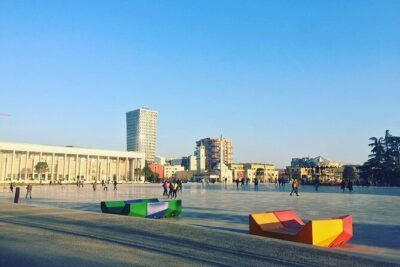

Tirana Stroll Tour, Walk and Taste Qofte & Raki!
Read our review →
Tirana’s Communist Past; Small Group Walking Tour
Read our review →Browse the lists this tour appears in