
Reviewed · WALKING TOURS
Tirana Walking Tour
Tirana’s story is written in sharp contrasts: Italian-era government buildings face communist monuments, Ottoman traces sit beside bold new towers, and the former dictatorship district now fills with cafés. This three-hour walk gives you that story in one steady sweep, with guides such as Gloria, Ilir, Thomas, and Iris bringing personal knowledge of the city’s recent changes.
I like two things right away. First, the route covers far more than Skanderbeg Square, reaching the Tanners’ Bridge, Blloku, the Pyramid, Mother Teresa Square, and the city’s religious landmarks. Second, the planned café stop gives you time to ask about food, customs, politics, and daily life. The main drawback is pace: some information may be given while walking, so ask your guide to stop when you want a fuller explanation.
In This Review
- Key points at a glance
- Why Tirana makes a good walking tour subject
- Starting at Tirana International Hotel and Skanderbeg Square
- Et’hem Bey Mosque and the Watch Tower
- Bunk’Art 2 and Tirana’s communist years
- Tirana Castle and the old bazaar area
- Tanners’ Bridge and the city’s older traces
- Mosques, cathedral, and Tirana’s religious mix
- The Pyramid and Tirana’s new face
- Mother Teresa Square and Postbllok
- Blloku and Enver Hoxha’s villa
- House of Leaves and the Resurrection Cathedral
- The guides and the style of commentary
- Is $17 good value for three hours?
- Who should book this Tirana walk?
- Should you book the Tirana Walking Tour?
- FAQ
- Where does the Tirana Walking Tour begin?
- Where does the tour finish?
- How long does the walking tour last?
- How much does the tour cost?
- Which languages are available?
- Is the tour private?
- Is the tour wheelchair accessible?
- Are food and drinks included?
- Are museum entry fees included?
- Can children join the tour?
- What should I bring?
- Can I cancel for a full refund?
Key points at a glance
- A useful first-day orientation: The route links Tirana’s main central sights and helps you understand how the city fits together.
- History in visible layers: Look from Brasini’s Italian buildings to communist-era structures, Ottoman remnants, and new public spaces.
- Strong local guiding: Guides named Gloria, Ilir, Thomas, and Iris have been praised for clear English, personal stories, flexibility, and practical advice.
- A city walk with breathing room: The three-hour format includes photo stops, free time, and a break in Blloku for coffee or a cocktail.
- Good value at $17: You get a qualified guide and a broad introduction without paying for a full-day excursion.
- Come ready to walk: Comfortable shoes matter, and children must stay with an adult.
Why Tirana makes a good walking tour subject
Tirana is not a city that explains itself at first glance. Its center has grand squares and monumental buildings, yet it also feels young, informal, and in motion. The capital’s café culture gives it a relaxed Dolce Vita mood, while cranes and new high-rises signal how quickly Albania is changing.
That tension is the real subject of this tour. You are not simply ticking off old buildings. You are watching an Ottoman town, an Italian-planned capital, a tightly controlled communist city, and a modern European capital occupy the same streets.
The route also makes sense geographically. Most stops are in or near the central area, so you can build a mental map as you go. I would take this tour early in a Tirana visit, then return to the places that catch your interest, such as Bunk’Art 2, the House of Leaves Museum, or the Pyramid.
A few more Tirana trips to weigh up
- Walking Tour of Tirana
★ 5.0 · 646 reviews - Tirana: Express Walking Tour with a Guide
★ 4.8 · 503 reviews - Tirana Center: Magic Walking Tour French/Italian/English Etc
★ 4.9 · 402 reviews
Starting at Tirana International Hotel and Skanderbeg Square
The meeting point is at the Tirana International Hotel, though the exact starting point can vary with the option you book. From there, the walk moves into the Monumental Center and the broad public space around Skanderbeg Square.
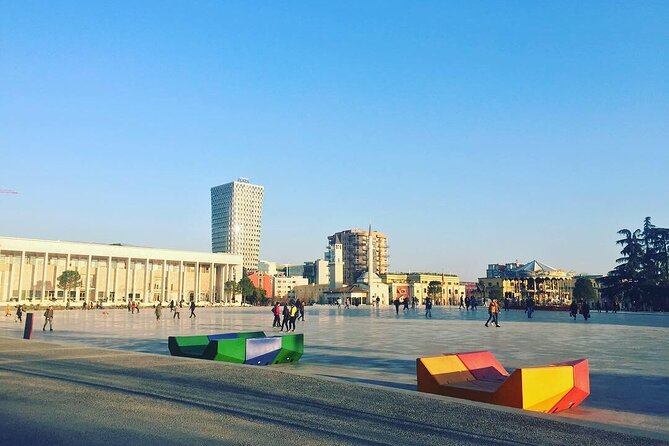
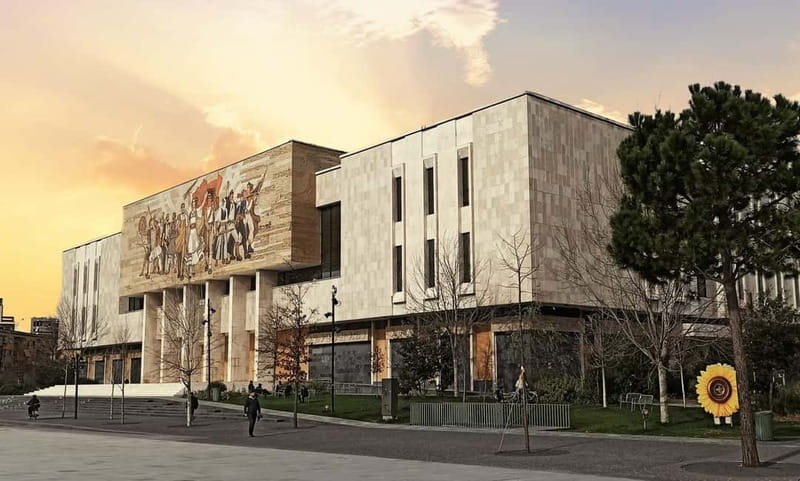
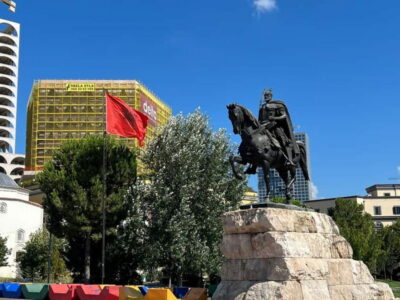
The square is the right place to begin because it brings several eras together. The statue of Skanderbeg, Albania’s national hero, provides the national focus. Around it, your guide can point out the National History Museum, the Palace of Culture, the Et’hem Bey Mosque, and the Italian government buildings.
The National History Museum is likely to be handled mainly as a sightseeing or photo stop on this tour. If you want a full museum visit, check what is included before booking, since optional activity costs are not part of the stated price. The museum’s large façade is still useful for understanding how the communist period presented national history in monumental form.
The Palace of Culture sits nearby and represents another force in the city center. Its heavy communist-era design contrasts with the Italian buildings from the 1920s, created by architect Armando Brasini. That side-by-side comparison is one of the most useful visual lessons of the morning.
Et’hem Bey Mosque and the Watch Tower
The Et’hem Bey Mosque brings you back to Tirana’s earlier centuries. Its presence near the main square is a reminder that the capital did not begin as a twentieth-century project. The nearby Watch Tower adds another layer, tied to the city’s nineteenth-century expansion.
These stops are especially valuable with a guide because the buildings are easy to see but harder to place in context. You can look at the mosque, tower, and square in minutes on your own. A good explanation connects them to Tirana’s Ottoman-era development and later political upheavals.
The tour is designed for sightseeing, walking, guided commentary, and photos. Do not assume that every interior is open during your visit. The experience can still work well if a building is viewed from outside, but anyone hoping to spend long periods inside should ask about opening hours and entry arrangements.
Bunk’Art 2 and Tirana’s communist years
Bunk’Art 2 shifts the conversation toward the communist dictatorship. Its name points to Albania’s famous bunker-building program, and its central location makes it an efficient stop during a city walk.
The tour itinerary includes a visit and guided sightseeing at Bunk’Art 2, but optional activity costs are listed separately. Confirm the entry detail when you book if going inside is important to you. If you do enter, allow for the fact that a museum visit can require more time than a quick exterior stop.
This is where the guide’s personal perspective can make the largest difference. Several of the named guides have explained Tirana’s changes through their own lives, including what the city was like during childhood and how it has shifted since the end of communist rule. Thomas, in particular, has been praised for using personal memories and old photographs to make the city’s changes easier to grasp.
Ask questions here. Albania’s twentieth-century history is not a quick story, and a three-hour walk can only cover the main points. The value is that you gain a framework, then decide which museums or sites deserve a longer visit.
Same coast, a completely different kind of day:
- From Tirana: Bovilla Lake & Gamti Mountain Hiking Day Trip
★ 4.9 · 4,397 reviews - From Tirana: Bovilla Lake & Gamti Mountain Hiking Tour
★ 4.9 · 3,003 reviews - From Tirana: Bovilla Lake & Gamti Mountain Viewpoint Hike
★ 4.8 · 2,053 reviews - Tirana/Durres/Golem: Saranda, Ksamil, Blue Eye Day Trip
★ 4.8 · 1,584 reviews
Tirana Castle and the old bazaar area
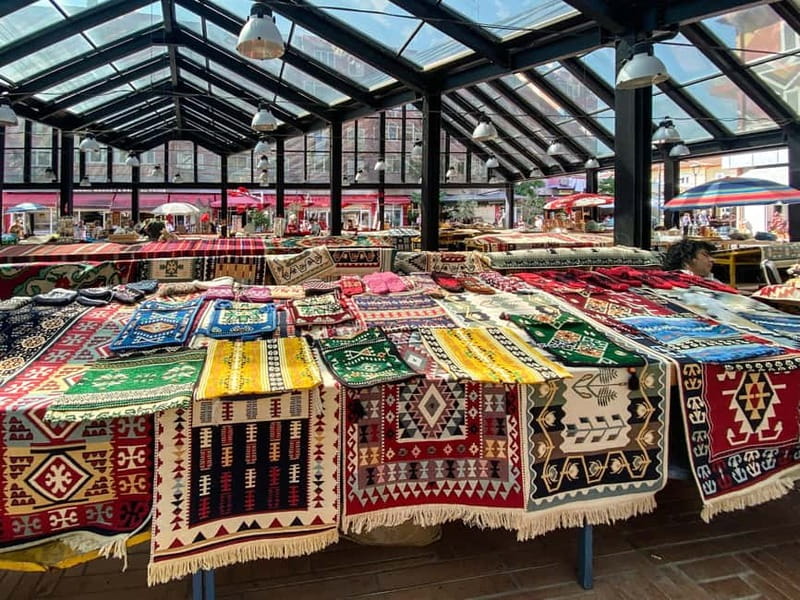
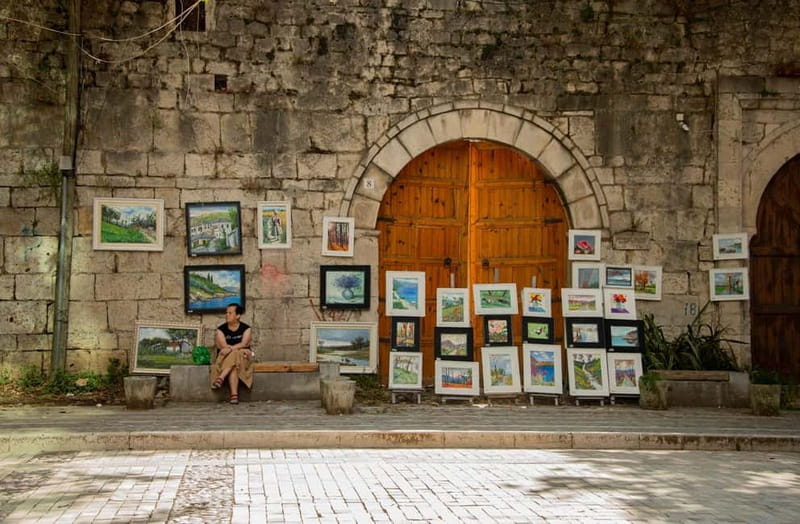
The newly reopened Tirana Castle offers a change of mood. The route includes a break, photos, sightseeing, free time, and shopping here, so this may be one of the less hurried parts of the walk.
The castle area also helps explain Tirana’s historic center. The old bazaar once formed part of the city’s commercial life, and the route uses this section to show what remains of that older urban fabric. Do not expect a vast medieval fortress complex. The appeal is the contrast between a small historic remnant and the much larger modern capital surrounding it.
Free time is useful here because you may want to browse, take photos, or simply pause. The tour price does not cover personal purchases, so keep shopping separate from the $17 guide fee.
Tanners’ Bridge and the city’s older traces
The stone Tanners’ Bridge is one of the quieter stops and one of the most revealing. It connects the modern center to the memory of older routes and trades. Compared with the large square and monumental buildings, this is a more modest piece of Tirana.
I like that the route includes places such as this rather than focusing only on grand façades. A short stop at an old bridge can tell you more about how a city once worked than another impressive government building.
The bridge is also a good photo opportunity. You will want comfortable shoes here and throughout the tour. Three hours on foot, with many stops and crossings between districts, is manageable for most people but less pleasant in sandals or stiff shoes.
Mosques, cathedral, and Tirana’s religious mix
The itinerary includes Namazgah Mosque, Saint Paul’s Cathedral, and the Resurrection of Christ Orthodox Cathedral. Together, these sites broaden the tour beyond architecture and politics.
Albania’s religious identity is complex, and Tirana’s center gives you a chance to see several traditions within a relatively compact area. The guide can explain customs, religious history, and the place of faith in modern Albanian life. The tour is available in Albanian, English, and Italian, which is helpful when discussing subjects that depend on nuance.
As with the Et’hem Bey Mosque, the schedule may favor exterior viewing and short visits rather than long interior tours. If you have a particular interest in one building, tell the guide early. The guides are described as flexible, and several have adjusted the route or level of detail around personal interests.
The Pyramid and Tirana’s new face
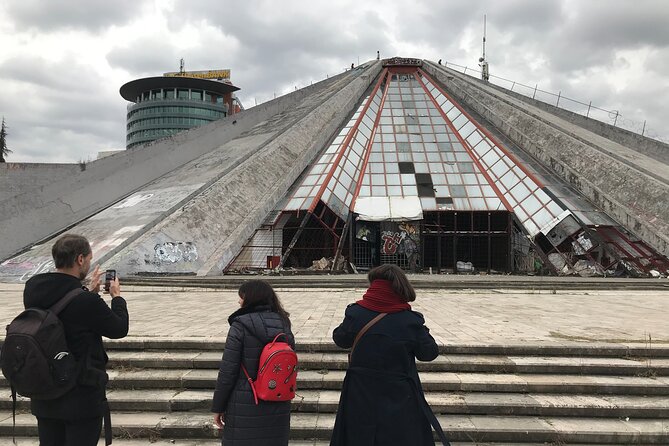
The repurposed Pyramid is one of the most memorable stops because it carries both political weight and present-day energy. Built during the communist era and later given a new use, it reflects Tirana’s effort to deal with difficult symbols rather than simply erase them.
The building also fits the tour’s larger theme: the city is changing fast. New architecture, redesigned public spaces, and fresh uses for older structures appear throughout central Tirana. The experience presents this transformation as unfinished, which is more honest than treating the capital as a finished postcard.
You will have time for photos and guided sightseeing. The Pyramid is a place where a short explanation can become a longer conversation, so this is another good moment to ask about the city’s future, construction boom, and changing public life.
Mother Teresa Square and Postbllok
Mother Teresa Square extends the central walk toward a more formal, spacious part of Tirana. Its scale and surrounding buildings create a different impression from the cafés and traffic around Skanderbeg Square.
Postbllok, also called Checkpoint, brings the communist past back into view through a memorial setting. This stop helps keep the tour from becoming a simple celebration of new architecture. Tirana’s current freedom and social life are easier to appreciate when you understand the restrictions that came before.
The route includes photo stops and guided sightseeing here rather than promising a long museum session. That distinction matters. You are paying for a city overview with interpretation, not a series of lengthy indoor admissions.
Blloku and Enver Hoxha’s villa
Blloku is where Tirana’s modern café culture becomes most visible. Once associated with the ruling elite, the district is now filled with restaurants, bars, and coffee spots. The change is striking, and your guide can explain why the neighborhood carries such symbolic weight.
The former villa of dictator Enver Hoxha gives Blloku its sharper historical edge. You are looking at an ordinary-looking residence connected to a powerful and oppressive political system, now surrounded by a social district that represents a very different Albania.
I would not rush through Blloku. The scheduled café or cocktail stop is one of the best features of the tour because it lets you sit down and ask practical questions. Guides have helped people with restaurant choices, local transport, customs, shopping, and other plans. This is also the point where the walk can feel less like a lecture and more like a conversation with someone who knows the city.
Drinks and food are not included in the $17 price. That keeps the base cost low, but plan to pay for your own coffee, soft drink, cocktail, or snack.
House of Leaves and the Resurrection Cathedral
The House of Leaves Museum is another important reference point for the surveillance state. The stop gives the communist story a more personal angle, moving from public monuments to the machinery of monitoring and control.
The itinerary lists the museum for a visit, photos, and guided sightseeing, but you should confirm whether museum admission is included. The stated inclusions are the city tour and a qualified guide, while optional activities are excluded.
The Resurrection of Christ Orthodox Cathedral provides a visual counterpoint. Its central location and distinctive design add another contemporary religious building to the route. It also reinforces how much of Tirana’s public image has changed since the communist period.
The guides and the style of commentary
The strongest part of this experience is the guiding. The available languages are Albanian, English, and Italian, and the guide roster has included Gloria, Ilir, Thomas, Iris, Aron, Sonila, Bledi, and others.
Gloria has been singled out for warmth, clear explanations, and practical knowledge of culture and customs. Ilir is known for fluent English and a relaxed, friendly manner. Thomas brings personal stories, old photographs, and useful food advice. Iris has been praised for explaining Tirana’s politics and recent changes in an engaging way.
That does not mean every walk will feel identical. One useful piece of advice is to tell your guide how you prefer to learn. Some information may come while you are moving, and one participant found it easier when the group changed to a walk, stop, and explain pattern. Guides have shown a willingness to adjust, but you need to speak up if the pace or volume is not working for you.
The tour may operate even with only one participant. That can turn the experience into a private-style conversation, though you should not book on the assumption that your group will always be tiny. A private group option is available if that matters to you.
Is $17 good value for three hours?
At $17 per person, this is a strong value for a first look at Tirana. The fee covers three hours with a qualified guide and a route that reaches the main square, historic remains, communist landmarks, religious buildings, Blloku, and newer urban projects.
The value is greatest if you want context. You can walk around Skanderbeg Square without paying anything, but it is harder to understand why the buildings look so different or how Albania moved from dictatorship to its current café-centered public life.
The price does not include meals, drinks, personal purchases, hotel transfers, or optional entry costs. That is reasonable for a low-cost walking tour, but budget a little extra if you want to enter museums or stay for the café stop.
Free cancellation up to 24 hours before departure and reserve-now, pay-later booking make it easier to fit into a changing itinerary. The tour lasts three hours, but starting times depend on availability.
Who should book this Tirana walk?
I would choose this for a first day in the capital, especially if you want help getting your bearings. It suits history-minded visitors, architecture fans, couples, solo walkers, and anyone curious about how everyday life changed after communism.
It is also a good fit if you like asking questions. The guides can discuss restaurants, transport, customs, politics, and local life, not just dates and building names.
You may want something else if you prefer long museum visits, a slow photography tour, or a ride between sights. This is a city walk, and the broad route means some stops receive only a short explanation. Children must be accompanied by an adult, unaccompanied minors are not allowed, and the activity is wheelchair accessible.
Should you book the Tirana Walking Tour?
Book it if you want a low-cost, well-covered introduction to Tirana with a human voice at the center. The mix of Skanderbeg Square, Ottoman landmarks, communist sites, Blloku, and new architecture gives you a clear sense of a capital still working out what it wants to become.
To get the most from it, wear comfortable shoes, bring questions, and tell the guide if you need more frequent stops. I would also leave your schedule open afterward for a museum or meal recommendation in Blloku. At $17, this is an easy choice for most first-time visitors, provided you understand that it is an interpreted city walk rather than a full indoor tour of every attraction.
FAQ
Where does the Tirana Walking Tour begin?
The usual meeting point is in front of the Tirana International Hotel. The exact starting point may vary depending on the option booked.
Where does the tour finish?
The tour finishes at the Tirana International Hotel.
How long does the walking tour last?
The stated duration is three hours.
How much does the tour cost?
The price is $17 per person.
Which languages are available?
The tour can be conducted in Albanian, English, or Italian.
Is the tour private?
A private group option is available. The standard group arrangement depends on the option and booking.
Is the tour wheelchair accessible?
Yes, the activity is listed as wheelchair accessible.
Are food and drinks included?
No. Meals and drinks are not included, including the coffee or cocktail stop in Blloku.
Are museum entry fees included?
Optional activity costs are not included. Check the booking details if you want to enter Bunk’Art 2, the House of Leaves Museum, or another attraction.
Can children join the tour?
Children can join when accompanied by an adult. Unaccompanied minors are not allowed.
What should I bring?
Bring comfortable shoes for the three-hour walk.
Can I cancel for a full refund?
Yes. You can cancel up to 24 hours in advance for a full refund.
Just added around Tirana
- Zipline Tirana Adventure & Petrela Castle – With Transport★ 4.4 · 10 reviews
- Wine Tasting & Vineyards Escape near Tirana★ 4.9 · 8 reviews
- Wonderful Sunset and Dinner in the Castel Of Petrela★ 4.6 · 4 reviews
- Walking Tour in Tirana, Albania★ 3.7 · 28 reviews
- Vlora, Dhermi & Llogara Day Trip from Durrës or Golem★ 5.0 · 5 reviews
- From Tirana: Mount Dajti Adventure, Local Vibes & Cable Car opt★ 4.5 · 6 reviews
- Winetasting tour in Alpeta winery – Roshnik village by 1001 Albanian Adventures★ 5.0 · 26 reviews
- Day Tour to Petrela Castle and Zip Line Albania Adventure★ 5.0 · 10 reviews
Walking Tours, compared.
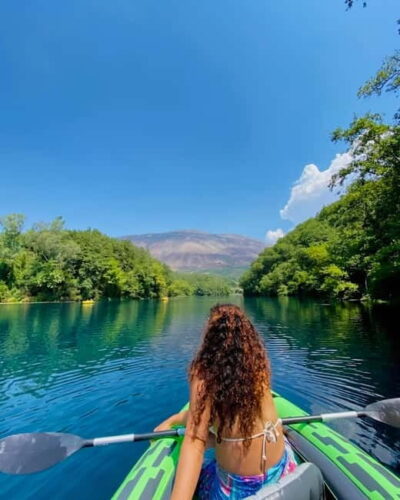
Blue Eye Kayak and walking tour & Lekursi Castle
Read our review →
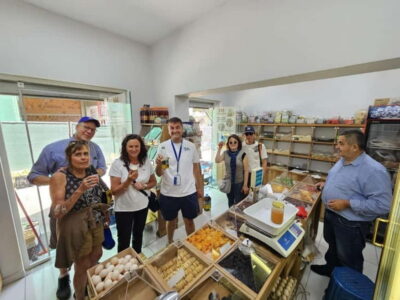
Tirana Stroll Tour, Walk and Taste Qofte & Raki!
Read our review →
Tirana’s Communist Past; Small Group Walking Tour
Read our review →
Tirana Walking Tour: History, Culture &Gems by a Passionate Guide
Read our review →Browse the lists this tour appears in