
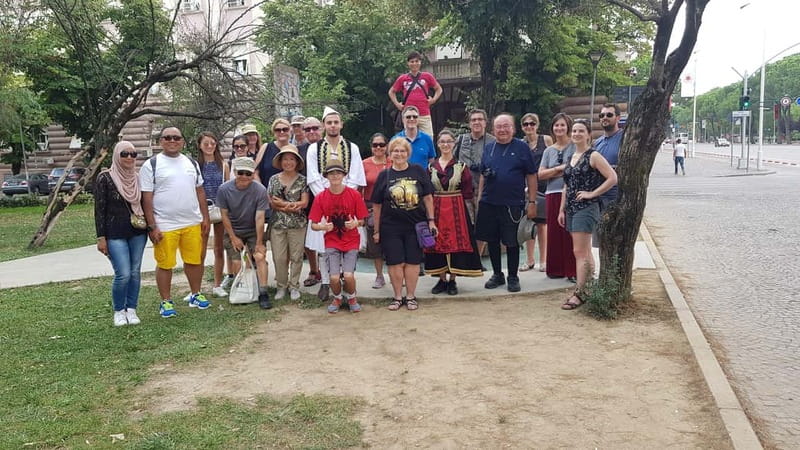
Reviewed · WALKING TOURS
Walking Tour of Tirana
Tirana’s past is unusually close at hand. In little more than two hours, this walk links the grand center of Skanderbeg Square with a former dictator’s neighborhood, a Cold War bunker museum, a half-rebuilt communist pyramid, and a cathedral that reflects the city’s newer direction. The route is less about ticking off monuments than learning how Albania moved from empire to dictatorship to democracy.
I like the strong historical focus, especially when guides such as Arber, Eri, Clint, Klint, Kedri, Rie, Ariola, and Aurora add personal stories to the explanation. I also like the practical route: it gives you your bearings fast and shows you where to return later. The main drawback is the meeting point, which can be hard to find, and Tirana’s summer heat can make the walk uncomfortable.
In This Review
- Key points to know before booking
- Why this walk works as your first Tirana activity
- Starting at the National Theatre of Opera, Ballet and Folk Ensemble
- Skanderbeg Square, the city’s main stage
- Et’hem Bej Mosque and the Clock Tower
- Bunk’Art 2, a compact look at communist repression
- The National Gallery of Art and Albania’s communist era
- The Pyramid of Enver Hoxha
- Blloku, from dictatorship to nightlife district
- Postbllok and the Checkpoint Monument
- Ending at the Resurrection of Christ Orthodox Cathedral
- How the guides shape the experience
- Heat, pace, group size, and practical comfort
- Is $18.14 good value?
- Who should book this Tirana walk?
- Should you book the Walking Tour of Tirana?
- FAQ
- How long is the Walking Tour of Tirana?
- What language is the tour offered in?
- Where does the tour start?
- Where does the tour end?
- What sights are included?
- Can I cancel for a full refund?
Key points to know before booking
- A useful first look at Tirana: The route covers the city center, Blloku, major monuments, and several museums from the outside.
- History comes through storytelling: Guides explain Ottoman, fascist, and communist rule, often with family memories of life under communism.
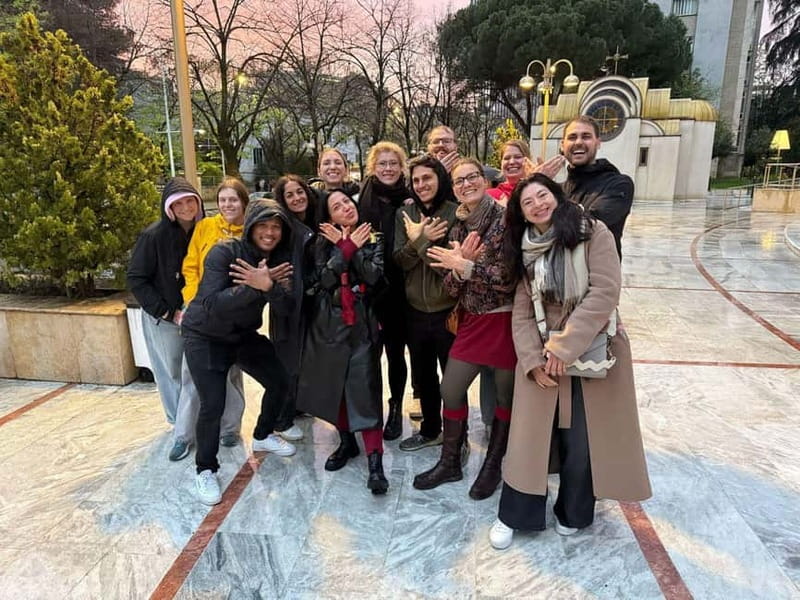
- A small group of up to 15: The maximum group size allows room for questions and can feel personal when numbers are low.
- Mostly easy walking: The route includes frequent stops for photos, shade, and questions rather than a nonstop march.
- Good value at $18.14: Your payment covers the reservation and the guide’s compensation, even though it is organized as a general free walking tour.
- Plan around the weather: The tour runs in all weather conditions, but poor weather can lead to cancellation, and extreme summer heat is a real concern.
Why this walk works as your first Tirana activity
Tirana can seem simple at first glance: a large square, a few colorful buildings, cafés, and broad streets. Then the layers begin to show. A mosque sits beside a clock tower. A bunker recalls secret police and political fear. A former communist power symbol has become a public gathering place. A polished cathedral sits only a short walk from sites tied to Albania’s hardest years.
This tour gives you that framework before you spend time inside individual museums. I like this approach because Tirana’s sights make more sense when you know the basic sequence of events. The guide’s job is not only to point at buildings, but to explain why they matter.
The walk lasts about two hours and 15 minutes, including movement between stops. The listed stop times are short, so expect a city introduction rather than a series of long museum visits. You will see several places from the outside or pause briefly nearby, then decide which ones deserve a return visit.
That makes the tour especially useful early in a stay. You can note the places you want to revisit, ask for local suggestions, and get a feel for the city center without spending half a day indoors.
A few more Tirana trips to weigh up
- Tirana: Express Walking Tour with a Guide
★ 4.8 · 503 reviews - Tirana Center: Magic Walking Tour French/Italian/English Etc
★ 4.9 · 402 reviews - Walking tour of Tirana
★ 4.8 · 285 reviews
Starting at the National Theatre of Opera, Ballet and Folk Ensemble
The meeting point is at the National Theatre of Opera, Ballet and Folk Ensemble, inside the Palace of Culture on Skanderbeg Square. This is a central location, but the precise meeting instructions deserve attention. At least two people have had trouble locating the group, and one missed the start after traffic and a taxi drop-off caused delays.
I would arrive early and use the full address: Pallati i Kulturës, Sheshi Skënderbej, Tirana. Do not rely only on a broad map pin or assume a taxi will leave you directly beside the guide. The tour begins at the scheduled time, so late arrivals may not be able to catch up.
The guide is an English-speaking licensed professional. The team includes guides such as Eri, Arber, Clint, Klint, Kedri, Rie, Ariola, Aurora, Arbri, and Buli, though you will not know in advance which guide leads your departure. Their styles vary, but the strongest pattern is clear storytelling, humor, and a willingness to explain Albania through personal experience.
Skanderbeg Square, the city’s main stage
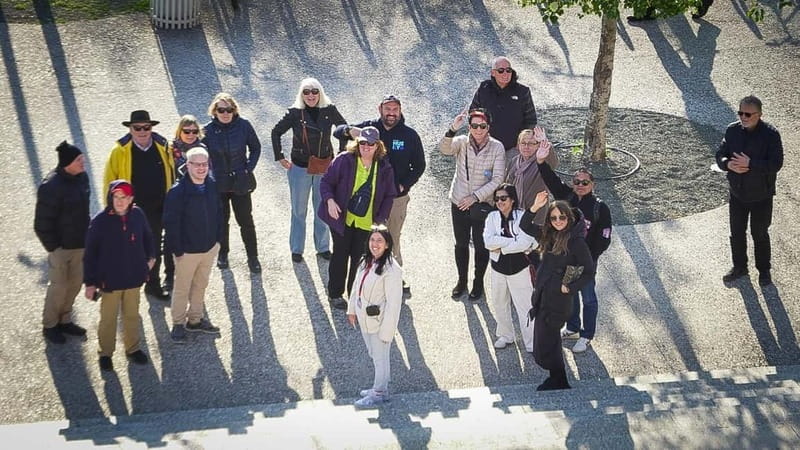
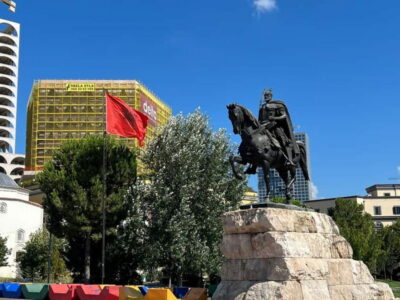
The first substantial stop is Skanderbeg Square, Tirana’s main public space. It is the right place to begin because so much of the city’s story gathers here. The guide uses the square to orient you and introduce Albania’s changing political and cultural identity.
You will have about 10 minutes here, enough for the main explanation and a few photographs. Do not expect a detailed architectural study of every building around the square. Instead, use this pause to get your map in your head. From here, the rest of the route unfolds through the central district.
The square also helps explain the scale of Tirana. Several later stops are within comfortable walking distance, so you can return easily after the tour. I would take note of side streets, cafés, and any building the guide recommends exploring later.
Et’hem Bej Mosque and the Clock Tower
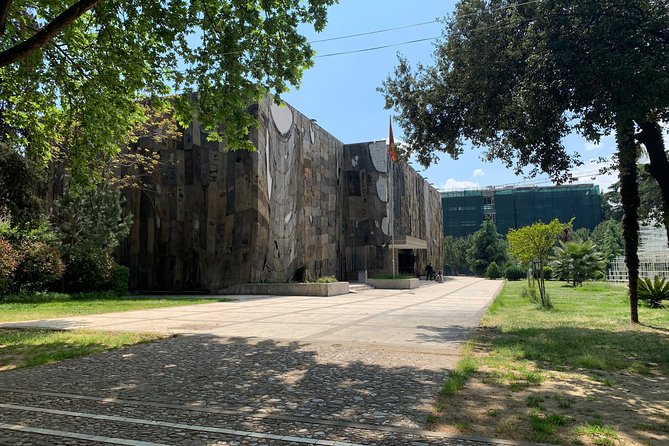
The Et’hem Bej Mosque is described as an old mosque in the city center. The stop is brief, about five minutes, but its location gives it weight. It is part of the historic core and offers a contrast with the modern public spaces and newer buildings encountered later.
Next comes the Clock Tower, another five-minute stop. These two sights are close together, making them an efficient pair. The guide can place religious life, civic life, and the city’s older center into a single picture.
The short timing is the chief limitation. You may not have time for a long look inside either site, and the schedule is designed for an overview. If the mosque or tower catches your interest, mark it for a later visit and check the opening arrangements independently.
Same coast, a completely different kind of day:
- From Tirana: Bovilla Lake & Gamti Mountain Hiking Day Trip
★ 4.9 · 4,397 reviews - From Tirana: Bovilla Lake & Gamti Mountain Hiking Tour
★ 4.9 · 3,003 reviews - From Tirana: Bovilla Lake & Gamti Mountain Viewpoint Hike
★ 4.8 · 2,053 reviews - Tirana/Durres/Golem: Saranda, Ksamil, Blue Eye Day Trip
★ 4.8 · 1,584 reviews
Bunk’Art 2, a compact look at communist repression
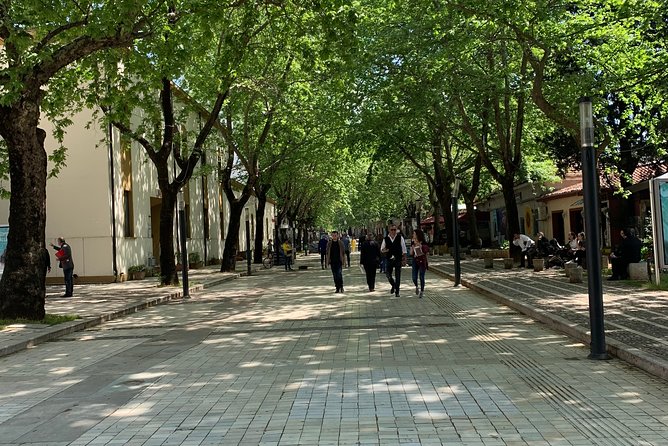
Bunk’Art 2 is one of the most important stops for understanding Albania’s communist period. The museum sits near the city center, making it easy to include in a walking route. The tour pauses for about five minutes, so the guide’s explanation is more of an introduction than a full museum visit.
That distinction matters. You are not being given a long, detailed museum tour here. Instead, you learn why a bunker museum in the middle of Tirana matters and how it connects with the country’s political past. If you want a closer look at exhibits about surveillance, imprisonment, and state control, you will need to return with extra time.
I find this one of the most useful stops because the physical presence of a bunker is hard to ignore. It gives the history a concrete setting. Guides who share family memories of the communist era can make this part especially personal, though the exact depth will depend on who leads your group.
The National Gallery of Art and Albania’s communist era
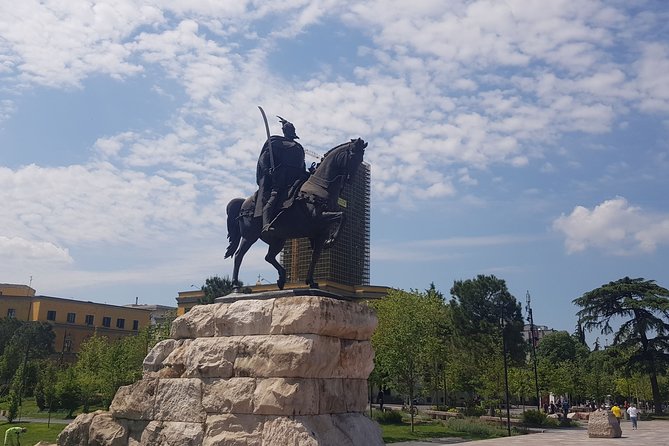
The National Gallery of Art is used to discuss art during the communist era. This adds a welcome cultural angle to the tour. Albania’s past was not only about political leaders and closed borders. Art, public images, and official culture also helped shape how the state presented itself.
The pause lasts around 10 minutes. That is enough for context and perhaps a quick look at the building, but not enough for a full gallery visit. If you enjoy art, plan to return on your own. The walking tour helps you understand what to look for, especially in work connected to the communist period.
This stop also breaks up the political landmarks with something more reflective. I like that balance. Tirana becomes more than a collection of government buildings and monuments.
The Pyramid of Enver Hoxha
The Pyramid is one of Tirana’s main landmarks and one of the route’s most visually striking stops. It is tied to Enver Hoxha, Albania’s long-time communist dictator, and its presence raises useful questions about how a city handles difficult symbols.
You have about 10 minutes here. The guide explains the building’s place in the capital and Albania’s political story, while you get time for photographs. The Pyramid is also a good example of Tirana’s changing identity. Its meaning has shifted as the country has moved away from the system it once represented.
This is another place where a short stop works well for orientation, but not for a full architectural or political study. If you want to understand the Pyramid in detail, return later and spend more time around it.
Blloku, from dictatorship to nightlife district
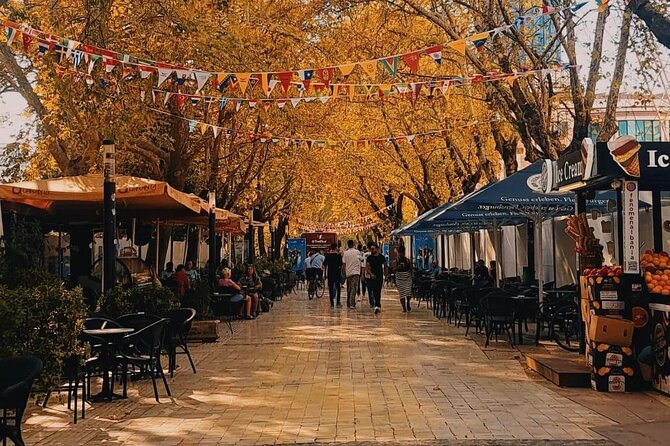
The route then reaches Blloku, one of Tirana’s best-known neighborhoods. The tour points out the villa of the Albanian dictator, giving you a direct link between the city’s former ruling class and the area’s modern identity.
The stop itself is listed at five minutes, so do not expect a long neighborhood walk. Still, the change in mood is useful. You have moved from the formal center and its national monuments into an area associated with cafés, restaurants, and evening activity. The guide helps connect present-day Blloku with its restricted past.
I would pay close attention here and ask for suggestions about where to return. Several people have found the tour valuable because it identifies places worth exploring in greater depth later. Blloku is exactly that sort of area: the walk introduces it, but does not try to cover every street.
Postbllok and the Checkpoint Monument
Near Blloku, Postbllok, also called the Checkpoint Monument, continues the communist-era story. This stop is brief, around five minutes, but it adds a strong visual reminder of political division and control.
Placed beside the more fashionable Blloku area, the monument creates a sharp contrast. The neighborhood’s current social life can make the old political boundaries easier to think about. You are seeing how Tirana’s public spaces have changed, not just hearing a list of dates.
The guide’s storytelling matters most at this point. Several guides are praised for explaining complex history with humor while keeping its serious side intact. That balance is useful in Albania, where the twentieth century brought fascism, communism, invasions, and major social change within a short span.
Ending at the Resurrection of Christ Orthodox Cathedral
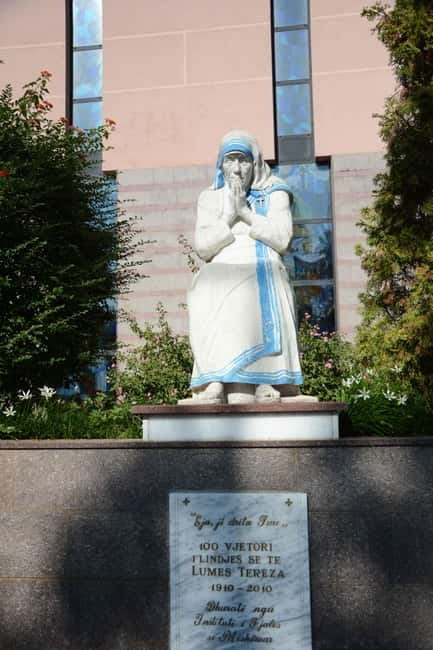
The tour finishes at the Resurrection of Christ Orthodox Cathedral on Rruga Ibrahim Rugova, very near the city center. The five-minute stop gives you a look at one of Tirana’s newer religious landmarks and provides a clear ending point.
This is a practical finish. You are not left in a distant suburb, and you can continue walking through the center afterward. The cathedral also gives the tour a final shift in tone, from the monuments of dictatorship toward the city’s newer public and religious identity.
Because the tour ends here, you can easily continue on foot or return to another stop. I would use the final minutes to ask the guide for suggestions about museums, food, or areas you want to see again. The tour is designed to help you plan the rest of your time.
How the guides shape the experience
The guide is the main reason to choose this walk over simply following a map. The strongest descriptions point to guides who are funny, passionate, articulate, and able to answer questions. Names repeatedly associated with particularly strong visits include Eri, Arber, Clint, Klint, Kedri, Rie, Aurora, Ariola, and Arbri.
Klint and Clint are especially noted for personal stories connected with family life under communism. That kind of first-hand family memory can make a difficult subject easier to understand, though it is still one person’s perspective rather than a full academic account.
Eri is praised for humor and storytelling, while Kedri is described as friendly, thoughtful, and approachable. Ariola is noted for balancing detailed history with humor. Buli is able to lead the tour in Italian, but this particular booking is offered in English, so check the language when reserving.
The guide assignment can change, so book this experience for the route and format rather than for one specific person. Still, the range of guide styles is a strong part of the tour’s appeal.
Heat, pace, group size, and practical comfort
The walk is generally easy, with plenty of stops. You will be standing outdoors much of the time, though guides may seek shade when conditions are difficult. That matters in Tirana, where summer afternoons can become extremely hot. One recent account describes temperatures reaching 42 C, while other outings also mention strong heat.
I would choose an early departure when possible, wear light clothing, and bring water. The tour operates in all weather conditions, so dress for rain or sun. The cancellation terms also say that poor weather may lead to a different date or a full refund.
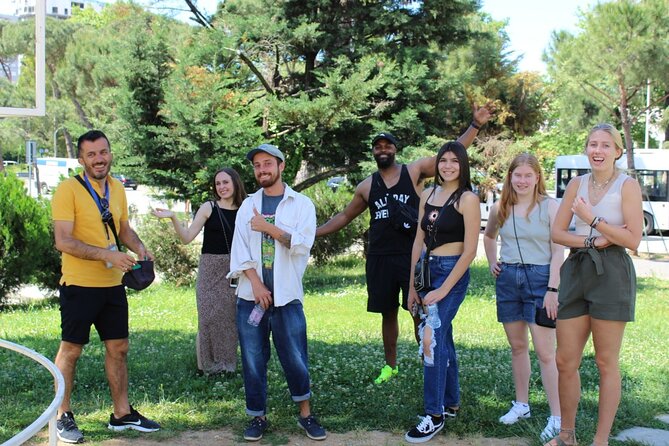
The group maximum is 15 people. That is small enough for questions and easier listening than a large coach group. When attendance is low, the walk can feel almost private. There is no private transportation, and children must be accompanied by an adult. Service animals are allowed, and the meeting point is near public transportation.
Is $18.14 good value?
At $18.14 per person, this is a sensible price for a guided introduction to central Tirana. The payment covers both the reservation fee and the guide’s compensation, so you are not expected to treat it as a standard unpaid free walk with a separate required payment.
The value comes from the context, not admission tickets. The listed stops are free to visit from the outside, and the short pauses do not replace a full museum visit. What you are buying is a clear route, a local English-speaking guide, historical background, and help deciding how to use your own time afterward.
For me, the price makes sense if you are new to Tirana, want a fast orientation, or prefer history explained by a person rather than a guidebook. It is less useful if you want extended time inside Bunk’Art 2, the National Gallery, the mosque, or other attractions.
Who should book this Tirana walk?
I would recommend it to first-time visitors, history-minded visitors, solo visitors who want an easy way to learn the city, and families with older children who can manage two hours of walking and standing. It also suits anyone who wants practical ideas for the rest of a short stay.
You should think twice if heat is a serious problem, if you dislike outdoor walks, or if you want a private tour with a guaranteed guide. The group is capped at 15, but this is still a shared experience.
Reserve at least a little ahead, since it is commonly booked about 10 days in advance. Free cancellation is available up to 24 hours before the start time for a full refund. Changes or cancellations inside that window are not refunded, and a minimum group size may apply.
Should you book the Walking Tour of Tirana?
Yes, if you want a strong first look at the capital for a reasonable price. The route covers the places that help explain Tirana, from Skanderbeg Square and the old mosque to communist bunkers, the Pyramid, Blloku, and the Orthodox Cathedral.
Book it early in your stay, arrive well before the meeting time, and aim for the coolest part of the day. You will still need to revisit the museums and major sights for a fuller look, but you will understand what you are seeing and why it matters.
FAQ
How long is the Walking Tour of Tirana?
The tour lasts approximately 2 hours and 15 minutes.
What language is the tour offered in?
The tour is offered in English and includes an English-speaking licensed guide.
Where does the tour start?
It starts at the National Theatre of Opera, Ballet and Folk Ensemble in the Palace of Culture, at Skanderbeg Square in Tirana.
Where does the tour end?
The tour ends at the Resurrection of Christ Orthodox Cathedral on Rruga Ibrahim Rugova 1, near Tirana’s city center.
What sights are included?
The route includes Skanderbeg Square, the Et’hem Bej Mosque, the Clock Tower, Bunk’Art 2, the National Gallery of Art, the Pyramid of Enver Hoxha, Blloku, Postbllok and the Checkpoint Monument, and the Resurrection of Christ Orthodox Cathedral.
Can I cancel for a full refund?
Yes. You can cancel at least 24 hours before the scheduled start time for a full refund. Cancellations or changes made less than 24 hours before the start are not refunded.
Just added around Tirana
- Zipline Tirana Adventure & Petrela Castle – With Transport★ 4.4 · 10 reviews
- Wine Tasting & Vineyards Escape near Tirana★ 4.9 · 8 reviews
- Wonderful Sunset and Dinner in the Castel Of Petrela★ 4.6 · 4 reviews
- Walking Tour in Tirana, Albania★ 3.7 · 28 reviews
- Vlora, Dhermi & Llogara Day Trip from Durrës or Golem★ 5.0 · 5 reviews
- From Tirana: Mount Dajti Adventure, Local Vibes & Cable Car opt★ 4.5 · 6 reviews
- Winetasting tour in Alpeta winery – Roshnik village by 1001 Albanian Adventures★ 5.0 · 26 reviews
- Day Tour to Petrela Castle and Zip Line Albania Adventure★ 5.0 · 10 reviews
Walking Tours, compared.
Blue Eye Kayak and walking tour & Lekursi Castle
Read our review →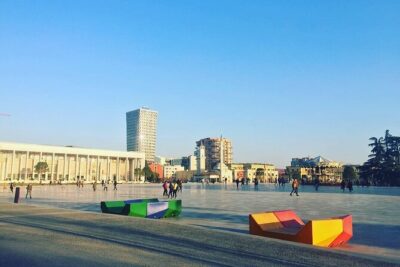

Tirana Stroll Tour, Walk and Taste Qofte & Raki!
Read our review →
Tirana’s Communist Past; Small Group Walking Tour
Read our review →Browse the lists this tour appears in