
Reviewed · WALKING TOURS
Tirana’s Communist Past; Small Group Walking Tour
Tirana’s communist past is not tucked away in one museum. It is spread across boulevards, cafés, memorials, former government neighborhoods, bunkers, and public squares. This two-hour walking tour connects those pieces, showing you how Enver Hoxha’s dictatorship shaped daily life and how quickly Tirana changed after 1991.
I like the small group limit of eight, which gives you room to ask questions. I also like the route’s mix of difficult history and present-day Tirana, from a concrete bunker at Postblloku to the cafés and street art of Blloku. The main drawback is time: two hours moves quickly, and several important sites are viewed from outside or passed by rather than visited inside.
In This Review
- Key points to know before you go
- Why this walk is useful on a first day in Tirana
- Postblloku: a sharp introduction to repression
- Blloku: from forbidden quarter to favorite hangout
- The House of Leaves and the unseen work of the Sigurimi
- Skanderbeg Square and the fall of Enver Hoxha
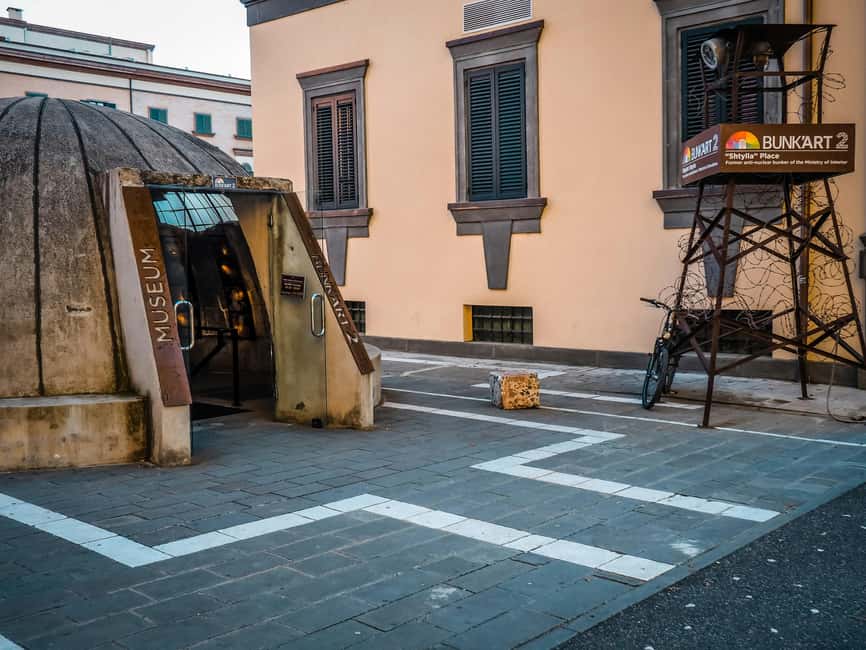
- BUNK’ART 2: seeing the bunker from the outside
- Tirana Castle and a city remaking itself
- Three religious buildings and the atheist-state policy
- What the $13 price really buys you
- Pace, weather, and what to bring
- Who will get the most from this tour?
- Should you book Tirana’s Communist Past?
- FAQ
- Where does the walking tour begin?
- How long does the tour last?
- What language is the tour conducted in?
- How large is the group?
- What communist sites are included?
- Do you enter BUNK’ART 2?
- Does the tour visit Tirana Castle?
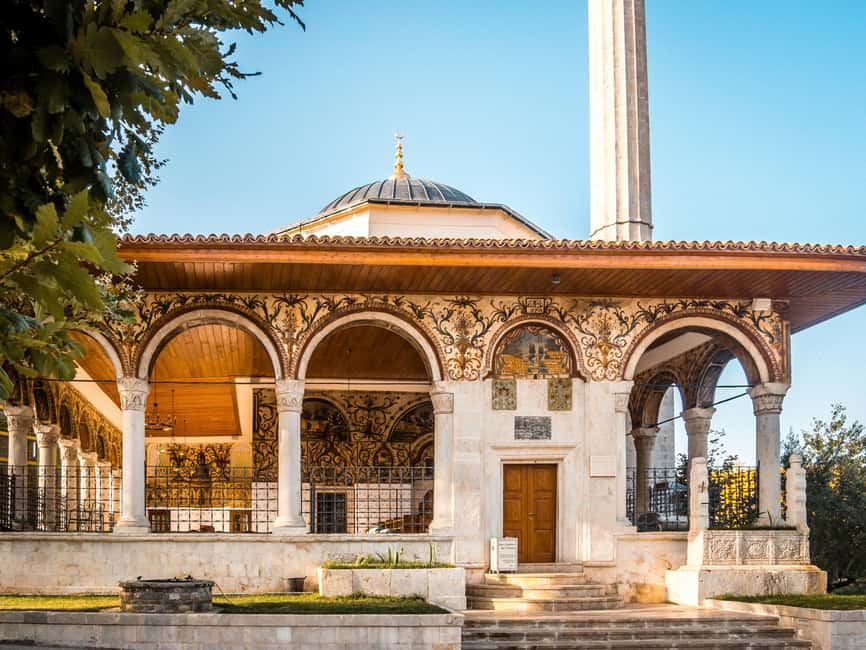
- Which religious sites are part of the route?
- Can I cancel the booking?
Key points to know before you go
- Postblloku uses real Cold War objects: See a concrete bunker, a piece of the Berlin Wall, and steel supports from a forced labor camp.
- Blloku tells two stories at once: Learn about the former secret neighborhood of the communist elite, then see its modern cafés and street art.
- Skanderbeg Square marks a political turning point: The statue of Enver Hoxha once stood here until it was pulled down in 1991.
- Religion is part of the communist story: The walk links three faith traditions with Albania’s period as the world’s first atheist state.
- The group stays small: With no more than eight participants, the guide can respond to personal questions and interests.
- The price is modest: At $13 per person, you are paying mainly for local context, route planning, and a useful introduction to Tirana.
Why this walk is useful on a first day in Tirana
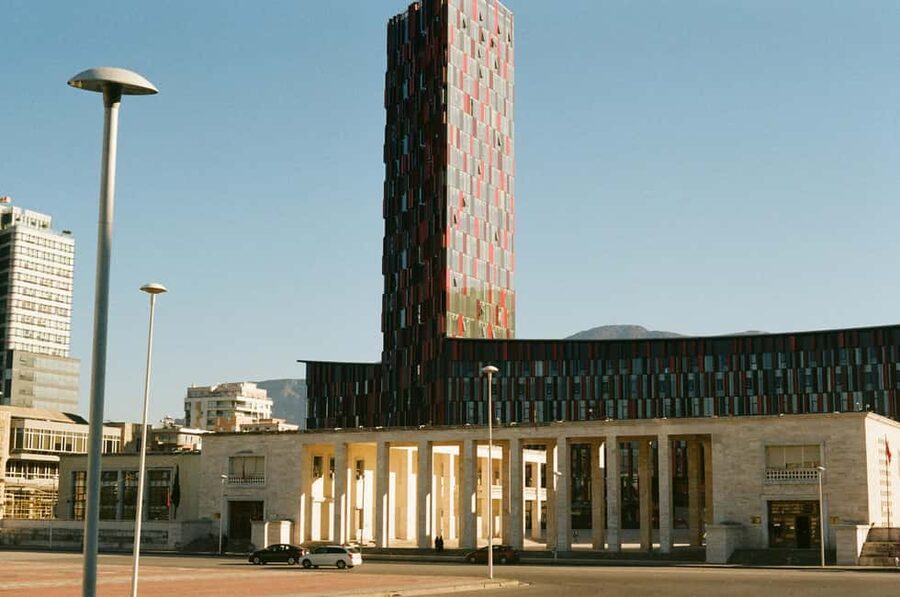
This is a good orientation walk if Tirana is new to you. The route brings together several central sights, but its real purpose is to explain how they fit together. You are not simply ticking off a square, a castle, and a few monuments. You are learning why a city that once enforced strict isolation now fills its former forbidden district with restaurants and bars.
The guide leads in English, and the group is limited to eight people. That size matters here. Albania’s communist period can raise personal and political questions, and a small group makes it easier to pause, ask, and clarify rather than listen to a fixed speech from the back of a crowd.
The guides named in the feedback include Markel, Angjelo, Brikena, and Elrvis. Markel is repeatedly singled out for combining historical detail with an easy, friendly manner. Brikena is noted for adding personal stories, while Angjelo is praised for linking the past with what is happening in Tirana today. Your guide will vary, but the experience is designed around a local companion rather than an audio guide or a large formal group.
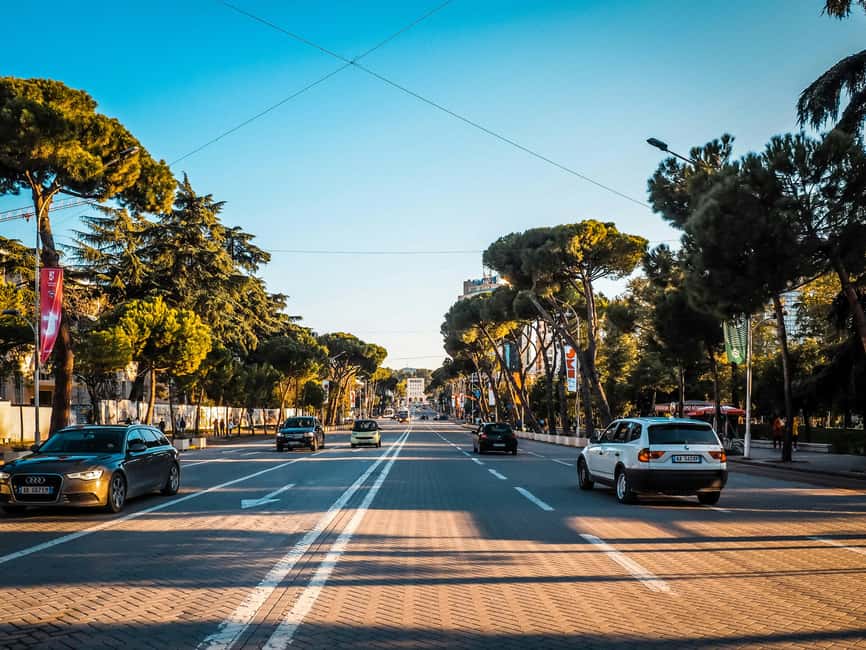
The meeting point is outside the Amo Sushi restaurant on the ground floor of Tower 2 at the Twin Towers, on Bulevardi Dëshmorët e Kombit. The building is directly opposite the Pyramid of Tirana. I would arrive a little early and use the Pyramid as your visual landmark, since the Twin Towers can be easier to recognize from the boulevard than from a side street.
A few more Tirana trips to weigh up
- Walking Tour of Tirana
★ 5.0 · 646 reviews - Tirana: Express Walking Tour with a Guide
★ 4.8 · 503 reviews - Tirana Center: Magic Walking Tour French/Italian/English Etc
★ 4.9 · 402 reviews
Postblloku: a sharp introduction to repression
The first major stop is Postblloku, also called the Checkpoint Memorial. It is an open-air installation on Tirana’s main boulevard, made from objects connected with the communist period.
The concrete bunker is the first thing you notice. Albania built thousands of bunkers during Enver Hoxha’s rule, driven by fear of foreign invasion and internal enemies. Here, the bunker is not presented as a curious military object. It helps you picture the defensive mindset that shaped the country during decades of isolation.
A section of the Berlin Wall adds another layer. It connects Albania’s experience with the wider Cold War, while also reminding you that the country’s isolation was unusually severe. The steel supports from a forced labor camp are harder to process. They point toward imprisonment, state punishment, and the human cost behind the official language of political loyalty.
I appreciate that this stop comes early. It gives the rest of the walk a moral and political frame. Blloku is not just a fashionable district, and Skanderbeg Square is not just a handsome plaza. You begin to see them as places shaped by privilege, control, fear, and public protest.
The scheduled stop is about 10 minutes, so expect a focused explanation rather than a long museum visit. Wear sunglasses and a hat in sunny weather. This is an outdoor walk with little reason to expect shade at every stop.
Blloku: from forbidden quarter to favorite hangout
From Postblloku, the group continues into Blloku. During communism, this was the country’s most restricted neighborhood, reserved for senior party officials and the ruling elite. Ordinary Albanians could not simply stroll through it or choose to live there.
The former residence of Enver Hoxha is one of the key points. You pass by rather than tour the interior, but the location helps explain the gap between the ruling class and the rest of Albanian society. Hoxha’s Albania promoted equality in official language while protecting a tightly controlled leadership circle.
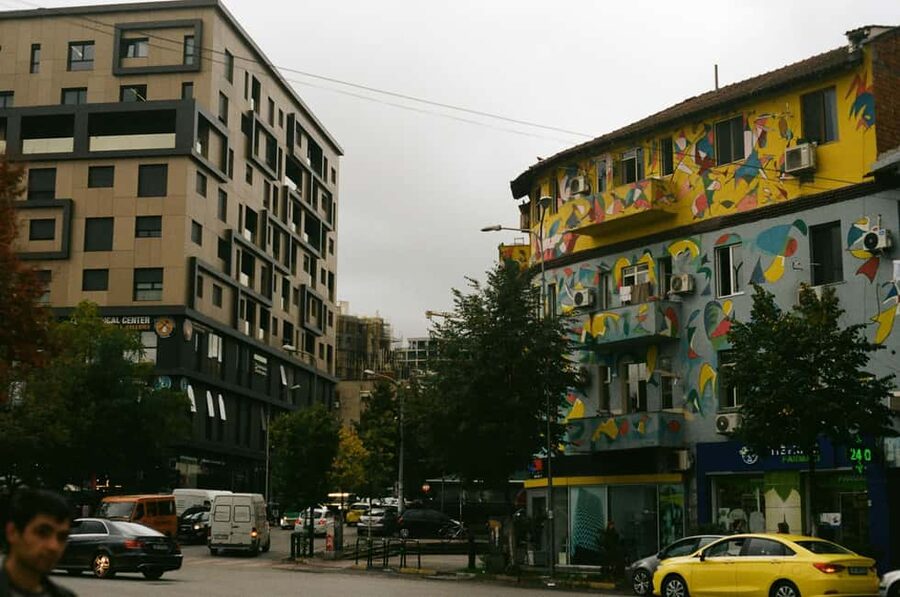
Today, Blloku looks entirely different. Cafés, restaurants, street art, and modern city life fill streets that were once hidden from public view. That contrast is one of the most effective parts of the tour. You can look at a busy café and then hear that the same district once represented exclusion and secrecy.
The walk here lasts roughly 20 minutes, including sightseeing and a photo stop. I would not expect a full neighborhood tour or time to settle in for coffee. Instead, you get a compact explanation of Blloku’s past and a quick look at its current role in Tirana.
This is also where the tour shows its interest in daily life. Albania’s transition is easier to understand when you see how a prohibited residential zone became a social center. The story is not only about the fall of a dictator. It is about how people reclaim spaces and give them new meaning.
The House of Leaves and the unseen work of the Sigurimi
On the way toward the center, you pass the House of Leaves. This building once served as the headquarters of the Sigurimi, Albania’s communist-era secret police.
The stop is a pass-by rather than a scheduled interior visit, so you should not book this walk expecting a museum tour there. Still, its place in the route is useful. Political repression was not limited to dramatic public events. Surveillance, interrogation, informants, and fear affected ordinary people, families, and workplaces.
If you have time after the walking tour, the House of Leaves may be a natural follow-up, but this experience itself keeps moving. That is part of the tradeoff. You receive a broad account of the system without spending the whole afternoon in one institution.
The guide can also help connect the building to the wider theme of everyday control. The tour’s most effective moments are often the links between a site and a question: who was allowed into a neighborhood, who could speak freely, and what happened when the state decided a person was disloyal?
Same coast, a completely different kind of day:
- From Tirana: Bovilla Lake & Gamti Mountain Hiking Day Trip
★ 4.9 · 4,397 reviews - From Tirana: Bovilla Lake & Gamti Mountain Hiking Tour
★ 4.9 · 3,003 reviews - From Tirana: Bovilla Lake & Gamti Mountain Viewpoint Hike
★ 4.8 · 2,053 reviews - Tirana/Durres/Golem: Saranda, Ksamil, Blue Eye Day Trip
★ 4.8 · 1,584 reviews
Skanderbeg Square and the fall of Enver Hoxha
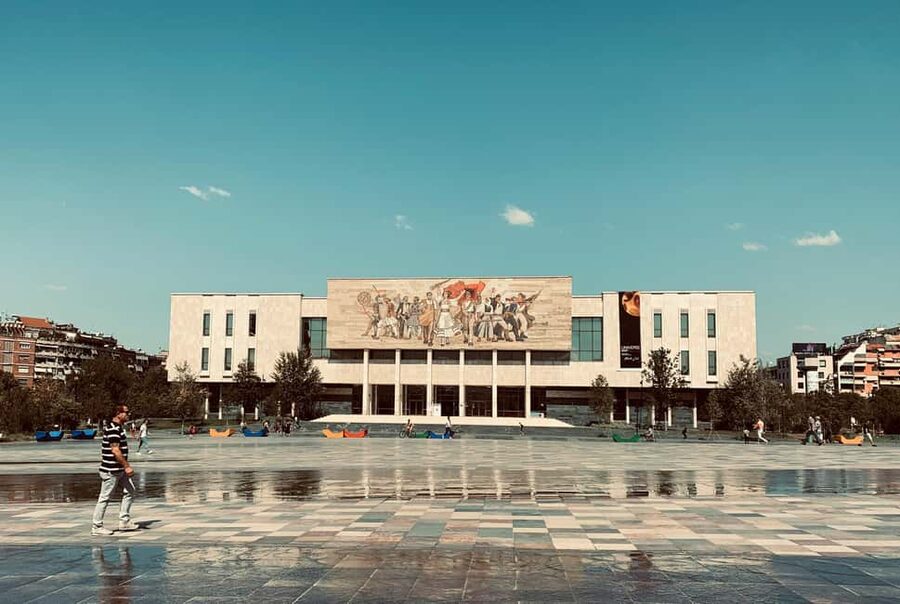
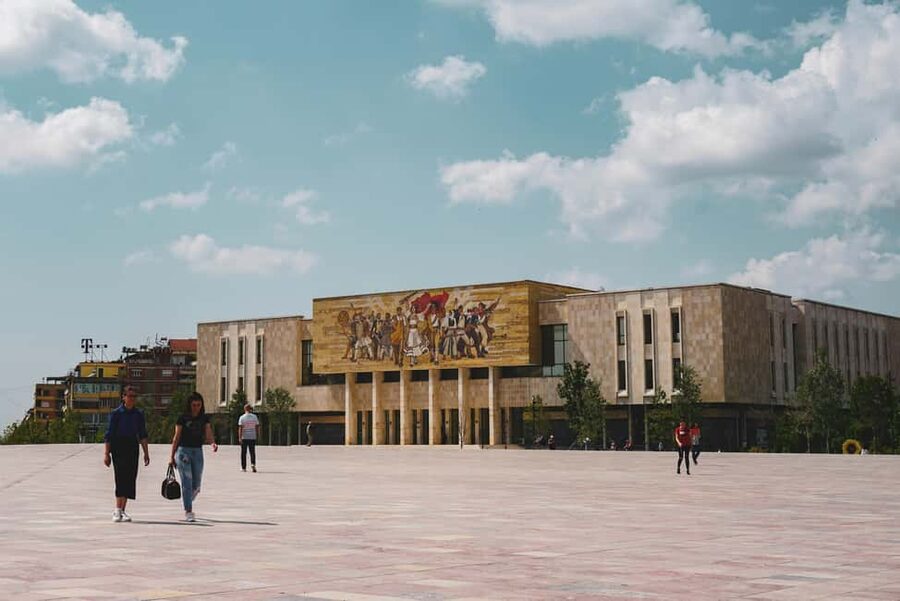
Skanderbeg Square is Tirana’s civic heart and one of the most important stops on the route. Under communism, it hosted military parades and political rallies, giving the square a strong public and ceremonial role.
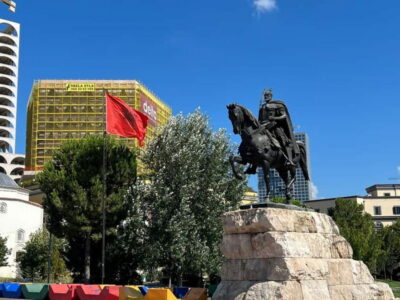
The square also marks the collapse of the old order. The statue of Enver Hoxha once stood here, until people overthrew it in 1991. That detail gives the square a clear human and political charge. It was not merely a place where officials displayed power. It became a place where that power was challenged.
You spend about 20 minutes here, with time for a guided visit and sightseeing. The guide’s explanation is especially useful because the square can otherwise seem like a broad urban space with many unrelated buildings around it. Its meaning comes from the events and rituals that took place there.
This is a good point to ask questions about the transition from communism to the present. Several people who took this tour valued the way guides explained both the older period and modern Albania. Markel, in particular, is praised for making the subject detailed without turning the walk into a lecture.
That balance matters. Albania’s communist past is painful, but the tour keeps the tone approachable. You get serious information, yet the pace remains social and conversational.
BUNK’ART 2: seeing the bunker from the outside
The route passes BUNK’ART 2, a museum created inside a former nuclear bunker. It was originally designed to shelter Albania’s supreme communist leader and close party members during the Cold War.
The tour does not include an interior visit, so keep your expectations clear. You will see the site and hear why it matters, but the admission and museum experience are not part of this two-hour walk.
Even from outside, BUNK’ART 2 helps explain the scale of Hoxha’s fears. The bunker was not only for ordinary citizens. It was built for the leadership itself, showing how deeply the regime anticipated invasion and conflict.
I see this as a useful preview rather than a substitute for the museum. If you are interested in secret police files, bunker architecture, and the machinery of the regime, you may want to return separately. The walking tour gives you a reason to do so and places BUNK’ART 2 within the city’s wider story.
Tirana Castle and a city remaking itself
Tirana Castle adds a different time period to the walk. This centuries-old structure survived the communist years and has recently been revitalized.
The stop lasts about 20 minutes and includes a photo stop, a visit, and a guided explanation. Rather than focusing only on communist buildings, the guide uses the castle to show that Tirana’s story is older and broader than the dictatorship.
Today, the castle area blends older traditions with modern uses. That change fits the larger theme of the tour: Albania is not frozen in its communist past. The city keeps reworking old places, sometimes preserving them, sometimes giving them new commercial or social roles.
The castle also provides a change of mood after the memorials and former security sites. You still learn about the years under Hoxha, but you are no longer looking only at prisons, bunkers, and political power. The route gives you a sense of continuity, too.
Three religious buildings and the atheist-state policy
The final major section addresses one of Albania’s most radical communist policies. In 1967, the country was declared the world’s first atheist state. Religious practice was banned, and religious buildings were closed, repurposed, or shut down.
The walk passes Namazgah Mosque, the Orthodox Resurrection Cathedral, and St. Paul’s Catholic Cathedral. These sites represent different faith communities and make the policy easier to grasp in physical terms. You are not discussing an abstract law. You are looking at religious institutions that were once suppressed and are now part of public life again.
Namazgah Mosque is listed as a break and photo stop, with guided commentary and a pass-by. The route does not promise entry into every religious building, so dress and behave respectfully around active places of worship. The guide’s role here is to explain how religious identity was restricted and how it changed after communism ended.
I find this one of the most valuable parts of the tour because it widens the subject beyond dictatorship and architecture. Communism affected family traditions, worship, names, holidays, and personal identity. The return of religious practice is part of Albania’s modern story, not a side note.
What the $13 price really buys you
At $13 per person, this is inexpensive for a guided city walk. You are not paying for attraction admissions, a vehicle, or a long museum program. You are paying for a local guide, a planned route, English explanations, and the ability to ask questions as Tirana unfolds around you.
That is good value if you are visiting for the first time and want a framework before exploring alone. A guide can point out connections that are easy to miss, especially when a former elite neighborhood now looks like an ordinary entertainment district.
The price is less compelling if you already know Tirana well or plan to visit every museum independently. Since BUNK’ART 2 and the House of Leaves are passed rather than explored inside, you may need separate tickets and extra time for a fuller examination of the communist period.
The pay-later option and free cancellation up to 24 hours before the tour also make it easy to fit into a changing schedule. Starting times vary, so check availability when booking.
Pace, weather, and what to bring
The walk lasts two hours and moves at a leisurely pace, with stops for explanations and photographs. One detailed account describes enough time to enjoy the sights without feeling rushed, but the route still covers a lot of ground for a short experience.
Bring sunglasses, a sun hat, and sunscreen. The information provided does not promise indoor shelter or air-conditioned transport, and the tour is conducted on foot. Comfortable walking shoes are sensible, even though no special equipment is required.
The meeting point is central and easy to pair with nearby sightseeing. The Twin Towers are opposite the Pyramid of Tirana, and the tour returns to the same general meeting point after the final stop.
Who will get the most from this tour?
I would choose this walk for a first visit to Tirana, especially if you want politics, architecture, and present-day city life in one outing. It suits people who prefer explanations and conversation over simply taking photos.
It is also a strong choice if Albania’s communist period is new to you. The route covers the dictatorship, the secret police, the ruling elite, Cold War bunkers, the fall of Hoxha, and the suppression of religion in a compact form.
You may want something else if your main aim is to spend hours inside museums. This tour passes BUNK’ART 2 and the House of Leaves rather than including full museum visits. It is best viewed as a city orientation and historical introduction, not a museum ticket.
Should you book Tirana’s Communist Past?
I would book it if you have two hours, want a local guide, and need a clear introduction to Tirana. The small group, $13 price, central meeting point, and broad route make it an easy first-day choice.
Book with realistic expectations. You will see several key places, but some are outside views and the walk cannot explain every detail of Albania’s twentieth century. If you want a focused, human account of how communism shaped the city and how Tirana changed afterward, this is a practical and worthwhile start.
FAQ
Where does the walking tour begin?
It begins outside the Amo Sushi restaurant on the ground floor of Tower 2 at the Twin Towers, on Bulevardi Dëshmorët e Kombit in Tirana. The Twin Towers are directly opposite the Pyramid of Tirana.
How long does the tour last?
The walking tour lasts two hours.
What language is the tour conducted in?
The live tour guide speaks English.
How large is the group?
The experience is limited to eight participants.
What communist sites are included?
The route includes Postblloku, Blloku, Skanderbeg Square, and a pass-by of BUNK’ART 2. It also passes the House of Leaves, the former headquarters of the communist-era secret police.
Do you enter BUNK’ART 2?
BUNK’ART 2 is passed by during the walk. An interior museum visit is not included in the stated experience.
Does the tour visit Tirana Castle?
Yes. Tirana Castle is included as a guided visit and photo stop.
Which religious sites are part of the route?
The tour passes Namazgah Mosque, the Orthodox Resurrection Cathedral, and St. Paul’s Catholic Cathedral. The guide discusses Albania’s period as the world’s first atheist state.
Can I cancel the booking?
You can cancel up to 24 hours in advance for a full refund. You can also reserve now and pay later, keeping your plans flexible.
Just added around Tirana
- Zipline Tirana Adventure & Petrela Castle – With Transport★ 4.4 · 10 reviews
- Wine Tasting & Vineyards Escape near Tirana★ 4.9 · 8 reviews
- Wonderful Sunset and Dinner in the Castel Of Petrela★ 4.6 · 4 reviews
- Walking Tour in Tirana, Albania★ 3.7 · 28 reviews
- Vlora, Dhermi & Llogara Day Trip from Durrës or Golem★ 5.0 · 5 reviews
- From Tirana: Mount Dajti Adventure, Local Vibes & Cable Car opt★ 4.5 · 6 reviews
- Winetasting tour in Alpeta winery – Roshnik village by 1001 Albanian Adventures★ 5.0 · 26 reviews
- Day Tour to Petrela Castle and Zip Line Albania Adventure★ 5.0 · 10 reviews
Walking Tours, compared.

Blue Eye Kayak and walking tour & Lekursi Castle
Read our review →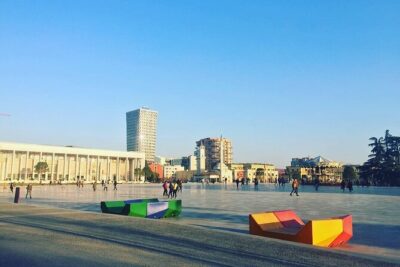

Tirana Stroll Tour, Walk and Taste Qofte & Raki!
Read our review →
Tirana Walking Tour: History, Culture &Gems by a Passionate Guide
Read our review →Browse the lists this tour appears in