
Reviewed · WALKING TOURS
Tirana Stroll Tour, Walk and Taste Qofte & Raki!
Tirana’s best welcome may be a walk that ends not at a grand restaurant, but with a hot qofte sandwich and a strong glass of raki. This two-hour tour links the city’s major sights with stories about communism, religion, modern Albania, and everyday life. Guides such as Çeleste, Anna, Megi, and Antigona have led the walk, and the experience is designed to feel more like an introduction from a local than a formal lecture.
I like the way the route gives you a quick sense of Tirana’s past and present without taking half a day. I also like the practical advice built into the walk, including suggestions for cafés, restaurants, and drinks after the tour. The main drawback is that this is a walking tour for adults who can keep moving through city streets, and the guide may be hard to hear when traffic and street noise rise.
In This Review
- Key points to know before booking
- Why this Tirana walk works as a first-day introduction
- Finding the office on Myslym Shyri
- The Orthodox Cathedral and Tirana’s religious mix
- Skanderbeg Square and the center of Albanian identity
- New Bazaar, where the walk feels more local
- Namazgah Mosque and the city’s changing skyline
- Mother Teresa Square and Tirana’s monumental side
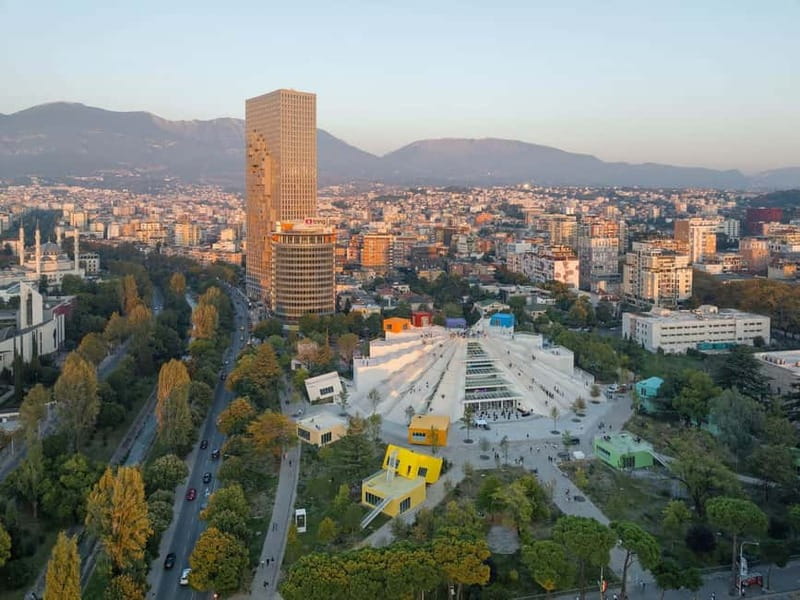
- The Pyramid of Tirana, from communist symbol to modern landmark
- The final walk to qofte and raki
- The guides make the biggest difference
- What the route tells you about Albania
- Who should book this tour?
- Booking details worth knowing
- Should you book the Tirana Stroll Tour?
- FAQ
- How long does the Tirana Stroll Tour last?
- What food and drink are included?
- What language is the live tour guide?
- Which Tirana sights are included?
- Where does the tour meet?
- Who should not book this activity?
Key points to know before booking
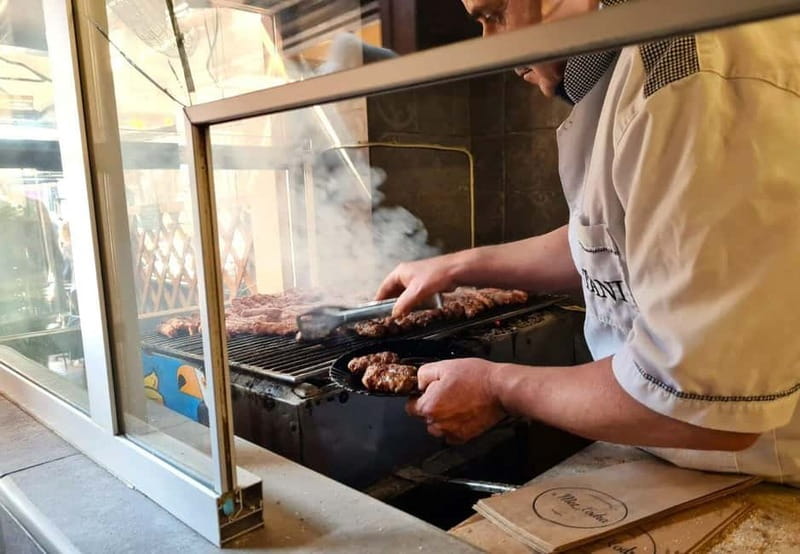
- Qofte and raki finish: End the walk with a grilled minced-meat sandwich and one glass of Albania’s famous spirit.
- Seven central stops: See the Orthodox Cathedral, Skanderbeg Square, New Bazaar, Namazgah Mosque, Mother Teresa Square, the Pyramid, and more.
- Local introductions: Guides explain Albanian culture, religion, politics, and daily life, not just building names.
- Small groups: The group is limited to 10 people, though some departures may feel almost private if numbers are low.
- Useful for first-time visitors: The guide can suggest places to eat, drink coffee, and continue exploring after the tour.
- Adult walking experience: Children under 18, vegetarians, pregnant women, and people with mobility impairments should choose another activity.
Why this Tirana walk works as a first-day introduction
At $23 per person, this tour is priced as a low-cost city orientation with food and drink included. You are not paying for a long museum visit or a full meal, but you are getting a live English-speaking guide, a carefully arranged central route, a bottle of water, one raki, and one qofte sandwich.
I see the value in using this near the start of your stay. Tirana’s center is easy to explore on foot, but a guide gives the streets more meaning. You learn which landmarks connect to Albania’s Ottoman, religious, communist, and modern chapters. You also get a short list of places to try afterward, which can save you from choosing meals at random.
The tour runs for two hours and uses a small group capped at 10 participants. That size matters. You can ask questions without holding up a large crowd, and the guide has a better chance of adjusting the pace or explaining a point clearly. On quieter departures, the experience may feel close to a private walk.
Keep your expectations in check. This is not a full food tour. The tasting is one qofte sandwich and one glass of raki at the end. The main purpose is the city walk and conversation, with the food acting as a friendly Albanian welcome.
A few more Tirana trips to weigh up
- Walking Tour of Tirana
★ 5.0 · 646 reviews - Tirana: Express Walking Tour with a Guide
★ 4.8 · 503 reviews - Tirana Center: Magic Walking Tour French/Italian/English Etc
★ 4.9 · 402 reviews
Finding the office on Myslym Shyri
The meeting point is near Basico Coffee Shop at 65 Rruga Myslym Shyri, on the main street. From there, turn briefly to the left and go to the Discover Albania office. Tell the staff you are there for the Tirana tour.
This is a useful detail because the starting point is an office rather than one of the major squares. Allow a little extra time to find the correct entrance. The supplied map link can help with the final approach.
The tour is led live in English. Audio guides are also included in Italian, Spanish, French, or German. Ask at the start how the audio guide works, especially if you plan to rely on it for details while the guide is speaking to the group.
The Orthodox Cathedral and Tirana’s religious mix
The first scheduled stop is the Resurrection of Christ Orthodox Cathedral, with about 10 minutes for a visit. It gives the tour an early chance to discuss Albania’s religious variety and the place of Orthodox Christianity in the capital.
The cathedral is not treated as an isolated sight. It helps set up a wider theme of the walk: Tirana has Muslim, Orthodox, Catholic, and secular influences close together. Later stops at Saint Paul’s Church and the Namazgah Mosque add to that picture, even though some are brief or passed from outside depending on the route and timing.
You should not expect a long guided church visit. Ten minutes is enough to look around and hear the main points, but not enough for a detailed architectural study. That short format suits anyone trying to see the city’s main themes in one morning or afternoon.
Skanderbeg Square and the center of Albanian identity
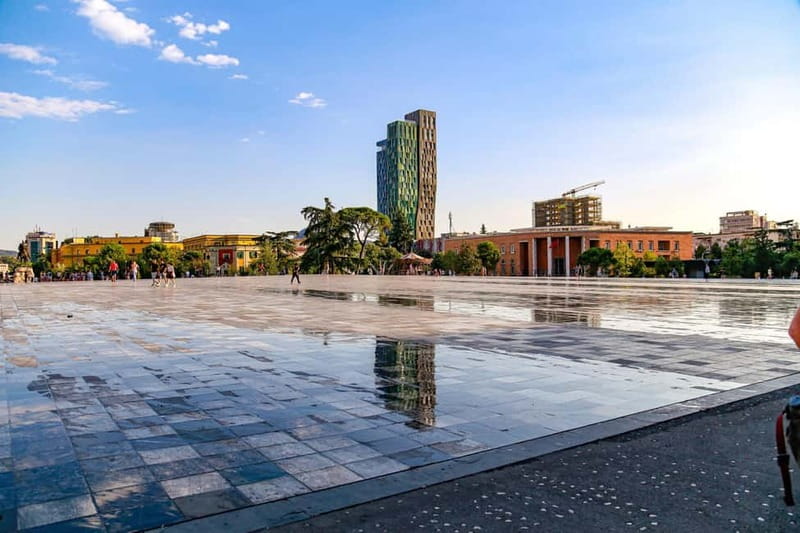
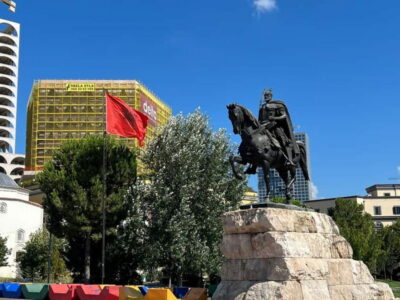
The route then reaches Skanderbeg Square, the city’s main public space. The schedule allows roughly 20 minutes here, including time for photographs and explanation.
This is where Tirana’s major symbols come together. The square gives you a useful anchor for the rest of your visit, since many central sights are within walking distance. The guide explains the significance of Skanderbeg and places the square within Albania’s national story.
The nearby National Historical Museum is one of the important landmarks highlighted during the experience. The tour does not include a museum admission or a dedicated museum visit, so treat it as an exterior sight and a subject for discussion unless your guide says otherwise. If the museum interests you, save it for another time rather than expecting to tour its galleries during this walk.
The square is also a good place to notice Tirana’s mix of monumental planning and everyday city life. Your guide can help you read the space instead of simply taking a photograph and moving on.
Same coast, a completely different kind of day:
- From Tirana: Bovilla Lake & Gamti Mountain Hiking Day Trip
★ 4.9 · 4,397 reviews - From Tirana: Bovilla Lake & Gamti Mountain Hiking Tour
★ 4.9 · 3,003 reviews - From Tirana: Bovilla Lake & Gamti Mountain Viewpoint Hike
★ 4.8 · 2,053 reviews - Tirana/Durres/Golem: Saranda, Ksamil, Blue Eye Day Trip
★ 4.8 · 1,584 reviews
New Bazaar, where the walk feels more local
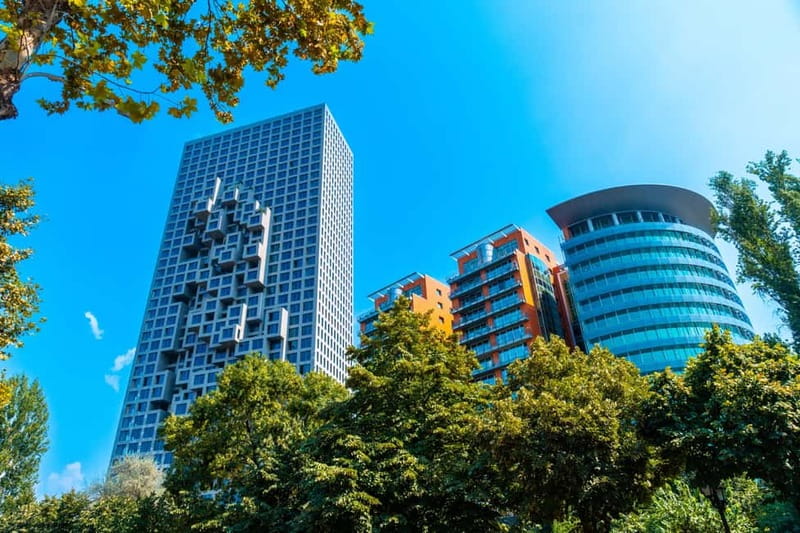
The longest scheduled stop is the New Bazaar, with around 30 minutes. This is one of the strongest parts of the route for visitors who want more than a parade of official monuments.
The bazaar area connects food, shopping, and ordinary city routines. It gives the guide room to talk about Albanian produce, eating habits, and how central Tirana has changed. You may find this stop more relaxed than Skanderbeg Square, with more chances to watch people going about their day.
The 30-minute allocation is helpful because it allows time to look around without reducing the rest of the itinerary to a race. Still, this is a walking tour, not a market tasting session. The included food comes later at a local eatery, and additional purchases are not listed as part of the price.
I would pay close attention here to the guide’s suggestions. Several guides have offered personal lists of places for coffee, meals, and drinks after the tour. That kind of advice can be more useful than a generic list online, particularly when you have only a short stay in Tirana.
Namazgah Mosque and the city’s changing skyline
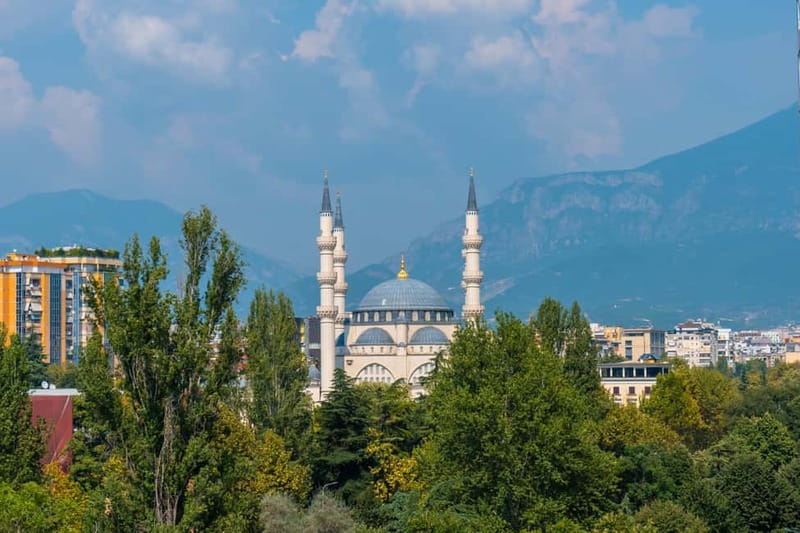
The route passes by Namazgah Mosque for about 10 minutes. The itinerary describes this as a pass-by rather than a full interior visit, so dress and plan accordingly. The stop contributes to the tour’s broader discussion of religious life and the city’s changing appearance.
The mosque also helps show how Tirana continues to develop. Older religious sites, communist-era structures, and new construction exist within the same central area. The guide uses these contrasts to explain how the capital has changed from a controlled communist city into Albania’s main modern hub.
This part is likely to appeal to you if you enjoy urban history. It is less satisfying if you want long visits inside every building. The tour covers many sights in only two hours, so some stops are deliberately brief.
Mother Teresa Square and Tirana’s monumental side
Mother Teresa Square receives about 10 minutes. The space offers another view of Tirana’s formal architecture and links the city to one of Albania’s best-known international figures.
The guide can place the square within the route’s discussion of national identity, public spaces, and the city’s modern civic center. It is a compact stop, but it helps break up the walk between the historic core and the Pyramid.
As with Skanderbeg Square, the value is in the explanation. On your own, you may simply see a large open area and surrounding buildings. With a guide, you can connect the square to Albania’s recent political and cultural story.
The Pyramid of Tirana, from communist symbol to modern landmark
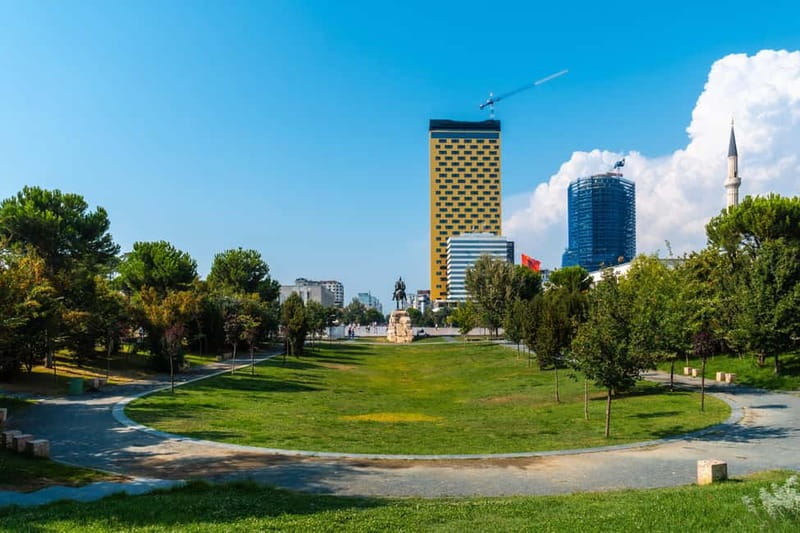
The Pyramid is scheduled for about 15 minutes and is one of the most unusual sights on the walk. Its shape is unlike the city’s mosques, churches, and traditional streets, and its meaning has shifted over time.
The guide explains how Tirana’s urban identity has changed, using the Pyramid as a clear example. It represents one chapter of the country’s communist past, while its present-day role reflects a capital trying to modernize and attract new activity.
You get time to see the structure and discuss its place in the city, but not to spend hours exploring every detail. If you are interested in architecture or Albania’s transition after communism, this stop will likely stay with you longer than its 15-minute schedule suggests.
It is also a good photo stop. The unusual form gives the tour visual variety after the squares and religious buildings.
The final walk to qofte and raki
After the Pyramid, the group walks for about 10 minutes to a local restaurant. This is where the tour shifts from city orientation to Albanian hospitality.
Qofte is made from seasoned minced meat and grilled, then served in a sandwich. It is simple, filling street-style food, and a useful introduction to a dish you may see elsewhere in Albania. The included portion is one qofte sandwich, not a full spread of regional dishes.
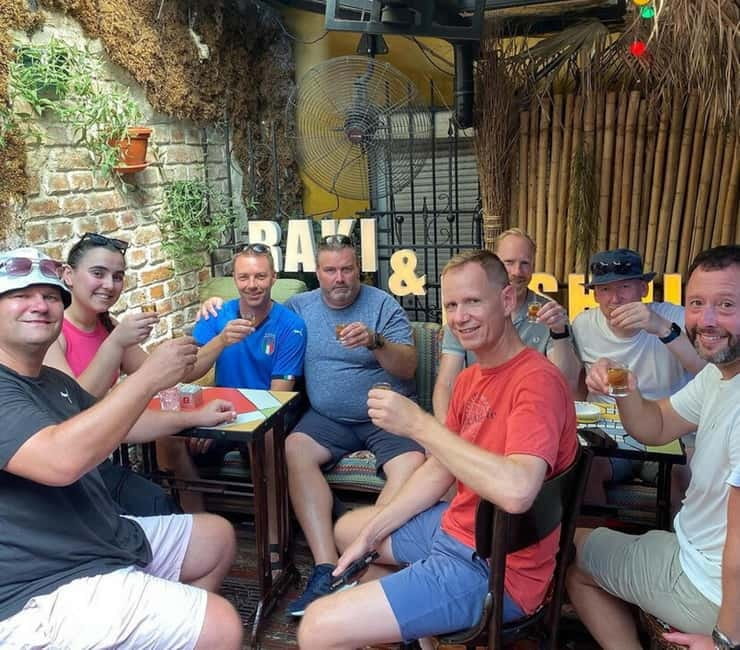
The raki is served as one glass. Expect it to be strong. One person found the qofte delicious but preferred beer to the raki, which is a fair warning if you are not used to high-proof spirits. You can enjoy the food without treating the drink as a test of courage.
I like this ending because it gives the group time to sit down and talk. After a walk through churches, squares, markets, mosques, and modern buildings, the meal creates a natural pause. It also makes the tour feel less like a checklist of monuments.
Vegetarians should note that the activity is specifically marked as unsuitable for them. The food inclusion is meat-based, and no vegetarian substitute is stated. The tour is also not suitable for children under 18.
The guides make the biggest difference
The strongest part of this experience is the guide. Çeleste, also written as Celeste or Çelest in the supplied comments, is repeatedly praised for her humor, warmth, and local perspective. Megi is described as friendly and well informed, while Anna, Antigona, and Grisela are also named as guides who made the walk enjoyable.
You should not assume a specific guide will lead your departure unless you can request one directly. The important point is the style of guiding: the best version of this tour goes beyond dates and names. It connects Tirana’s buildings with Albanian people, recent political change, religious tolerance, tourism, and daily life.
The guides have also been praised for answering questions and sharing recommendations for later. Çeleste in particular has offered lists of places to eat, drink, and get coffee after the walk. That is a practical bonus, especially if you have just arrived and want help choosing your next stop.
The walking pace is another plus. It is described as relaxed rather than rushed, and one departure continued even in rain. Still, the city can be noisy. One person found it difficult to hear the guide over street noise and wished for a microphone. Stay close, pay attention when crossing streets, and ask the guide to repeat anything you miss.
What the route tells you about Albania
The tour’s real subject is not just Tirana. It is Albania’s rapid change.
In a short distance, you move between Orthodox Christianity, Islamic architecture, national heroes, communist memory, modern construction, and everyday food. The guide explains how these parts fit together and how Tirana has become the country’s main center for work, culture, and tourism.
That broad sweep is valuable because Albania’s past can be unfamiliar to first-time visitors. A local guide can explain the difference between seeing a building and understanding why it matters. You also have a chance to ask about present-day life, not just the country’s past.
The tour avoids making the city feel frozen in history. The Pyramid and New Bazaar show a capital still changing, while the squares and religious sites provide older reference points. You come away with a basic map of both the city and its story.
Who should book this tour?
I would choose this walk if you are visiting Tirana for the first time, have only a day or two in the capital, or want a friendly orientation before exploring alone. It suits solo visitors particularly well because the small group and shared meal make it easy to ask questions and meet people.
It is also a good fit if you enjoy history explained in plain language rather than a formal museum lecture. The tour covers religion, communism, democracy, architecture, food, and local customs, but it does so while moving through the city.
You should choose something else if you want a serious food tour, a long museum visit, or a fully accessible route. The activity is not suitable for pregnant women or people with mobility impairments, and it is limited to participants aged 18 and over.
At $23, the combination of guiding, water, raki, and qofte makes good sense. The price is especially fair if you use the guide’s local suggestions for the rest of your stay. The tour does not replace an in-depth history tour, but it gives you a useful and tasty start.
Booking details worth knowing
You can cancel up to 24 hours before the activity for a full refund. You can also reserve now and pay later, which helps if your Tirana plans are still shifting.
Check the available starting times before booking, since the exact departure schedule is not fixed here. Wear comfortable shoes, stay near the guide in noisy streets, and consider bringing a rain layer because the walk operates outdoors.
Should you book the Tirana Stroll Tour?
Book it if you want a short, social introduction to Tirana with real local conversation and a modest food stop at the end. The combination of Skanderbeg Square, New Bazaar, the Pyramid, religious sites, and practical restaurant tips gives you more than a basic photo walk.
I would be especially happy to recommend it for a first afternoon in the city. Just remember that the qofte and raki are a final taste, not the main event, and that the route is best for adults comfortable walking through a sometimes noisy city center.
FAQ
How long does the Tirana Stroll Tour last?
The tour lasts two hours.
What food and drink are included?
You receive one qofte sandwich and one glass of raki. A 0.5 bottle of water is also included.
What language is the live tour guide?
The live guide leads the tour in English. Audio guides are available in Italian, French, Spanish, and German.
Which Tirana sights are included?
The route includes the Resurrection of Christ Orthodox Cathedral, Skanderbeg Square, New Bazaar, Namazgah Mosque, Mother Teresa Square, and the Pyramid of Tirana. The route also highlights the National Historical Museum, Et’hem Bey Mosque, the Pedestrian Road, the Castle of Tirana, and Saint Paul’s Church.
Where does the tour meet?
Meet near Basico Coffee Shop at 65 Rruga Myslym Shyri. Turn briefly left and go to the Discover Albania office, where you should say you are there for the Tirana tour.
Who should not book this activity?
The tour is not suitable for pregnant women, people with mobility impairments, children under 18, or vegetarians.
Just added around Tirana
- Zipline Tirana Adventure & Petrela Castle – With Transport★ 4.4 · 10 reviews
- Wine Tasting & Vineyards Escape near Tirana★ 4.9 · 8 reviews
- Wonderful Sunset and Dinner in the Castel Of Petrela★ 4.6 · 4 reviews
- Walking Tour in Tirana, Albania★ 3.7 · 28 reviews
- Vlora, Dhermi & Llogara Day Trip from Durrës or Golem★ 5.0 · 5 reviews
- From Tirana: Mount Dajti Adventure, Local Vibes & Cable Car opt★ 4.5 · 6 reviews
- Winetasting tour in Alpeta winery – Roshnik village by 1001 Albanian Adventures★ 5.0 · 26 reviews
- Day Tour to Petrela Castle and Zip Line Albania Adventure★ 5.0 · 10 reviews
Walking Tours, compared.

Blue Eye Kayak and walking tour & Lekursi Castle
Read our review →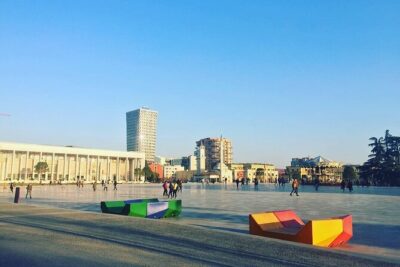

Tirana’s Communist Past; Small Group Walking Tour
Read our review →
Tirana Walking Tour: History, Culture &Gems by a Passionate Guide
Read our review →Browse the lists this tour appears in