
Reviewed · GJIROKASTER TOURS
Prepare Osa with Teta Marjeta
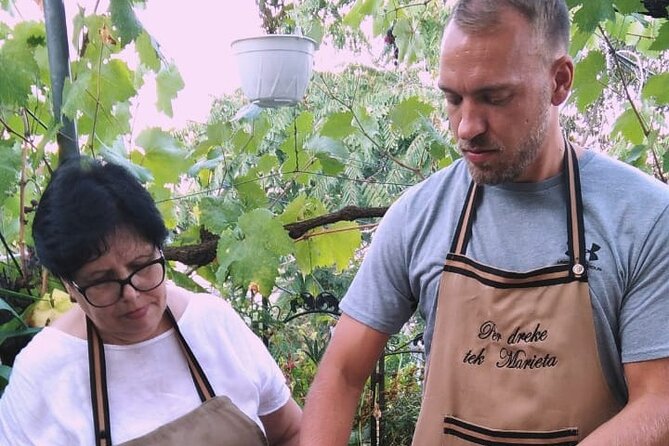
Gjirokaster’s best cooking lesson may be the one that takes you out of a restaurant and into Teta Marjeta’s home. With a local guide, you prepare Osa, qifqi, and hasude from scratch, then eat the results on her veranda with drinks and conversation.
I like the small group limit of 10 people, which keeps the lesson personal. I also like that the recipes come with you afterward, so the class can continue in your own kitchen. The warm welcome, fresh ingredients, and helpful translator-guide Besi add real character.
The main consideration is timing. At roughly two and a half hours, this is not a quick cooking demonstration. You need to be comfortable with a social meal and hands-on preparation, and the class is offered in English rather than Albanian.
In This Review
- Key details of the Gjirokaster cooking class
- Why cooking at Marjeta’s home matters
- Osa, qifqi, and hasude on one menu
- Qifqi, Gjirokaster’s distinctive starter
- Osa, the main dish
- Hasude, a sweet finish
- A relaxed class, not a rushed demonstration
- The veranda, the welcome, and the meal
- What makes the food worth learning
- Is $66.09 a fair price?
- Who should book this activity?
- Timing, meeting point, and practical planning
- How this compares with a restaurant meal
- A clear choice for food-focused days in Gjirokaster
- FAQ
- Where does the cooking class begin?
- Where does the activity end?
- How long does Prepare Osa with Teta Marjeta last?
- What dishes will I prepare?
- What is Osa?
- What is qifqi?
- Are food and drinks included?
- Is the class offered in English?
- What is the cancellation policy?
Key details of the Gjirokaster cooking class
- Three regional dishes: Prepare Osa, qifqi, and hasude, a meal strongly tied to Gjirokaster.
- A real home setting: Marjeta welcomes you into her house rather than a formal cooking school.
- Small group size: The class accepts no more than 10 people, helping the lesson stay friendly and manageable.
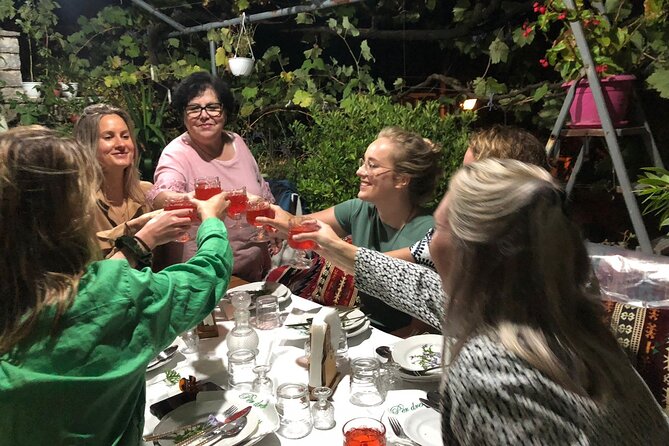
- Drinks included: Start with raki or a soft drink, then enjoy wine, raki, or a soft drink with the meal.
- Recipes to take home: Recipe cards let you try the dishes again after your time in Albania.
- Easy meeting point: Meet at Sheshi Çerçiz Topulli 5 in central Gjirokaster, then walk with the host to Marjeta’s home.
Why cooking at Marjeta’s home matters
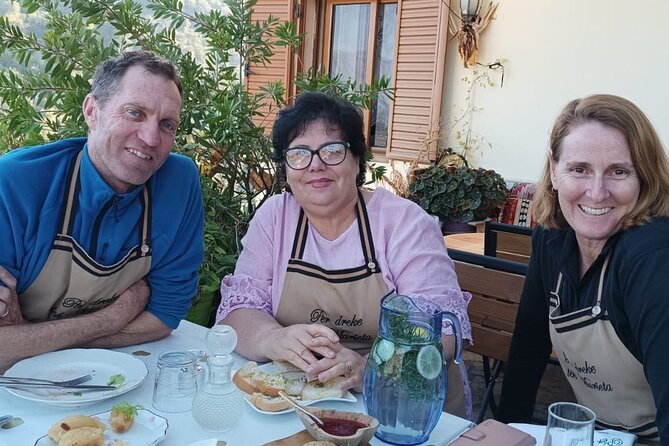
Gjirokaster is a place where food is closely tied to home life. A class in a private house gives you something a standard restaurant meal cannot: a look at how regional dishes are prepared, explained, and shared in an everyday setting.
The class begins at Cerciz Topulli Square, written in the booking details as Sheshi Çerçiz Topulli 5. You meet the host there and walk over to Marjeta’s home. That short walk is useful because you do not need to find an unfamiliar address on your own.
Once inside, the mood starts with a drink. You may have raki made by Marjeta’s husband, a soft drink, or one of the drinks she prepares. This is a simple start, but it gives everyone time to settle in, meet the group, and begin talking before the cooking starts.
I like this opening because it treats food as a social event rather than a task list. You are not simply shown three recipes and sent away. You sit with the host, work alongside the group, and later share the meal you helped make.
Other Gjirokaster days people book alongside this one:
- Sarandë: Tour Gjirokaster,Blue Eye & Lekursi Castle
★ 4.7 · 220 reviews - Gjirokaster walking Tour Baazar – The Castle – Zekate house
★ 4.6 · 21 reviews - Saranda Hidden Gems: Sunset at Lekursi,Blue Eye&Wine Tasting
★ 4.9 · 20 reviews
Osa, qifqi, and hasude on one menu
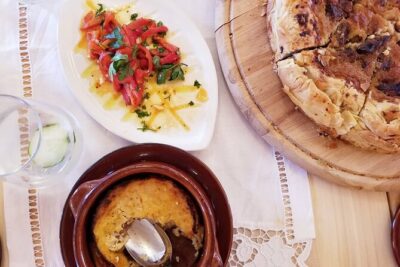
The menu gives you a useful sample of Gjirokaster cooking. It includes a starter, a main dish, and dessert, with a seasonal salad already prepared by Marjeta.
Qifqi, Gjirokaster’s distinctive starter
Qifqi is made mainly with rice and is associated especially with Gjirokaster. The dish is not presented as a generic Albanian appetizer. It is one of the class’s most place-specific recipes, which makes it a good reason to choose this activity over a broader national cooking lesson.
You prepare qifqi as part of the class, then eat it as the starter. Because you work through the process yourself, the recipe card matters here. Qifqi is the sort of dish you may not encounter in the same form once you leave Gjirokaster, so having written instructions gives you a better chance of making it again.
Osa, the main dish
Osa is described as a kind of pasta combined with chicken. It forms the main part of the meal and gives you a chance to work with a more substantial regional recipe.
The appeal is not just the final plate. You get to see how the ingredients come together and how a home cook handles the recipe. The supplied information does not give a detailed step by step breakdown of every cooking task, so you should expect a practical class without assuming a formal chef-school format.
Same coast, a completely different kind of day:
- Day Tour to Permet Thermal Baths and Langarica Canyon
★ 5.0 · 18 reviews - Walking Tour Baazar – The Argjiro Castle – Zekate house
★ 4.5 · 18 reviews - Gjirokastër: Traditional Albanian Vegetarian Cooking Class
★ 4.4 · 17 reviews - Gjirokaster: Wood Crafting Class
★ 5.0 · 16 reviews
Hasude, a sweet finish
Hasude is the dessert. It rounds out the meal and makes the class feel like a complete home lunch or dinner rather than a single dish workshop.
Preparing dessert during the same session also gives the class a good rhythm. You move from starter to main course to something sweet, then sit down together and taste the full menu. A seasonal salad prepared by Marjeta accompanies the dishes, adding a fresh side without asking you to cook every part of the meal yourself.
A relaxed class, not a rushed demonstration
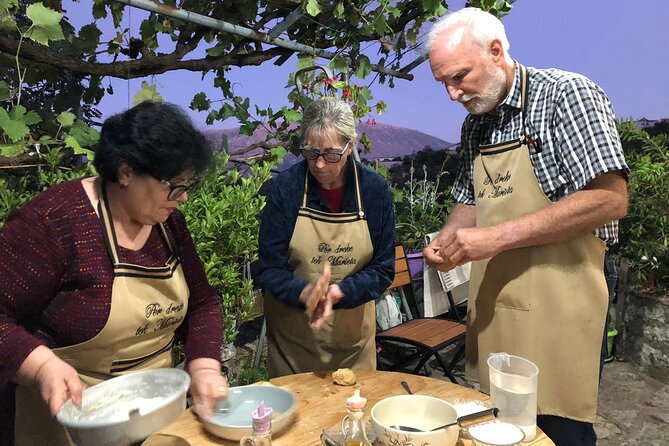
The total duration is about two hours and 30 minutes. That is long enough for cooking, conversation, and a proper meal, but short enough to fit into a day of sightseeing in Gjirokaster.
I would allow extra time around the official schedule, especially if you are planning another fixed activity afterward. The class begins with drinks and conversation, includes several recipes, and ends back at the meeting point. It is built around a shared pace, not a quick presentation followed by an immediate departure.
The group maximum is 10 people. That number is worth noting. A cooking class can become awkward when too many people crowd around one work area, while a very small class can feel overly formal. Ten is still intimate enough for a host and guide to give attention, though the exact amount of hands-on time for each person can depend on the group.
The class is offered in English. Besi is named as a translator-guide, and that is useful context if you want to understand the instructions, ingredients, and stories around the food. You are not relying only on watching someone cook. Clear communication is part of what makes a cooking lesson worthwhile.
The veranda, the welcome, and the meal
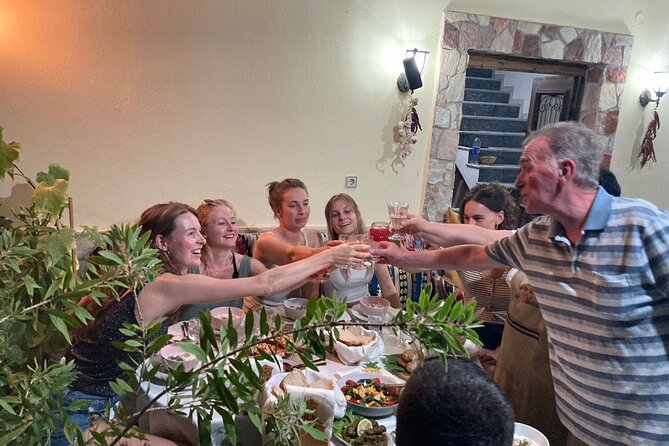
One of the most appealing details is the setting on a cute veranda, where the dishes are prepared and shared. A veranda gives the class a more open, home-based feel than a commercial kitchen. It also supports the social side of the event, since you can chat while preparing food and then remain in the same setting for the meal.
Marjeta’s role is central. She is described as someone who loves cooking and opens her home to the group. That personal touch changes the tone. You are learning special recipes associated with her rather than following a generic menu designed for a large cooking school.
The available comments place strong emphasis on the friendliness of Marjeta, Besi, and the wider team. I would take that as a sign that the welcome is one of the main strengths of the class. Still, it is wise to book this for the human contact as much as for the food. If you want a silent, highly technical lesson with exact culinary instruction at every stage, this may feel too casual.
After the work is done, you sit with the group, Marjeta, and your guide to eat. Drinks are included, with a choice of wine, raki, or a soft drink. The opening drink may be raki or a soft drink, and the meal includes a complimentary beverage as well.
The minimum drinking age is 18. You do not need to drink alcohol, since soft drinks are available. That makes the activity practical for mixed groups and for anyone who wants the food and conversation without raki or wine.
What makes the food worth learning
A restaurant meal lets you taste local food. A cooking class lets you understand it well enough to recognize the work behind the plate and attempt it later.
That difference matters with regional dishes. Qifqi is closely linked to Gjirokaster, while Osa and hasude complete a local menu that may be difficult to reproduce from memory. The recipe cards give you a useful record of what you prepared. You can take them home and cook the dishes again rather than leaving with only a photograph.
The lesson also gives you a better sense of Albanian hospitality. Drinks, conversation, preparation, and eating all belong to the same event. The food is important, but the point is not only technical skill. You are being welcomed into a household and sharing a meal made with local ingredients.
I especially like that the ingredients are described as fresh and local. That does not mean every product is explained in detail, and no market visit is included. It does mean the class is connected to the food available in the area instead of presenting an abstract international menu.
Is $66.09 a fair price?
The listed price is $66.09 per person. For about two and a half hours, that includes instruction, three prepared dishes, a seasonal salad, food, drinks, and recipe cards.
I consider that a reasonable price if you value the full package rather than comparing it with the cost of a restaurant plate. You are paying for a hosted activity, a guide, ingredients, preparation, and a shared meal. The recipe cards add value because they let you bring the experience home in a practical form.
The price is less compelling if you mainly want to eat cheaply or if you already plan to take several food-focused activities in Albania. In that case, you may prefer to spend the money on a good meal and use your limited time for another part of Gjirokaster.
The strongest value comes from the combination of food and access to a local home. This is not simply a tasting session. It gives you time with Marjeta, help from Besi, and the chance to take part in the cooking.
Who should book this activity?
I would recommend it to anyone who enjoys food, small groups, and direct contact with local hosts. It is especially suitable if you like returning home with recipes and stories rather than only souvenirs.
It also works well for couples, friends, and families with older children who can take part in a cooking session. The group limit keeps the event from feeling like a large bus tour, though the provided details do not specify a minimum age for children. Only the alcohol rule is clear: the minimum drinking age is 18, with nonalcoholic drinks available.
This is a good choice for a first visit to Gjirokaster because the menu focuses on dishes unique to the city. You get a food lesson and a cultural introduction in one appointment.
You may want to skip it if you dislike group activities, do not want to cook, or prefer a polished restaurant setting. The home setting is the point, and a home setting naturally comes with a more informal rhythm.
Timing, meeting point, and practical planning
The activity starts at Sheshi Çerçiz Topulli 5, Gjirokastër 6001. Meet there first, then walk to Marjeta’s house with the host. The activity ends back at the meeting point, so you do not need to arrange separate transport home.
A mobile ticket is accepted, and confirmation is received when you book. The class is commonly reserved well ahead of time, with an average booking lead of 37 days. That does not guarantee that every date sells out, but it does suggest you should not leave this until the last day of your Gjirokaster stay.
The free cancellation rule is straightforward. You can cancel up to 24 hours before the start time for a full refund. Changes or cancellations made less than 24 hours before the activity are not accepted for a refund, and the cut-off follows local time.
Because the class includes a walk from the square to the home, arrive at the meeting point on time. The provided details do not state the walking distance or accessibility conditions, so you should ask the provider if you have mobility concerns.
How this compares with a restaurant meal
A restaurant lets you control your own schedule. You can arrive late, order what you want, and leave when you are finished. This class asks you to follow a set time and menu.
In return, you get access to dishes that are less familiar outside Gjirokaster and the chance to learn how they are made. Qifqi, in particular, gives the meal a strong local identity. Osa and hasude make the menu feel complete rather than leaving you with one recipe and a short demonstration.
The class is also more social. You begin with a drink, cook with the group, and eat beside your guide and host. The friendly atmosphere is one of its most praised features, with Besi singled out as an especially helpful part of the experience.
If you are choosing between this and a food tour, think about what you want to remember. A food tour gives you more stops and perhaps more tastes. This class gives you fewer dishes, but more involvement and a recipe to use later.
A clear choice for food-focused days in Gjirokaster
I would book Prepare Osa with Teta Marjeta if you want a personal, home-based activity built around food and conversation. The strongest reasons are the three Gjirokaster recipes, the small group, the included drinks, and the recipe cards.
The main limitation is that the class depends on a shared pace. It is not designed for people who want to rush through a demonstration or simply sit down to eat. Book it when you have a relaxed two and a half hours and want to meet a local host.
At $66.09, the value is solid for a cooking lesson that includes the meal, beverages, guidance, and take-home recipes. If qifqi, Osa, and hasude sound more interesting to you than another standard restaurant dinner, this is a worthwhile addition to your Gjirokaster plans.
FAQ
Where does the cooking class begin?
It begins at Sheshi Çerçiz Topulli 5, Gjirokastër 6001, Albania.
Where does the activity end?
The activity ends back at the meeting point.
How long does Prepare Osa with Teta Marjeta last?
The class lasts approximately two hours and 30 minutes.
What dishes will I prepare?
You will prepare Osa, qifqi, and hasude. A seasonal salad prepared by Marjeta accompanies the meal.
What is Osa?
Osa is a local dish described as a kind of pasta combined with chicken.
What is qifqi?
Qifqi is a traditional Gjirokaster dish made mainly with rice. It is served as the starter.
Are food and drinks included?
Yes. All food is included, along with beverages. You may have wine, raki, or a soft drink with the meal, and an afternoon tea option is also included.
Is the class offered in English?
Yes. The activity is offered in English, and Besi is identified as a translator-guide.
What is the cancellation policy?
You can cancel up to 24 hours before the start time for a full refund. Cancellations or changes made less than 24 hours before the start time are not accepted for a refund.
Just added around Gjirokaster
- Vlora, Llogara & Dhërmi: Albanian Riviera from Durres/Golem★ 4.9 · 7 reviews
- Walking Tour “The Old Bazaar, Cfake, Dunavat, Ali Pasha Bridge”★ 5.0 · 10 reviews
- Wood Crafting Experience in Gjirokastra★ 4.5 · 10 reviews
- Vegetarian Cooking Class @Teta Marjeta★ 5.0 · 11 reviews
- Cooking Class★ 4.5 · 12 reviews
- Gjirokastra Private Half-Day Walking Tour★ 5.0 · 3 reviews
- Gjirokaster – The Stone City of UNESCO, Private Tour from Tirana★ 4.5 · 4 reviews
- Gjirokaster Walking Tour★ 5.0 · 4 reviews
Gjirokaster Tours, compared.

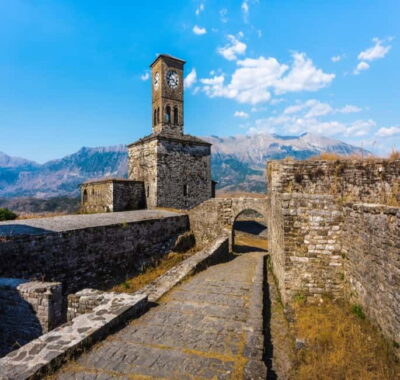
Gjirokaster walking Tour Baazar – The Castle – Zekate house
Read our review →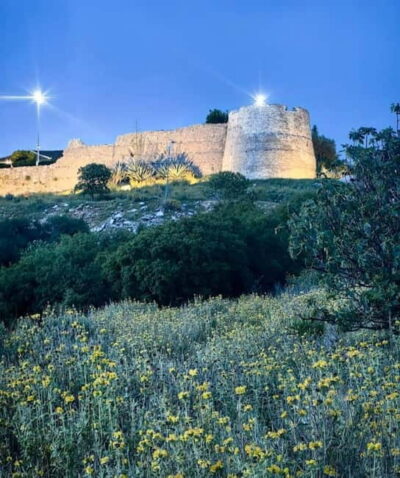
Saranda Hidden Gems: Sunset at Lekursi,Blue Eye&Wine Tasting
Read our review →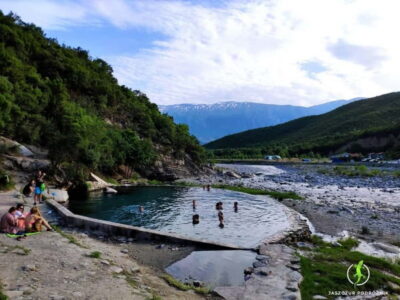
Day Tour to Permet Thermal Baths and Langarica Canyon
Read our review →
Walking Tour Baazar – The Argjiro Castle – Zekate house
Read our review →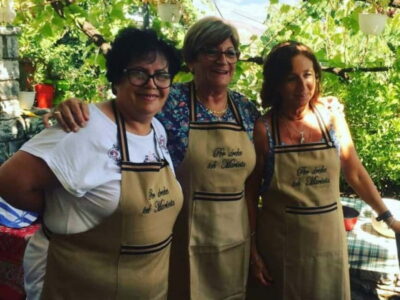
Browse the lists this tour appears in