
Reviewed · KRUJA OLD BAZAAR TOURS
Walking Tour “The Old Bazaar, Cfake, Dunavat, Ali Pasha Bridge”
Gjirokaster’s most rewarding sights may be the ones beyond its famous castle. This three-hour walk takes you through the old Bazaar area, the Cfaka neighborhood, and countryside above town before reaching views of the Ali Pasha Bridge, an aqueduct remnant built more than 200 years ago.
I like the route for two clear reasons: it shows you parts of town many people skip, and it connects architecture with daily life. Guides such as Arli and Viki bring local knowledge and personal stories, while Marco and Mario have been praised for making the walk feel like time with well-informed friends rather than a formal lecture.
The main drawback is the ground under your feet. Expect cobblestones, slopes, and an uncomfortable path toward the bridge area. You will want sturdy sneakers, and you should understand that the route may lead to a fine viewpoint of the bridge rather than an easy walk directly onto it.
In This Review
- Key points to know before you book
- Why this walk gets beyond the usual Gjirokaster visit
- Starting at Cerciz Topulli Square
- Walking through the old Bazaar beneath the castle
- Crossing the Zerzebili Bridge toward Cfaka
- The Bektashi tekke in Cfaka
- Reaching the hills and the Ali Pasha Bridge
- What the guides add to the walk
- Is $18.06 a fair price?
- Who should book this Gjirokaster walk?
- Timing, group size, and cancellation details
- My verdict: a strong choice for the overlooked side of town
- FAQ
- Where does the walking tour begin?
- What time does the tour start?
- How long does the experience last?
- Where does the tour end?
- What language is the tour offered in?
- What is included in the price?
- How difficult is the walk?
- Can I cancel for a full refund?
Key points to know before you book
- A quieter side of Gjirokaster: Leave the main square for old neighborhoods beneath the castle walls, where stone houses and cobbled lanes replace the usual sightseeing circuit.
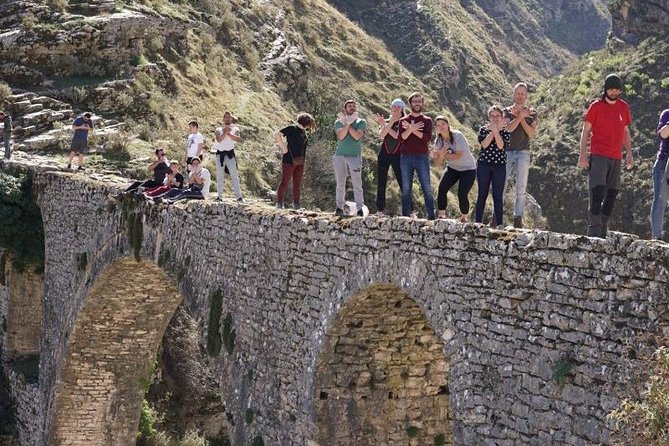
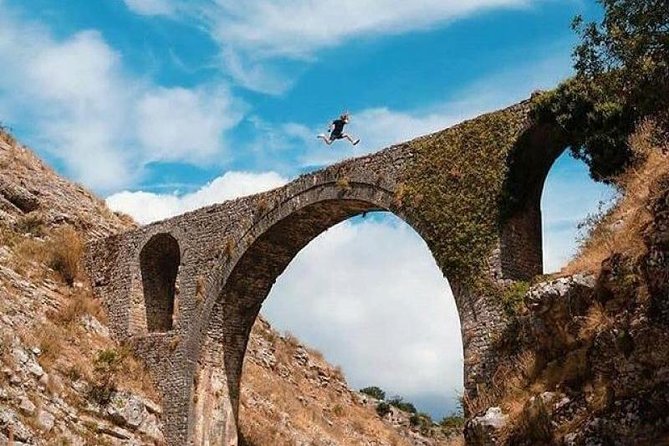
- The route ends with Ali Pasha Bridge: The bridge is part of an old aqueduct system, but difficult ground may mean seeing it from a good viewpoint rather than reaching the structure itself.
- Local English-speaking guides: Arli, Viki, Marco, and Mario have each been praised for clear explanations, humor, flexibility, and personal stories about Gjirokaster.
- Three hours on foot: The tour begins at 9:30 a.m. at Experience Gjirokastra and returns to the same meeting point.
- Good value at $18.06: For a small-price, history-focused walk with a guide, this offers more local context than simply wandering the old streets alone.
- Wear proper shoes: Uneven cobbles, hills, and rough ground are central to the experience, not minor details.
Why this walk gets beyond the usual Gjirokaster visit
Most first visits to Gjirokaster focus on the castle, the main stone streets, and the old commercial center. Those places deserve your time, but they can give you only part of the town’s character.
This walk takes a different line. It begins at Cerciz Topulli Square, then heads into older residential areas beneath the castle walls. You get architecture, local history, religious heritage, and open views in one outing.
I like that the route is not built around a long list of famous monuments. Its appeal comes from seeing how Gjirokaster spreads beyond the polished center. Old houses, bridges, hills, sheep, and quiet lanes become the subject.
The guide matters a great deal here. A formal route through unfamiliar neighborhoods can feel confusing without context, while a local guide can explain why a house matters, how the neighborhoods fit together, and what life in Gjirokaster is like now.
The strongest guide names associated with this experience are Arli, Viki, Marco, and Mario. You may not receive a particular guide, but the feedback points to a style worth looking for: clear English, humor, local experience, and room for questions.
More kruja old bazaar tours in Gjirokaster:
- Gjirokaster Walk Tour: Old Bazaar, Cfake, Dunavat, AliPasha!
★ 4.2 · 9 reviews - Gjirokaster: Old Bazaar and Castle Private Walking Tour
★ 5.0 · 6 reviews - Old Bazaar-Cfake-Dunavat-Ali Pasha Bridge Walking Tour
★ 4.6 · 5 reviews
Starting at Cerciz Topulli Square
The meeting point is Experience Gjirokastra on Rruga Gjin Zenebisi, close to the old town center. The start time is 9:30 a.m., which is useful if you want to finish before the strongest afternoon heat.
The walk begins at Cerciz Topulli Square and quickly shifts away from the central sightseeing path. This opening gives you time to settle into the pace before the route becomes more uneven.
Because the tour lasts about three hours, do not treat it like a quick orientation walk. You are signing up for a proper outing on foot, with hills and old paving underfoot.
The group can include up to 30 people. That is a reasonable maximum for a guided walk, though a group of that size may feel less personal on narrow lanes than a smaller party.
The tour is offered in English and comes with a mobile ticket. Confirmation is provided when you book, so you can keep the booking on your phone rather than carrying printed paperwork.
Walking through the old Bazaar beneath the castle
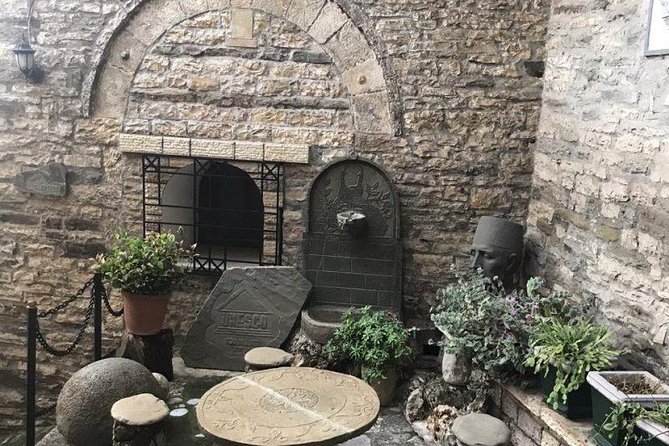
The first major area is the Old Bazaar, described here as the first neighborhood outside the castle walls. It runs beneath the castle and contains some of Gjirokaster’s oldest houses.
The name can set the wrong expectation. This is not a busy market full of stalls and shoppers. The appeal is the neighborhood itself, especially its stone paving, old homes, and position under the massive castle.
That distinction is important. If you are looking for a shopping stop, this section may feel quiet. If you want to understand the town’s older layout, it gives you a better sense of how Gjirokaster grew around its fortress.
The characteristic cobblestones are part of the charm and part of the challenge. They help preserve the old feel of the district, but they can be hard on your feet and awkward in smooth-soled shoes.
The guide’s explanation adds value here. A local can point out architectural details that are easy to miss when you are simply walking from one photo stop to the next.
This is also where the tour begins to show the gap between the well-known Gjirokaster and the less-visited town around it. You are not only looking at impressive stone buildings. You are seeing a neighborhood with a longer connection to the castle and to local life.
Crossing the Zerzebili Bridge toward Cfaka
After the Old Bazaar, the route passes over the Zerzebili Bridge and enters Cfaka, another old neighborhood in Gjirokaster. The bridge provides a clear transition between the two sections of the walk.
Cfaka is one of the strongest parts of the route for anyone interested in older homes. Several houses here are listed as first-category monuments, which signals their importance to the town’s architectural heritage.
The tour does not present these buildings as isolated museum pieces. You encounter them along a neighborhood route, where their setting matters as much as their façades.
I find this kind of stop more useful than a quick list of dates. You can ask how the buildings relate to one another, why they have protected status, and what makes Gjirokaster’s traditional homes distinct.
The condition of the streets may vary, and the route is not designed for effortless walking. Keep your pace measured, especially if the surface is wet or if you are carrying a heavy bag.
The walk through Cfaka also gives the guide room to discuss the town outside its postcard image. One of the most praised qualities of the guides is their ability to connect the past with what it is like to live in Gjirokaster today.
That balance is a real strength. You get the history needed to understand the houses, but you are not locked into a dry sequence of facts.
A few more Gjirokaster trips to weigh up
- Blue Eye & Gjirokaster: 4×4 Tour and Old Bazaar
★ 5.0 · 3 reviews - From Tirana: Kruja Castle, Old Bazaar & Sari Salltik View
★ 4.8 · 2,171 reviews - From Durres/Golem: Kruja Castle & Old Bazaar Day Tour
★ 4.9 · 1,317 reviews - Durres/Golem: Kruja Castle & Bazaar with Traditional Lunch
★ 5.0 · 632 reviews
The Bektashi tekke in Cfaka
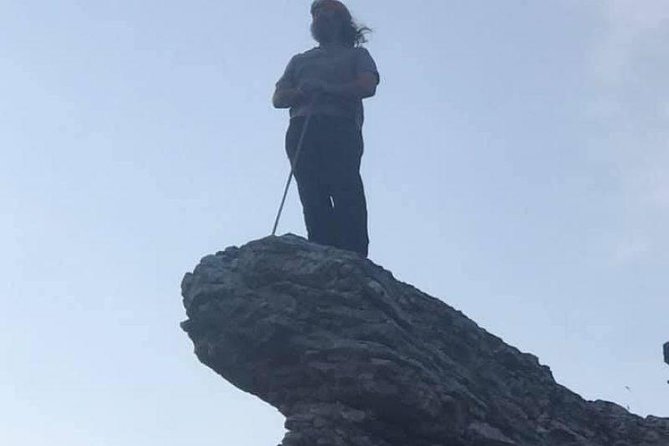
Cfaka also includes a tekke connected with the Bektashi Order. This adds a religious and cultural layer to the walk that you will not get from focusing only on military buildings and old houses.
The Bektashi tradition is part of the religious history of Albania, and the tekke helps show that Gjirokaster’s story is not limited to its castle or Ottoman-era architecture. It gives the guide a chance to explain a living cultural tradition within the setting of an old neighborhood.
The available details do not promise a long interior visit or a formal ceremony, so you should think of this as a meaningful point along the route rather than a separate religious tour. The guide’s explanation is likely to be the main part of the stop.
This is one reason a guided walk makes sense. Without local context, a small religious building can be easy to pass without understanding its place in the community.
If you value cultural background as much as scenic stops, the tekke may be one of the most worthwhile parts of the route. If your main goal is a fast architectural survey, the pace may feel slower than expected.
Reaching the hills and the Ali Pasha Bridge
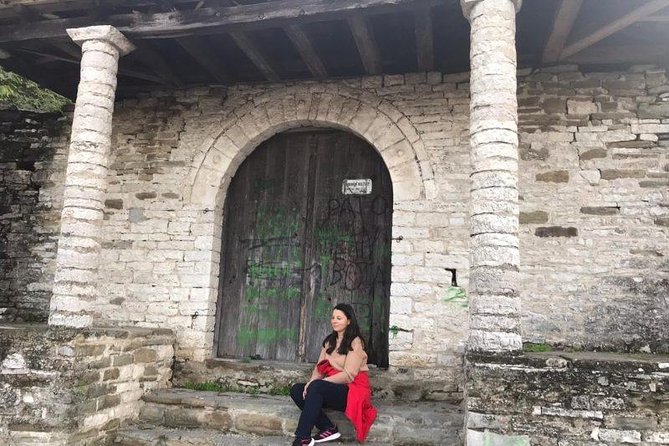
The final destination is the Ali Pasha Bridge, a surviving section of an aqueduct built by Ali Pasha Tepelena more than 200 years ago. The aqueduct was intended to bring water to the castle, so the structure connects engineering, military power, and the practical needs of the town.
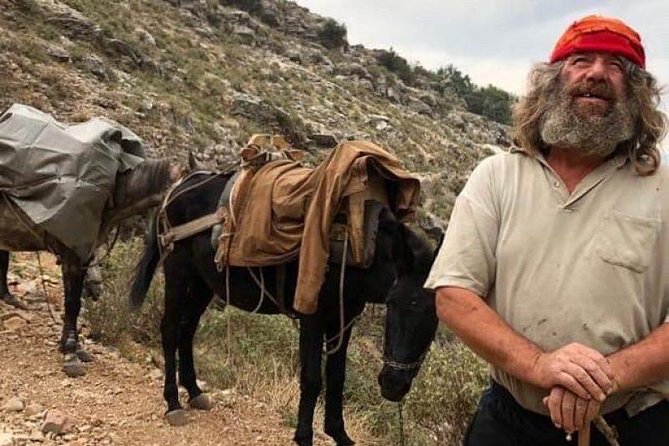
The setting changes as you move away from the denser neighborhoods. The route includes hills, sheep, old houses, and open views around the town. This gives the last section a more rural feel than the opening streets.
You should pay close attention to the wording around the bridge. The route description warns that the terrain is not comfortable, and Arli has explained to visitors that reaching the actual bridge can be difficult. In that case, the guide may lead you through neighborhoods to a strong view of the bridge instead.
That is not a small distinction. If you are booking because you want to stand directly on the bridge, ask about current access before setting out. If you are happy to see and understand the structure from a suitable viewpoint, the stop can still be rewarding.
The bridge itself is not just a scenic object. Its original job explains why it was built where it was and why it mattered to the castle. A guide can turn what looks like a remote stone crossing into evidence of how water was managed in the area.
The views also give you a wider sense of Gjirokaster. After walking through old homes and narrow lanes, you can look back toward the town and see how the neighborhoods sit below the castle.
What the guides add to the walk
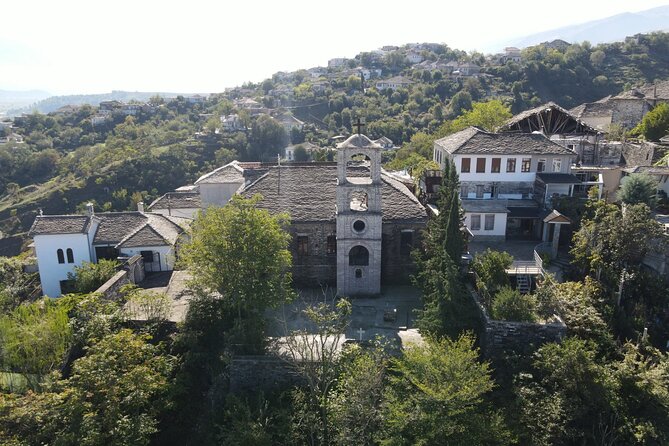
This experience depends more on the guide than a standard city stroll. The route passes through places where there may not be a large sign explaining what you are seeing.
Arli has been praised for adapting the route when the approach to the bridge proved difficult. He also explained the historical role of the neighborhoods and the bridge rather than treating the final stop as a simple photo opportunity.
Viki has been praised for tailoring the schedule to personal interests. Her connection to Gjirokaster gives her a useful local perspective, especially for visitors who want more than dates and architectural labels.
Marco and Mario have been described as making the walk feel like an outing with informed local friends. That is a good fit for this route because the experience is strongest when the guide talks about both the old town and present-day life.
The English-language guiding is another practical advantage. Several comments specifically highlight clear English and lively storytelling. Humor and personal experience can make a three-hour walk feel less formal and help the details stay with you.
Guide assignments can change, so you should not book on the assumption that one named guide is guaranteed. Still, the range of positive guide feedback suggests that the provider places real weight on local, conversational guiding.
Is $18.06 a fair price?
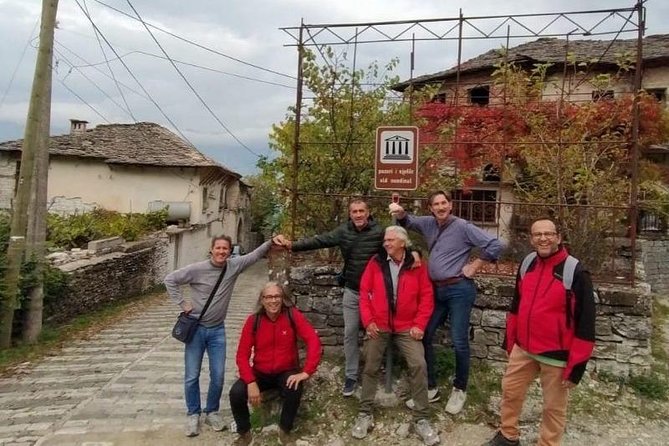
At $18.06 per person, this is inexpensive for a three-hour guided walk. The fee includes the guide, and the route covers several different parts of Gjirokaster rather than staying within one short central loop.
The value comes from access to context, not from paid entry tickets or included food. You are paying for someone to connect the Old Bazaar, Zerzebili Bridge, Cfaka, the tekke, and the aqueduct remains into one story.
That makes the price especially fair if you are curious about architecture and local history but do not want a private tour. The maximum group size is 30, so the cost stays low while still giving you a planned route.
You should not expect luxury touches. Gratitude for the guide is not included, and the walk takes place on public streets and rough ground. There is no mention of transport, meals, entrance fees, or equipment being included.
For me, the strongest value is the route choice. You could walk parts of these neighborhoods independently, but you might miss the importance of the protected homes, the Bektashi tekke, and the aqueduct system.
Who should book this Gjirokaster walk?
I would choose this experience if you have already seen, or plan to see, the castle and central old town. It fills in the less familiar side of Gjirokaster without requiring a full-day commitment.
It suits people who like architecture, local stories, religious heritage, and old infrastructure. It also works well for anyone who wants a guide to explain what daily life is like in the town today.
You should be comfortable walking for roughly three hours. The route is not described as easy, and the ground near the bridge can be difficult.
Most people can participate, and service animals are allowed. The activity is near public transportation, but the walk itself still requires you to manage slopes and uneven surfaces.
I would be more cautious if you have trouble with cobblestones, hills, or rough paths. The provider says good weather is required, and poor weather can lead to a new date or a full refund.
Timing, group size, and cancellation details
The tour starts at 9:30 a.m. and returns to the meeting point, so you do not need to arrange a separate pickup at the end. The approximate duration is three hours.
The maximum group size is 30. If you prefer a very quiet private walk, that limit may be larger than you want, but the price reflects a shared experience.
Free cancellation is available up to 24 hours before the start time for a full refund. Changes or cancellations made less than 24 hours before the local start time are not accepted for a refund.
The tour can also be canceled if the minimum number of participants is not reached. In that situation, you will be offered another date or experience, or a full refund.
My verdict: a strong choice for the overlooked side of town
Book this walk if you want Gjirokaster to feel like a lived-in town rather than only a castle and a pretty street. The Old Bazaar, Cfaka, the Bektashi tekke, and the Ali Pasha aqueduct offer a broader and more grounded picture.
The route is best for an active morning, good shoes, and an open attitude toward imperfect paths. The Ali Pasha Bridge may be viewed from a suitable point instead of reached directly, so confirm that detail if the bridge is your main reason for booking.
At $18.06, the tour offers strong value, especially with a local English-speaking guide who can adjust the conversation and explain both history and modern life. I would recommend it to curious walkers who want the parts of Gjirokaster that a standard castle visit often leaves out.
FAQ
Where does the walking tour begin?
The tour begins at Experience Gjirokastra on Rruga Gjin Zenebisi in Gjirokaster, Albania.
What time does the tour start?
The walking tour starts at 9:30 a.m.
How long does the experience last?
The tour lasts approximately three hours.
Where does the tour end?
The activity ends back at the meeting point.
What language is the tour offered in?
The tour is offered in English.
What is included in the price?
A guide is included. Gratitude for the guide is not included.
How difficult is the walk?
The route includes cobblestones, hills, and uncomfortable or uneven ground. You should wear sneakers or other sturdy walking shoes.
Can I cancel for a full refund?
Yes. You can cancel at least 24 hours before the start time for a full refund. Poor weather or failure to meet the minimum number of participants can also lead to a different date or a full refund.
More Walking Tours in Gjirokaster
- Gjirokaster walking Tour Baazar – The Castle – Zekate house
★ 4.6 · 21 reviews - Walking Tour Baazar – The Argjiro Castle – Zekate house
★ 4.5 · 18 reviews - Gjirokaster Walking Tour
★ 5.0 · 4 reviews - Gjirokaster walking Tour The Old Baazar, Cfake, Dunavat, Ali Pasha Bridge
★ 5.0 · 4 reviews
More Shopping Tours in Gjirokaster
- Kruja castle, the old Bazaar & Sarisalltik- Departure from Tirana
★ 5.0 · 592 reviews - From Tirana/Golem/Durres: Kruja, Bazaar, Sari Salltik Tour
★ 4.8 · 471 reviews - From Durres/Golem: Kruja Castle, Old Bazaar & Sari Salltik
★ 4.5 · 169 reviews - From Tirana: Krujë Day Trip with Krujë Castle & Old Bazaar
★ 4.8 · 71 reviews
Just added around Gjirokaster
- Vlora, Llogara & Dhërmi: Albanian Riviera from Durres/Golem★ 4.9 · 7 reviews
- Wood Crafting Experience in Gjirokastra★ 4.5 · 10 reviews
- Vegetarian Cooking Class @Teta Marjeta★ 5.0 · 11 reviews
- Cooking Class★ 4.5 · 12 reviews
- Gjirokastra Private Half-Day Walking Tour★ 5.0 · 3 reviews
- Gjirokaster – The Stone City of UNESCO, Private Tour from Tirana★ 4.5 · 4 reviews
- Prepare Osa with Teta Marjeta★ 4.5 · 7 reviews
- Gjirokaster Walking Tour★ 5.0 · 4 reviews
Kruja Old Bazaar Tours, compared.
Kruja castle, the old Bazaar & Sarisalltik- Departure from Tirana
Read our review →
Browse the lists this tour appears in