
Reviewed · WALKING TOURS
Gjirokaster walking Tour The Old Baazar, Cfake, Dunavat, Ali Pasha Bridge
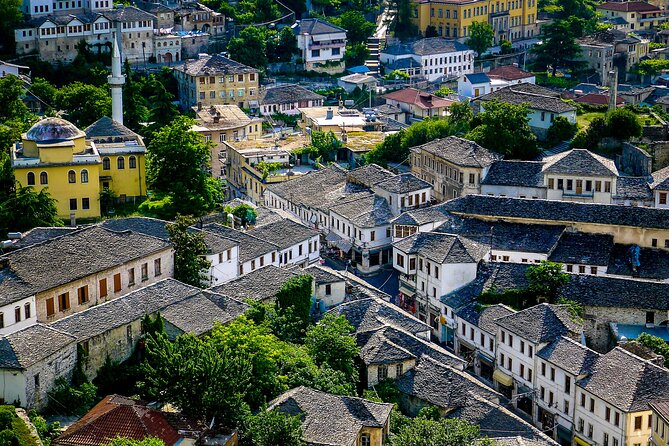
Gjirokaster’s best stories begin where many visitors stop looking: below the castle walls and beyond the main square. This walk takes you through the Old Bazaar, Cfake, and Dunavat, then out to the stone Ali Pasha Bridge, linking old homes, rough cobbles, hills, and local history in one three-hour outing.
I like two things right away: the route shows you a side of Gjirokaster that is easy to miss, and the local guide gives the streets a human voice. Guides such as Besi are praised for being warm, flexible, entertaining, and deeply interested in the town’s past.
The main consideration is the walking itself. This is not a flat town-center stroll. Cobblestones, older lanes, and the route toward the bridge call for sensible shoes, and the tour requires at least two people to run.
In This Review
- Key points at a glance
- Why this Gjirokaster walk is different
- Starting at Çerçiz Topulli Square
- The Old Bazaar below the castle
- Crossing the Zerzebili Bridge toward Cfake
- Dunavat, hills, and the changing view
- Reaching Ali Pasha Bridge
- What the guide adds
- Is $18.08 a fair price?
- Who should book this walk?
- Practical details before you reserve
- Should you book the Old Bazaar to Ali Pasha Bridge walk?
- FAQ
- Where does the walking tour begin?
- Where does the tour end?
- How long does the tour last?
- What places does the tour visit?
- Is a guide included?
- How much does the tour cost?
- Is there a minimum number of participants?
- How many people can join the tour?
- Can I cancel for a refund?
Key points at a glance
- Old Bazaar beneath the castle: Walk through one of Gjirokaster’s earliest neighborhoods outside the fortress walls, where stone lanes and old homes matter more than modern shops.
- Cfake’s first-category monuments: See historic houses and a Bektashi tekke in a quieter part of town.
- Ali Pasha Bridge finish: Reach a distinctive Ottoman-era stone bridge beyond the main visitor circuit.
- A local guide matters: Expect town history, cultural context, and stories that are hard to get from a self-guided map.
- Small maximum group: The tour is limited to 15 people, which should make questions and conversation easier.
- Good price for a guided walk: At $18.08 per person, the cost is modest for about three hours with a guide, though transport and other unlisted expenses are not included.
Why this Gjirokaster walk is different
Gjirokaster is often reduced to three postcard subjects: the castle, the main bazaar, and a view across the Drino Valley. Those are worthwhile, but they do not tell the whole story. This walk turns away from the usual center and follows the older neighborhoods that sit below and beyond the castle.
That change of direction is the real point. You are not simply collecting another landmark. You are seeing how the town spreads out from its fortress, how stone houses occupy steep ground, and how old religious and civic places fit into ordinary residential areas.
The walk begins at Çerçiz Topulli Square, a practical central meeting point. From there, you head toward the Old Bazaar. The name can mislead you a little. It is no longer a working bazaar in the simple market sense, so do not arrive expecting rows of stalls or a busy shopping arcade.
Instead, expect a historic neighborhood beneath the castle walls. Its appeal comes from the cobblestones, age-worn houses, and position outside the fortress. A guide can help you read these details rather than rushing past them as background scenery.
A few more Gjirokaster trips to weigh up
- Gjirokaster walking Tour Baazar – The Castle – Zekate house
★ 4.6 · 21 reviews - Walking Tour Baazar – The Argjiro Castle – Zekate house
★ 4.5 · 18 reviews - Walking Tour “The Old Bazaar, Cfake, Dunavat, Ali Pasha Bridge”
★ 5.0 · 10 reviews
Starting at Çerçiz Topulli Square
The meeting point is Sheshi Çerçiz Topulli, also written as Çerçiz Topulli Square, in Gjirokaster’s old town. This keeps the start easy to reach, since the square is near public transportation and sits in the central visitor area.
You receive confirmation when you book, and the activity uses a mobile ticket. That makes the practical side simple: keep the booking information on your phone and arrive at the named square.
The tour ends back at the meeting point. This is useful if you have a hotel, restaurant, or another activity planned in the old town afterward. You are not left figuring out a return transfer from the bridge.
The group can reach up to 15 people. That is not a private walk, but it is still a manageable size for a three-hour route. If the group is smaller, you may have more room to ask about family homes, local customs, or the buildings you pass.
The Old Bazaar below the castle
The first part of the walk leads to the Old Bazaar, the first neighborhood outside Gjirokaster’s castle walls. Its setting gives it a special character. You are walking beneath the fortress, close enough to feel the castle’s presence without spending the entire tour inside it.
The cobbled street is one of the main attractions. In Gjirokaster, stone is not just a decorative material. It shapes the roads, walls, roofs, and houses, giving the town its famous gray appearance. Here, the paving and old buildings create a sense of continuity that a quick visit through the central streets can miss.
I like this section because it offers a quieter kind of sightseeing. You are not ticking off a grand monument every few minutes. You are looking at how the neighborhood was built and listening to the guide explain why the streets and houses matter.
The drawback is that the Old Bazaar is not a conventional bazaar anymore. If shopping is your main reason for booking, this route may feel less rewarding. If you care about historic streets and local setting, the absence of a commercial market is not much of a problem.
The itinerary lists 15 minutes for the Old Bazaar stop, but the full activity lasts about three hours. Treat that short figure as a stop marker, not as the total time spent walking the route. The experience is built around movement between several neighborhoods and the bridge.
Crossing the Zerzebili Bridge toward Cfake
After the Old Bazaar, the route passes over the Zerzebili Bridge and continues toward Cfake. This transition is important because the walk begins to feel less like a central old-town tour and more like an exploration of Gjirokaster’s outer historic quarters.
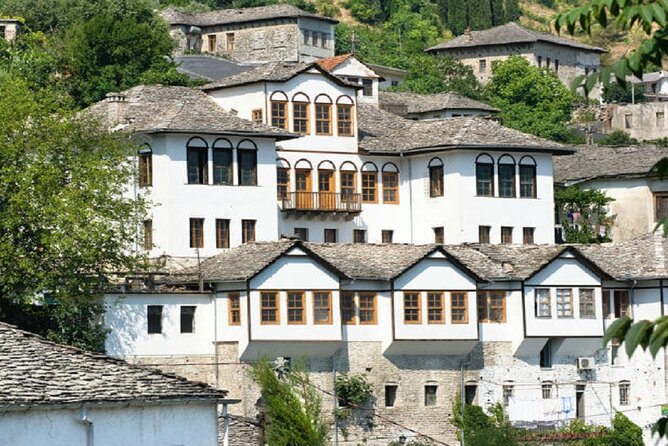
Cfake is another old neighborhood, with houses that belong to the town’s protected architectural heritage. The route includes houses classified as first-category monuments. That designation tells you to pay attention to the buildings themselves, not only to scenic views.
You may notice how the homes sit against the slope and how the old construction fits the uneven ground. The supplied details do not promise entry into private houses, so expect to see them from the route rather than tour their interiors.
This is where a local guide can add the most value. A facade may look like another stone house if you do not know its age or place in the town. With context, small features become easier to notice, from the shape of a building to its position within the neighborhood.
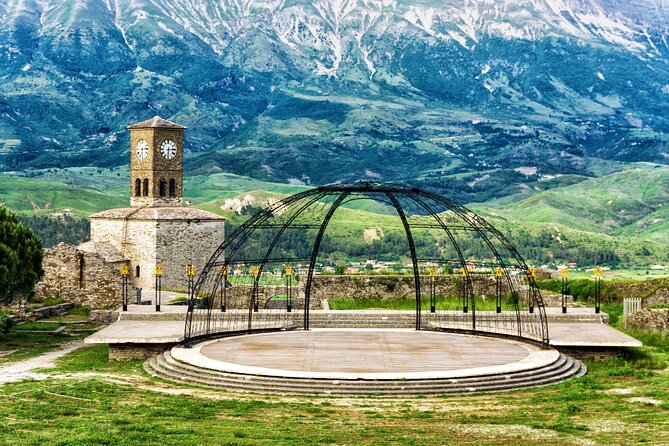
The route also reaches a tekke connected with the Bektashi Order. This adds a religious and cultural layer to the walk. It is not only a tour of architecture. You also get a glimpse of the different traditions that have shaped life in southern Albania.
The information provided does not specify a formal interior visit or a religious ceremony, so plan to view the tekke as part of the walking route. Dress and behave respectfully around the site, as you would at any active or historically important religious place.
Same coast, a completely different kind of day:
- Sarandë: Tour Gjirokaster,Blue Eye & Lekursi Castle
★ 4.7 · 220 reviews - Saranda Hidden Gems: Sunset at Lekursi,Blue Eye&Wine Tasting
★ 4.9 · 20 reviews - Day Tour to Permet Thermal Baths and Langarica Canyon
★ 5.0 · 18 reviews - Gjirokastër: Traditional Albanian Vegetarian Cooking Class
★ 4.4 · 17 reviews
Dunavat, hills, and the changing view
Dunavat is named as part of the experience, and the route’s character continues to shift as you move away from the central square. You are likely to spend more time among older homes and open hills than in a compact shopping area.
One of the appealing details of this section is the mix of nature and settlement. The route description points to sheep on the hilltops alongside old houses. That contrast is useful because it shows Gjirokaster as a living place, not a preserved stage set made only for sightseeing.
I would keep your eyes up and down here. Look down for the paving and building details, then up toward the hills and the scattered rural activity. The walk seems designed for this change of pace, with the guide connecting the town’s built past to its surrounding countryside.
There is also a practical point to remember: the town’s historic quarters are not level. The information does not provide a precise accessibility rating, so I would not choose this outing if you need a fully step-free route. Most people can take part, but the cobbles and sloping streets may affect your comfort.
Reaching Ali Pasha Bridge
The final destination is the Ali Pasha Bridge, a stone bridge reached after passing through the old neighborhoods. Its location gives the walk a satisfying sense of progress. You begin in the central square, move below the castle, cross the Zerzebili Bridge, continue through Cfake and Dunavat, and finish at a landmark beyond the usual center.
The bridge is not presented as a separate paid attraction. Its value comes from the route and the setting around it. You get there on foot, with the older quarters providing the story between the starting point and the final structure.
The available information does not state how long the group stays at the bridge or whether the guide leads a formal interpretation there. You should expect it to be the last destination before returning to the meeting point, not a full-day excursion with extended time at the site.
That makes the bridge a good reason to book the walk, but not the only reason. If you want a quick photograph and nothing else, a shorter independent outing might suit you. If you want the connected story of neighborhoods, bridges, religious places, and old homes, the guided route makes more sense.
What the guide adds
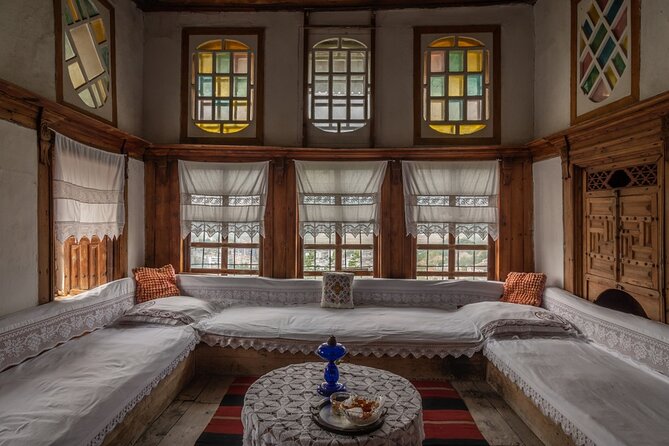
The strongest part of this activity is the guide’s local point of view. A guide from Gjirokaster can explain the town as a place where people lived, worshipped, worked, and moved between neighborhoods. That is more useful than a list of dates delivered while you hurry uphill.
Besi is specifically associated with the experience and is described as warm, curious, passionate, cultured, and flexible. Those qualities matter on a route like this because the interest is spread across many small details rather than concentrated in one large museum.
You can expect the guide to explain the town’s history well and to share a clear affection for Gjirokaster. The guide is also praised for being pleasant and entertaining, which should help during the longer walking stretches.
Flexibility is another useful quality. Historic neighborhoods do not always unfold like a neat indoor exhibition. A question about a house, bridge, religious building, or local custom can change the pace. A guide who listens can make the outing feel more personal.
The guide is included in the price. No meals, entrance fees, transport, or other extras are listed, so you should budget separately for anything beyond the guided walk.
Is $18.08 a fair price?
At $18.08 per person, this is a low-cost way to spend roughly three hours in Gjirokaster. The value comes from the guide and the route rather than from paid admissions. There is no listed ticket charge for the Old Bazaar stop, and the supplied details do not list extra attraction fees.
I see the price as especially fair if you are staying in the old town and want more than the standard castle visit. A self-guided walk costs less, of course, but you would need to research the neighborhoods, identify the protected homes, understand the Bektashi connection, and work out the route to the bridge yourself.
The price is less compelling if you only want to shop, avoid hills, or spend your limited time inside major monuments. This is a neighborhood walk, not a castle ticket with a guide attached.
The experience is commonly booked well ahead, with an average booking lead time of 42 days. That does not guarantee that every date sells out, but it is a useful reason to reserve early if the route is important to your plans.
A minimum of two people is required. Solo visitors should check that the departure can operate with another booking or arrange to join someone else. The maximum group size is 15.
Who should book this walk?
I would recommend it to you if you have already seen, or plan to see, Gjirokaster’s main castle and want a different side of the town. It also suits anyone who prefers local neighborhoods, old buildings, and cultural context over a checklist of major sights.
History fans should find plenty to discuss, especially around the first-category houses and the Bektashi tekke. Photographers may also enjoy the contrast between cobbled streets, stone homes, hills, sheep, bridges, and castle walls.
This is a good choice for couples and small groups. One couple described the guide as pleasant, entertaining, flexible, and well informed about the town, while another assessment specifically praised the clear explanation of local history. That combination suggests the walk is not just a transfer between sights.
I would think twice if you have difficulty walking on uneven surfaces. The route is about three hours, and the available details do not promise a flat or step-free path. You should also skip it if your main goal is shopping, since the Old Bazaar is no longer a bazaar in the ordinary commercial sense.
Book it if you want a guide-led look at Gjirokaster’s older quarters and do not mind walking beyond the polished center. Skip it if you need a short, level, attraction-heavy tour.
Practical details before you reserve
The tour begins at Çerçiz Topulli Square and returns there. That makes it easy to combine with other plans in the old town, but you should allow the full three-hour window rather than treating it as a brief guided stop.
The activity has a mobile ticket, and confirmation is provided at booking. Public transportation is nearby. The guide is included, while anything not specifically listed as included is your responsibility.
Free cancellation is available if you cancel at least 24 hours before the local start time. A cancellation made less than 24 hours before the start is not refunded, and changes inside that period are not accepted.
Most people can participate, but the route’s cobbled and sloping historic streets deserve attention. Wear shoes you trust on uneven ground, carry water if you like, and keep your schedule flexible enough that you do not have to rush back from the bridge.
Should you book the Old Bazaar to Ali Pasha Bridge walk?
Book this tour if you want Gjirokaster to feel like a real town rather than only a fortress and a postcard view. For $18.08, you get about three hours with a local guide, a route through the Old Bazaar, Cfake, and Dunavat, and a finish at Ali Pasha Bridge.
The best reason to go is the connection between places. You see old houses, a Bektashi tekke, bridges, hills, and castle-side streets as parts of one town. The guide, possibly Besi, adds the local stories and historical sense that make those details easier to understand.
Just bring realistic expectations. The Old Bazaar is historic, not a shopping market. The route may be demanding for anyone uncomfortable on cobbles or slopes. If those points work for you, this is an affordable and worthwhile way to spend a morning or afternoon in Gjirokaster.
FAQ
Where does the walking tour begin?
The tour begins at Çerçiz Topulli Square, also called Sheshi Çerçiz Topulli, in Gjirokaster, Albania.
Where does the tour end?
The activity ends back at the meeting point in Çerçiz Topulli Square.
How long does the tour last?
The walking tour lasts approximately three hours.
What places does the tour visit?
The route includes the Old Bazaar, Cfake, Dunavat, and the Ali Pasha Bridge. It also passes the Zerzebili Bridge and a Bektashi tekke in Cfake.
Is a guide included?
Yes. A guide is included in the tour price.
How much does the tour cost?
The listed price is $18.08 per person.
Is there a minimum number of participants?
Yes. At least two people are required for the tour to take place.
How many people can join the tour?
The activity has a maximum group size of 15 people.
Can I cancel for a refund?
Yes. You can cancel for a full refund up to 24 hours before the experience start time. Cancellations and changes made less than 24 hours before the start are not accepted for a refund.
Just added around Gjirokaster
- Vlora, Llogara & Dhërmi: Albanian Riviera from Durres/Golem★ 4.9 · 7 reviews
- Walking Tour “The Old Bazaar, Cfake, Dunavat, Ali Pasha Bridge”★ 5.0 · 10 reviews
- Wood Crafting Experience in Gjirokastra★ 4.5 · 10 reviews
- Vegetarian Cooking Class @Teta Marjeta★ 5.0 · 11 reviews
- Cooking Class★ 4.5 · 12 reviews
- Gjirokaster – The Stone City of UNESCO, Private Tour from Tirana★ 4.5 · 4 reviews
- Gjirokastra Private Half-Day Walking Tour★ 5.0 · 3 reviews
- Prepare Osa with Teta Marjeta★ 4.5 · 7 reviews
Walking Tours, compared.
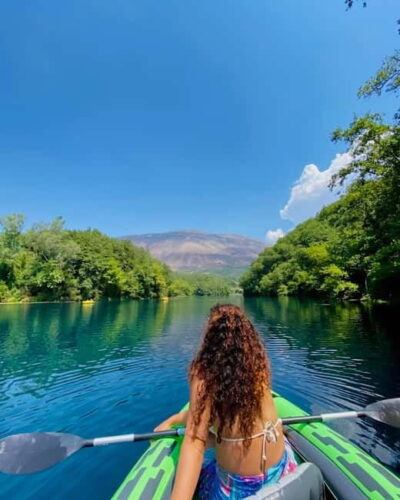
Blue Eye Kayak and walking tour & Lekursi Castle
Read our review →

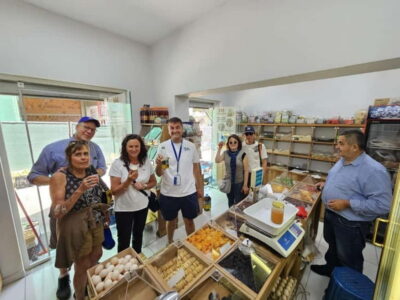
Tirana Stroll Tour, Walk and Taste Qofte & Raki!
Read our review →
Tirana’s Communist Past; Small Group Walking Tour
Read our review →Browse the lists this tour appears in