
Reviewed · WORKSHOPS
Gjirokaster: Wood Crafting Class
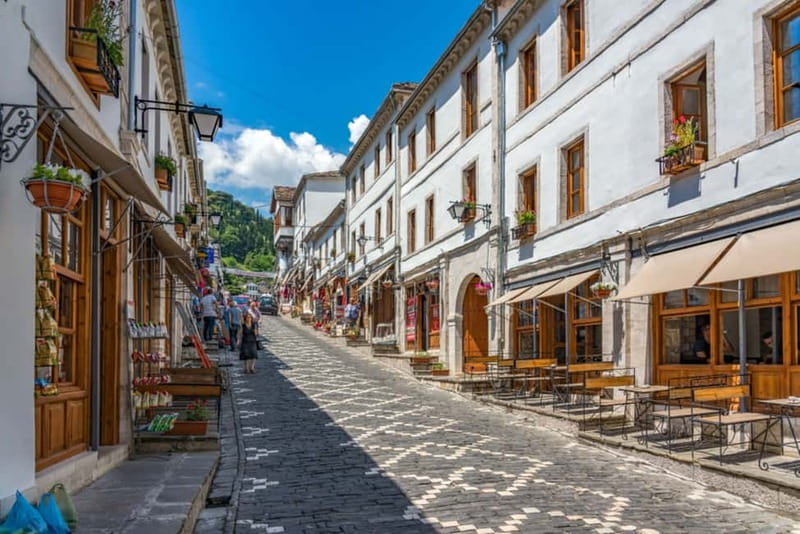
Gjirokaster’s old streets are made for looking, but this three-hour woodcraft class gives you something better than another photograph: a small object shaped by your own hands. At Master Nurce’s workshop, you learn about local woodwork, sketch a design, and carve a keepsake with help from an experienced instructor.
I like the personal result, since your souvenir can be a sign, necklace, key hanger, or small mirror rather than a mass-produced trinket. I also like the easy social rhythm: local stories, coffee or tea, and a glass of raki or homemade wine while you work. The main consideration is that carving takes patience, so this is not a quick make-and-take activity.
In This Review
- Key points to know before booking
- Why this Gjirokaster workshop is worth three hours
- Meeting at Cerciz Topulli Square
- The opening lesson: wood, buildings, and local craft
- Choosing a project and sketching your design
- Learning the tools with Victor or Viktor
- Raki, homemade wine, and the pace of the work
- What you can realistically take home
- How the experience feels for beginners
- The value of the $64 price
- Practical tips for a smoother class
- Who should book this experience?
- Should you book the Gjirokaster woodcraft class?
- FAQ
- Where does the Gjirokaster wood crafting class meet?
- How long does the woodcraft class last?
- How much does the experience cost?
- Is the class conducted in English?
- What can I make during the workshop?
- Are tools and materials included?
- Is a drink included?
- Is food included?
- Can I cancel the booking?
Key points to know before booking
- Meet at Cerciz Topulli Square: The experience begins in central Gjirokaster, followed by a short walk to the workshop.
- Choose your own project: Make a small wooden sign, necklace, key hanger, or mirror.
- Suitable for beginners: Victor or Viktor provides close help with the tools and the carving process.
- Local context comes first: The class opens with information about Gjirokaster, its old buildings, and its wood decoration.
- A drink is part of the workshop: Raki or homemade wine is included, with coffee or tea also offered during the introduction.
- You leave with a personal memento: Your finished piece is designed and made by you, with expert assistance.
Why this Gjirokaster workshop is worth three hours
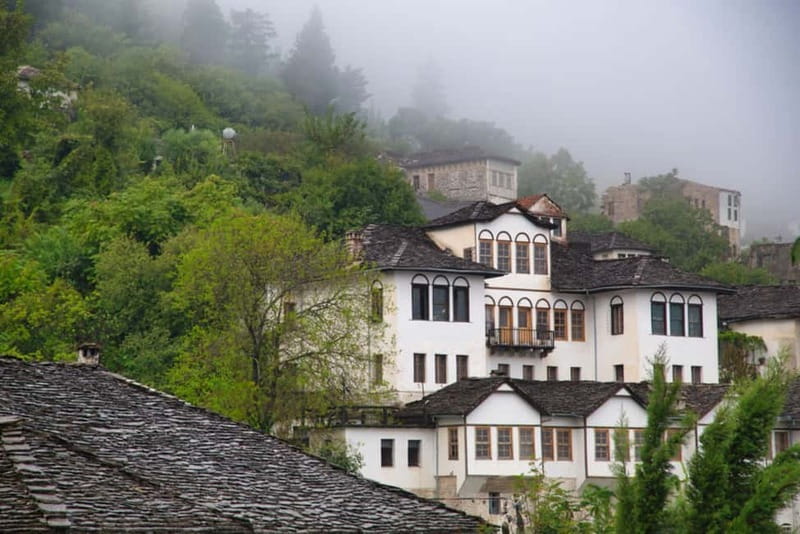
I see this class as a useful change of pace from sightseeing. Gjirokaster asks you to look upward at stone roofs, old façades, and carved details. Here, you slow down and work with one small piece of wood. That shift helps you notice the skill behind the decorative work you have already seen around town.
The class costs $64 per person, which is more than you would pay for a small wooden souvenir in a shop. The difference is the activity itself: instruction, tools, materials, local background, a drink, and a finished item made to your design are included. If you want the cheapest souvenir, this is not the right choice. If you value time with a craftsperson and want something tied to your own visit, the price is easier to justify.
You should also allow the full three hours. The class is not just a short demonstration followed by a few minutes of carving. You first hear about local traditions, choose a project, sketch it, learn to use the tools, and then work patiently under supervision.
A few more Gjirokaster trips to weigh up
- Gjirokastër: Traditional Albanian Vegetarian Cooking Class
★ 4.4 · 17 reviews - Cooking Class
★ 4.5 · 12 reviews - Vegetarian Cooking Class @Teta Marjeta
★ 5.0 · 11 reviews
Meeting at Cerciz Topulli Square
Your starting point is Cerciz Topulli Square, a practical place to meet in Gjirokaster. From there, your host leads you on a short walk to the workshop of Master Nurce.
That short walk matters. You do not need to arrange transport to a remote studio, and the experience connects naturally with a day spent exploring the old town. Still, wear sensible shoes. Gjirokaster is known for steep streets and stone paving, and the route to the workshop is described as a walk rather than a vehicle transfer.
The host introduces the activity and provides some wider information about the town. Theo has guided some sessions, taking photos and videos for participants and sending them afterward. The available guide is English-speaking, so you can follow the historical and practical parts without needing translation.
The opening lesson: wood, buildings, and local craft
The first part is not hands-on carving. You begin by learning about the types of wood used in the class and the place of woodcraft in Gjirokaster’s traditions.
The introduction also covers the town’s architecture and the decorative woodwork found in its old buildings. This gives the class more purpose. You are not simply making a wooden object in Albania; you are hearing why carved wood matters in a town where timber details form part of the visual character.
This section lasts long enough to provide useful context, but the precise division between the introduction and practical work may vary. Coffee or tea can be offered during this opening period, adding a relaxed start before you handle the tools.
I would pay attention here, even if you booked mainly to make something. The historical material helps you think about patterns, lettering, and simple drawings for your own design. It also gives you a better eye for wood details when you continue exploring Gjirokaster afterward.
Choosing a project and sketching your design
Once you are familiar with the materials, you choose what to make. The available projects are small wooden signs with words or drawings, necklaces, key hangers, and small mirrors.
This choice is one of the class’s strongest features. You are not handed a fixed pattern and asked to copy it. You can decide if you want something decorative, useful, or easy to carry home.
A small sign gives you room for text or a simple image. A necklace is compact and practical for luggage. A key hanger has a clear use at home, while a small mirror may appeal if you want a more decorative object. The description does not promise a large or elaborate piece, so keep your expectations modest. Think personal souvenir, not full-size furniture.
You then sketch your idea before carving. That step is important for beginners. It gives you a plan and lets the instructor suggest changes before you begin cutting into the wood. If your drawing is simple, that is fine. The point is to make an object you can complete with guidance, not to prove yourself an artist.
Same coast, a completely different kind of day:
- Sarandë: Tour Gjirokaster,Blue Eye & Lekursi Castle
★ 4.7 · 220 reviews - Gjirokaster walking Tour Baazar – The Castle – Zekate house
★ 4.6 · 21 reviews - Saranda Hidden Gems: Sunset at Lekursi,Blue Eye&Wine Tasting
★ 4.9 · 20 reviews - Day Tour to Permet Thermal Baths and Langarica Canyon
★ 5.0 · 18 reviews
Learning the tools with Victor or Viktor
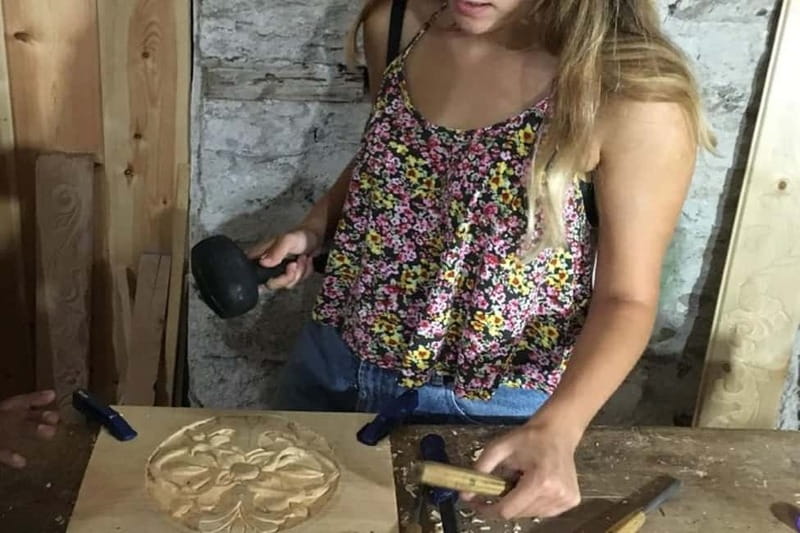
The practical section is led by a master instructor, with Victor or Viktor named by participants as the person offering hands-on help. The information provided uses both spellings, so the exact instructor name may depend on the session.
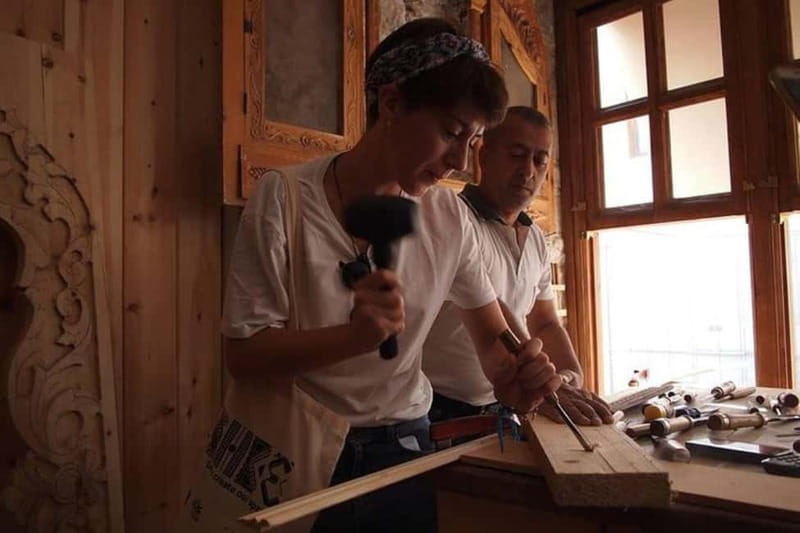
You receive the equipment and instruction needed for the craft. Beginners are welcome, and the guidance is personal rather than purely demonstrative. That matters because wood carving can feel awkward at first. You need to understand how to hold the tool, where to apply pressure, and how to follow your sketch without rushing.
I especially like that the instructor helps people who are not naturally confident with carving. One session was praised for making sure everyone received personal attention and left happy with the result. Another described the instructor as very helpful with tool use. That points to the class’s real strength: you do not need previous woodworking experience.
Still, expert help does not mean the instructor makes the whole item for you. You will need patience. The finished piece may show small irregularities, and that is part of its appeal. It carries the marks of a beginner working with local guidance rather than the perfect finish of a shop display.
Raki, homemade wine, and the pace of the work
A glass of raki or homemade wine is included while you work. The drink fits the setting and gives the workshop a friendly, informal feel. Coffee or tea may also be offered during the earlier introduction.
Keep the alcohol detail in perspective. It is a small part of the experience, not the main event. If you do not drink, the class still has plenty of value through the history, instruction, and making process. Food is not included, so do not arrive expecting a meal or a tasting session.
The relaxed pace also gives you time to talk with the guide and instructor. Theo has added general information about the city during some sessions, and photos or videos may be taken and shared afterward. These extras are useful, but they should be treated as possible additions rather than guaranteed features of every booking.
Because you are using tools, drink slowly and keep your attention on the carving. The class is best enjoyed as a craft workshop with a local drink, not as a drinking activity with a little carving on the side.
What you can realistically take home
The final object is a small personal memento of Gjirokaster. You can admire your work at the end and take it home with you.
That sounds simple, but it solves a common souvenir problem. A bought object may remind you that you visited Albania. An item you designed and carved also reminds you of the afternoon spent learning, making mistakes, asking for help, and finishing the piece.
The class does not specify the exact size of each project or the amount of finishing work provided. Your result will depend on your design, pace, and comfort with the tools. A simple sign or small necklace may be easier to complete than a detailed drawing or more involved mirror design.
For that reason, I would choose a manageable idea. Use short lettering, a basic symbol, or a clean shape. You can always add character through the handmade finish. A complicated plan may leave you spending too much time on details.
How the experience feels for beginners
This is a good option if you want a creative activity but do not consider yourself artistic. The instructor’s role is to guide your design and help you use the tools, and the available feedback points to strong attention for first-timers.
The class also suits couples, families with older children, and friends who want to make different objects side by side. Each person can choose a separate project, so the experience does not require everyone to follow the same pattern.
It may be less suitable if you want a fast activity with little instruction. The opening lesson takes time, and the carving itself rewards care rather than speed. It may also disappoint anyone expecting a large finished sculpture or a professional woodworking course. This is a small souvenir workshop built around a friendly introduction to a local craft.
The value of the $64 price
At $64, the class sits in the paid-experience range rather than the casual souvenir range. You are paying for three hours, an English-speaking guide, a master workshop setting, equipment, woodcraft instruction, materials, and a glass of raki or wine.
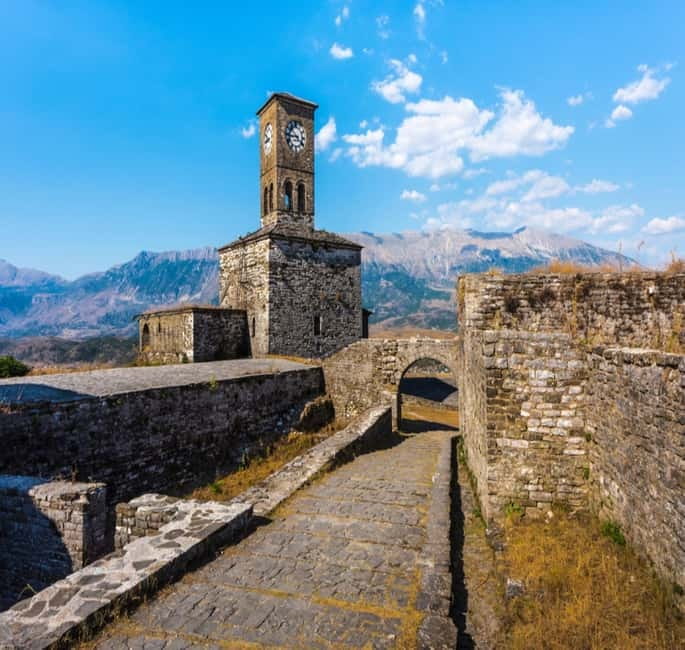
The value depends on what you want from Gjirokaster. If your goal is to see as much of the town as possible, three hours in a workshop means time away from other sights. If you have already allowed time for the castle and old town, this class adds a more active layer to your visit.
I think the price works best for someone who values a handmade result and direct instruction. The finished item alone may not be worth $64. The setting, background, help with the tools, and time spent making it are what turn a small object into a worthwhile experience.
Free cancellation up to 24 hours before the start and the option to reserve now and pay later also make it easier to fit into a changing Albania itinerary. Check the available starting times before booking, since the class lasts three hours.
Practical tips for a smoother class
Choose a design before you arrive, but keep it simple. A short word, initials, or a basic drawing will give you a clear goal without making the carving too demanding.
Wear clothes you can work comfortably in. The supplied information does not give a dress code, but a workshop is a better place for practical clothing than for anything delicate or restrictive.
Plan your meal separately. Food is not included, and the drink provided is not a substitute for lunch. You may want to eat before or after the class, depending on the starting time.
Meet at Cerciz Topulli Square with enough time to find the host. The activity begins there, and the short walk to the workshop is part of the opening transfer on foot.
If you drink raki or wine, remember that the class involves tools. Enjoy the local custom, but keep the focus on safe and careful work.
Who should book this experience?
I would recommend the class to you if you enjoy making things, want a souvenir with a story, or need a quieter break from sightseeing. It is especially useful for first-time woodworkers because the instructor provides direct assistance.
It also suits visitors who want local contact without committing to a full-day excursion. You learn about Gjirokaster’s architecture and wood tradition, then spend most of the session doing something practical.
You may want to skip it if you dislike hands-on activities, have very little time in town, or want a polished artisan product without doing the work yourself. You should also consider the alcohol component if raki or wine is not of interest, although the craft and instruction remain the main parts of the class.
Should you book the Gjirokaster woodcraft class?
Book it if you want to bring home more than a standard souvenir. The strongest reasons are the personal design, patient help for beginners, and connection between the workshop and Gjirokaster’s carved architectural details.
Before reserving, make sure three hours fits your sightseeing plan and that you are happy with a small, handmade object rather than a large woodworking project. At $64, this is a good-value cultural activity for people who enjoy making and learning. It is not the best choice for anyone seeking a quick stop or the lowest-cost keepsake.
FAQ
Where does the Gjirokaster wood crafting class meet?
Meet your host at Cerciz Topulli Square in Gjirokaster. From there, you take a short walk to Master Nurce’s workshop.
How long does the woodcraft class last?
The activity lasts three hours. Starting times depend on availability.
How much does the experience cost?
The listed price is $64 per person.
Is the class conducted in English?
Yes. The experience includes a live English-speaking guide.
What can I make during the workshop?
You can choose a small wooden sign with text or a drawing, a small necklace, a key hanger, or a small mirror.
Are tools and materials included?
Yes. The instructor, all equipment, and the woodcraft activity are included.
Is a drink included?
Yes. A glass of raki or wine is included. Coffee or tea may also be offered during the introductory part.
Is food included?
No. Food is not included in the activity.
Can I cancel the booking?
You can cancel up to 24 hours in advance for a full refund. You can also reserve now and pay later.
Just added around Gjirokaster
- Vlora, Llogara & Dhërmi: Albanian Riviera from Durres/Golem★ 4.9 · 7 reviews
- Wood Crafting Experience in Gjirokastra★ 4.5 · 10 reviews
- Walking Tour “The Old Bazaar, Cfake, Dunavat, Ali Pasha Bridge”★ 5.0 · 10 reviews
- Vegetarian Cooking Class @Teta Marjeta★ 5.0 · 11 reviews
- Cooking Class★ 4.5 · 12 reviews
- Gjirokastra Private Half-Day Walking Tour★ 5.0 · 3 reviews
- Gjirokaster – The Stone City of UNESCO, Private Tour from Tirana★ 4.5 · 4 reviews
- Prepare Osa with Teta Marjeta★ 4.5 · 7 reviews
Workshops, compared.
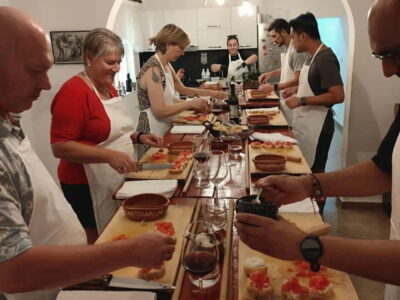
Traditional Cooking Class with Wine & Raki Tasting
Read our review →
Cooking Classes and Traditional food tasting in Tirana
Read our review →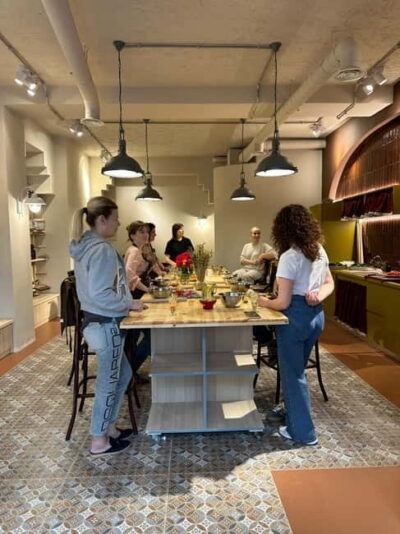
Traditional Albanian Cooking Class in Tirana & Raki Tasting
Read our review →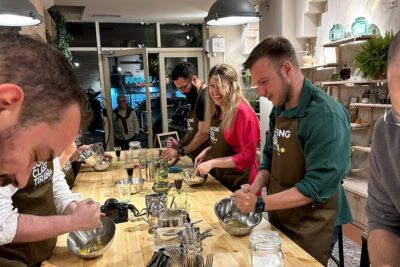
Traditional Albanian Cooking Class in Tirana with Raki Tasting
Read our review →
Berat Cooking Class- Traditional Albanian Cooking Class /By Vato
Read our review →
Savor Albanian Cuisine Cooking Class with Mama Nina Berat Castle
Read our review →
Tirana Cooking Class – Traditional Albanian Recipes
Read our review →Browse the lists this tour appears in