
Reviewed · ALBANIAN COOKING EXPERIENCES
Cook Like a Local – Authentic Cooking Class in Gjirokastra
Gjirokastra’s best food lesson may be the one you can eat at the end. In a stone house or family-run guesthouse in the Old Bazaar, you learn to make qifqi, the town’s herb-scented rice balls, and hand-rolled pasta with lamb. I like the cooking because it is practical, and I like the storytelling because it explains how food fits into Albanian family life.
The friendly host and intimate feel are the main draws. The class has been described as very private, with lovely food and a warm welcome. The catch is that the experience lasts only two hours, and the advertised overall rating is uneven at 3.2 from four ratings, so you should book it for the local meal and cultural contact rather than expect a polished culinary school.
In This Review
- Key points at a glance
- Cooking in Gjirokastra’s Old Bazaar
- Making qifqi with mint and oregano
- Preparing osa me mish qengji
- A seasonal dessert and a shared Albanian lunch
- The stories behind family recipes
- What the two-hour schedule means
- Is $73 a fair price?
- Who will enjoy this class most?
- Booking details worth knowing
- Should you book Cook Like a Local?
- FAQ
- Where does the cooking class take place?
- How long does the experience last?
- What dishes will I prepare?
- What is included in the meal?
- Are drinks included?
- Which languages are available?
- Do I receive the recipes?
- Is the activity suitable for wheelchair users?
- Can I cancel for a refund?
- Can I reserve now and pay later?
Key points at a glance
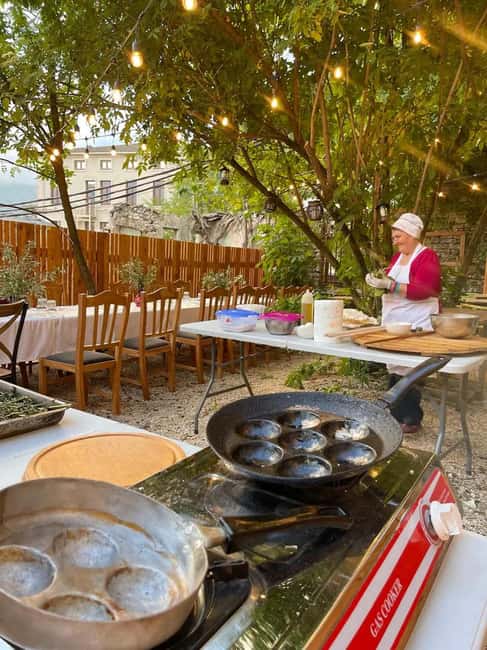
- Qifqi cooked the Gjirokastrian way: Shape herb-filled rice balls and fry them in the traditional cast-iron mold associated with the region.
- Lamb pasta is the main meal: Prepare osa me mish qengji, hand-rolled pasta with slow-cooked lamb and local seasoning.
- The setting is part of the lesson: Cook among cobblestones and Ottoman-era buildings in Gjirokastra’s UNESCO-listed Old Bazaar.
- Your host adds the local meaning: Hear about family recipes, Albanian hospitality, herbs, spices, and food customs.
- Lunch is included: Eat the dishes you prepare with seasonal salad, dessert, and drinks such as tea or raki.
- Recipes go home with you: Written recipe cards make this more useful than a meal that ends when you leave the table.
Cooking in Gjirokastra’s Old Bazaar
This class begins in one of Albania’s most atmospheric places. Gjirokastra’s Old Bazaar is a UNESCO World Heritage site, known for cobbled lanes and Ottoman-era architecture. The cooking takes place in a cozy rustic setting, described as an old stone house or family-run guesthouse within the bazaar.
That setting matters. You are not simply sitting in a modern kitchen with a city view on a screen. The stone buildings, narrow alleys, and old-town surroundings give the food a clear sense of place. The class connects the dish in front of you with the town outside the door.
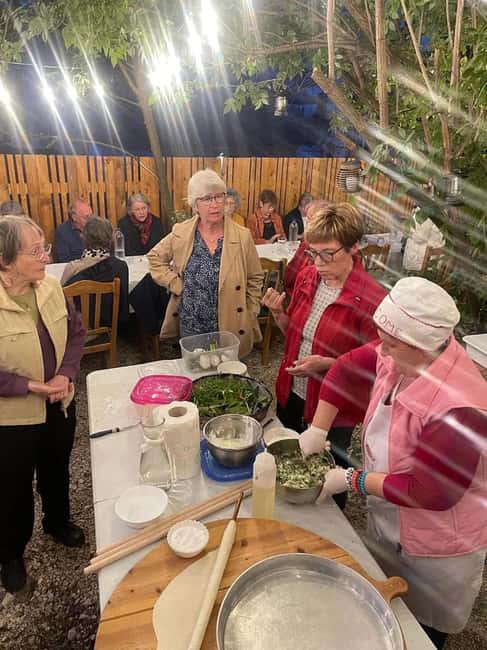
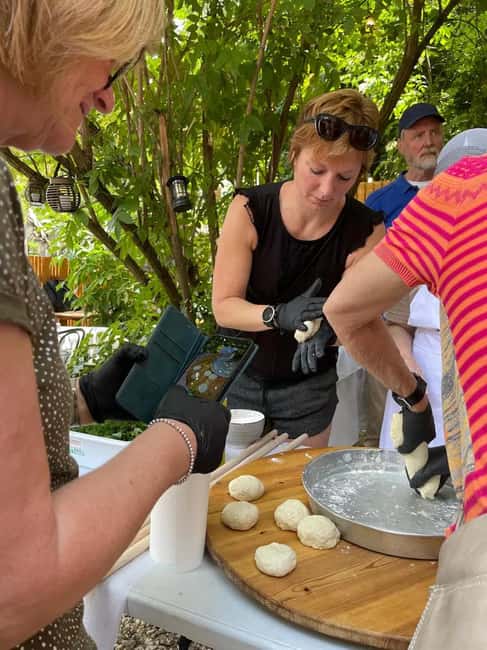
You should expect a hands-on workshop rather than a demonstration where you watch a chef do everything. The host guides you through the preparation, then explains why the recipes matter. Details such as how herbs are dried, preserved, and blended help you understand the flavor of southern Albania instead of merely memorizing a list of ingredients.
The exact room may vary, since the experience can be held in an old stone house or a family-run guesthouse. That means the atmosphere should feel personal, but it also means you should not expect a single standardized venue with the same layout every time.
More albanian cooking experiences in Gjirokaster:
- Gjirokastër: Traditional Albanian Vegetarian Cooking Class
★ 4.4 · 17 reviews - Cooking Class
★ 4.5 · 12 reviews - Vegetarian Cooking Class @Teta Marjeta
★ 5.0 · 11 reviews
Making qifqi with mint and oregano
Qifqi is the dish that gives this class its strongest local identity. These savory rice balls are mixed with fresh herbs, including mint and oregano, then fried in a traditional cast-iron mold unique to Gjirokastra.
That mold is more than a cooking tool. It is a small piece of regional technique, and using it gives you a direct connection to the town’s kitchens. You learn how the mixture is handled, how the balls take shape, and how the herbs change the character of what might otherwise be a plain rice dish.
I like this part for two reasons. First, it is genuinely participatory. You are shaping and cooking something with your own hands. Second, qifqi is closely tied to Gjirokastra, so you are learning a dish that says more about the town than a generic Balkan recipe would.
Fresh, seasonal, and locally sourced ingredients are part of the class. Availability changes with the time of year, but the focus stays on food that belongs to the area and its cooking habits. Your host also explains how herbs and spices are stored and combined, which gives you useful ideas for recreating the dish at home.
The frying stage may be the most interesting and the least familiar part for home cooks. Pay close attention to how the cast-iron mold is used. If you plan to make qifqi later, the recipe card will help, but the technique you see in person is just as important.
Preparing osa me mish qengji
The second main dish is osa me mish qengji, a hearty preparation of hand-rolled pasta with tender lamb. It has the comfort-food quality you want after walking Gjirokastra’s steep old streets, and it reflects the area’s mountain setting through its lamb and local seasoning.
The phrase hand-rolled is important. This is not simply pasta taken from a packet and covered with sauce. You take part in the preparation, learning how the pasta is formed before it is served with slow-cooked lamb.
The lamb is described as tender and slow-cooked, with local spices adding flavor. The host uses the dish to talk about regional ingredients and the way cooking has been passed through families. You are not only learning a method. You are hearing why this sort of filling meal belongs to southern Albania.
The class does not promise a long restaurant-style tasting menu. You prepare two main dishes, a seasonal dessert, and then sit down for lunch. That is a sensible format for a two-hour activity, but it also means the pace may feel brisk if you want detailed instruction at every stage.
I would treat the pasta and lamb as the centerpiece of the meal. Qifqi offers the distinctive local touch, while osa me mish qengji gives you something substantial to eat. Together, they make the lunch feel like a proper home meal rather than a sample plate.
A seasonal dessert and a shared Albanian lunch
Dessert depends on the season and the ingredients available. You might prepare a fruit compote with local honey and nuts, or a traditional sweet such as sheqerpare.
This changing dessert is a strength if you enjoy food tied to the calendar. It keeps the class connected to local produce instead of forcing the same dessert in every month. The tradeoff is simple: you cannot know exactly what you will make ahead of time.
Once the cooking is finished, you sit down for the meal. Lunch includes the lamb pasta, qifqi, a seasonal salad, and dessert. Drinks are included too, with tea or raki listed as options. The broader description also mentions local wine, so drink choices may depend on what is being served on the day.
The shared table is an important part of the experience. Albanian hospitality is not treated as a side note here. Your host explains the role of food in family life and the customs surrounding traditional meals, then you have time to eat and talk in the same setting where you cooked.
The atmosphere is intended to be warm and authentic rather than formal. That suits the class. You are there to learn how food is made and why it matters, not to receive restaurant service with a fixed script.
One practical point: tea, wine, or raki can make the meal feel festive, but raki is strong. If you are driving, have dietary concerns, or simply do not drink spirits, ask for tea or another available option.
A few more Gjirokaster trips to weigh up
- Tirana: Traditional Cooking Class with Wine & Raki Tasting
★ 5.0 · 284 reviews - Cooking Classes and Traditional food tasting in Tirana
★ 5.0 · 282 reviews - Traditional Albanian Cooking Class in Tirana & Raki Tasting
★ 5.0 · 266 reviews - Traditional Albanian Cooking Class in Tirana with Raki Tasting
★ 5.0 · 125 reviews
The stories behind family recipes
The most valuable part of the class may happen between cooking steps. Your host shares stories about recipes kept within families for generations, the meaning of certain ingredients, and the way local cooking has changed while keeping its traditional base.
This is where a short class can offer more than a cookbook. You hear how food is connected with hospitality, celebration, preservation, and everyday life. Herbs are not just seasonings. You learn how they are dried, stored, and combined to bring out the flavors of the region.
The class is offered in English, Italian, Greek, or Albanian. That range makes it easier for many visitors to follow the instruction, though the amount of storytelling you receive will naturally depend on the language you choose and the flow of the group.
Past feedback points to a friendly host and a very private feel. That is encouraging if you prefer a personal encounter over a large group class. It also sets the right expectation: this is likely closer to cooking with a local family than attending a formal lesson led by a celebrity chef.
You should come ready to ask questions. Ask about the herbs, the cast-iron mold, the pasta technique, and when families usually serve these dishes. A curious participant will get more from the class than someone who simply waits for lunch.
What the two-hour schedule means
Two hours is enough time to cook, hear some stories, and eat the meal. It is not enough time for a long market visit, a full tour of Gjirokastra, or a detailed lesson in every regional dish.
The experience is therefore a good fit for a morning or afternoon gap in your town visit. You can add a cultural activity without giving up half a day. The short length also works well if you are traveling with a mixed group and not everyone wants an extended cooking course.
At the same time, two hours can pass quickly. You may need to keep moving from preparation to cooking to lunch. If you are an experienced cook hoping to study advanced techniques, this may feel introductory. If you are a beginner, the pace should be more approachable because the menu is focused.
Starting times vary, so you need to check availability for the date you want. No transport is listed as part of the activity, so plan to reach the Old Bazaar independently and allow time for Gjirokastra’s cobbled streets.
The location is not suitable for people with mobility impairments or wheelchair users. The old town’s stone lanes and historic buildings are a serious consideration, not a minor footnote.
Is $73 a fair price?
At $73 per person, the price is not low for a two-hour activity in Albania. The value depends on what you want from the class.
You receive instruction, ingredients, a full lunch, a seasonal salad, dessert, drinks, and written recipes. You also pay for the setting and the time of a local host who explains the food’s place in Gjirokastra’s culture. Compared with buying a meal alone, the class offers more substance because you take part in preparing it.
I think the price makes the most sense if you value small-scale, personal experiences. The private feel and friendly hosting are central to its appeal. If your main goal is simply to eat inexpensive Albanian food, you can likely find a cheaper meal elsewhere.
The limited number of ratings and the mixed overall score call for sensible expectations. This is not presented as a high-end professional cooking school, and you should not book it expecting restaurant-level precision or a long culinary program. Book it for the local setting, the traditional recipes, and the chance to sit at the table with your host.
The recipe cards improve the value. They turn the class into something you can revisit after your trip, especially if you already cook at home and have access to rice, herbs, lamb, and basic pasta-making equipment.
Who will enjoy this class most?
I would recommend it most strongly to people who care about food as a way to meet a place. It suits curious beginners, couples, small groups, and anyone who prefers a personal host to a large commercial activity.
It is also a good match for visitors spending time in Gjirokastra who want more than photographs of the old town. The class gives the bazaar a human side. You learn what people eat, how families preserve recipes, and why hospitality matters.
Food lovers who enjoy regional specialties will appreciate qifqi in particular. It is not the sort of dish you encounter in every international Albanian restaurant, and the traditional mold makes the lesson more specific to Gjirokastra.
You may want to skip it if you need step-free access, dislike shared meals, or want a long and highly technical cooking course. The two-hour format is focused, and the menu changes slightly with the season.
Dietary needs are not described in the available information. If you have allergies or follow a special diet, contact the provider before booking rather than assuming the lamb, pasta, rice balls, or dessert can be altered.
Booking details worth knowing
The activity costs $73 per person and lasts two hours. You can reserve now and pay later, which helps if your Albania plans are still shifting.
Free cancellation is available up to 24 hours before the activity for a full refund. Check the exact starting time when selecting your date, since times vary by availability.
Kalemi Travel & Tours provides the experience. Instruction is available in English, Italian, Greek, or Albanian. The meeting setting is in the Gjirokastra District, specifically around the Old Bazaar area described for the class.
No separate transport is included in the information provided. Since the activity takes place in the historic bazaar, wear comfortable shoes and be prepared for old cobbled surfaces. This is basic advice for the setting, and especially important if you have difficulty walking.
Should you book Cook Like a Local?
Book this class if you want a friendly, personal food experience built around Gjirokastra’s own dishes. The qifqi, cast-iron mold, lamb pasta, family stories, and recipe cards give it a clear local purpose.
I would be more cautious if you are judging value only by time or expecting a flawless professional course. Two hours is short, $73 is a meaningful price, and the limited rating record is mixed. Still, for a visitor who wants to cook, eat, and learn inside the Old Bazaar, this is a thoughtful way to spend part of a day.
FAQ
Where does the cooking class take place?
The class takes place in Gjirokastra’s Old Bazaar, a UNESCO World Heritage site. The setting may be an old stone house or a family-run guesthouse within the bazaar.
How long does the experience last?
The cooking class lasts two hours.
What dishes will I prepare?
You will prepare qifqi, savory rice balls flavored with herbs such as mint and oregano, and osa me mish qengji, hand-rolled pasta with lamb. You will also prepare a seasonal Albanian dessert.
What is included in the meal?
Lunch includes pasta with lamb, qifqi, seasonal salad, and dessert.
Are drinks included?
Yes. Drinks are included, with tea or raki listed. The experience description also mentions local wine.
Which languages are available?
The instructor can provide the class in English, Italian, Greek, or Albanian.
Do I receive the recipes?
Yes. You receive written recipe cards for the dishes prepared during the class.
Is the activity suitable for wheelchair users?
No. The activity is not suitable for wheelchair users or people with mobility impairments.
Can I cancel for a refund?
Yes. You can cancel up to 24 hours in advance for a full refund.
Can I reserve now and pay later?
Yes. The reserve now and pay later option lets you book without paying at the time of reservation.
More Workshops in Gjirokaster
- Gjirokaster: Wood Crafting Class
★ 5.0 · 16 reviews - Berat Cooking Class- Traditional Albanian Cooking Class /By Vato
★ 5.0 · 120 reviews - Savor Albanian Cuisine Cooking Class with Mama Nina Berat Castle
★ 5.0 · 55 reviews - Cooking Class in Berat Slow Food Community
★ 5.0 · 34 reviews
Just added around Gjirokaster
- Vlora, Llogara & Dhërmi: Albanian Riviera from Durres/Golem★ 4.9 · 7 reviews
- Walking Tour “The Old Bazaar, Cfake, Dunavat, Ali Pasha Bridge”★ 5.0 · 10 reviews
- Wood Crafting Experience in Gjirokastra★ 4.5 · 10 reviews
- Vegetarian Cooking Class @Teta Marjeta★ 5.0 · 11 reviews
- Cooking Class★ 4.5 · 12 reviews
- Gjirokaster – The Stone City of UNESCO, Private Tour from Tirana★ 4.5 · 4 reviews
- Gjirokastra Private Half-Day Walking Tour★ 5.0 · 3 reviews
- Prepare Osa with Teta Marjeta★ 4.5 · 7 reviews
Albanian Cooking Experiences, compared.
Traditional Cooking Class with Wine & Raki Tasting
Read our review →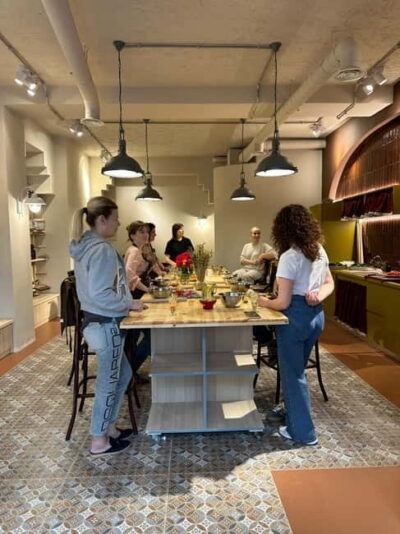
Traditional Albanian Cooking Class in Tirana & Raki Tasting
Read our review →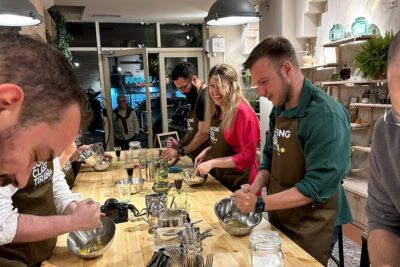
Traditional Albanian Cooking Class in Tirana with Raki Tasting
Read our review →
Berat Cooking Class- Traditional Albanian Cooking Class /By Vato
Read our review →
Savor Albanian Cuisine Cooking Class with Mama Nina Berat Castle
Read our review →
Tirana Cooking Class – Traditional Albanian Recipes
Read our review →
Tirana Photo Shoot in Traditional Albanian Costumes
Read our review →Browse the lists this tour appears in