
Reviewed · WALKING TOURS
Tirana Highlights: A Walking Tour with a Local Guide
Tirana’s story is best understood on foot, and this tour gets quickly to the heart of it. In two hours, you move from Ottoman-era landmarks to Communist-era reminders and bold new architecture, with a local guide explaining the connections. Ray and K have earned especially strong praise for making history clear, personal, and fun.
I like the route’s compact list of major sights, especially Skanderbeg Square, Bunk’Art 2, and the Pyramid of Tirana. I also like the personal angle: K has family ties to historians who lived through Communist Albania, while Ray has been praised for answering questions with humor and detail. The main drawback is pace. With so many stops packed into two hours, most places receive only five or ten minutes.
In This Review
- Why this two-hour Tirana walk works
- Starting under the Opera sign
- Skanderbeg Square and the center of Tirana
- The Clock Tower and Bunk’Art 2
- Reja and Tirana Castle
- Mosques and cathedrals in one central route
- The Pyramid of Tirana and the weight of the past
- Blloku and modern Tirana
- What the guides add to the route
- The pace, walking, and practical fit
- Is $23 a fair price?
- Who should book this Tirana walk?
- Should you book it?
- FAQ
- Where does the Tirana walking tour begin?
- Where does the tour end?
- How long does the experience last?
- What language is the tour offered in?
- Is the tour wheelchair accessible?
- What is included in the price?
Why this two-hour Tirana walk works
- Communist-era context: Bunk’Art 2 and the Pyramid help explain Albania’s difficult 20th century.
- A local voice: Guides such as Ray and K connect political change with family and social experience.
- A practical first look: The route covers many central sights without transport or long transfers.
- Old and new Tirana: Ottoman, Orthodox, Catholic, Communist, and modern buildings appear on one walk.
- Good trip-planning value: Your guide can point out what to see next and suggest a useful order for exploring.
Starting under the Opera sign
The meeting point is under the Opera & Ballet Theatre sign, a clear central location near the start of the route. You return to the same area at the end, which makes this easy to fit into a day of sightseeing.
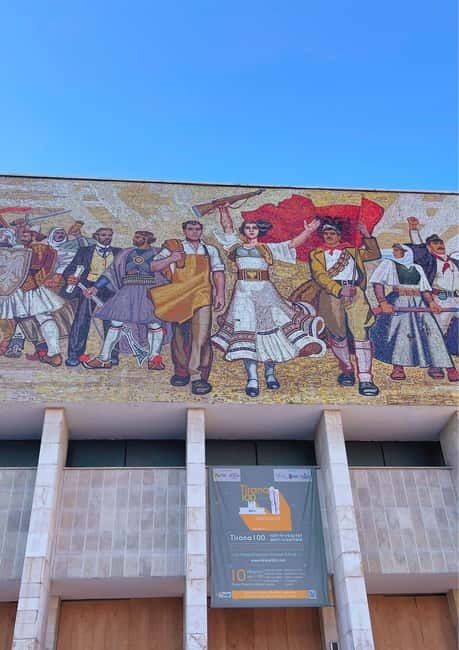
The route begins with a short visit near the theater before moving toward the National History Museum. Since the museum stop is listed as only five minutes, treat it as an orientation point rather than a museum visit. You should not expect time to study the exhibits or tour the building’s full collection during this walk.
That short opening is still useful. Tirana can seem like a jumble of grand squares, new construction, old religious buildings, and Communist symbols. A guide gives you a framework before you begin, so the later stops make more sense.
A few more Tirana trips to weigh up
- Walking Tour of Tirana
★ 5.0 · 646 reviews - Tirana: Express Walking Tour with a Guide
★ 4.8 · 503 reviews - Tirana Center: Magic Walking Tour French/Italian/English Etc
★ 4.9 · 402 reviews
Skanderbeg Square and the center of Tirana
Skanderbeg Square is the natural center of the tour. It has long been tied to Tirana’s public and political life, so this is where your guide can explain more than the names of buildings. You get a sense of how the capital presents its national identity and how public space has changed over time.
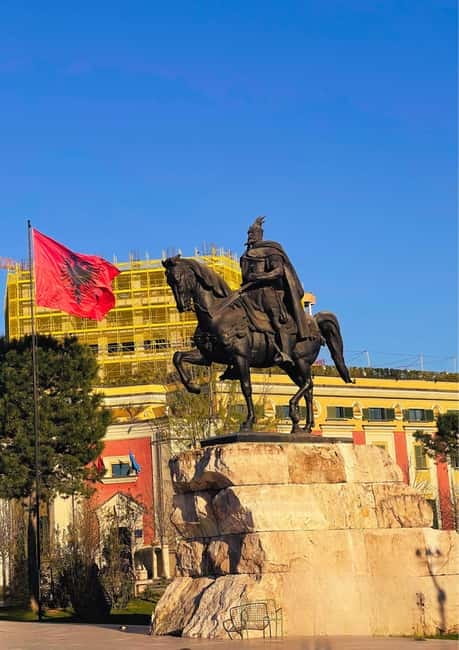
The nearby Skanderbeg Statue gives the square its visual focus. The stop is short, but it helps connect the modern capital with Albania’s national hero. I would pay attention here to the guide’s explanation rather than expect a long formal talk at the statue.
The route then reaches the Et’hem Bey Mosque, one of Tirana’s most important historic religious sites. It is presented as a symbol of the city’s resilience, and its location near the main square makes it a useful reminder that Tirana’s past did not begin with the Communist period.
The scheduled visit lasts five minutes. That is enough for a quick look and explanation, but not a leisurely architectural study. If seeing the interior matters to you, ask the guide about current access and timing. The tour information confirms the stop, but it does not promise a full interior visit.
The Clock Tower and Bunk’Art 2
Kulla e Sahatit, Tirana’s Clock Tower, follows the mosque. This brief stop adds another layer to the city center, showing how Ottoman-era and later civic buildings sit close together. The five-minute timing keeps the tour moving, but your guide can help you understand why this small landmark matters in the wider center.
Bunk’Art 2 is one of the most useful stops for understanding modern Albanian history. The site recalls the country’s Communist period and the machinery of political control. Even with ten minutes, the stop gives your guide room to explain why bunkers and state security remain such important subjects in Albania.
I especially value this part of the route because Albania’s Communist past can be easy to miss if you only admire the cafés, squares, and new buildings. Bunk’Art 2 brings the subject into the open. The tour does not appear to include a full museum visit, so plan a separate return if you want to spend more time inside.
That distinction matters. This is a city walk with short stops, not a series of full admissions. You receive context and an overview, then decide which places deserve a longer visit later.
Reja and Tirana Castle
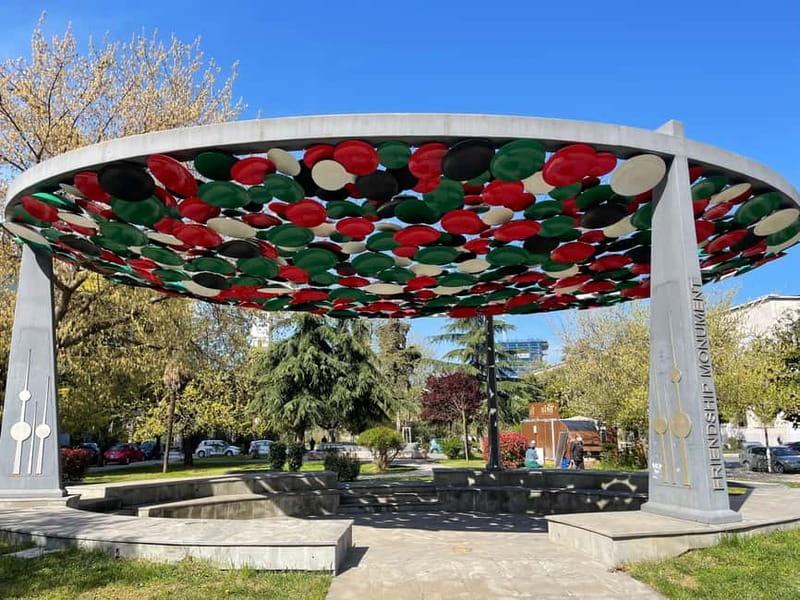
Reja, known as The Cloud, changes the mood. This modern public artwork offers a sharp contrast with the historic buildings around it. The five-minute stop is enough to see the form and hear why it has a place in the city center.
Tirana Castle comes next. The name can suggest a preserved fortress complex, but the tour information does not promise a long historical visit or a particular interior experience. Think of this as a short stop within the city route, with your guide providing the useful context.
These two locations work well together. Reja represents contemporary Tirana, while the castle points toward older layers of the city. One of the tour’s strengths is this constant shift between periods. You do not spend the whole walk looking at one kind of monument.
Same coast, a completely different kind of day:
- From Tirana: Bovilla Lake & Gamti Mountain Hiking Day Trip
★ 4.9 · 4,397 reviews - From Tirana: Bovilla Lake & Gamti Mountain Hiking Tour
★ 4.9 · 3,003 reviews - From Tirana: Bovilla Lake & Gamti Mountain Viewpoint Hike
★ 4.8 · 2,053 reviews - Tirana/Durres/Golem: Saranda, Ksamil, Blue Eye Day Trip
★ 4.8 · 1,584 reviews
Mosques and cathedrals in one central route
The walk continues to Namazgah Mosque and Saint Paul Cathedral. These stops show the range of religious architecture in Tirana and help explain the city’s changing public identity.
Namazgah Mosque is scheduled for five minutes, while Saint Paul Cathedral receives the same short visit. The route does not promise a service, guided interior access, or extended architectural study. You can expect an outside look or brief stop with an explanation from the guide, depending on access at the time.
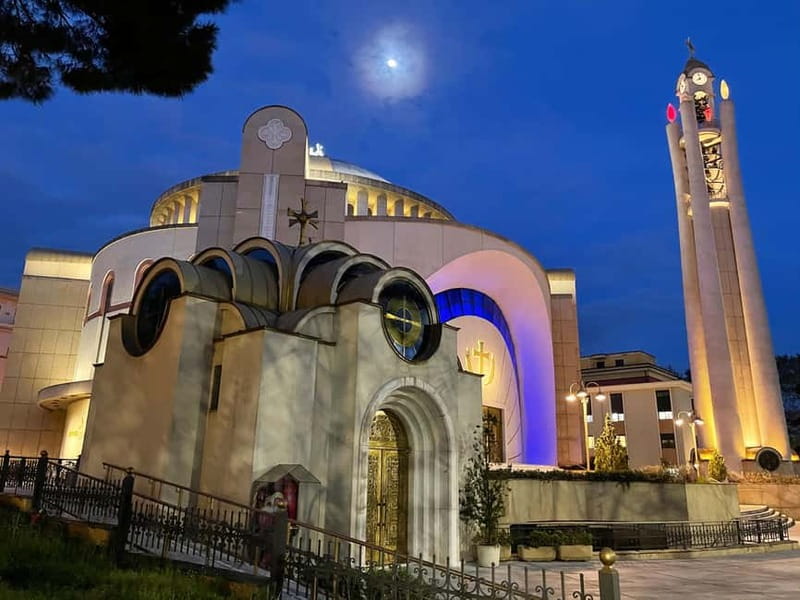
The Resurrection of Christ Orthodox Cathedral appears later in the walk and receives ten minutes. Together, the Orthodox Cathedral, Saint Paul Cathedral, Et’hem Bey Mosque, and Namazgah Mosque create one of the tour’s most useful themes: Tirana’s religious buildings represent different periods and communities within the capital.
For me, the value is not simply seeing four buildings. It is hearing how they fit into Albania’s social and political story. The country’s religious history is part of what makes this city different from many nearby Balkan capitals, and one highly rated tour comment specifically praised the chance to understand Albania as distinct from other Balkan countries.
The Pyramid of Tirana and the weight of the past
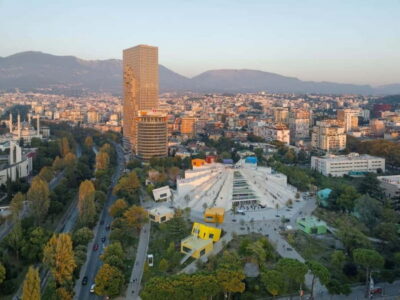
The Pyramid of Tirana gets ten minutes, making it one of the longer stops. Its unusual shape draws attention, but the important part is its complicated past. The building is tied to Albania’s Communist era and has taken on a different meaning as the city changes.
A short guided explanation can help you see the Pyramid as more than an odd piece of architecture. It raises questions about memory, public symbols, and how a capital decides what to keep, change, or reinterpret.
This is another place where the guide’s personal knowledge can add real value. K has been praised for explaining Communist-era suffering through family and friends while also showing pride in Albania’s future. That balance is important. The history is not presented as a simple story of old bad times and new good times.
If you want a long visit to the Pyramid, allow time before or after the tour. The ten-minute stop is enough for orientation and photographs, not a full exploration of every feature.
Blloku and modern Tirana
Blloku is the final major neighborhood stop before the route returns toward the Opera & Ballet Theatre. Its importance comes from the contrast between its past and its current place in city life. The tour description connects Blloku with Tirana’s political and social changes, making it a useful closing chapter after Bunk’Art 2 and the Pyramid.
The route also passes the Prime Minister’s office, where your guide can discuss Albania’s political system and current public life. The stop is valuable because you are not only seeing a government building. You are learning how power, memory, and city space meet in the capital.
Blloku is scheduled for ten minutes. That gives you enough time to understand its role, but not enough for an extended neighborhood walk or a café break. If you like the area, note it for a later visit. The guide can also help you decide what to see next and in what order, a practical benefit highlighted by the strongest comments.
What the guides add to the route
The guide is the main reason to choose this experience instead of walking the same streets with a map. The route itself is easy to identify, but the meaning behind the places is less obvious.
Ray has been praised for keeping explanations informative while still fun. Another strong account describes him as able to answer every question and fill in background that was missing after several days of independent sightseeing. That is a useful distinction: this tour can add value even if you have already seen central Tirana on your own.
K has also received particular praise for making political and social change personal without losing sight of Albania’s progress. His family connection to historians gives the Communist period a human dimension, though you should not assume he will be your guide. Guide assignments can vary.
The available comments also describe the guides as well-informed, engaged, humorous, and good at choosing manageable distances. Those qualities matter on a two-hour walk. A dry lecture would make the compressed schedule feel rushed, while a clear speaker can make each short stop count.
The tour is in English only. If you want a guide in another language, this is not the right choice based on the available details.
The pace, walking, and practical fit
Two hours is both the tour’s strength and its limit. You can fit it into a busy day, and the route gives you a useful first look at central Tirana. Several people have valued the timing because it fits neatly around other plans.
At the same time, the stop schedule is tight. Most locations receive five minutes, with only Skanderbeg Square, Bunk’Art 2, the Pyramid, Blloku, and the Orthodox Cathedral receiving ten. You will need to listen while walking and accept that some sights are introductions rather than full visits.
I would book this early in your Tirana stay if possible. The route gives you a map of the center and helps you choose where to return. It is also a good choice after you have walked alone and want the political and historical context that signs and buildings cannot provide on their own.
The tour is listed as wheelchair accessible, which makes it a useful option for many visitors who need an accessible activity. Still, the provider’s details do not describe the exact street surfaces, restroom arrangements, or access conditions inside individual buildings. If those points are important for you, confirm them before booking.
Is $23 a fair price?
At $23 per person, the tour offers solid value if you want a local English-speaking guide and a quick introduction to Tirana’s main sights. You are paying for interpretation, not admission-heavy sightseeing. The included guide is the central service, and there is no indication that entrance fees to museums or monuments are part of the price.
The value is strongest for first-time visitors, short stays, and anyone interested in Albania’s political past. It is also worthwhile for independent sightseers who have already seen the buildings but want the story behind them. A private guide for two hours would likely cost more, though group size is not provided, so I cannot judge how much personal attention you will receive.
The price is less compelling if you want to spend substantial time inside museums, study religious architecture, or take a slow neighborhood walk. In that case, use the tour as a sampler and budget extra time for return visits.
Flexible booking adds practical value. You can reserve now and pay later, and cancellation is free up to 24 hours in advance for a full refund. Starting times vary, so check availability when choosing your date.
Who should book this Tirana walk?
I recommend it most for:
- First-time visitors who want a clear introduction to the capital
- People with only a short time in Tirana
- History-minded visitors interested in the Communist period
- Independent sightseers who want better context
- Visitors who prefer walking to organized vehicle tours
- Anyone who wants advice on what to see next
You may want a different experience if your priority is a long museum visit, detailed interior access, food tasting, or a slow photography walk. The route covers a lot, but it moves quickly.
The strongest reason to book is the human explanation. Albania’s recent past can be difficult, political, and personal. A guide such as Ray or K can make those subjects easier to follow without turning the walk into a dull lecture.
Should you book it?
Book this tour if you want a fast, useful introduction to Tirana with historical context and a local English-speaking guide. The route covers the city’s main public square, Ottoman and religious landmarks, Communist-era sites, modern art, government buildings, the Pyramid, and Blloku in one compact outing.
Do not book it expecting long visits at every stop. Think of it as a well-organized orientation walk that helps you understand the city and plan the rest of your stay. At $23, that is a fair trade, especially if Ray, K, or another guide with the same personal approach leads your group.
FAQ
Where does the Tirana walking tour begin?
The tour begins under the Opera sign at the Opera & Ballet Theatre.
Where does the tour end?
The walk returns to the Opera & Ballet Theatre.
How long does the experience last?
The tour lasts two hours.
What language is the tour offered in?
The tour is offered in English with a live English-speaking guide.
Is the tour wheelchair accessible?
Yes, the activity is listed as wheelchair accessible.
What is included in the price?
An English-speaking guide is included. The available information does not state that admission fees to museums or other sights are included.
Just added around Tirana
- Zipline Tirana Adventure & Petrela Castle – With Transport★ 4.4 · 10 reviews
- Wine Tasting & Vineyards Escape near Tirana★ 4.9 · 8 reviews
- Wonderful Sunset and Dinner in the Castel Of Petrela★ 4.6 · 4 reviews
- Walking Tour in Tirana, Albania★ 3.7 · 28 reviews
- Vlora, Dhermi & Llogara Day Trip from Durrës or Golem★ 5.0 · 5 reviews
- From Tirana: Mount Dajti Adventure, Local Vibes & Cable Car opt★ 4.5 · 6 reviews
- Winetasting tour in Alpeta winery – Roshnik village by 1001 Albanian Adventures★ 5.0 · 26 reviews
- Day Tour to Petrela Castle and Zip Line Albania Adventure★ 5.0 · 10 reviews
Walking Tours, compared.

Blue Eye Kayak and walking tour & Lekursi Castle
Read our review →

Tirana Stroll Tour, Walk and Taste Qofte & Raki!
Read our review →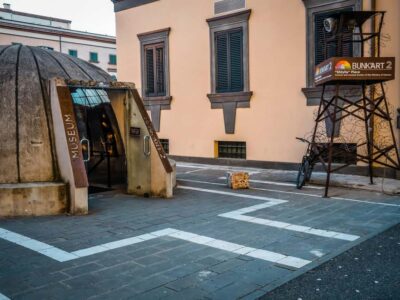
Tirana’s Communist Past; Small Group Walking Tour
Read our review →Browse the lists this tour appears in