
Reviewed · WALKING TOURS
Tirana Extended Walking Tour – Essential of the Albanian Capital
Tirana’s story comes into focus on foot, from Ottoman-era mosques and a 19th-century clock tower to a nuclear bunker and the former home of Albania’s communist elite. This private four-to-five-hour walk gives you a useful first look at the capital without rushing you from one far-flung sight to another.
I like the mix of major landmarks and ordinary city life, especially the stop at Komiteti Café-Museum, where coffee, tea, or rakia comes with a look at communist-era household objects. I also like the guide’s flexible approach. Daniel is praised for adjusting the pace and explanations for a multigenerational group, though the long walking route and 90 stairs in the Clock Tower may not suit everyone.
In This Review
- Key points to know before booking
- Why this Tirana walk works as a first introduction
- Et’hem Bey Mosque and the Clock Tower
- Bunk’Art 2 and the hard years of communist Albania
- Murat Toptani Street and the old Toptani connection
- Komiteti Café-Museum and a taste of everyday Albania
- The Pyramid and Tirana’s changing identity
- Dëshmorët e Kombit Boulevard and Mother Teresa Square
- Blloku, from party enclave to nightlife district
- Resurrection of Christ Orthodox Cathedral
- Price, pace, and what you receive for $84.03
- Who will get the most from this tour
- Booking details and practical points
- Should you book the Tirana Extended Walking Tour?
- FAQ
- Where does the tour start?
- What time does the tour begin?
- How long does the tour last?
- Is this a private tour?
- Is the tour offered in English?
- Are the Clock Tower and Bunk’Art 2 admissions included?
- Can dietary requirements be accommodated?
Key points to know before booking
- A private tour for your own group: You do not share the activity with strangers, and the guide can adjust the pace and content.
- Tirana’s past in one walk: The route covers Ottoman monuments, communist rule, post-communist change, and today’s fashionable Blloku district.
- A real local pause at Komiteti: Enjoy coffee, tea, or rakia among radios, furniture, kitchenware, and other communist-era objects.
- A climb for city views: The Clock Tower has 90 stairs and overlooks Skanderbeg Square and the central city.
- Bunk’Art 2 adds difficult context: The former Ministry of Internal Affairs shelter explains Albania’s huge bunker-building program.
- Best for first-time visitors: The route gives you a clear framework for exploring Tirana on your own afterward.
Why this Tirana walk works as a first introduction
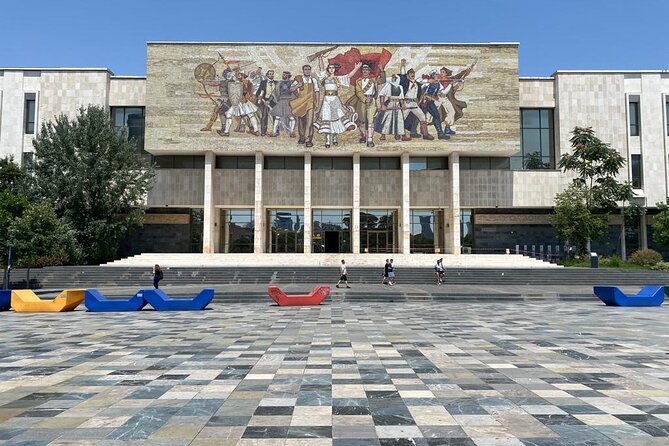
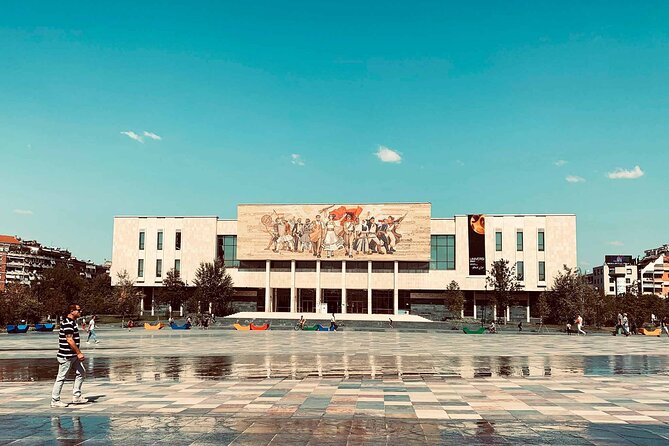
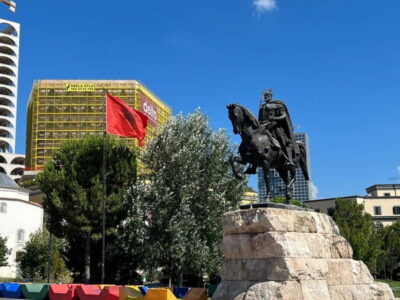
The tour begins at 10:30 am in Skanderbeg Square, the broad central stage of Tirana. This is the right place to begin because the surrounding buildings tell much of the city’s story in a compact area: the Opera House, National History Museum, National Bank, City Hall, and the square itself.
Your guide uses the buildings to explain how Tirana changed from an Ottoman town into Albania’s political and cultural center. You are not simply looking at façades. You are learning how power, religion, trade, and national identity shaped the city.
The first 45 minutes also include a walk toward the New Bazaar area. This adds a more everyday side of Tirana, with time for shopping and local browsing. The contrast matters. Skanderbeg Square is formal and monumental, while the bazaar area feels more connected to daily commerce and neighborhood life.
Because this is a private activity, your group can ask questions as you go. That matters in Tirana, where a short walk can raise complicated questions about Ottoman rule, communism, religion, and the country’s rapid changes after 1990.
A few more Tirana trips to weigh up
- Walking Tour of Tirana
★ 5.0 · 646 reviews - Tirana: Express Walking Tour with a Guide
★ 4.8 · 503 reviews - Tirana Center: Magic Walking Tour French/Italian/English Etc
★ 4.9 · 402 reviews
Et’hem Bey Mosque and the Clock Tower
From the square, you visit Et’hem Bey Mosque, the only remaining 19th-century mosque in Tirana. Its decoration makes it one of the most important early stops. The building offers a close look at Ottoman-era religious art in the heart of a capital that later went through a strict communist period.
The visit lasts about 15 minutes, so expect an introduction rather than a long architectural study. That is probably enough for most people on a general city walk, especially since the tour has many more stops ahead.
Next comes the Clock Tower, built in 1822 by the same person associated with the mosque. Together, the mosque and tower form one of the city’s most recognizable architectural pairings. The tower is also part of the emblem of Tirana Municipality.
You can climb its 90 stairs to reach the top. The reward is a view over Skanderbeg Square and the city beyond. This is one of the few moments when the tour shifts from street-level history to a wider view of Tirana.
The climb is short but worth treating seriously if you have limited mobility or dislike tight stairways. The visit lasts around 15 minutes, including the climb and the view. Comfortable shoes are a sensible choice for the full route.
Bunk’Art 2 and the hard years of communist Albania
Bunk’Art 2 is the tour’s most sobering stop. The museum occupies an atomic bomb shelter built for Albania’s Ministry of Internal Affairs between 1981 and 1986. The bunker was designed to survive chemical and nuclear attack and included 24 rooms, an apartment for the minister, and a large communications hall.
This site helps explain the scale of Albania’s bunker program. During the communist period, about 175,000 bunkers of different sizes were built across the country. The shelter you enter was never used for training, and its entrance and exit were added only later. Originally, access was possible from inside the ministry.
You spend about 30 minutes here. That is enough to understand why the bunker was built and how it fits into Albania’s political past, though anyone wanting a long museum visit may want more time than this tour allows.
I value this stop because it keeps the tour from becoming a parade of attractive squares and old buildings. Tirana’s past includes fear, isolation, and state control. Bunk’Art 2 gives that story a physical setting underground.
The museum entrance is included in the price, so you do not need to arrange a separate ticket. If you prefer light sightseeing only, this portion may feel heavy. Still, it is an important part of understanding modern Albania.
Murat Toptani Street and the old Toptani connection
The walk continues along Rruga Murat Toptani, near the remains of an old Justinian fortress. This is one of the few archaeological traces still found in central Tirana.
The area also connects to the Toptani family, one of Albania’s wealthiest families, with roots in Kruja. The family moved to Tirana in the 17th century, and members were appointed by the Ottoman Empire to govern Albanian territories.
You spend around 15 minutes here. The value is in the story rather than in a large, intact ruin. If you expect a major castle complex, adjust your expectations. This is a brief urban history stop that links Tirana to Kruja, Ottoman administration, and powerful local families.
That kind of connection is easy to miss when exploring alone. A guide can point out why a small remnant matters, even when little of the original structure remains.
Same coast, a completely different kind of day:
- From Tirana: Bovilla Lake & Gamti Mountain Hiking Day Trip
★ 4.9 · 4,397 reviews - From Tirana: Bovilla Lake & Gamti Mountain Hiking Tour
★ 4.9 · 3,003 reviews - From Tirana: Bovilla Lake & Gamti Mountain Viewpoint Hike
★ 4.8 · 2,053 reviews - Tirana/Durres/Golem: Saranda, Ksamil, Blue Eye Day Trip
★ 4.8 · 1,584 reviews
Komiteti Café-Museum and a taste of everyday Albania
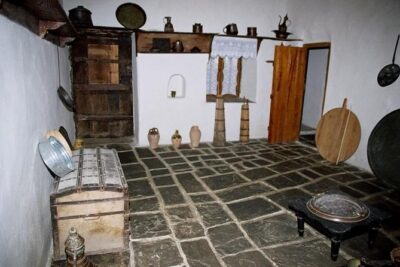
Komiteti Bar is one of the tour’s most distinctive stops. It occupies a communist-era apartment and functions as both café and museum. The interior includes old radios, furniture, tools, kitchenware, silverware, cups, and glasses.
You have about 35 minutes here, with coffee, tea, refreshments, or rakia included. Rakia is Albania’s well-known spirit, so this is a chance to try a local drink in a setting tied to the country’s recent past.
I like the way this stop changes the pace. After monuments and political history, you sit down and look at the objects people used at home. These small items can make an era easier to understand than a string of dates.
The café also offers practical flexibility. Vegetarian, vegan, and gluten-free dietary needs can be accommodated if you note them when booking. The included drink is not a full meal, so you should plan lunch separately if you will be hungry after several hours on foot.
The Pyramid and Tirana’s changing identity
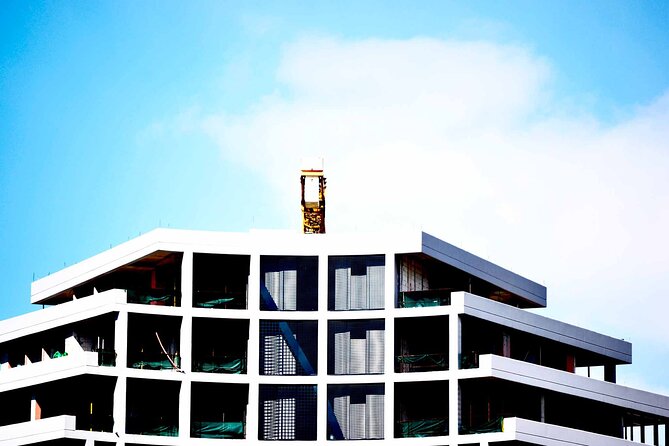
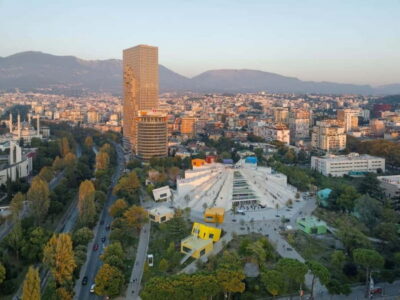
The Enver Hoxha Pyramid is one of Tirana’s most recognizable buildings. It was originally a museum dedicated to Albania’s long-time communist leader and dictator. After communism fell, the building served at different times as a discotheque, cultural center, radio station, and exhibition venue.
The pyramid has since been reconstructed with modern architecture and is intended to become the Balkans’ largest technology center, focused on information and digital technology. The building’s changing uses mirror Tirana’s own effort to move beyond its communist past without erasing it.
You have about 25 minutes here, with no separate admission fee. The guide can place the building in the larger political story, which is more useful than simply taking a photo outside.
This is also a good example of how Tirana keeps changing. A building once made to honor a dictator now points toward digital education and technology. The shift is striking, and it helps explain why the capital can feel both historical and experimental.
Dëshmorët e Kombit Boulevard and Mother Teresa Square
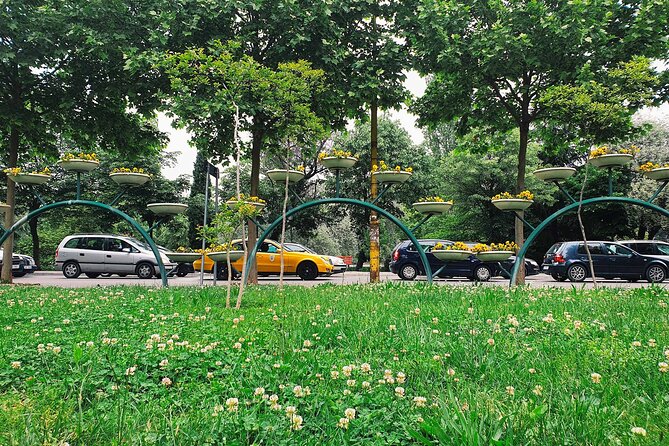
The walk along Dëshmorët e Kombit Boulevard introduces Tirana’s formal civic center. Built in the 1930s, the boulevard is lined with major government buildings and carries much of the city’s modern political story.
The tour continues to Mother Teresa Square, the second-largest square in central Tirana. Here you see the University of Tirana, the University of Arts, Air Albania Arena, and other important buildings.
The boulevard section lasts about 15 minutes, so the guide will focus on orientation and context rather than detailed visits inside each building. That is useful if you are new to the city and want to understand how the center is arranged.
I would pay attention to the change in scale here. The route moves from Ottoman religious buildings and communist underground spaces to wide avenues, institutions, and national monuments. Tirana’s central district is easier to understand when you see these layers in sequence.
Blloku, from party enclave to nightlife district
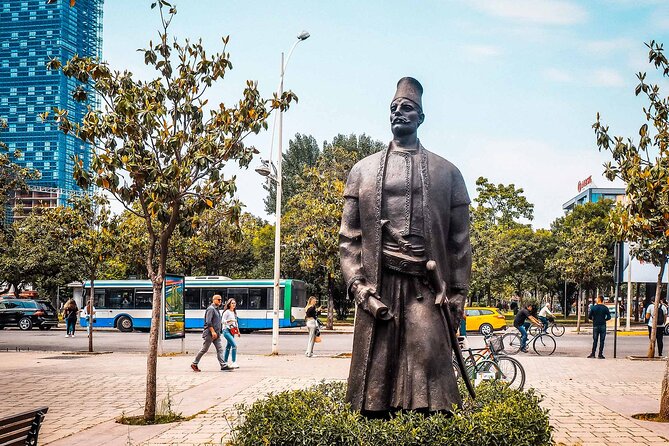
Blloku offers one of the clearest contrasts in Tirana. Today it is a leafy residential and commercial area filled with cafés, bars, international restaurants, luxury shops, and nightlife.
During communist rule, Blloku was closed to ordinary citizens and reserved for the party elite. Enver Hoxha’s former villa is still here, linking the fashionable district to the political system that once controlled the country.
You spend about 20 minutes in the area. This is not a shopping tour or an evening food crawl. Instead, it is a short walk that shows how a restricted neighborhood became one of the city’s most fashionable quarters.
For me, Blloku is valuable because the transformation is easy to see. You can enjoy its cafés and shops while also remembering that access was once limited to senior communist officials. That tension gives the district more meaning than its polished appearance suggests.
Resurrection of Christ Orthodox Cathedral
The final major stop is the Resurrection of Christ Orthodox Cathedral, inaugurated in 2012. It is one of the largest cathedrals in the Balkans and is decorated with mosaics and paintings.
The visit lasts about 30 minutes. After the communist period, when religion was heavily suppressed, a large new cathedral in the capital carries particular weight. The building is not only an architectural sight. It also points to the return of public religious life in Albania.
The cathedral provides a calm finish after the difficult subject matter at Bunk’Art 2 and the political history of the boulevard and Blloku. Its mosaics and paintings also give the tour a visual change of pace.
The activity ends back at Skanderbeg Square, its starting point. That makes the tour easy to fit into a day of sightseeing. You finish near the city’s main landmarks rather than being dropped in an unfamiliar part of Tirana.
Price, pace, and what you receive for $84.03
At $84.03 per person, this is not the cheapest way to see Tirana. The value depends on what you want from a city walk.
You receive a private English-language guide, admission to Bunk’Art 2, access to the Clock Tower, and coffee or tea at Komiteti Café-Museum. All fees and taxes are included. You also get the convenience of one connected route rather than arranging several tickets and finding each place yourself.
The private format is the strongest reason to consider the price. Your group is the only group on the activity, and the guide can adjust the pace or explain more about the subjects that interest you. Group discounts may improve the per-person value for larger parties.
The schedule is full. The listed stops add up to several hours before counting the walking between them, so the advertised four-to-five-hour duration makes sense. You should expect a proper walking tour, not a short orientation stroll.
Wear comfortable shoes and bring water. The tour includes outdoor walking, museum time, a stair climb, and several standing sections. Most people can participate, and service animals are allowed, but the 90 Clock Tower steps are worth considering before you book.
Who will get the most from this tour
I would recommend this tour to first-time visitors who want history and orientation in one morning. It suits couples, families, and multigenerational groups particularly well because the private guide can modify the pace and amount of explanation.
It is also a good choice if you want more than postcard sights. The route includes a local café, a former political shelter, an old family connection, a communist-era landmark, and a modern cathedral. Together, these stops give you a better sense of how Tirana became the city you see today.
History-minded visitors will appreciate Bunk’Art 2 and the Enver Hoxha Pyramid. Architecture fans will enjoy the mosque, Clock Tower, cathedral, and changing city center. Food-focused visitors should note that the included café visit is a tasting pause, not a complete meal.
You may prefer a shorter tour if you have only limited energy or want more time inside each museum. The route covers a lot of ground, and the 15-minute stops are designed to give you a broad picture rather than a slow, specialist examination.
Booking details and practical points
The meeting point is Skanderbeg Square in Tirana, and the start time is 10:30 am. The tour is offered in English and ends at the same meeting point.
Confirmation is provided at booking. The activity is near public transportation, and most people can participate. Under-18 participants must carry photo identification, with a digital copy accepted.
If you have vegetarian, vegan, gluten-free, or other dietary needs, add them to the special requirements when booking. The provider also offers free cancellation if you cancel at least 24 hours before the local start time. Cancellations or changes made later are not accepted for a refund.
Should you book the Tirana Extended Walking Tour?
Book it if you want a private, history-focused introduction to Tirana that combines famous sights with places many visitors would not understand on their own. The Clock Tower view, Bunk’Art 2, Komiteti Café-Museum, and Blloku give the walk a useful range.
The main caution is the pace. Four to five hours, several outdoor sections, and 90 stairs require reasonable stamina. At $84.03, the tour makes the most sense for groups that value a dedicated guide, included admissions, and a flexible private format.
If that sounds like your kind of first morning in Tirana, this is a strong way to get your bearings and learn what to explore next.
FAQ
Where does the tour start?
The tour starts at Skanderbeg Square, Sheshi Skënderbej, in Tirana, Albania.
What time does the tour begin?
The start time is 10:30 am.
How long does the tour last?
The experience lasts approximately four to five hours.
Is this a private tour?
Yes. Only your group participates in the activity.
Is the tour offered in English?
Yes. The tour is offered in English.
Are the Clock Tower and Bunk’Art 2 admissions included?
Yes. Access to the Clock Tower and Bunk’Art 2 Museum is included, along with all fees and taxes.
Can dietary requirements be accommodated?
Yes. Vegetarian, vegan, gluten-free, and other dietary needs can be accommodated if you provide the details in the special requirements when booking.
Just added around Tirana
- Zipline Tirana Adventure & Petrela Castle – With Transport★ 4.4 · 10 reviews
- Wonderful Sunset and Dinner in the Castel Of Petrela★ 4.6 · 4 reviews
- Wine Tasting & Vineyards Escape near Tirana★ 4.9 · 8 reviews
- Walking Tour in Tirana, Albania★ 3.7 · 28 reviews
- Vlora, Dhermi & Llogara Day Trip from Durrës or Golem★ 5.0 · 5 reviews
- From Tirana: Mount Dajti Adventure, Local Vibes & Cable Car opt★ 4.5 · 6 reviews
- Winetasting tour in Alpeta winery – Roshnik village by 1001 Albanian Adventures★ 5.0 · 26 reviews
- Day Tour to Petrela Castle and Zip Line Albania Adventure★ 5.0 · 10 reviews
Walking Tours, compared.

Blue Eye Kayak and walking tour & Lekursi Castle
Read our review →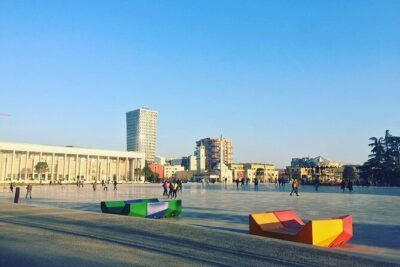

Tirana Stroll Tour, Walk and Taste Qofte & Raki!
Read our review →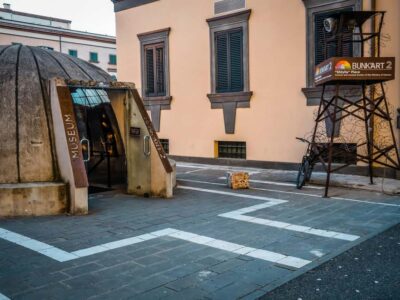
Tirana’s Communist Past; Small Group Walking Tour
Read our review →Browse the lists this tour appears in