
Reviewed · WALKING TOURS
Private Walking Tour Visit to Durrës with Licensed Guide
Durrës packs more history into a few walkable streets than you might expect. On this private tour, Roman ruins, Byzantine walls, Ottoman buildings, Italian-era architecture, communist-era changes, and modern city life all appear within one compact route. The best feature is the city’s layered past, explained by a local guide rather than left as a collection of old stones.
I like the private format, since you can ask questions and set the pace with your own group. I also like the way the tour connects major monuments to urban planning, religion, trade, and everyday life. Artan is praised for his love of Durrës, while Joana is described as clear and competent. The main consideration is that the route includes many short stops, so the experience is more about context and storytelling than long visits inside each site.
In This Review
- Key points before you book
- Why Durrës works so well on foot
- Starting at the Venetian Tower
- Saints, a hammam, and Bulevardi Epidamn
- The Aleksandër Moisiu house and Fatih Mosque
- The amphitheatre and Saint Lucy
- Freedom Square and Durrës City Hall
- The Grand Mosque and Palace of Culture
- The Byzantine Forum and the tour’s finish
- What $24.10 buys you
- Who will get the most from this walk
- Should you book the Durrës walking tour?
- FAQ
- Where does the walking tour start?
- Where does the tour end?
- How long does the tour last?
- Is the tour private?
- Is the tour offered in English?
- Is admission to the Venetian Tower included?
Key points before you book
- A private English-language walk: Your group participates alone, with a licensed guide and no large tour crowd.
- Four major eras in one route: Roman, Byzantine, Ottoman, Italian, and communist-era Durrës all appear in the story.
- The Venetian Tower has an extra-cost feature: Interior viewing is included, but the multimedia projection and upper balcony require an additional fee.
- Local breaks are part of the walk: You may pause at two or three local spots for coffee, water, burek, ice cream, or orange juice.
- A strong history tour for the price: At $24.10 per person, the private guiding and wide range of sights offer solid value.
- The finish is central: The walk ends at Sheshi Liria, making it easy to continue exploring Durrës afterward.
Why Durrës works so well on foot
Durrës is one of those Albanian cities where the past does not sit in a separate archaeological park. Ancient remains appear beside homes, mosques, churches, roads, and public buildings. The tour helps you understand how the modern city grew around older foundations instead of treating each monument as an isolated stop.
The route begins at the Venetian Tower and ends at Freedom Square, known locally as Sheshi Liria. The walk lasts about two to three hours, although the listed stops are generally brief. That pacing suits you if you want a broad introduction before exploring particular sites on your own.
This is not a beach excursion or a museum-heavy outing. It is a city walk focused on history, buildings, urban form, and the changes Durrës has endured. You will spend much of the time outdoors, so comfortable shoes and protection from the sun are sensible choices, though the provided details do not specify a dress code or exact walking distance.
A few more Tirana trips to weigh up
- Walking Tour of Tirana
★ 5.0 · 646 reviews - Tirana: Express Walking Tour with a Guide
★ 4.8 · 503 reviews - Tirana Center: Magic Walking Tour French/Italian/English Etc
★ 4.9 · 402 reviews
Starting at the Venetian Tower
The Venetian Tower is an effective starting point because it introduces Durrës as a fortified Adriatic port shaped by many powers. The guide uses old maps, photographs, and nearby locations to explain how the city developed through Roman, Byzantine, Norman, Venetian, Ottoman, industrial, and modern periods.
The first stop is a short orientation to the surrounding neighborhood. You are not simply shown a tower and sent onward. Instead, the guide places it within the old street pattern and explains how different cultures and religions left their mark on the city.
The second stop focuses on the tower itself. You learn about its construction methods, its relationship to similar towers around the Adriatic, and its changing role under Ottoman rule. The story continues through its demilitarization during the early years of World War II, its use during Albania’s communist period, and its more recent restoration.
The tower now has a multimedia center presenting Durrës’s past. Interior access is included, but the projection and raised balcony require an extra payment. This is worth noting before you arrive. If you want the complete tower experience, budget for that additional fee. If you prefer to keep costs down, the included interior visit still gives the guide a useful setting for explaining the building.
Saints, a hammam, and Bulevardi Epidamn
The Church of Apostle Paul and Saint Asti provides a quieter pause amid the city streets. Here, the guide explains the connection between the two saints and Durrës, along with traces of the former Church of Saint Spiridon, which was demolished during the communist period.
The stop is brief, but it adds an important religious layer to the tour. Durrës has Orthodox, Catholic, and Muslim landmarks, and the route makes that mixture part of the central story rather than a side note.
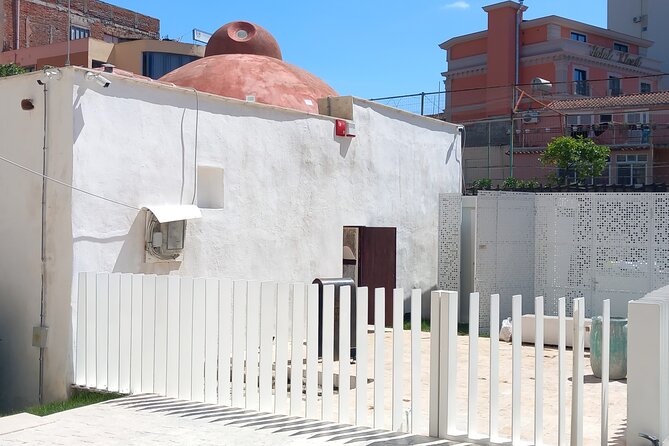
Next comes the 17th-century Ottoman hammam. The bath may have been privately owned or connected to government buildings along the waterfront. It may also have had a relationship with the White Mosque, once located nearby. The guide points out remnants connected to the former road leading to Durrës Castle and explains how steam and heating worked in the bath.
You should keep your expectations measured here. The description centers on surviving traces and interpretation, not a fully restored bathhouse that you can explore room by room. Its value comes from learning how Ottoman public or semi-public buildings fit into the city.
The walk then continues along Bulevardi Epidamn. This road is linked to the first urban regulatory plan of 1928, which guided new residential construction. The guide uses the buildings along the boulevard to explain early 20th-century investment, street planning, and architectural change.
This is also where the tour includes two or three short refreshment stops. Depending on the group and local arrangements, you might have coffee, water, burek, ice cream, or orange juice. These breaks are a pleasant touch, especially on a warm day, but the information does not indicate that food or drinks are included in the tour price. Treat them as optional purchases.
The Aleksandër Moisiu house and Fatih Mosque
The Aleksandër Moisiu Museum introduces both traditional Albanian domestic design and Durrës architecture. The house once served as the English consulate when Durrës became the national capital after independence. It is also linked to Aleksandër Moisiu, one of the city’s best-known international theater artists.
The building was damaged in the 2019 earthquake, as was the nearby Byzantine tower. The house is awaiting needed investment, so do not expect a polished museum interior in perfect condition. That limitation is part of what makes the stop useful: you see how historic buildings can carry several identities while also facing the practical problems of preservation.
The Fatih Mosque is one of Albania’s three oldest mosques. Built in 1501, it sits at the base of a Byzantine wall between two outer towers. Its position helped shield the minaret from views and possible attacks from the sea, while the builders reused the same materials and supporting sections of the Byzantine fortifications.
This is an excellent example of how Durrës’s buildings overlap in time. A mosque was not placed in an empty part of town. It was built into an older defensive setting, using what was already available. The guide’s attention to construction materials and wall supports helps you see the city as a place of reuse, not just replacement.
Same coast, a completely different kind of day:
- From Tirana: Bovilla Lake & Gamti Mountain Hiking Day Trip
★ 4.9 · 4,397 reviews - From Tirana: Bovilla Lake & Gamti Mountain Hiking Tour
★ 4.9 · 3,003 reviews - From Tirana: Bovilla Lake & Gamti Mountain Viewpoint Hike
★ 4.8 · 2,053 reviews - Tirana/Durres/Golem: Saranda, Ksamil, Blue Eye Day Trip
★ 4.8 · 1,584 reviews
The amphitheatre and Saint Lucy
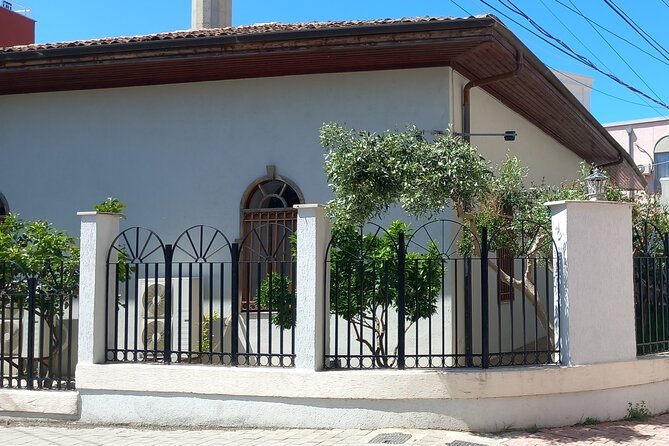
The Durrës Amphitheatre is one of the major highlights. The route takes you by the site and explains its history, its excavation in 1966 by archaeologist Vangjel Toci, and the unusual way the ancient structure coexists with the city built above and around it.
That relationship is the key point. You are not looking at a ruin separated from daily life. The amphitheatre’s remains raise questions about how ancient buildings were buried, built over, rediscovered, and protected while the city continued to grow.
A government project aims to restore the entire amphitheatre and preserve its different historical layers. The tour does not state that admission to the amphitheatre is included, and the stop is described as passing by the site. If entering the archaeological area is important to you, confirm the current entrance arrangements before booking or plan a separate visit.
The Catholic Church of Saint Lucy, also called Kisha Katolike Shën Dominiku in the route details, offers another view of the city’s religious past. The guide discusses the church’s construction, important figures in local government, and the effect of the communist period, when religious activity was legally banned.
The building’s present condition is considered alongside its earlier role. This makes the stop more than a quick church visit. You get a clear reminder that Durrës’s religious buildings survived not only wars and political change, but also decades when worship was forbidden.
Freedom Square and Durrës City Hall
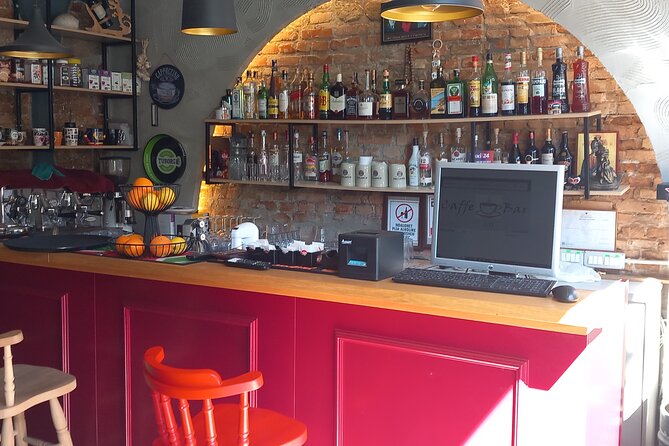
The route reaches Sheshi Liria, or Freedom Square, one of Durrës’s early planned public spaces. The 1928 urban plan first conceived it as a floral garden. Today it is associated with the Municipality and the Grand Mosque.
The guide traces the square from the Ottoman period through the years before World War II and into the present. This is where the larger urban story comes together. You can see how the city expanded from older Varosh neighborhoods in several directions and how public space helped shape that growth.
Durrës City Hall, built in 1931, reflects the Italian architectural taste of the period. Its large central balcony once served as a platform for public speeches. The building also received a public clock after the 1926 earthquake destroyed the earlier clock tower.
This stop is particularly useful for understanding the period when Italian economic and architectural influence became strong in Durrës. The building is not just a government office. Its form, balcony, and clock reflect the ambitions of a city trying to present itself as modern and organized.
The Grand Mosque and Palace of Culture
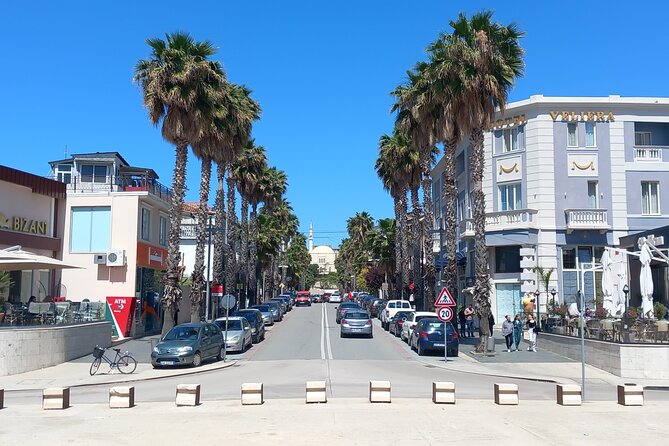
The Grand Mosque, or Xhamia E Madhe E Durresit, was built in 1939 with funding from local merchants during Italy’s economic dominance before World War II. The communist regime later closed and altered it, and it was restored after the 1990s.
The mosque’s story shows how religious buildings can become political markers. Its continued use and restoration connect faith with survival, local identity, and the return of religious freedom after communism. The tour gives you a chance to compare it with the much older Fatih Mosque and to see how Muslim architecture changed across different periods.
The next stop is the Aleksandër Moisiu Theatre, housed in the Palace of Culture. Built in 1960, it was the first building of its type in the Republic of Albania. The guide uses it to explain Albanian architecture of the 1960s and its influence beyond Durrës.
This is a valuable counterpoint to the ancient and Ottoman monuments. Many city tours stop once the old ruins are covered. Here, the story continues into the communist era, when public buildings, cultural institutions, and architecture were shaped by a very different political system.
The Byzantine Forum and the tour’s finish
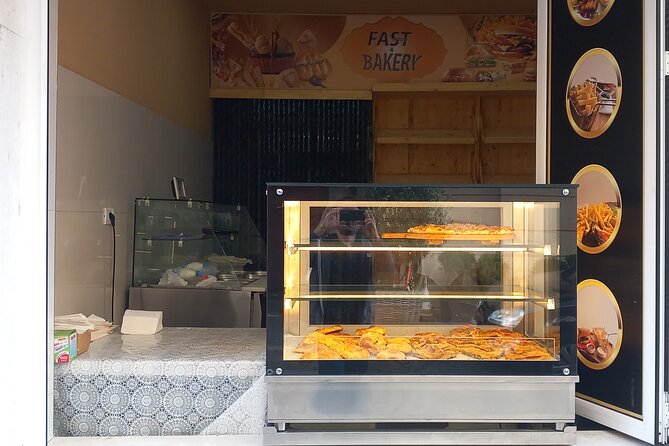
The final major sight is the Rotonda and Byzantine Forum. Archaeologist Vangjel Toci discovered the forum, which helps explain Durrës’s shift from Late Antiquity into the Middle Ages.
The site includes an open forum with archaeological remains and displayed artifacts. It gives you a physical sense of urban life during the Byzantine period, though the available information does not specify a full indoor museum visit or a separate admission arrangement. The guide’s explanation is the main reason to include it.
The tour ends at Sheshi Liria. That is convenient because you finish near several central sights rather than being returned to the starting point. From the square, you can continue in any direction through the city center.
What $24.10 buys you
At $24.10 per person, the price is attractive for a private two to three-hour walk. You are paying for a licensed English-speaking guide, a route through 14 stops, and the ability to ask questions without sharing the experience with a large group.
The value is strongest if you care about context. You will not receive long entry visits at every monument, and many stops last about 10 minutes. But the guide connects each place to wider subjects such as urban planning, religion, earthquakes, war, communism, architecture, and conservation.
The tour also includes no-cost admission at the listed stops, with the important exception that the Venetian Tower’s multimedia projection and elevated balcony cost extra. The data does not say that refreshments are included, so expect to pay separately for anything you choose at the local stops.
The tour is booked, on average, 24 days ahead. That suggests planning early if your schedule is fixed, especially since the activity is private and limited to one group. Confirmation arrives at booking, and free cancellation is available up to 24 hours before the start time. Changes or cancellations made inside that 24-hour window are not accepted for a refund.
Who will get the most from this walk
I would choose this tour if you are visiting Durrës for the first time and want a clear framework for the city. It suits history lovers, architecture fans, families who prefer a private pace, and anyone who wants to understand more than the beach and seaside promenade.
It is also a good match if you are staying in Tirana and want a focused city visit without arranging a complicated independent route. The meeting point is the Venetian Tower in Durrës, not Tirana, so you must organize your own transport to the starting point.
Most people can participate, the activity is near public transportation, and service animals are allowed. The walk is private, which makes it easier to ask for clarification or spend a little longer at a favorite stop. Still, the route covers many sites in a short time, so people who want lengthy archaeological visits may prefer to add independent time before or after the tour.
Should you book the Durrës walking tour?
Book it if you want a compact, affordable introduction led by someone who can explain how Roman, Byzantine, Ottoman, Italian, and communist-era Durrës fit together. Artan’s enthusiasm for his city and Joana’s clear approach are useful qualities, particularly when the route includes so many different periods.
Skip it if you want a relaxed beach day, a long sit-down meal, or extended entry time at every monument. The pace is brisk, some buildings are viewed from outside or through surviving traces, and the Venetian Tower’s multimedia section costs extra.
For most first visits, I think the tour earns its price. It gives you the city’s basic map, points out what deserves a closer look, and finishes in a central square where you can keep exploring on your own.
FAQ
Where does the walking tour start?
The tour starts at the Venetian Tower of Durrës, at 8C5W+VQC, Durrës, Albania.
Where does the tour end?
It ends at Sheshi Liria, or Freedom Square, in central Durrës.
How long does the tour last?
The tour takes approximately two to three hours.
Is the tour private?
Yes. Only your group participates in the activity.
Is the tour offered in English?
Yes. English is the listed tour language.
Is admission to the Venetian Tower included?
Interior viewing of the Venetian Tower is included. The multimedia projection and elevated balcony require an additional fee.
Just added around Tirana
- Zipline Tirana Adventure & Petrela Castle – With Transport★ 4.4 · 10 reviews
- Wine Tasting & Vineyards Escape near Tirana★ 4.9 · 8 reviews
- Wonderful Sunset and Dinner in the Castel Of Petrela★ 4.6 · 4 reviews
- Walking Tour in Tirana, Albania★ 3.7 · 28 reviews
- Vlora, Dhermi & Llogara Day Trip from Durrës or Golem★ 5.0 · 5 reviews
- From Tirana: Mount Dajti Adventure, Local Vibes & Cable Car opt★ 4.5 · 6 reviews
- Winetasting tour in Alpeta winery – Roshnik village by 1001 Albanian Adventures★ 5.0 · 26 reviews
- Day Tour to Petrela Castle and Zip Line Albania Adventure★ 5.0 · 10 reviews
Walking Tours, compared.
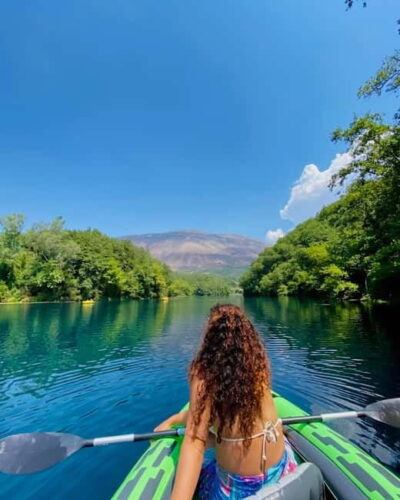
Blue Eye Kayak and walking tour & Lekursi Castle
Read our review →

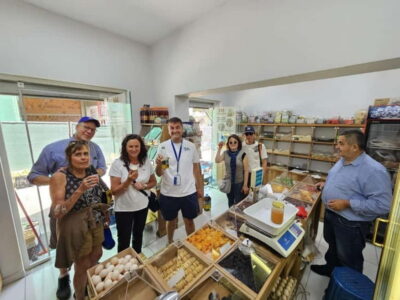
Tirana Stroll Tour, Walk and Taste Qofte & Raki!
Read our review →
Tirana’s Communist Past; Small Group Walking Tour
Read our review →Browse the lists this tour appears in