
Reviewed · WALKING TOURS
Inside Tirana Walking Tour
Tirana’s story comes into focus as you walk from the grand center of Skanderbeg Square to the former communist power zone of Blloku. Along the way, you get opera, national symbols, museum history, a concrete bunker, and the city’s modern café life in one compact route.
I like the very low price and the way the walk connects famous sights with harder questions about Albania’s past. I also like its small, personal feel when guide Era leads it, with attention to street culture and murals. The main tradeoff is that two hours gives you an overview, not enough time for long museum visits or detailed interior tours.
In This Review
- Key points to know before you book
- Start at Et’hem Bej Mosque and meet Tirana’s central symbols
- Fifteen minutes around Skanderbeg Square
- The National History Museum’s powerful entrance
- Postbllok explains Albania’s communist past
- Blloku: from forbidden district to café quarter
- Why the $6.02 price offers good value
- What the two-hour timing really means
- How this walk compares with exploring alone
- Who should book the Tirana walking tour
- Should you book it?
- FAQ
- How long is the Inside Tirana Walking Tour?
- Where does the tour begin?
- Where does the tour end?
- Is the tour offered in English?
- What sights are included?
- Are admission tickets included?
- What happens if the tour is canceled because of weather?
Key points to know before you book
- A sharp look at old and new Tirana: The route moves from the historic center to Blloku, once closed to ordinary Albanians and now packed with cafés, bars, shops, and apartments.
- Postbllok adds real historical weight: Concrete pillars from a labor camp, a bunker, and a piece of the Berlin Wall make Albania’s communist period easier to grasp.
- The price is hard to beat: At $6.02 per person, you are mainly paying for a guided introduction, with admission listed as free at every stop.
- Guide Era brings a personal touch: If Era leads your walk, expect clear explanations of Albania and Tirana, plus attention to murals and street life.
- The route is easy to fit into a day: It lasts about two hours, starts at Et’hem Bej Mosque, and returns to the same meeting point.
- Expect an overview rather than museum time: The National History Museum is part of the route, but the scheduled stop is about 15 minutes.
Start at Et’hem Bej Mosque and meet Tirana’s central symbols
The walk begins at Et’hem Bej Mosque on Skanderbeg Square, a useful place to get your bearings in central Tirana. Since the tour ends back here, you do not need to arrange a second pickup or figure out how to return from a distant neighborhood.
The first stop is the National Theatre of Opera and Ballet of Albania, housed in the Palace of Culture since 1966. Its story reaches back to the Albanian Philharmonic, founded in 1950 with a choir, symphony orchestra, opera singers, ballet troupe, and conductor.
That background helps you see the theatre as more than a large public building. It represents Albania’s effort to build formal music and performance institutions during the 20th century. The State Conservatory also grew from this wider push to train professional musicians.
You get about 15 minutes here, with admission listed as free. That timing suits an exterior explanation and a quick look at the setting, but you should not expect to attend a performance or spend time studying the building’s interior.
A few more Tirana trips to weigh up
- Walking Tour of Tirana
★ 5.0 · 646 reviews - Tirana: Express Walking Tour with a Guide
★ 4.8 · 503 reviews - Tirana Center: Magic Walking Tour French/Italian/English Etc
★ 4.9 · 402 reviews
Fifteen minutes around Skanderbeg Square
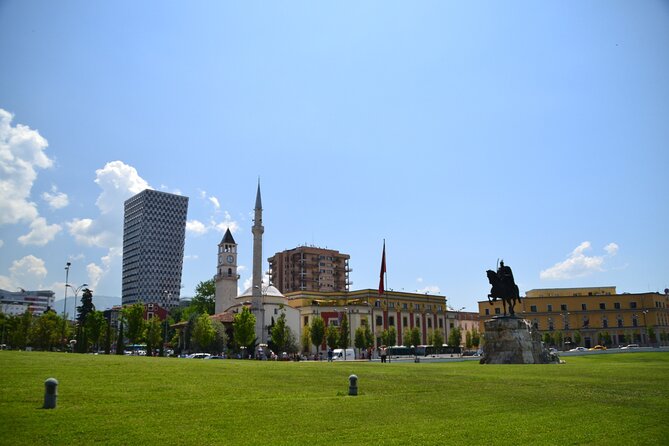
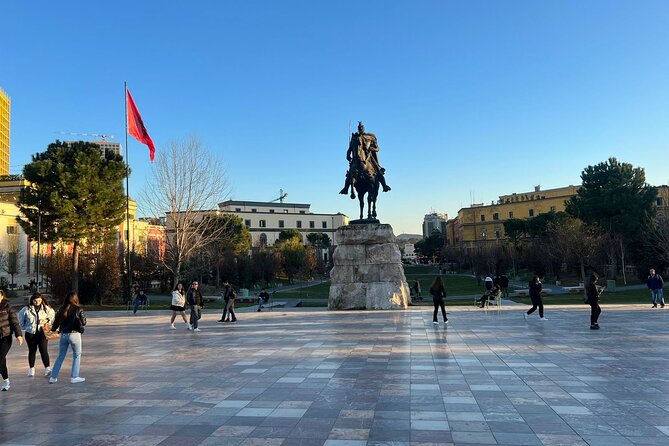
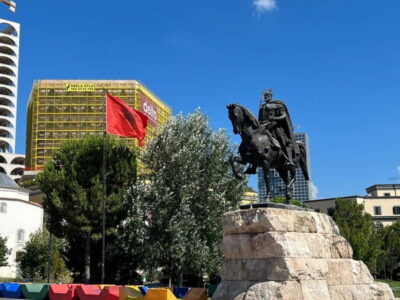
From the theatre, the route reaches Skanderbeg Square, Tirana’s main plaza. The Skanderbeg Monument honors Gjergj Kastrioti Skënderbeu, the national hero whose name appears across Albania.
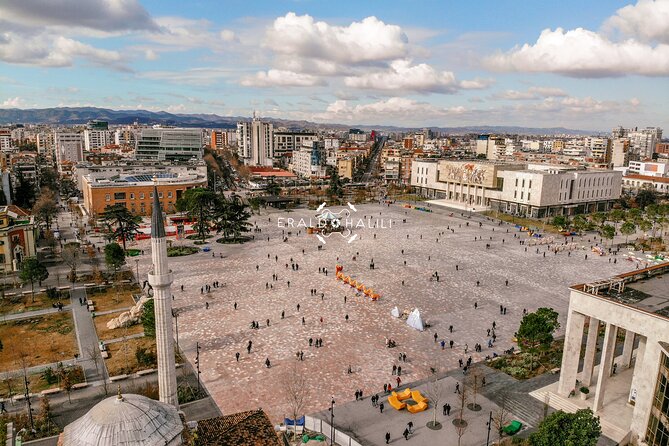
The square covers about 40,000 square meters, so it gives the walk room to breathe. Your guide can point out the many important buildings gathered around it, including the Palace of Culture, National Opera, National Library, National Bank, National Historical Museum, Ethem Bey Mosque, and Clock Tower.
This is the best part of the walk for understanding Tirana’s city plan. Armando Brasini first designed the plan in 1925, Florestano Di Fausto continued it in a Neo-Renaissance style, and Gherardo Bosio updated it in 1939 after the Italian invasion.
You do not need to memorize those names to enjoy the square. The useful point is that Tirana’s center was shaped by several layers of planning, not one single vision. Italian influence, Albanian national identity, communist-era construction, and modern city life all meet here.
The stop lasts about 15 minutes. That is enough for orientation and photographs, though you will want more time if your main interest is architecture.
The National History Museum’s powerful entrance
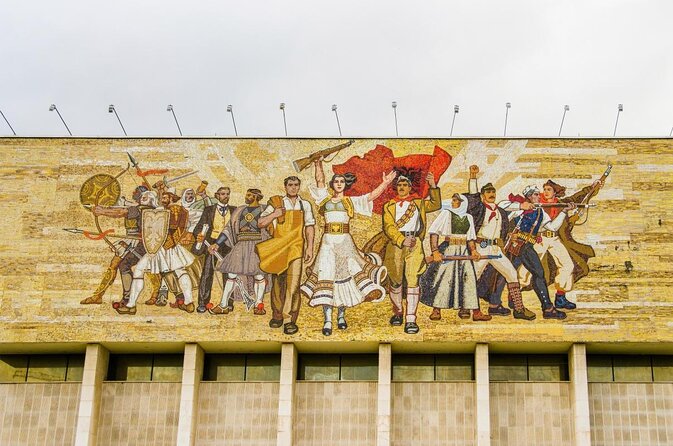
The National History Museum is another short stop, scheduled for about 15 minutes. Its large façade mural, The Albanians, shows figures from ancient times through the modern era and gives the building an unmistakable presence.
Inside, the museum has sections covering antiquity, the Middle Ages, the Renaissance, independence, iconography, the antifascist war, communist terror, and Mother Teresa. These sections cover a wide span, but the short tour stop means you should treat the museum as a landmark and historical reference point, not a full museum visit.
That distinction matters. If you want to examine artifacts, read labels, and take your time with Albania’s difficult 20th-century story, return on your own after the walk. If you want a guide to explain how the museum fits into the city, the brief stop does the job.
The location also helps tie together the earlier parts of the route. Skanderbeg Square presents national identity in a public, monumental way. The museum then frames that identity through a long national story, including periods of war, dictatorship, and cultural change.
Postbllok explains Albania’s communist past
Postbllok, or Checkpoint Monument, is the most emotionally serious stop. The installation recalls the surveillance, punishment, and political control of Enver Hoxha’s communist regime.
It includes original concrete pillars from a notorious labor camp, an old bunker, and part of the Berlin Wall. These are plain objects, but that is part of their force. They make political repression physical and visible rather than leaving it as a distant chapter in a textbook.
The stop lasts about 10 minutes, so expect a concise explanation. You will not get a full seminar on communist Albania, but you will have a strong visual reminder of what the regime meant for ordinary people.
Postbllok also changes the rhythm of the walk. The earlier sights focus on national culture, public buildings, and city planning. Here, the focus turns to fear, surveillance, and the difficult path toward freedom and democracy.
If modern Albanian history interests you, this is likely the stop you will remember most. It also gives the later visit to Blloku more meaning, since Blloku was once a restricted residential district for members of the political leadership.
Same coast, a completely different kind of day:
- From Tirana: Bovilla Lake & Gamti Mountain Hiking Day Trip
★ 4.9 · 4,397 reviews - From Tirana: Bovilla Lake & Gamti Mountain Hiking Tour
★ 4.9 · 3,003 reviews - From Tirana: Bovilla Lake & Gamti Mountain Viewpoint Hike
★ 4.8 · 2,053 reviews - Tirana/Durres/Golem: Saranda, Ksamil, Blue Eye Day Trip
★ 4.8 · 1,584 reviews
Blloku: from forbidden district to café quarter
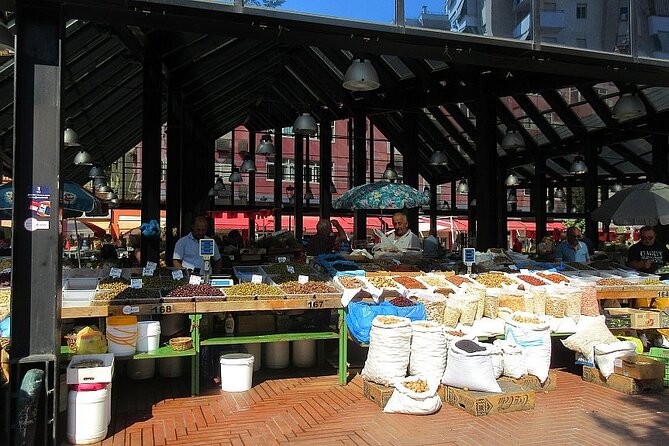
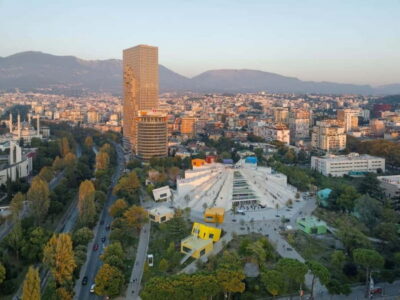
The final main stop is Blloku, short for Ish-Blloku. Today, it is known for boutiques, shops, restaurants, bars, pubs, and cafés. New flats and apartments have changed the area quickly, and it is often described as a playground for Tirana’s young elite.
The important detail is what Blloku used to be. During communism, it was reserved for members of Albania’s politburo. Ordinary Albanians could not enter, and the neighborhood was left off many maps.
You can still find the former residence of Enver Hoxha here. The contrast is striking: a place once guarded by political privilege is now one of the city’s main social and entertainment districts.
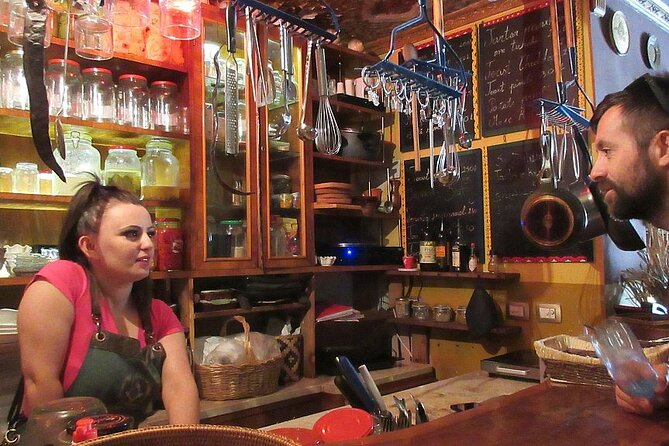
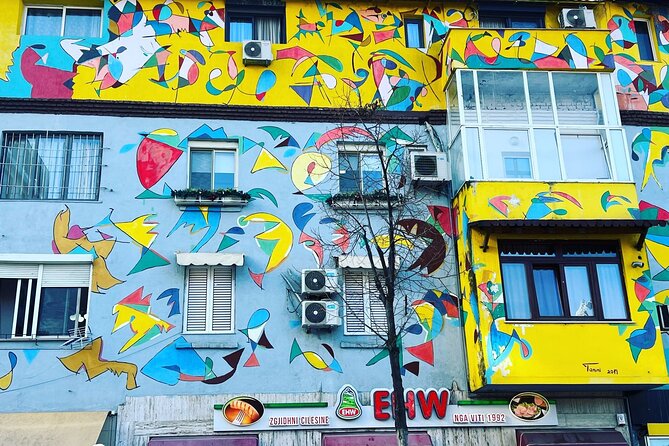
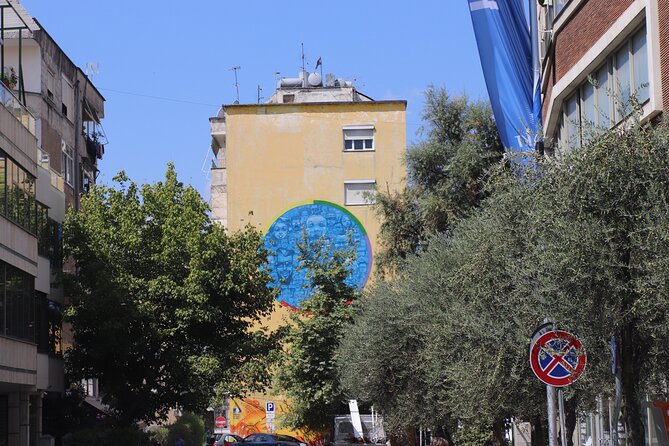
This is also where the tour’s street-life angle matters. Guide Era’s version was praised for going beyond the standard monuments, with attention to murals and the feel of Tirana’s streets. If you have already taken a conventional city walk, this part may give you a different view of the capital.
The 15-minute stop is enough to explain the neighborhood’s past and point out its modern character. It is not long enough for a meal, coffee, shopping, or a detailed look at the former residence, so plan to return if you want to spend time here.
Why the $6.02 price offers good value
At $6.02 per person, this is an unusually inexpensive way to get a guided introduction to central Tirana. The listed admission charge is free at all five stops, so the price mainly covers the guide’s time and the structure of the walk.
That is good value if you are new to Tirana and want context quickly. A guide can connect the opera institution, Skanderbeg Square, the national museum, communist repression, and Blloku in a way that is harder to do from a map alone.
The low price also makes the tour a practical first-day choice. You can use the two-hour route to decide which places deserve a longer return visit. The National History Museum and Blloku are the clearest examples.
There are limits. Tips are not included, and the route does not list food, drinks, museum admission, or private transport. The stops are brief, so you are buying orientation and explanation rather than a series of in-depth visits.
The group may include up to 30 people. That is still manageable for a walking route, but it may feel less personal than a private tour. The experience can be especially good when numbers are low. In one case, Era led the walk for a single participant, allowing an easy pace and a more personal exchange.
What the two-hour timing really means
The five listed stops add up to about 70 minutes of scheduled sightseeing. The rest of the two-hour period allows for walking between locations, meeting the guide, and hearing explanations along the route.
You should wear comfortable shoes and expect to walk between central Tirana landmarks. The tour is offered in English and uses a mobile ticket, which keeps the start simple at Et’hem Bej Mosque.
Because the route begins and ends at the same point, it works well before or after other plans in central Tirana. You can start the day with it, then return to the National History Museum, Clock Tower, mosque, or Blloku later.
The walk is listed as suitable for most people, with service animals allowed and public transportation nearby. The maximum group size is 30. No special fitness requirement is given, but this remains a walking activity, so anyone who needs frequent rests should keep the two-hour length in mind.
Confirmation is sent within 48 hours of booking, subject to availability. The tour requires good weather and a minimum number of participants. If weather or the minimum group size causes cancellation, you are offered another date or experience, or a full refund.
You can cancel for a full refund up to 24 hours before the start time. Changes or cancellations inside that 24-hour window are not accepted for a refund.
How this walk compares with exploring alone
You can see Skanderbeg Square, the mosque, Clock Tower, museum, and Blloku without a guide. The city center is compact enough for independent sightseeing, and all the listed stops are free to view from outside.
The advantage of this walk is the connection between places. Without explanation, Blloku can look like a fashionable café district, and Postbllok can seem like an unusual arrangement of concrete and wall fragments. Together, they show how Tirana moved from a tightly controlled capital to a more open, modern city.
You also get a ready-made route, which saves time during a short stay. The tour does not ask you to plan a path through several parts of central Tirana or decide how long to spend at each site.
The drawback is flexibility. You cannot linger for an hour at the museum, stop for lunch in Blloku, or change the route around your own interests. If you already know Tirana well, the general overview may feel too basic.
Who should book the Tirana walking tour
I would suggest this walk for a first visit, a short stay, or anyone who wants historical context before exploring alone. It suits solo visitors especially well when the group is small, since the guide can adjust the pace and answer questions.
It also works for people who want more than monuments. The route includes national culture, urban planning, communist memory, and present-day street life. That range gives you a clearer sense of how Tirana functions today.
Families and mixed-interest groups may like the varied route, since no single stop dominates the entire experience. Architecture fans will appreciate Skanderbeg Square, history-focused visitors will value Postbllok and the museum, and younger visitors may prefer Blloku.
I would hesitate if you want full museum access, long interior visits, or a private tour guaranteed for your group. The advertised maximum of 30 people means the experience can be larger than the personal walk described by the strongest account.
The rating is 4.5 from 10 reviews, with 90 percent recommending the experience. That is a solid signal, but the small number of ratings means you should judge the tour mainly by its route, low cost, and short format.
Should you book it?
Book this tour if you want an inexpensive, English-language introduction to Tirana that links the city’s main plaza with its communist past and modern social district. The best features are the $6.02 price, the convenient two-hour route, and the chance to see both famous sights and less obvious meaning behind them.
If Era is your guide, expect a particularly personal walk with clear history and attention to murals and street culture. Just remember that this is an overview. Use it to get oriented, then return to the National History Museum or Blloku when you have more time.
FAQ
How long is the Inside Tirana Walking Tour?
The tour lasts approximately two hours.
Where does the tour begin?
It begins at Et’hem Bej Mosque, Sheshi Skënderbej 1, Tirana 1001, Albania.
Where does the tour end?
The activity ends back at the meeting point by Et’hem Bej Mosque.
Is the tour offered in English?
Yes. The tour is offered in English.
What sights are included?
The route includes the National Theatre of Opera and Ballet of Albania, Skanderbeg Statue and Square, the National History Museum, Postbllok Checkpoint Monument, and Blloku.
Are admission tickets included?
Admission is listed as free at each scheduled stop. The guide is included, while tips and anything not specifically listed are not included.
What happens if the tour is canceled because of weather?
If poor weather causes cancellation, you are offered a different date or experience, or a full refund. The same options apply if the minimum number of participants is not met.
Just added around Tirana
- Zipline Tirana Adventure & Petrela Castle – With Transport★ 4.4 · 10 reviews
- Wine Tasting & Vineyards Escape near Tirana★ 4.9 · 8 reviews
- Wonderful Sunset and Dinner in the Castel Of Petrela★ 4.6 · 4 reviews
- Walking Tour in Tirana, Albania★ 3.7 · 28 reviews
- Vlora, Dhermi & Llogara Day Trip from Durrës or Golem★ 5.0 · 5 reviews
- From Tirana: Mount Dajti Adventure, Local Vibes & Cable Car opt★ 4.5 · 6 reviews
- Winetasting tour in Alpeta winery – Roshnik village by 1001 Albanian Adventures★ 5.0 · 26 reviews
- Day Tour to Petrela Castle and Zip Line Albania Adventure★ 5.0 · 10 reviews
Walking Tours, compared.

Blue Eye Kayak and walking tour & Lekursi Castle
Read our review →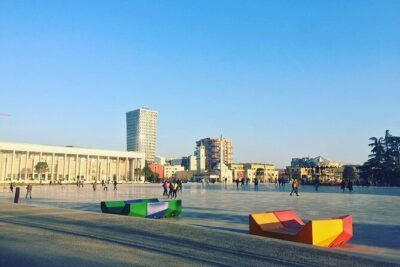


Tirana Stroll Tour, Walk and Taste Qofte & Raki!
Read our review →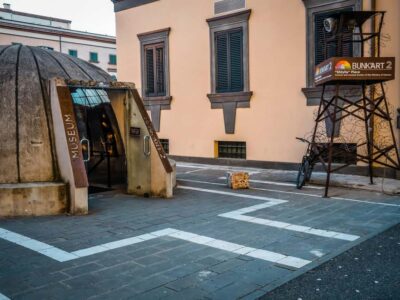
Tirana’s Communist Past; Small Group Walking Tour
Read our review →Browse the lists this tour appears in