
Reviewed · WALKING TOURS
Discover Tirana: Panoramic Tour and Walk around the Artificial Lake
Tirana’s story comes into focus when you move from its grand central monuments to the former communist elite quarter, then finish beside the Artificial Lake, where the city slows down. This $15 tour links those very different sides of the capital in one walk, with Spanish-speaking guide Florina leading the way.
I like the wide historical sweep, from Ottoman and Italian-era buildings to Enver Hoxha’s former neighborhood. I also like the ending: time beside the lake gives you a look at ordinary Tirana life rather than one more museum display. The main consideration is the pace and access. You cover a lot on foot in 150 minutes, and the experience is not suitable for wheelchair users.
In This Review
- Key points at a glance
- Why this Tirana tour is more than a monument checklist
- Starting at the Opera and Ballet Theatre
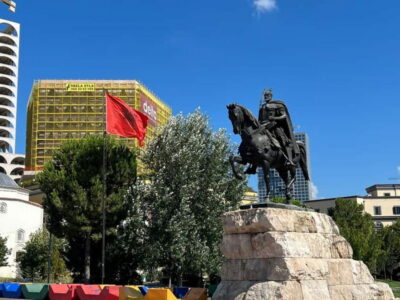
- Reading Skanderbeg Square through its buildings
- Et’hem Bey Mosque, the Cathedral, and religious Tirana
- Tirana Castle and the city’s changing center
- Walking the boulevard to the Pyramid
- Blloku and the private world of communist power
- Mother Teresa Square and modern civic Tirana
- Finishing at the Artificial Lake
- What the $15 price really covers
- Who will get the most from this walk
- Practical tips before you set out
- Should you book this Tirana tour?
- FAQ
- Where does the tour start?
- Where does the tour finish?
- How long does the tour last?
- What language is the tour conducted in?
- Is entry to the Namazgjase Mosque included?
- Is entry to the Cathedral of the Resurrection of Christ included?
- Are Bunk’Art 2 and the stadium included?
- Is the tour suitable for wheelchair users?
- Can I cancel the booking?
Key points at a glance
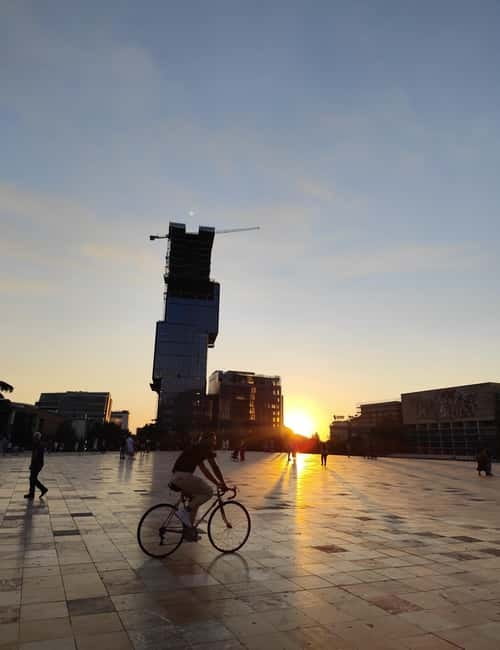
- A city story in one walk: See Ottoman, Italian, socialist, and modern Tirana in a single route.
- Florina guides in Spanish: Her style combines historical facts, local stories, curiosity, and humor.
- The Pyramid and Blloku: Learn how a dictator’s memorial and an exclusive communist district changed after the regime fell.
- Free entry at two important sites: The Namazgjase Mosque and Cathedral of the Resurrection of Christ are included.
- Artificial Lake finish: End in Tirana’s main green space, a useful contrast to the central streets.
- Good value at $15: The price covers the guided panoramic walk, but optional museum, stadium, meal, and other entry costs are extra.
Why this Tirana tour is more than a monument checklist
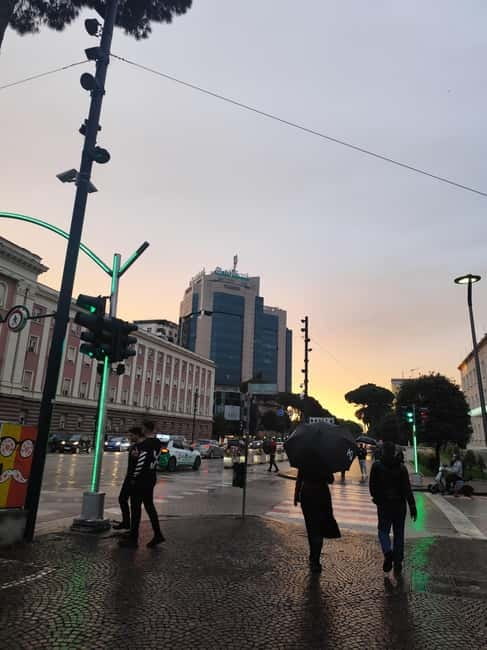
Many first walks through Tirana focus on Skanderbeg Square and stop there. This route keeps going. You get the city’s main symbols, but you also hear how power shaped neighborhoods, how communist-era buildings are being reused, and where locals go to relax.
That mix gives the tour its purpose. Tirana is not a city you understand from one grand church, mosque, or museum. Its character comes from the sharp changes between them. A historic mosque can sit close to a socialist mural, while newer cafes and creative spaces occupy buildings tied to the old regime.
Florina’s approach, based on the details provided for the experience, is personal and conversational. She uses stories and small facts alongside the larger political history. That matters in Tirana, where a short walk can raise questions about religion, dictatorship, urban change, and daily life.
The tour is conducted in Spanish, so it suits you best if you can follow a spoken Spanish explanation comfortably. Some content may appear in its original language, which can add flavor but may require a little patience.
A few more Tirana trips to weigh up
- Walking Tour of Tirana
★ 5.0 · 646 reviews - Tirana: Express Walking Tour with a Guide
★ 4.8 · 503 reviews - Tirana Center: Magic Walking Tour French/Italian/English Etc
★ 4.9 · 402 reviews
Starting at the Opera and Ballet Theatre
The meeting point is the Opera and Ballet Theatre, near the center of Tirana. Look for the guide with a green umbrella. That simple marker is useful in a busy central area, especially if several groups are gathering nearby.
From there, the route moves into the core of the city. The opening section is packed with landmarks, so do not expect a slow, single-site visit. You will see the major buildings from the outside and get the context needed to place them in Tirana’s story.
That format is a good choice if you have only a short stay or want to get your bearings before exploring alone. It is less suitable if you want long photo sessions at every stop or detailed interior visits. The tour is built around movement and explanation.
Reading Skanderbeg Square through its buildings
Skanderbeg Square is the natural starting point for Tirana’s public story. Here you encounter the Et’hem Bey Mosque, Clock Tower, National Museum, National Library, Italian-era ministries, Bunk’Art 2, and the Orthodox Cathedral of the Resurrection of Christ.
The value is in seeing these buildings together. The square is not just a pretty open space. It shows how different rulers and governments left their mark on the capital. Ottoman religious architecture, Italian planning, communist state imagery, and modern Albanian identity all appear within a short walk.
The National Museum’s large socialist mural deserves attention. Even from outside, it gives you a visual clue about how the communist state presented Albanian history and national purpose. Bunk’Art 2 offers another route into the period of dictatorship, though its admission fee is not included.
You should plan your expectations carefully here. The tour includes the monuments and emblematic sites from the outside, so you are receiving interpretation rather than full museum visits. If Bunk’Art 2 is a priority, you will need to pay separately and may want to return at another time.
Et’hem Bey Mosque, the Cathedral, and religious Tirana
The route includes free admission to the Namazgjase Mosque and the Cathedral of the Resurrection of Christ. That is one of the stronger practical features of the tour because the interiors add depth to what you see on the streets.
The Namazgjase Mosque is presented as one of the important mosques in the Balkans. Its inclusion helps broaden the usual Tirana story, which can lean heavily toward communism and post-communist change. You get a chance to consider the city’s religious life as part of its present identity.
The Orthodox cathedral offers a very different visual and spiritual setting. Visiting both religious sites in the same walk gives you a clearer sense of Albania’s varied traditions. The experience does not treat Tirana as a city defined by one faith or one period.
Remember to follow any site rules during the visit. The tour information does not specify clothing requirements or interior photography rules, so ask Florina on the day if you are unsure.
Same coast, a completely different kind of day:
- From Tirana: Bovilla Lake & Gamti Mountain Hiking Day Trip
★ 4.9 · 4,397 reviews - From Tirana: Bovilla Lake & Gamti Mountain Hiking Tour
★ 4.9 · 3,003 reviews - From Tirana: Bovilla Lake & Gamti Mountain Viewpoint Hike
★ 4.8 · 2,053 reviews - Tirana/Durres/Golem: Saranda, Ksamil, Blue Eye Day Trip
★ 4.8 · 1,584 reviews
Tirana Castle and the city’s changing center
Tirana Castle is an ancient walled area that has been converted into a space with cafes and craft shops. It is an especially useful stop for understanding how old urban structures can be given a new public role.
Do not expect a preserved medieval fortress experience on the scale of a major European castle. The appeal here is the combination of history and current use. The walls and older setting provide a link to the past, while cafes and small shops show how the area now fits into city life.
This is also a good place to notice the tour’s balance. Florina does not focus only on solemn political history. The route includes places where people meet, eat, shop, and spend time. That makes the walk feel more connected to present-day Tirana.
Walking the boulevard to the Pyramid
The main boulevard leads toward the Tirana Pyramid, one of the city’s most debated landmarks. It was originally dedicated to Enver Hoxha, Albania’s communist dictator, so the building carries a heavy political past.
The Pyramid is valuable to see because it raises a question that many cities face: what should happen to an uncomfortable monument after the system that created it is gone? Its form is striking, but its meaning has changed over time. Florina’s explanation helps connect the building to Hoxha’s rule and to Tirana’s later transformation.
This is not simply a stop for an unusual photograph. It is a compact lesson in memory and public space. You can look at the Pyramid as architecture, propaganda, a symbol of dictatorship, and a building absorbed into a newer city.
The tour does not list an interior visit, so expect to view and discuss the site from the route rather than spend a long period inside. That keeps the walk moving toward Blloku.
Blloku and the private world of communist power
Blloku is one of the most revealing parts of the route. During the communist period, it was reserved for the political elite. Ordinary people could not simply enter and live there as they pleased, which makes the neighborhood’s present character all the more striking.
Today, Blloku is known as a modern area with cafes, restaurants, and nightlife. The tour points out Hoxha’s own house and explains what life was like under strict state control. That contrast is the heart of the visit. A place associated with privilege and exclusion has become one of the city’s most open and social districts.
The story is stronger because it is tied to a real street and a real house rather than offered only as a timeline in a museum. You can connect political power to an address, then see how the same area functions now.
Keep in mind that seeing Hoxha’s house does not mean entering it. The focus is on the outside setting and Florina’s explanation. If you want a detailed museum treatment of the communist period, Bunk’Art 2 is the optional extra to consider, with its entrance fee paid separately.
Mother Teresa Square and modern civic Tirana
The route continues to Mother Teresa Square, where you find the Air Albania Stadium, the University of Fine Arts, and the Polytechnic. This part of the walk shifts from political memory to education, sport, and cultural life.
The square shows Tirana as a capital still building its public identity. The stadium represents modern events and national sport, while the university buildings point to the city’s role as a center for learning and the arts.
The stadium is viewed from the outside, and entry is not included. That is sensible for a short walking tour, since a stadium visit would change the focus and add another fee. You still get the setting and its place in the city without paying for an attraction you may not want.
Mother Teresa Square also helps break up the older center. After mosques, ministries, museums, and communist landmarks, the route gives you a more contemporary civic space before the final walk to the lake.
Finishing at the Artificial Lake
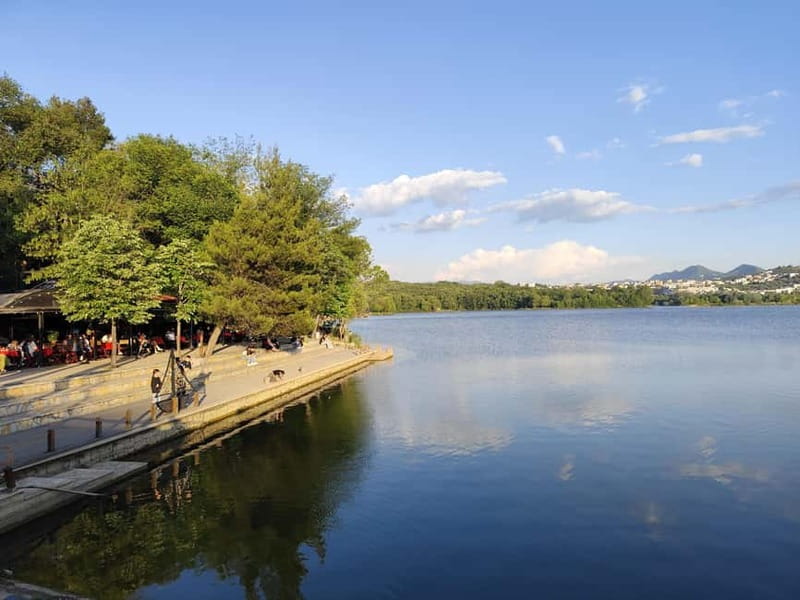
The Artificial Lake is the tour’s most effective change of mood. Known locally as Tirana’s green lung, the park gives residents room to walk, relax, and spend time outdoors.
Here, the point is less about checking off a sight and more about observing how the city lives. You can breathe fresher air, watch people use the park, and see a side of Tirana that is easy to miss if you remain around the central monuments.
The lake also makes a smart ending. The route begins with official buildings and public symbols, then moves through places shaped by dictatorship and social change. It finishes in a setting used for everyday rest. That final contrast helps tie the experience together.
The itinerary describes photo stops, guided sightseeing, walking, and the possibility of sunrise or sunset timing. Starting times depend on availability, so check the schedule when booking. If you want the softest light and a cooler walk, ask which available departure best suits the season and day.
What the $15 price really covers
At $15 per person, this is a low-cost way to get a guided introduction to central Tirana and the lake. The price includes the panoramic walking tour and admission to the Namazgjase Mosque and Cathedral of the Resurrection of Christ.
You should treat the fee as payment for context and company, not as a bundle of attraction tickets. Bunk’Art 2, the stadium, meals, and other sites not specifically included cost extra. Since the major route is outdoors and the monuments are mainly viewed from outside, the value comes from Florina’s explanations and the range of neighborhoods covered.
That is a good deal if you are new to Tirana and want a clear first look. It is less of a bargain if you only want museum interiors or prefer to explore at your own pace. The tour covers a lot, but you will not have unlimited time at each location.
The booking terms also keep plans flexible. You can cancel up to 24 hours before the experience for a full refund, and you can reserve now and pay later. Those details are useful when your Albania schedule is still shifting.
Who will get the most from this walk
I would choose this tour for a first visit to Tirana, especially if you want history explained in Spanish and prefer a human guide to a recorded audio route. It suits curious walkers who like seeing how political events connect to streets, buildings, and current city life.
It is also a strong fit for anyone interested in communist-era Albania. The Pyramid, Blloku, Hoxha’s house, the socialist mural, and Bunk’Art 2’s location create several ways into that subject, even though the bunker museum itself is not included.
You will also like it if you want a gentle nature finish rather than a final hour among traffic and monuments. The lake gives you time to pause and watch the city at ease.
This may not be your best choice if you need wheelchair access, want a private vehicle, dislike walking, or require English guidance. The provided language is Spanish, and unaccompanied minors are not allowed. Weapons or sharp objects, alcohol and drugs, and audio recording are also prohibited.
Practical tips before you set out
Wear shoes suited to a city walk and bring water, since the route combines central streets, public squares, and the long approach to the lake. The precise meeting time can vary, so confirm the available departure before you plan meals or museum visits around it.
Arrive at the Opera and Ballet Theatre with enough time to find the green umbrella. A clear meeting signal matters more than it sounds, especially in a central square where other tours may gather.
Keep your schedule open after the tour if you want to visit Bunk’Art 2 or spend longer at another site. The route gives you an outside introduction to many places, but it cannot turn every stop into a full visit within 150 minutes.
Ask Florina questions as you go. The strongest part of this experience is the connection between the sites: why a district was restricted, how the Pyramid was used, and what makes the lake important to people now.
Should you book this Tirana tour?
Book it if you want a broad, affordable introduction to Tirana with a Spanish-speaking guide, several free interior visits, and a calm finish at the Artificial Lake. Florina’s warm, energetic style is a clear reason to choose this experience if you value stories, humor, and room for questions.
Skip it if you want a slow museum tour, a wheelchair-accessible route, or guidance in a language other than Spanish. Also remember that the $15 price does not cover Bunk’Art 2, the stadium, food, or other paid sites.
For most first-time visitors who can walk comfortably and follow Spanish, the route offers a useful first day in Tirana. It shows the city’s symbols, its difficult memories, its new social spaces, and its favorite green retreat in one compact outing.
FAQ
Where does the tour start?
The tour starts at the Opera and Ballet Theatre in Tirana. The guide will have a green umbrella.
Where does the tour finish?
The tour finishes at Tirana’s Artificial Lake, the city’s main park and green lung.
How long does the tour last?
The activity duration is 150 minutes.
What language is the tour conducted in?
The live tour guide speaks Spanish. Some content may be shown in its original language.
Is entry to the Namazgjase Mosque included?
Yes. Admission to the Namazgjase Mosque is included in the price.
Is entry to the Cathedral of the Resurrection of Christ included?
Yes. Free admission to the Cathedral of the Resurrection of Christ is included.
Are Bunk’Art 2 and the stadium included?
No. Entrance fees for Bunk’Art 2, the stadium, meals, and other sites not specifically included are extra.
Is the tour suitable for wheelchair users?
No. The experience is listed as not suitable for wheelchair users.
Can I cancel the booking?
Yes. You can cancel up to 24 hours in advance for a full refund. You can also reserve now and pay later.
Just added around Tirana
- Zipline Tirana Adventure & Petrela Castle – With Transport★ 4.4 · 10 reviews
- Wonderful Sunset and Dinner in the Castel Of Petrela★ 4.6 · 4 reviews
- Wine Tasting & Vineyards Escape near Tirana★ 4.9 · 8 reviews
- Walking Tour in Tirana, Albania★ 3.7 · 28 reviews
- Vlora, Dhermi & Llogara Day Trip from Durrës or Golem★ 5.0 · 5 reviews
- From Tirana: Mount Dajti Adventure, Local Vibes & Cable Car opt★ 4.5 · 6 reviews
- Winetasting tour in Alpeta winery – Roshnik village by 1001 Albanian Adventures★ 5.0 · 26 reviews
- Day Tour to Petrela Castle and Zip Line Albania Adventure★ 5.0 · 10 reviews
Walking Tours, compared.
Blue Eye Kayak and walking tour & Lekursi Castle
Read our review →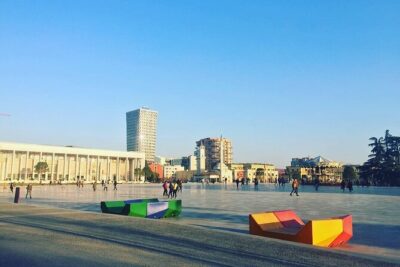

Tirana Stroll Tour, Walk and Taste Qofte & Raki!
Read our review →
Tirana’s Communist Past; Small Group Walking Tour
Read our review →Browse the lists this tour appears in