
Reviewed · WALKING TOURS
A short walking tour showing all in Tirana
Tirana’s story is packed into a short walk here, from the Ottoman-era Et’hem Bej Mosque to communist reminders, colorful murals, Italian-built streets, and new towers. I like the clear route and the small-group format, limited to two people, which should leave room for questions rather than a stream of facts.
I also like the price: at $11 per person, this is an inexpensive way to get your bearings before exploring on your own. Guides such as Enkeleda and Vladimir have been praised for clear explanations and warm conversation. The main consideration is pace. Two hours gives you an excellent introduction, but not time for long visits inside attractions.
In This Review
- Key points about this Tirana walk
- Starting at Et’hem Bej Mosque and Skanderbeg Square
- Murals that explain modern Albanian culture
- The Pyramid and Tirana’s changing identity
- The main boulevard and its 1930s Italian buildings
- Communist reminders at Checkpoint
- Modern towers and The Cloud
- What the guides add to the experience
- Why $11 is good value, and what it does not include
- Who should book this walk
- Timing, cancellation, and simple preparation
- Should you book the Tirana walking tour?
- FAQ
- Where does the tour start?
- What sights are included?
- How long does the tour last?
- What language is the tour offered in?
- How many people can join?
- How much does the tour cost?
- Is the tour wheelchair accessible?
- Is the tour suitable for people with hearing impairments?
- What should I bring?
- Can I cancel for a full refund?
Key points about this Tirana walk

- Starts at Et’hem Bej Mosque: Meet beside one of central Tirana’s best-known historic landmarks, then begin at Skanderbeg Square.
- Covers old, communist, and modern Tirana: The route links Ottoman religious architecture, 1930s Italian buildings, communist-era remains, murals, and contemporary towers.
- Small group of up to two people: This is suited to travelers who want a personal walk and the chance to ask plenty of questions.
- Guides add personal context: Enkeleda has been praised for her English and open discussions about Albania’s past and present. Vladimir has also led longer, story-filled walks.
- A useful two-hour introduction: You see major central sights without giving up an entire morning or afternoon.
- Bring comfortable shoes: This is a walking tour, and the experience is not suitable for people with hearing impairments.
Starting at Et’hem Bej Mosque and Skanderbeg Square
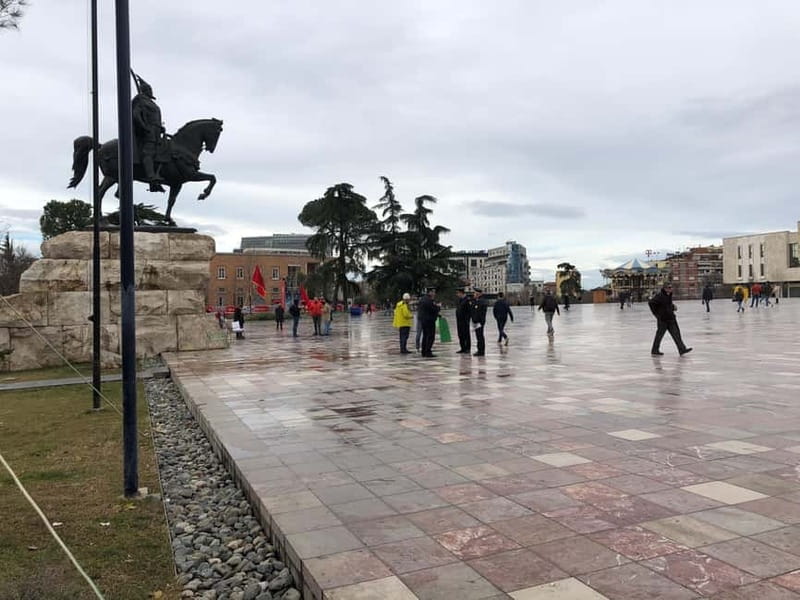
The tour begins at Et’hem Bej Mosque, a practical meeting point in the heart of Tirana. It is easy to connect this first stop with Skanderbeg Square, the city’s main public space and the natural place to begin understanding Tirana.
Your guide starts with an outline of Albanian and Tirana history. That opening matters because Albania can be hard to place on a first visit. The country’s Ottoman past, Italian influence, communist period, and current building boom all appear within a relatively small central area.
Skanderbeg Square gives the guide room to explain the capital before the walk moves into details. You can expect the emphasis to be on context rather than a long indoor museum visit. That makes this a good first-day activity, especially if you want the city to make more sense as you continue exploring.
The square is also useful for orientation. From here, Tirana’s main sights spread out on foot, and the route avoids the need for a taxi or public transport. You should still arrive ready to walk continuously for much of the two hours.
A few more Tirana trips to weigh up
- Walking Tour of Tirana
★ 5.0 · 646 reviews - Tirana: Express Walking Tour with a Guide
★ 4.8 · 503 reviews - Tirana Center: Magic Walking Tour French/Italian/English Etc
★ 4.9 · 402 reviews
Murals that explain modern Albanian culture
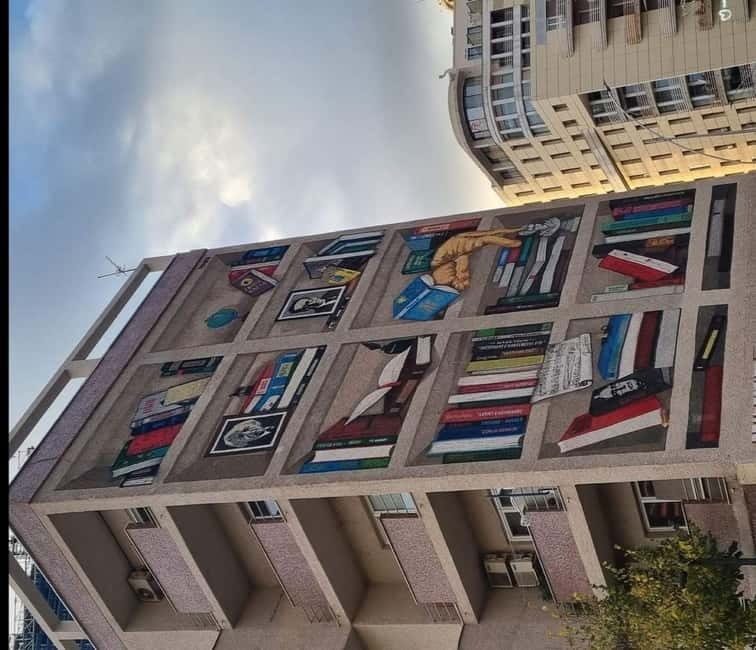
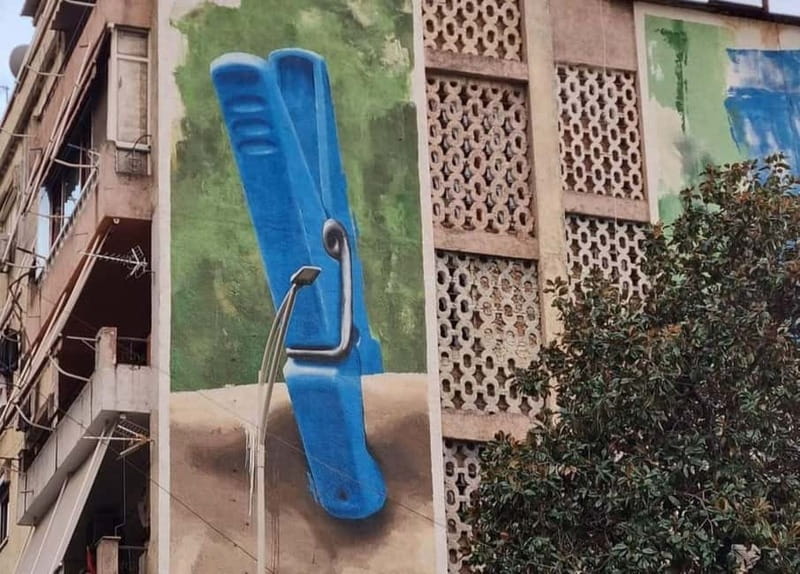
Murals are an important part of the tour. The guide chooses examples linked to Albanian culture and traditions, rather than treating street art as decoration alone.
This is one of the more useful features of the walk because murals can show how a city presents itself today. Tirana has changed quickly, and public art helps connect daily life with national identity. Your guide explains the meanings behind selected works, giving you more to look for after the tour ends.
The exact murals can change as the city changes, so you should think of this part as a guided reading of Tirana’s public art rather than a fixed gallery visit. The benefit is flexibility. You are not simply ticking off a set of sights; you are seeing how current culture appears in the streets.
For photographers, the mural stops add color and variety to a route that also includes monuments and formal architecture. For anyone less interested in art, the section is brief enough to keep the overall walk moving.
The Pyramid and Tirana’s changing identity
The Pyramid of Tirana is one of the most important stops because it links the city’s present to its communist past. The building remains a strong visual reminder of the period when Albania was governed under communism, while its place in today’s city reflects how Tirana continues to change.
The guide uses the Pyramid to discuss that transition. You will hear about a capital once shaped by isolation and a strict political system, then moving toward a more open and modern urban life.
This is not just an architecture stop. It gives the tour an emotional center. The Pyramid helps you see how political history can remain visible in a city even as new construction appears around it.
The trade-off is that this is primarily a walking explanation. The supplied information does not promise a full interior visit or a long stop inside the building. If you want a detailed architectural tour of the Pyramid itself, you would need more time elsewhere.
The main boulevard and its 1930s Italian buildings
The route continues along Tirana’s main boulevard, surrounded in part by Italian architecture from the 1930s. These buildings add another layer to the city’s story.
Their presence shows that Tirana’s appearance was shaped by more than Ottoman and communist influences. The Italian-era architecture gives the central boulevard a formal character, and your guide places it within the political and urban history of the period.
I appreciate this kind of stop because it encourages you to look up and around. Without an explanation, a historic facade can pass as background. With the guide’s help, the boulevard becomes evidence of the outside forces that influenced Albania before the communist period.
The route also lets you compare older buildings with newer construction. You are not seeing Tirana as a preserved historic center. You are seeing a city where several periods remain side by side, sometimes in sharp contrast.
Same coast, a completely different kind of day:
- From Tirana: Bovilla Lake & Gamti Mountain Hiking Day Trip
★ 4.9 · 4,397 reviews - From Tirana: Bovilla Lake & Gamti Mountain Hiking Tour
★ 4.9 · 3,003 reviews - From Tirana: Bovilla Lake & Gamti Mountain Viewpoint Hike
★ 4.8 · 2,053 reviews - Tirana/Durres/Golem: Saranda, Ksamil, Blue Eye Day Trip
★ 4.8 · 1,584 reviews
Communist reminders at Checkpoint
Checkpoint is another stop tied to Albania’s communist era. The tour uses it to bring that difficult period closer to the present.
This part is valuable because Albania’s communist years are not distant or abstract. The route gives you physical points where the guide can explain what the period meant for the country and its people. The stated aim is a clear introduction to a capital that has moved from communism into a developing modern state.
You should expect a concise explanation rather than a full political history course. The advantage is that the story stays connected to places you can see. The limitation is the same one found throughout the tour: two hours allows for a broad view, not an exhaustive account.
Guides have also brought personal experience to this section. Enkeleda has been praised for speaking openly about Albania’s past and current struggles, while Vladimir has shared personal stories during longer walks. That personal element can make the history easier to understand, though the exact conversation will depend on your guide and questions.
Modern towers and The Cloud
The final part of the route looks at modern towers and their meanings. This is a useful counterpoint to the mosque, boulevard, Pyramid, and communist landmarks.
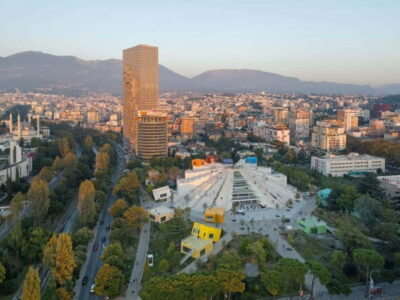
Tirana’s newer buildings signal investment and change, but they also raise questions about how a capital preserves its identity while it grows. The guide connects contemporary architecture to the wider story of the city, giving you a way to compare old and new rather than viewing modern construction in isolation.
The listed finish is The Cloud, a recognizable public art installation in central Tirana. It makes a fitting endpoint for a walk that moves from historic religious architecture to present-day design.
There is a small point to clarify before booking. The description says the tour finishes at The Cloud, while another part says it returns to the original meeting point. Treat The Cloud as the listed endpoint, and confirm the final location with the guide before you start if this matters for your next appointment.
What the guides add to the experience
The strongest part of this tour is the guide-led interpretation. The walk is short, but the subject is broad, so clear explanations matter.
Enkeleda, also spelled Engelka in the available information, has been praised for answering questions, speaking strong English, and making the conversation comfortable. She has also used WhatsApp to confirm the meeting point, a small but useful touch if you are arriving in Tirana for the first time.
Her approach appears especially suitable if you want more than a memorized list of dates. She has discussed Albania’s past and present openly and shown interest in the countries and cultures of the people she guides. That can turn a standard sightseeing walk into a two-way conversation.
Vladimir has also led the experience. One booking described a walk that lasted about three hours instead of the advertised two, with explanations of monuments, Albanian history, and personal stories. You should not assume every tour will run that long, but it suggests that timing may have some flexibility when the discussion is flowing.
The listed guide language is English, while the main description also mentions English or Spanish. If Spanish is important to you, confirm availability before booking. The practical strength here is direct contact with a guide who can adjust the discussion to your interests.
Why $11 is good value, and what it does not include
At $11 per person, this tour offers strong value for a central Tirana introduction. You get two hours with a live guide, a route covering several major themes, and city tax included.
The price is especially reasonable for a small group limited to two participants. Many low-cost city walks depend on large groups, where questions can be difficult and the guide must keep a broad crowd together. Here, the small format should give you more control over the conversation.
You are paying for orientation and interpretation, not admission to attractions or a full day of sightseeing. Nothing beyond the guide and city tax is included, so budget separately for food, drinks, entrance fees, or anything else you choose to do before or after the walk.
The best value comes when you take notes mentally and use the route to plan the rest of your visit. After learning the basic story of the square, mosque, Pyramid, boulevard, murals, and communist-era sites, you can decide which places deserve a longer return visit.
Who should book this walk
I would recommend it to a first-time visitor who has a short stay in Tirana and wants a useful introduction without committing half a day. It also suits anyone interested in the way architecture and public art reflect political change.
The tour is a good match for people who prefer conversation to a large group lecture. With only two participants, you can ask about Albania, Tirana, architecture, traditions, or the communist period as questions come to you.
It should also work well for independent travelers who want help at the beginning of a trip, then plan to explore alone. The compact route gives you a mental map and a list of themes to follow up on.
This is less suitable if you want extensive museum time, a detailed architectural study, or a long stop at each sight. It is also not suitable for people with hearing impairments, and comfortable shoes are essential.
The tour is wheelchair accessible, but the activity remains a walking route. If you use a wheelchair, confirm the exact route and endpoint with the provider before starting, especially because the finish is described in two different ways.
Timing, cancellation, and simple preparation
The walk lasts about two hours, with starting times available according to the booking calendar. That makes it easy to fit around a morning arrival, an afternoon departure, or another central Tirana activity.
You can reserve now and pay later, which helps if your schedule is still taking shape. Cancellation is free up to 24 hours before the start for a full refund.
The provider says cancellation at the last minute should occur only if the guide has an emergency before the tour begins. That is reassuring, but you should still keep the guide’s contact details handy in case the meeting arrangements change.
Wear comfortable shoes and bring water if the weather is warm. The route is short by city-tour standards, but you will be on foot and moving between several central sights.
Should you book the Tirana walking tour?
Book it if you want a fast, low-cost introduction to Tirana with a personal guide and a clear mix of history, art, architecture, and political memory. The $11 price is hard to fault, especially with a two-person maximum and guides who have been praised for careful answers, strong English, and thoughtful discussion.
Skip it if you want long interior visits or a specialist tour focused on one building or period. For most first visits, though, this walk gives you the essential central story in two hours and leaves you free to explore further on your own.
FAQ
Where does the tour start?
The tour starts at Et’hem Bej Mosque in central Tirana.
What sights are included?
The route includes Skanderbeg Square, selected murals, the Pyramid of Tirana, the main boulevard with 1930s Italian architecture, modern towers, communist-era reminders at Checkpoint, and The Cloud.
How long does the tour last?
The advertised duration is about two hours. One guide-led walk described in the available information lasted around three hours, but you should plan for two.
What language is the tour offered in?
The activity information lists a live English-speaking guide. The main description also mentions English or Spanish, so confirm Spanish availability before booking if needed.
How many people can join?
The tour is listed as a small group limited to two participants.
How much does the tour cost?
The price is $11 per person.
Is the tour wheelchair accessible?
Yes, the activity is listed as wheelchair accessible.
Is the tour suitable for people with hearing impairments?
No. It is specifically listed as not suitable for people with hearing impairments.
What should I bring?
Bring comfortable shoes because the experience is a walking tour.
Can I cancel for a full refund?
Yes. You can cancel up to 24 hours in advance for a full refund. You can also reserve now and pay later.
Just added around Tirana
- Zipline Tirana Adventure & Petrela Castle – With Transport★ 4.4 · 10 reviews
- Wine Tasting & Vineyards Escape near Tirana★ 4.9 · 8 reviews
- Wonderful Sunset and Dinner in the Castel Of Petrela★ 4.6 · 4 reviews
- Walking Tour in Tirana, Albania★ 3.7 · 28 reviews
- Vlora, Dhermi & Llogara Day Trip from Durrës or Golem★ 5.0 · 5 reviews
- From Tirana: Mount Dajti Adventure, Local Vibes & Cable Car opt★ 4.5 · 6 reviews
- Day Tour to Petrela Castle and Zip Line Albania Adventure★ 5.0 · 10 reviews
- Winetasting tour in Alpeta winery – Roshnik village by 1001 Albanian Adventures★ 5.0 · 26 reviews
Walking Tours, compared.

Blue Eye Kayak and walking tour & Lekursi Castle
Read our review →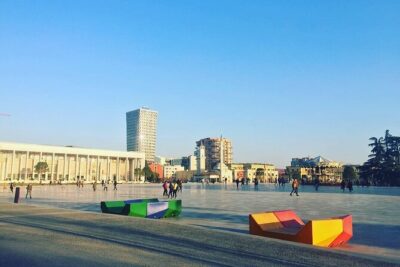

Tirana Stroll Tour, Walk and Taste Qofte & Raki!
Read our review →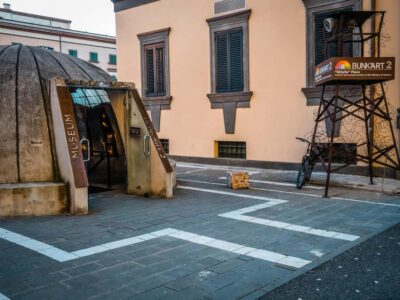
Tirana’s Communist Past; Small Group Walking Tour
Read our review →Browse the lists this tour appears in