
Reviewed · CITY TOURS
Private Cold War City Tour in Gjirokaster
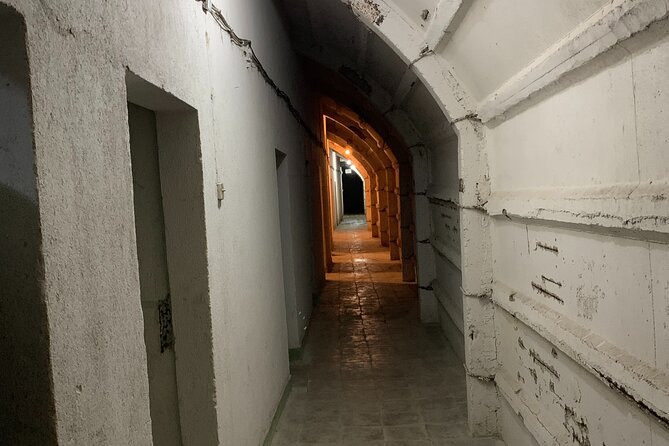
Gjirokaster’s Cold War Tunnel is the heart of this experience: a chilly underground shelter built for Albania’s 1970s political leaders, with rooms meant to keep the ruling circle working during a crisis. You then connect that secret world to the city castle, its prison building, and the personal stories of people caught under the communist regime.
I like the private format, since your group can ask questions without being lost in a crowd. I also like the way the tour pairs political history with a coffee or tea break, plus the moving story of Musine Kokalari, Albania’s first female writer. The main drawback is that the tour is offered in English only, and the €14 entrance fee per person is extra.
In This Review
- Key points to know before you book
- What this Gjirokaster tour is really about
- Going underground in the Cold War Tunnel
- The castle, prison, and public face of power
- Meeting Musine Kokalari at My Muse
- Enver Hoxha’s childhood home becomes a museum
- Why the private group format matters
- Is $75.74 plus admission good value?
- What could be improved
- Who should book this experience?
- Should you book the Cold War City Tour?
- FAQ
- Where does the tour start?
- Where does the tour end?
- How long does the tour last?
- What language is the tour offered in?
- Is this a private tour?
- What is included in the price?
- Are entrance tickets included?
- What places does the tour visit?
- Can I cancel for a full refund?
Key points to know before you book
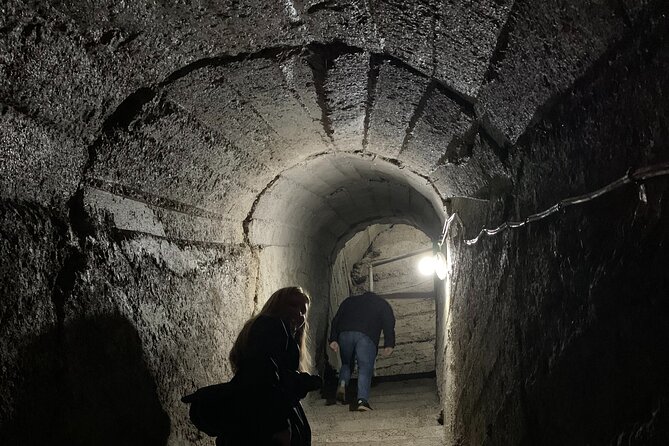
- The Cold War Tunnel is cool, dark, and purpose-built: It was made to shelter the political bureau of the 1970s and allow leaders to direct military action during danger.
- You get a personal guide for your own group: The private setup suits visitors who want to pause, ask questions, or set a comfortable pace.
- Musine Kokalari adds a human voice: Her memorial explains the life of a writer and political thinker persecuted by the communist regime.
- The former home of Enver Hoxha has had several lives: It began as his family home, later became a weapons museum, and is now the Ethnographic Museum.
- Coffee or tea is part of the tour: The final presentation takes place in the tour company’s hall, where you can sit and discuss less visible parts of the city’s past.
- Plan for an extra €14 admission charge: The advertised tour price is $75.74 per person, but entrance tickets are not included.
What this Gjirokaster tour is really about
This is not a broad introduction to every corner of Gjirokaster. It is a focused look at power, fear, resistance, and memory, told through places tied to Albania’s communist period.
That focus gives the tour a useful shape. You begin underground, move into the city’s public and military spaces, meet the story of a persecuted intellectual, and finish in a house linked to dictator Enver Hoxha. The route connects official power with the people who suffered under it.
The experience lasts about two hours and 30 minutes to three hours and 10 minutes. The longer timing allows for the stated 50-minute tunnel visit, 40 minutes at the My Muse memorial, 40 minutes at the Ethnographic Museum, and a short closing presentation with coffee or tea.
Because this is a private tour, you are not sharing the guide with a large group. That matters in places where the story can get complicated. You can ask for a clearer explanation, spend more time on a point that interests you, or move on if a particular section is not for you.
A few more Gjirokaster trips to weigh up
- Gjirokaster: Old Bazaar and Castle Private Walking Tour
★ 5.0 · 6 reviews - Gjirokaster – The Stone City of UNESCO, Private Tour from Tirana
★ 4.5 · 4 reviews - Gjirokastra Private Half-Day Walking Tour
★ 5.0 · 3 reviews
Going underground in the Cold War Tunnel
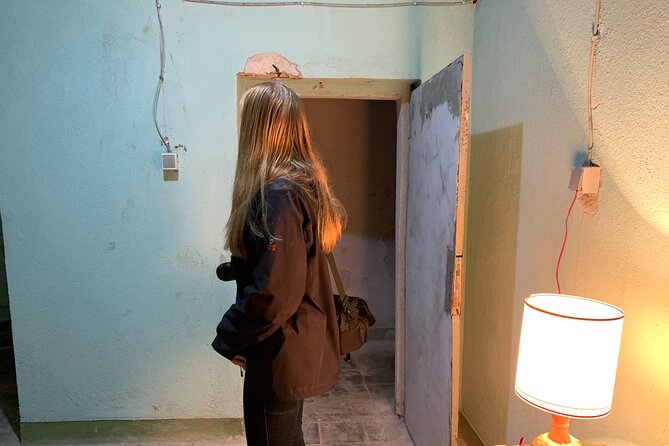
The first stop is the Cold War Tunnel, built to protect Albania’s political bureau during the 1970s. This was not a casual shelter for the public. It was designed for the country’s leading officials, who could use it as a protected command center and continue directing military action if danger reached the surface.
The tunnel gives the tour its strongest sense of place. Underground rooms and enclosed passages make the Cold War feel less like a chapter in a textbook and more like a system built into daily life. The atmosphere is also literal: one visitor noted that the tunnel is cool, a welcome break from Gjirokaster’s sun but a reason to carry a light layer.
You will spend about 50 minutes here, with admission included in the guided experience. The guide brings out stories, confessions, and facts about how the shelter was intended to work. The value is not simply seeing concrete rooms. It is learning why the rooms existed and what they reveal about a government that expected danger from outside enemies and distrust from within.
The tunnel may be difficult for anyone who dislikes enclosed spaces. The tour information does not give details about stairs, lighting, or the exact physical conditions, so ask the provider before booking if you have mobility or comfort concerns.
The castle, prison, and public face of power
The tour also includes Gjirokaster City Castle and its prison building. The castle is one of the city’s defining places, but this visit is less about a scenic walk than about how the fortress was used in the communist period.
The prison building adds a hard edge to the castle visit. It helps explain how punishment worked alongside political control. The castle can offer grand views and strong stone walls, but the prison points your attention toward confinement, interrogation, and the cost of opposing the regime.
The experience description identifies the castle and prison as central highlights, while the detailed stop schedule gives more time to the tunnel, memorial, and Ethnographic Museum. If the prison building is the main reason you are booking, confirm the exact access and sequence with C-Adventures&Tours before the day of the tour.
Entrance tickets are not included. The stated extra cost is €14 per person. At $75.74 per person, the total price is not a bargain city walk, but the private guide and specialist subject make the cost easier to justify for a couple, family, or small group with a serious interest in modern Albanian history.
Meeting Musine Kokalari at My Muse
The second stop is the My Muse Memorial, dedicated to Musine Kokalari. She was an Albanian writer, intellectual, and politician from Gjirokaster, and she is described as Albania’s first female writer.
Her story gives the tour a personal counterpoint to the rooms built for powerful men. Kokalari opposed the communist regime and was punished with imprisonment at Burrel and hard labor at Rreshen. The memorial focuses on her inner world, including her commitment to reading and writing despite poverty and persecution.
You have about 40 minutes here. That is enough time for a guided explanation and a thoughtful look at the memorial, but it is also the point where English ability matters most. One visitor found the content interesting but missed parts because the tour was conducted only in English and there were no translated explanatory texts in several languages.
You should treat the English-only format as a real booking condition, not a minor footnote. If you can follow spoken English comfortably, the guide can give you a direct account of Kokalari’s life. If you cannot, ask in advance if written material is available. The experience provider has acknowledged the suggestion for translations, but the stated language remains English.
Same coast, a completely different kind of day:
- Sarandë: Tour Gjirokaster,Blue Eye & Lekursi Castle
★ 4.7 · 220 reviews - Gjirokaster walking Tour Baazar – The Castle – Zekate house
★ 4.6 · 21 reviews - Saranda Hidden Gems: Sunset at Lekursi,Blue Eye&Wine Tasting
★ 4.9 · 20 reviews - Day Tour to Permet Thermal Baths and Langarica Canyon
★ 5.0 · 18 reviews
Enver Hoxha’s childhood home becomes a museum
The third main stop is the Ethnographic Museum, located in the house where Enver Hoxha was born and raised. The building has had an unusual path. It began as the Hoxha family home, was later used as the Museum of Weapons, and now functions as the Ethnographic Museum.
The original house was burned and rebuilt at five times its former size. That detail alone makes the building worth discussing. It is not simply a preserved childhood home. It is a place reshaped by politics, memory, and the changing way Gjirokaster has chosen to explain its past.
The guide introduces Hoxha’s rise as a leader and the punishments directed at opponents, acquaintances, and even people who had known him earlier in life. The account is meant to show how authority reached beyond formal political rivals into personal networks and ordinary relationships.
You will spend about 40 minutes inside the museum. The setting also links political history with the domestic character of Gjirokaster’s historic buildings. You get a chance to see how a family house was turned into a political symbol, then repurposed again as a museum about local life.
The tour closes with a short presentation at the company’s hall, where coffee or tea is served. This final section focuses on less visible parts of Gjirokaster’s past, which may be especially useful if you want interpretation rather than a quick series of photo stops.
Why the private group format matters
A private tour changes the feel of a history visit. You are not trying to hear a guide over a large group, and you can ask about the difference between a shelter, a prison, a memorial, and a former dictator’s home without holding up strangers.
The tour is offered only to your group, with a small-group feel built into the booking. The provider describes it as suitable for most people, and service animals are allowed. It is also near public transportation, though no specific transit route is supplied.
Guide Elisa has received particular praise for being kind and well informed. In one case, an early arrival led the staff to help with another attraction, which suggests some flexibility around timing. I would not count on an unscheduled extra visit, but arriving early and speaking with the provider may be worthwhile.
The private format is most useful for couples, families, and friends with different levels of interest. A history enthusiast can ask for more detail, while someone less focused on politics can still follow the main story without being trapped in a long lecture.
Is $75.74 plus admission good value?
The listed price is $75.74 per person, and the entrance tickets cost an additional €14 per person. That makes the real cost higher than the headline figure, so budget for both before you reserve.
The price buys a private guided experience lasting roughly half a day, though the actual tour time is under four hours. Coffee or tea is included, and the route covers several locations rather than one ticketed site. You are paying for interpretation, organization, and a guide focused on your group, not just entry to a tunnel.
For a solo visitor, the price may feel high. For two or more people sharing the value of a private guide, it becomes easier to defend, especially if you care about the Cold War period and want to understand the connections between the sites.
The tour also saves you from piecing together separate visits to the tunnel, castle area, memorial, and museum. Gjirokaster’s history can be hard to read from buildings alone. A good guide gives the places meaning, and that is the main reason to choose this experience over simply buying individual admissions.
What could be improved
The English-only format is the clearest limitation. The tour contains difficult political and biographical material, and missing a few sentences can mean missing the point of a whole stop. Written translations would make the memorial and museum sections more useful to a wider audience.
The timing may also feel brisk. The stated duration varies from two hours and 30 minutes to three hours and 10 minutes, while the main stops already account for more than two hours. Add movement, questions, and the coffee presentation, and you may not have much spare time.
Gjirokaster can also feel crowded around its central sights. One account describes a pleasant center with many souvenir shops and notes that the castle, bunker, views, and dinner options can attract plenty of people. The private guide helps with the storytelling, but it does not remove the city’s tourist traffic.
Finally, the extra €14 admission fee should be made prominent in your budget. The tour remains fairly priced for a private history experience, but it is not a low-cost walk.
Who should book this experience?
I would choose this tour if you want communist-era history, personal stories of repression, and places that are difficult to understand without a guide. It is a good match for visitors who prefer a private setting and want to ask questions as they go.
It also suits anyone curious about the contrast between Albania’s political elite and those who resisted or suffered under the regime. Musine Kokalari’s story gives the experience emotional weight, while the tunnel and castle show the machinery of power.
You may want a different activity if your main goal is Gjirokaster’s Ottoman architecture, food, or broad city sightseeing. This tour includes the city’s historic setting, but its main subject is the communist period. It is also less suitable if you are not comfortable following an English-language explanation or visiting enclosed underground spaces.
Should you book the Cold War City Tour?
Book it if you want a focused, private account of Gjirokaster’s Cold War past and you can follow English comfortably. The strongest parts are the Cold War Tunnel, the story of Musine Kokalari, and the unusual history of Enver Hoxha’s former home.
Before booking, add the €14 admission charge to the $75.74 tour price, bring a light layer for the tunnel, and confirm the castle prison visit if that is a priority. For a small group that values context, personal stories, and an unhurried chance to ask questions, this is a useful way to see Gjirokaster beyond its stone streets and souvenir shops.
FAQ
Where does the tour start?
The tour starts at C-Adventures & Tours, 6001 Gjirokastër, Albania.
Where does the tour end?
The activity ends back at the meeting point.
How long does the tour last?
The approximate duration is between two hours and 30 minutes and three hours and 10 minutes.
What language is the tour offered in?
The tour is offered in English only.
Is this a private tour?
Yes. Only your group participates in the activity.
What is included in the price?
A guided tour and coffee or tea are included.
Are entrance tickets included?
No. Entrance tickets are not included and cost €14 per person.
What places does the tour visit?
The experience includes the Cold War Tunnel, Gjirokaster City Castle and its prison building, the My Muse Memorial for Musine Kokalari, and the Ethnographic Museum in Enver Hoxha’s former childhood home.
Can I cancel for a full refund?
Yes. You can cancel at least 24 hours before the experience start time for a full refund. Cancellations or changes made less than 24 hours in advance are not refunded or accepted.
Just added around Gjirokaster
- Vlora, Llogara & Dhërmi: Albanian Riviera from Durres/Golem★ 4.9 · 7 reviews
- Wood Crafting Experience in Gjirokastra★ 4.5 · 10 reviews
- Walking Tour “The Old Bazaar, Cfake, Dunavat, Ali Pasha Bridge”★ 5.0 · 10 reviews
- Vegetarian Cooking Class @Teta Marjeta★ 5.0 · 11 reviews
- Cooking Class★ 4.5 · 12 reviews
- Gjirokastra Private Half-Day Walking Tour★ 5.0 · 3 reviews
- Gjirokaster – The Stone City of UNESCO, Private Tour from Tirana★ 4.5 · 4 reviews
- Prepare Osa with Teta Marjeta★ 4.5 · 7 reviews
City Tours, compared.
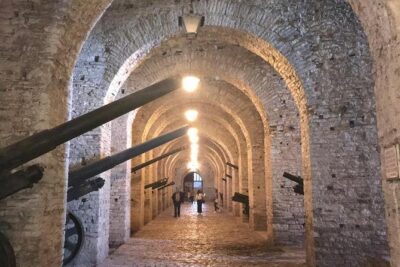
Gjirokastra- The Stone City & Blue Eye- The monument of Nature.
Read our review →
Best of Local Food & City Tour of Tirana – Food & Drinks Included
Read our review →
Durres city & Golem beach, Sun & History Day Trip
Read our review →
“Berat & Durres City, Belsh Lake – Day Tour from Tirana”
Read our review →
Browse the lists this tour appears in