
Reviewed · FOOD & DRINK
Highlights of Tirana & Rakia Tasting
Tirana’s story is written in sharp contrasts: Ottoman mosques, Byzantine traces, communist-era concrete, new stadiums, and cafés filling the spaces between them. This two-hour walking tour gives you a useful first look at that mix, then adds a small taste of raki, Albania’s local spirit.
I like the route for two reasons. It covers the main sights in central Tirana without wasting time on transport, and the guide helps explain why the city looks the way it does. I also like the choice of stops, especially the pairing of St Paul’s Cathedral and Namazgah Mosque. The main drawback is that the experience moves at a brisk pace, and language support is not equal in every language.
- Skanderbeg Square and the city center: Start with Tirana’s main public space and its key civic sights.
- Old and new Tirana together: See the Byzantine-era castle, Ottoman religious buildings, the Pyramid, and modern stadium architecture.
- English guide with audio options: The live tour is in English, with audio support listed for Italian, Spanish, French, and German.
- A small raki tasting: Finish the walk with a local drink rather than a full meal or drinks stop.
- A useful first-day orientation: The compact route helps you decide which parts of Tirana deserve a longer return visit.
- Central meeting point: Begin near Basico Coffee Shop on Myslym Shyri, at the Discover Albania office.
In This Review
- A fast introduction to Tirana’s many eras
- Meeting near Myslym Shyri
- Skanderbeg Square and Albania’s public face
- Et’hem Bey Mosque and the Ottoman center
- The National Historical Museum and the story behind the streets
- Pedestrian Road and the feel of central Tirana
- Tirana Castle, a small old-world pause
- The Pyramid and communist-era Tirana
- St Paul’s Cathedral and Namazgah Mosque
- The stadium, the Monument of Friendship, and modern Albania
- What the raki tasting adds
- Guide style and language choices
- Is $28 a fair price?
- Who should book this Tirana walk?
- Should you book Highlights of Tirana and Rakia Tasting?
- FAQ
- How long does the Tirana and raki tour last?
- What language is the live tour guide?
- Are audio guides available in other languages?
- Where does the tour meet?
- Is raki included?
- Is hotel pickup included?
- Can I cancel for a full refund?
A fast introduction to Tirana’s many eras
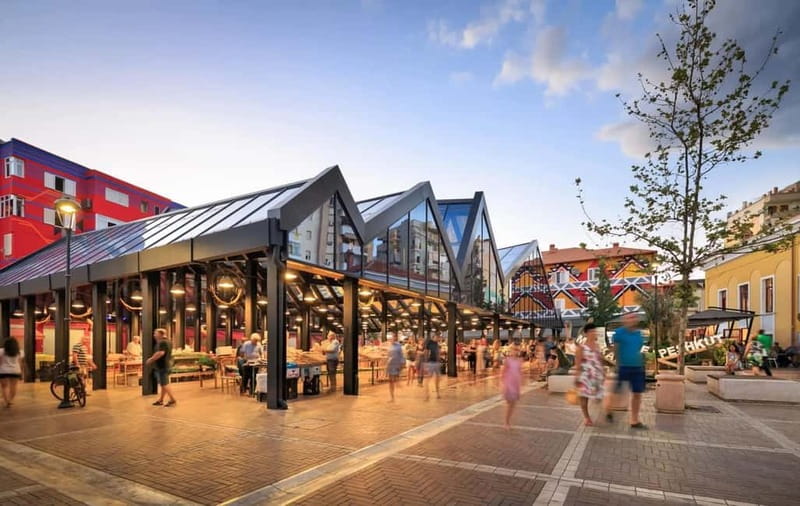
I see this tour as an orientation walk, not a full study of Albania. In two hours, you move through the center and get the basic framework: Skanderbeg and national identity, Ottoman and religious heritage, communist rule, and the city’s newer international image.
That framework matters in Tirana because the sights can seem disconnected at first. A mosque, a concrete pyramid, a new stadium, and a polished pedestrian street may look like unrelated stops. A good guide gives you the missing links.
The route is concentrated in the center, so you spend your time walking and listening rather than crossing town. You should still expect city pavements, road crossings, and a fair amount of standing. The experience is not suitable for wheelchair users or people with mobility impairments, and children under 18 cannot join.
Meeting near Myslym Shyri
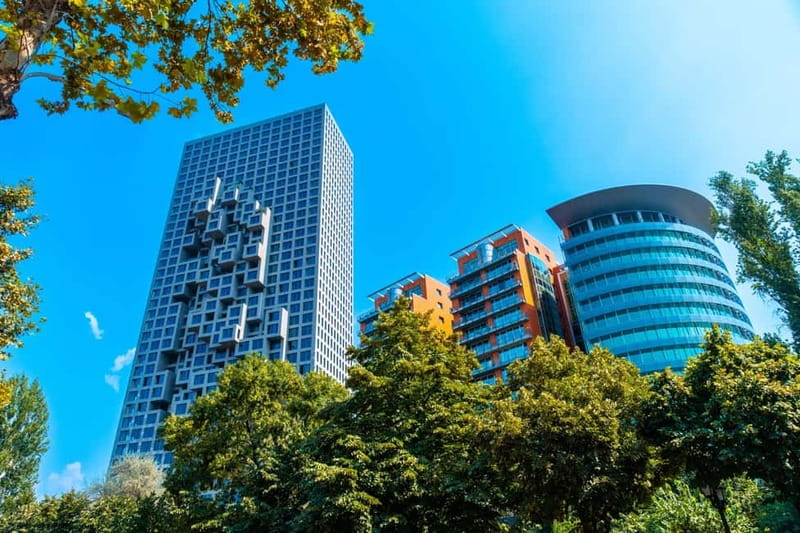
The starting point is near Basico Coffee Shop on Myslym Shyri, one of the city’s main streets. From the coffee shop, you take a short turn left and go to the Discover Albania office. Tell the staff you are there for the Tirana tour.
This is a practical starting point because it places you close to the central walking route. I would arrive with enough time to find the office, especially if you do not know Tirana yet. The directions are simple, but the meeting point is not described as a hotel lobby or a major monument, so do not wait at the coffee shop without checking for the office.
The tour lasts two hours. That is long enough to cover the central sights, but short enough to fit around lunch, a museum visit, or an evening booking. There is no hotel pickup or drop-off, so you need to make your own way to and from the meeting point.
A few more Tirana trips to weigh up
- Tirana: Traditional Cooking Class with Wine & Raki Tasting
★ 5.0 · 284 reviews - Cooking Classes and Traditional food tasting in Tirana
★ 5.0 · 282 reviews - Traditional Albanian Cooking Class in Tirana & Raki Tasting
★ 5.0 · 266 reviews
Skanderbeg Square and Albania’s public face
Skanderbeg Square is the natural place to begin understanding Tirana. It is the city’s central gathering space and one of the clearest places to consider Albania’s national identity. The name refers to Skanderbeg, the medieval Albanian leader whose image and legacy appear across the country.
The square also helps you orient yourself. From here, several major sights sit within easy reach, including the National Historical Museum and Et’hem Bey Mosque. Your guide can give you the basic political and cultural setting before the walk turns toward smaller streets and religious buildings.
Do not expect a long museum visit during this tour. The National Historical Museum is part of the sightseeing route, but the format is a walking overview rather than an extended indoor tour. If you want detailed exhibits, you will need to return on your own.
Et’hem Bey Mosque and the Ottoman center
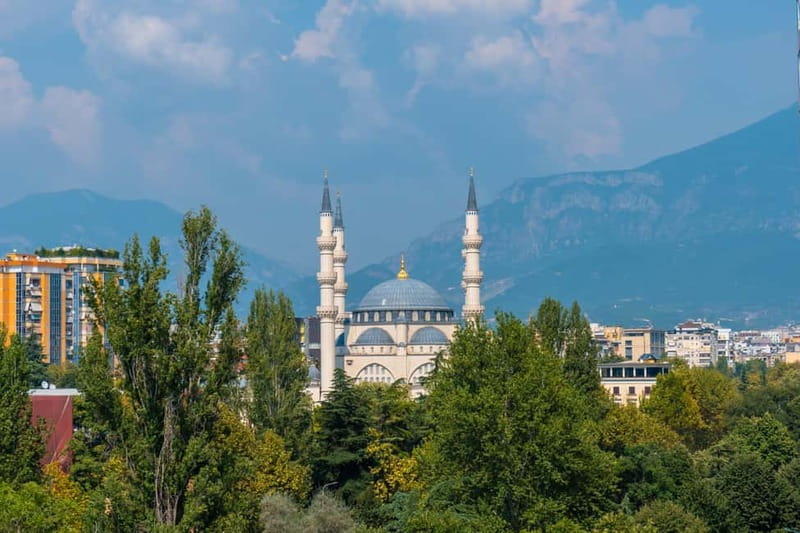
Et’hem Bey Mosque offers one of the city center’s clearest links to Tirana’s Ottoman past. Its presence near Skanderbeg Square gives you a chance to see how older religious buildings fit into a city that has changed sharply around them.
This stop works best when your guide explains the building in relation to the square and the surrounding city. Albania’s religious history is not something you can grasp from architecture alone. The walking commentary helps you understand why a mosque remains central to the city’s identity and why religious sites matter in a country shaped by several political systems.
The tour description includes the mosque as a landmark stop, but it does not promise an extended interior visit. Plan on seeing it as part of the route, with the exact access depending on the day and the guide’s schedule.
The National Historical Museum and the story behind the streets
A stop near the National Historical Museum adds context to the buildings you see later. Albania’s recent past has a strong effect on Tirana’s appearance, and the city makes more sense when you know at least the outline of that story.
One French-language review described the verbal explanation of Albania’s recent and tragic past as essential. I agree with the practical point behind that assessment. Without a guide, you can see unusual architecture, but you may miss why the city developed such a different character from many other European capitals.
The tour does not replace a museum visit or a dedicated political-history walk. It gives you the basic narrative while keeping you moving. For a first morning or afternoon in Tirana, that balance is useful.
Same coast, a completely different kind of day:
- From Tirana: Bovilla Lake & Gamti Mountain Hiking Day Trip
★ 4.9 · 4,397 reviews - From Tirana: Bovilla Lake & Gamti Mountain Hiking Tour
★ 4.9 · 3,003 reviews - From Tirana: Bovilla Lake & Gamti Mountain Viewpoint Hike
★ 4.8 · 2,053 reviews - Tirana/Durres/Golem: Saranda, Ksamil, Blue Eye Day Trip
★ 4.8 · 1,584 reviews
Pedestrian Road and the feel of central Tirana
The walk continues along the Pedestrian Road, where the experience shifts from formal landmarks to everyday city life. This part of the route lets you see how central Tirana is used, with shops, cafés, public spaces, and people moving between the main sights.
I like this kind of stop because it keeps the tour from becoming a parade of monuments. You get a sense of how the center connects rather than seeing each building in isolation. It is also a good place to ask your guide practical questions about returning to places later.
The route remains focused on the center. If you are hoping to see Tirana’s outer neighborhoods, markets, or nearby mountain views, this is not that tour. Its strength is concentration, not reach.
Tirana Castle, a small old-world pause
Tirana Castle is one of the route’s more unexpected sights. It is a remnant from the Byzantine era in the middle of the modern city, though the word castle may suggest something much larger than what you will find.
The value here is not grand defensive walls or a long fortress visit. The appeal is the contrast. A trace of earlier Tirana sits among newer streets and commercial spaces, showing how the city has built around its past rather than preserving one untouched historic quarter.
This is a good place to keep your expectations sensible. The tour presents the castle as part of the city walk, not as a major archaeological excursion. Your guide’s explanation is likely to be more valuable than the amount of structure you see.
The Pyramid and communist-era Tirana
The Pyramid is one of Tirana’s most memorable buildings. Its unusual concrete form gives the route a strong visual change after the older religious and civic sights. It also opens the door to Albania’s communist period and the way that era still shapes the capital.
You may find the building more interesting for the questions it raises than for architectural polish. Why was it built? How has its meaning changed? What does its current place in the city say about Albania today? Those are the sorts of questions a live guide can address better than a sign beside the building.
This is one reason I prefer taking the tour early in a Tirana stay. You can return to the Pyramid later, take a closer look, and think about the explanation you heard. The short visit gives you a prompt, not every answer.
St Paul’s Cathedral and Namazgah Mosque
The tour’s religious stops show Tirana’s variety in a direct and memorable way. St Paul’s Cathedral brings Catholic architecture into the route, while Namazgah Mosque represents the city’s Muslim presence and its modern religious development.
Seeing these places on the same walk gives you a clearer picture than visiting either one alone. The point is not to compare the buildings as a contest. It is to notice how different faith traditions share the capital and how religious architecture forms part of Albania’s public identity.
The cathedral is noted for its architecture, and Namazgah Mosque is included as a major city landmark. The tour does not promise a formal religious service, extended worship visit, or guaranteed interior access. Dress and behave respectfully at both sites, as you would at any active place of worship.
The stadium, the Monument of Friendship, and modern Albania
The final part of the route turns toward symbols of present-day Albania. Depending on the exact route and timing, you may stop near Air Albania Stadium or the Monument of Friendship.
Air Albania Stadium points to the country’s modern public image and international links. The Monument of Friendship carries a similar idea through a civic symbol. These stops balance the older sections of the walk and help you see Tirana as a city still defining itself.
This is a useful ending because the tour does not leave you with a picture of Albania frozen in Ottoman or communist times. You finish with the newer capital, where national identity, foreign connections, sport, and public architecture all meet.
What the raki tasting adds
Raki is a local drink and an important part of the experience, but you should think of this as a tasting, not a food tour. Meals and other drinks are not included, and the information provided does not specify the amount, setting, or number of samples.
For $28 per person, the raki adds a small cultural touch without changing the tour into a drinking activity. It gives the walk a social finish and introduces you to something you are likely to encounter elsewhere in Albania.
If you do not drink alcohol, check the arrangements before booking or ask the guide about the available alternative. The tour specifically includes raki, but no nonalcoholic substitute is promised.
Guide style and language choices
The live guide speaks English. That is the safest choice if you want direct explanations and the chance to ask questions as you walk.
Audio guides are listed in Italian, Spanish, French, and German in the inclusions, while the activity information also mentions English audio. The language details are not perfectly consistent, so check the available option when you book.
This distinction matters. Italian and French support may be provided through a device and headphones rather than a live guide. A French-language experience was described as an audio guide, and when an Italian guide was unavailable, headphones were offered instead. If personal commentary is important to you, book the English tour or confirm the live-language arrangement first.
The named guide Celesta received especially warm praise for being informative, patient, and kind. Another guide was described as a young student who gave strong explanations of the city’s architecture and history. Guide assignments can change, but those details suggest that the quality of the experience depends heavily on the person leading it.
Is $28 a fair price?
At $28, this is not Albania’s cheapest city walk. Some independent guides offer similar central routes on a tip-based model, so price-sensitive visitors may find a lower-cost option.
Still, the price can make sense if you value a confirmed booking, an English-speaking guide, an audio option, a raki tasting, and a skip-the-line ticket. The ticket is included, but the information does not specify which attraction it covers, so I would not assign it a large value before confirming the details.
You are paying mainly for structure and explanation. The tour brings the main sights into a clear two-hour sequence, which is helpful when your time in Tirana is limited or when you want to avoid spending your first day figuring out the city’s layout.
For a solo visitor, couple, or first-time arrival, $28 is reasonable if the guide is good and you want a compact introduction. If you already know Tirana or prefer wandering alone, the value is weaker.
Who should book this Tirana walk?
I would choose this tour for a first visit, especially if you have only a day or two in the capital. It gives you names, locations, and historical context that make later independent exploring easier.
It also suits you if architecture interests you. The route moves from Ottoman and Byzantine traces to Catholic and Muslim religious buildings, the Pyramid, and newer civic architecture. You get a useful visual guide to the city’s changes.
It is less suitable if you need a slow pace, step-free access, or a child-friendly activity. Children under 18 are not permitted, and the tour is not suitable for wheelchair users or people with mobility impairments.
You can cancel up to 24 hours before the activity for a full refund, and you can reserve now and pay later. Those terms are useful when your Tirana schedule is still shifting.
Should you book Highlights of Tirana and Rakia Tasting?
Book it if you want a short, guided introduction to central Tirana with clear historical framing and a local drink at the end. The strongest parts are the central route, the contrast between old and new buildings, and the live guide’s ability to explain Albania’s recent past.
Think twice if you want a deep museum visit, a food-focused outing, or a bargain walking tour. Also confirm your language arrangement, since Italian and French may mean audio support rather than a live guide.
For most first-time visitors who want to get their bearings quickly, this is a sensible opening look at Tirana. The 4.7 rating from 15 reviews supports a generally strong experience, with guide quality praised most often and the price and audio-only language format the main points to weigh.
FAQ
How long does the Tirana and raki tour last?
The tour lasts two hours. Starting times vary, so check availability when booking.
What language is the live tour guide?
The live guide speaks English.
Are audio guides available in other languages?
Audio support is listed for Italian, Spanish, French, and German. The activity details also mention English audio. Confirm the exact language option when booking because Italian and French may be audio-only.
Where does the tour meet?
Meet near Basico Coffee Shop on Myslym Shyri. Turn left onto the nearby side street and go to the Discover Albania office, where you should explain that you are there for the Tirana tour.
Is raki included?
Yes. A raki tasting is included. Meals and other drinks are not included.
Is hotel pickup included?
No. You must make your own way to the meeting point, and hotel pickup and drop-off are not included.
Can I cancel for a full refund?
Yes. You can cancel up to 24 hours in advance for a full refund. You can also reserve now and pay later.
Just added around Tirana
- Zipline Tirana Adventure & Petrela Castle – With Transport★ 4.4 · 10 reviews
- Wine Tasting & Vineyards Escape near Tirana★ 4.9 · 8 reviews
- Wonderful Sunset and Dinner in the Castel Of Petrela★ 4.6 · 4 reviews
- Walking Tour in Tirana, Albania★ 3.7 · 28 reviews
- Vlora, Dhermi & Llogara Day Trip from Durrës or Golem★ 5.0 · 5 reviews
- From Tirana: Mount Dajti Adventure, Local Vibes & Cable Car opt★ 4.5 · 6 reviews
- Winetasting tour in Alpeta winery – Roshnik village by 1001 Albanian Adventures★ 5.0 · 26 reviews
- Day Tour to Petrela Castle and Zip Line Albania Adventure★ 5.0 · 10 reviews
Food & Drink, compared.
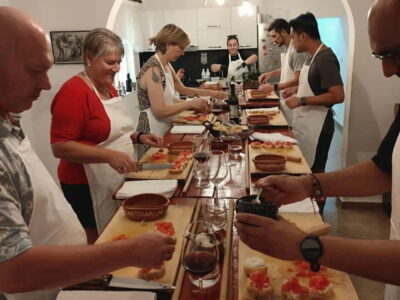
Traditional Cooking Class with Wine & Raki Tasting
Read our review →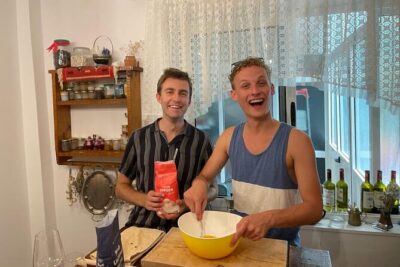
Cooking Classes and Traditional food tasting in Tirana
Read our review →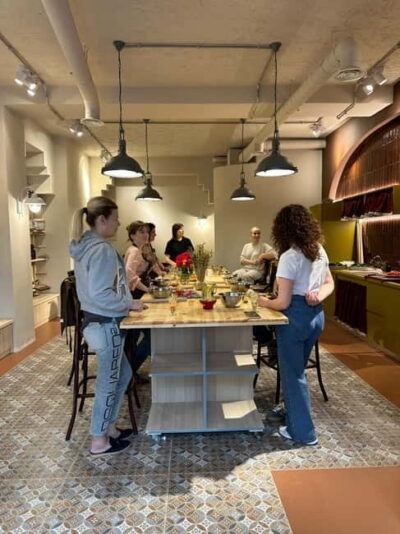
Traditional Albanian Cooking Class in Tirana & Raki Tasting
Read our review →
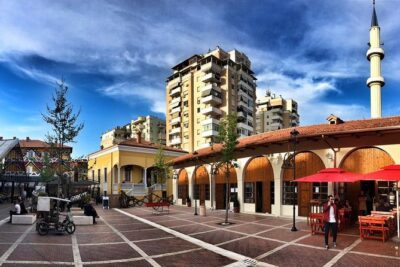
Best of Local Food & City Tour of Tirana – Food & Drinks Included
Read our review →
Durrës Countryside Vineyard Experience with Wine & Food Pairing
Read our review →
Traditional Albanian Cooking Class in Tirana with Raki Tasting
Read our review →Browse the lists this tour appears in