
Reviewed · ALBANIAN COOKING EXPERIENCES
Cooking Class & Traditional Albanian Dinner
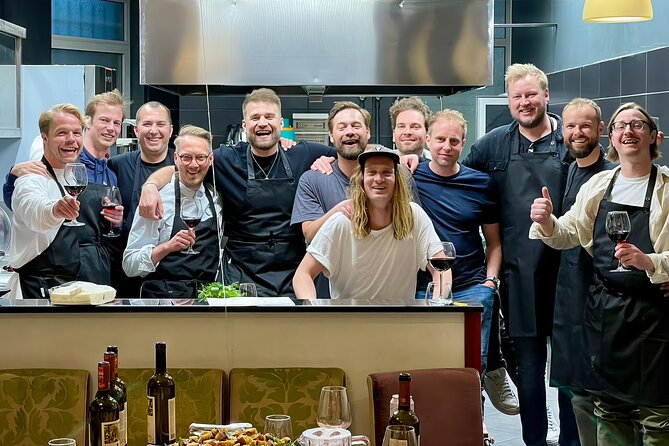
Albania’s food story comes to life at the table, not in a museum. In this five-hour evening with Master Chef Sokol Prenga, you cook, listen, eat, and drink your way through recipes that reach from old village kitchens to modern Tirana. Pispili, pite, homemade breads, lamb with yogurt, veal ribs, and Albanian flan all have a place.
I like the hands-on cooking, especially the chance to work with thin, hand-stretched filo for pite and prepare spinach pie from scratch. I also like the social side: this is built for a group, with music, wine, conversation, and enough time to learn why the dishes matter.
The main drawback is the required minimum of eight participants. Solo visitors or couples cannot count on a small class, and a group of 20 will feel more like a lively communal dinner than an intimate lesson.
In This Review
- Key points to know before booking
- An Albanian food lesson with a full evening attached
- Meeting at Delikatesë Pastiçeri on Myslym Shyri
- Stretching filo for pite and pispili
- From corn bread to kulaç
- Tavë Kosi and the taste of lamb with yogurt
- Two very different main dishes
- Qumeshtor, wine, and the final table
- What Sokol Prenga adds to the meal
- Is $90.11 good value in Tirana?
- Who should book this Albanian cooking class?
- Booking, timing, and cancellation details
- Should you book it?
- FAQ
- Where does the cooking class begin?
- Where does the activity end?
- How long does the experience last?
- What time does it operate?
- Is the experience offered in English?
- How many people are required for the class?
- Can I cancel for a full refund?
Key points to know before booking
- Chef Sokol Prenga leads the evening: He explains Albania’s food customs and the changes that shaped its cuisine.
- Pispili and pite are hands-on highlights: You learn how spinach pie is made and how Albanian filo is stretched and filled.
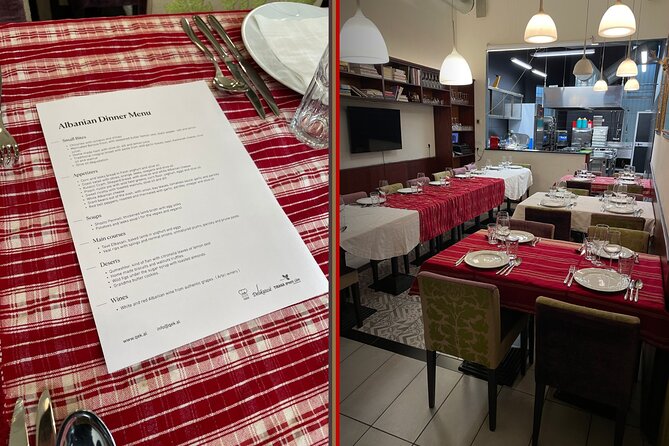
- The menu covers a full meal: Expect breads, starters, soup, mains, dessert, wine, and spirits.
- Plan on four to five hours: This is a full evening, not a quick demonstration followed by one dish.
- Groups range from 8 to 20 people: The format suits friends, office groups, and social visitors best.
- The setting is central and easy to reach: Meet at Delikatesë Pastiçeri on Rruga Myslym Shyri 97, then finish at the same place.
An Albanian food lesson with a full evening attached
This is more than a cooking class. It is part kitchen workshop, part history lesson, and part long Albanian dinner.
Sokol Prenga has built the evening around the idea that food records a country’s past. You are not simply shown a recipe and sent to a table. The cooking is tied to the origins, customs, and changes behind the dishes, so the meal has a clear sense of place.
That approach matters in Albania, where home cooking varies by region and uses familiar ingredients in very different ways. The menu includes dishes from several corners of the country, including Shqeto e Përmetit, an egg-based soup associated with Përmet, and pite made in several forms depending on its filling.
The experience runs on weekday evenings from 5:00 PM to 10:00 PM. The advertised duration is about five hours, so you should keep the rest of your evening free. This is not the right choice if you want a quick meal before a show or an early night.
More Albanian Cooking Experiences in Tirana
- Tirana: Traditional Cooking Class with Wine & Raki Tasting
★ 5.0 · 284 reviews - Traditional Albanian Cooking Class in Tirana & Raki Tasting
★ 5.0 · 266 reviews - Traditional Albanian Cooking Class in Tirana with Raki Tasting
★ 5.0 · 125 reviews
Meeting at Delikatesë Pastiçeri on Myslym Shyri
The evening begins at Delikatesë Pastiçeri, Rruga Myslym Shyri 97 in Tirana. The activity ends there as well, which keeps the logistics simple.
The meeting point is near public transportation. You do not need to arrange a separate transfer, and there is no second location to find at the end of the night. Still, give yourself time to arrive. The class starts at 5:00 PM, and an evening built around multiple courses works best when everyone arrives ready to begin.
The location also gives the experience a useful connection to everyday Tirana. You are meeting in a city pastry shop rather than being taken to a distant rural setting with a staged version of Albanian culture. The food is the focus, and the format is practical.
The size is important. The class requires at least eight participants and accepts no more than 20. A group of 13 has worked well for this kind of evening, while a full group of 20 can create a louder, more social mood. If you want one-on-one instruction, this probably is not the class for you.
Stretching filo for pite and pispili
The most distinctive cooking lesson is likely the work with filo dough. Albanian pite is made with thin dough that is stretched by hand, then filled according to the recipe. Fillings can include spinach, ground meat, leek, or feta cheese.
This is the sort of technique that makes a class worthwhile. You are learning something difficult to understand from a menu description alone. The process shows how a few basic ingredients can become a central dish for a family meal or celebration.
Pispili, the Albanian spinach pie, is another key part of the class. It offers a good introduction to the balance of pastry, greens, and filling that appears across Balkan cooking. You should expect to follow instructions step by step, rather than simply watching Sokol prepare everything.
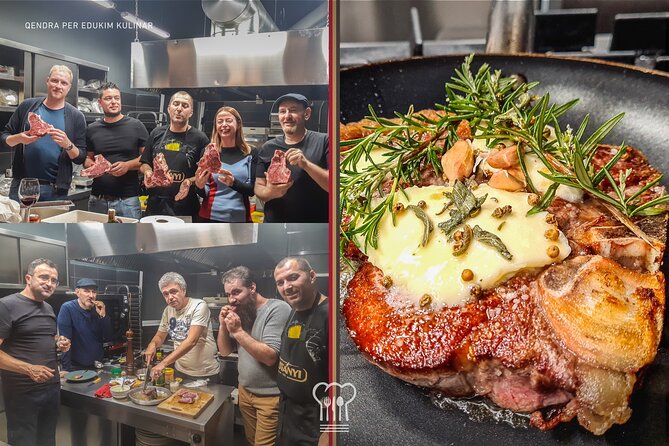
That said, not every course is necessarily made by every person. The evening combines group cooking with food prepared by Sokol and his team. This keeps the meal moving and makes it possible to serve a large group, but it means the class is not a full individual cooking exam.
From corn bread to kulaç
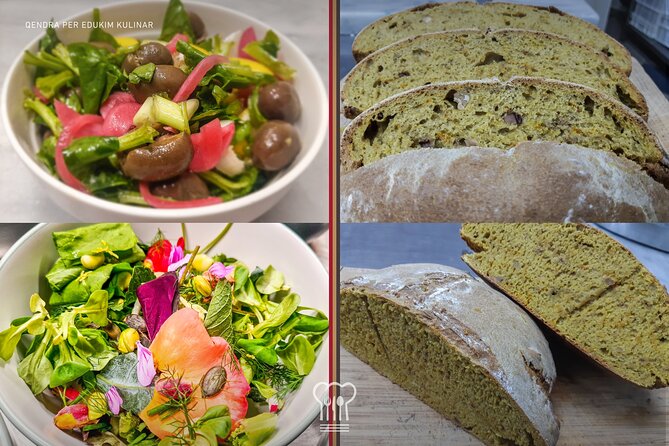
The bread course gives you a quick tour of Albanian baking traditions. The menu includes Bukë Kallamoqe, Bukë Misri, Kulaç, Pogaçe, and Kamkuçe, made with traditional corn and wheat flours.
The names may be unfamiliar, but the point is easy to grasp: bread is not treated as an afterthought. Different flour mixes and preparation methods tell you something about local food habits, available crops, and the importance of bread at the table.
This part should appeal to you if you enjoy simple foods with a strong connection to daily life. It is also useful for people who want to move beyond the better-known dishes served in tourist restaurants. You get a wider sense of Albanian cooking by tasting several breads rather than focusing only on one headline dish.
The menu is generous, and that is both a strength and a warning. You will have many courses ahead, so pace yourself. The food is served as a shared progression, not as one restrained restaurant plate.
Same coast, a completely different kind of day:
- From Tirana: Bovilla Lake & Gamti Mountain Hiking Day Trip
★ 4.9 · 4,397 reviews - From Tirana: Bovilla Lake & Gamti Mountain Hiking Tour
★ 4.9 · 3,003 reviews - From Tirana: Bovilla Lake & Gamti Mountain Viewpoint Hike
★ 4.8 · 2,053 reviews - Tirana/Durres/Golem: Saranda, Ksamil, Blue Eye Day Trip
★ 4.8 · 1,584 reviews
Tavë Kosi and the taste of lamb with yogurt
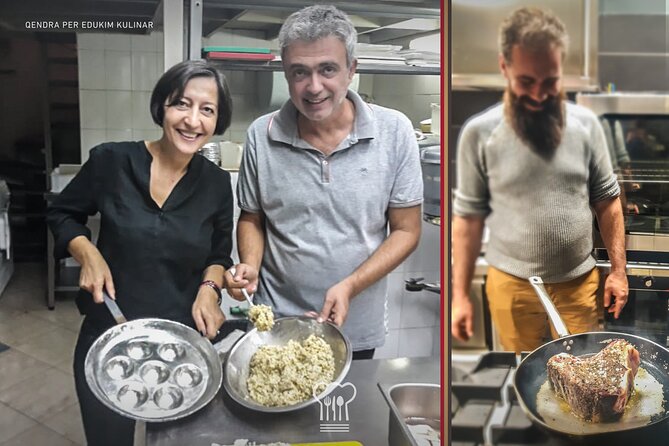
Tavë Kosi is a baked casserole made with yogurt and lamb. It is one of the best-known Albanian comfort foods, and its appeal comes from the contrast between tender meat and the tang of baked yogurt.
Serving it during the class lets you connect the cooking lesson with the final result. You see how a traditional dish can feel hearty without depending on a long list of ingredients. The yogurt gives the casserole its character, while lamb brings the deep flavor expected from a substantial main dish.
The menu places Tavë Kosi among the early courses, even though many people may think of it as a main dish. The order is less important than the overall flow: breads and pies lead into baked dishes, soup, meat, and dessert.
If you have strong food allergies or dietary restrictions, check before booking. The supplied details do not list substitutions or special menus, and the published meal includes lamb, veal, dairy, eggs, wheat, and spinach.
Two very different main dishes
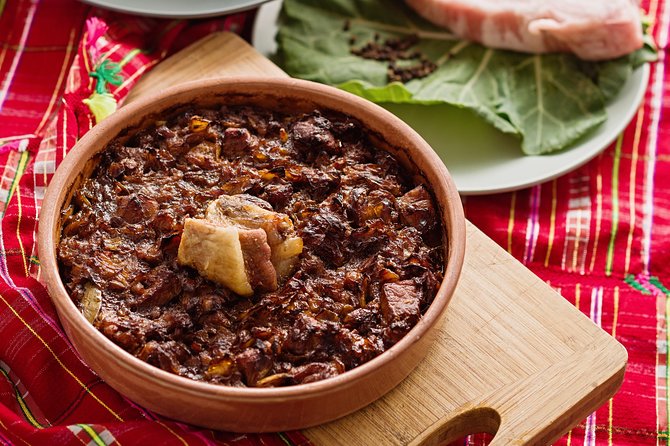
Mish me Pistil brings veal ribs with plum syrup to the table. The combination is a useful reminder that Albanian cooking is not limited to savory herbs and grilled meat. The plum syrup adds a sweet note to a rich meat course, giving the menu a more unusual finish than a standard roast.
Shqeto e Përmetit moves in another direction. This egg-based soup from Përmet is lighter and more delicate than the ribs, and it gives the meal a regional touch. Including a soup from Përmet helps show that the country’s food traditions are not all centered on Tirana.
These dishes also make the evening feel like a food journey rather than a single recipe class. You are tasting different textures and levels of richness, while Sokol explains the customs and stories connected with Albanian cuisine.
The course list uses several dishes under the starter heading, so do not expect a small three-course dinner. This is a substantial meal with many tastes along the way. If you are a light eater, share portions and save room for the end.
Qumeshtor, wine, and the final table
Dessert is Qumeshtor, an Albanian flan. Its milk-and-egg character makes it a gentle finish after the bread, pies, casserole, soup, and meat.
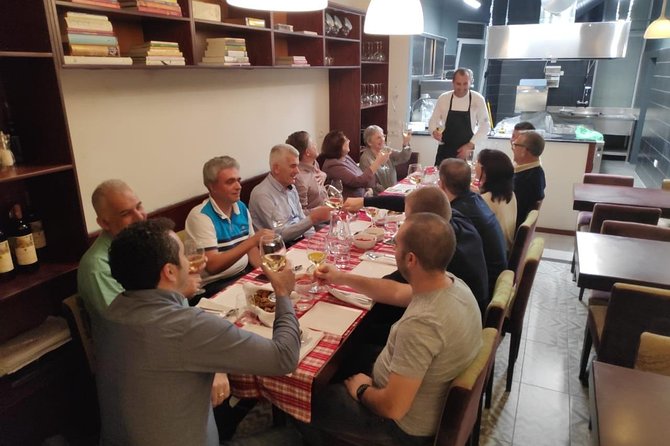
The drinks matter here, too. The evening includes Albanian wine and spirits, and the social rhythm depends partly on sharing them with the group. You can expect conversation, cheers, and music to join the cooking. The wine is not a minor extra added at the last moment. It is part of the way the evening is designed.
This makes the class a strong choice for a group of friends or an office outing. People with different levels of kitchen experience can take part, and the host team is described as patient with beginners. The format leaves room to chat while food is being prepared, so you do not need advanced cooking skills to enjoy it.
If you dislike group dining or prefer quiet meals, the same feature may work against you. A full room can be warm and welcoming, but it can also be noisy. The class aims for hospitality and good humor, not formal culinary training.
What Sokol Prenga adds to the meal
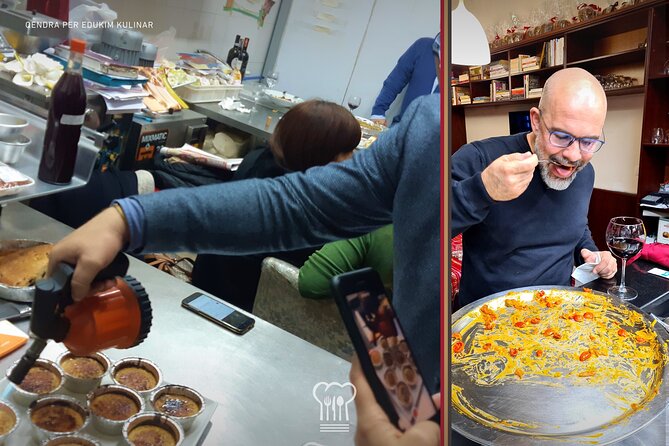
Sokol is the key personality in this experience. His role is not limited to showing you how to mix or bake. He explains the path of Albanian culinary culture, from older customs to the way food is prepared today.
That context gives the recipes more meaning. A lesson on bread becomes a talk about flour and tradition. A plate of pite becomes an explanation of how fillings change. A regional soup becomes a link to Përmet.
You should also expect help from the wider team. The kitchen staff prepares some of the food while participants work on selected parts of the menu. This division is sensible for a class that can hold 20 people. It keeps the evening from becoming a bottleneck around one chopping board or oven.
The result is best understood as a guided food experience with cooking included, rather than a professional cooking course. You will pick up tips and techniques, but the larger reward is understanding how the dishes fit together.
Is $90.11 good value in Tirana?
At $90.11 per person, this is not the cheapest dinner in Tirana. The price makes more sense when you count what is included: roughly five hours of instruction, a large menu, cooking participation, regional food stories, dessert, wine, spirits, and an evening of hosted entertainment.
A normal restaurant meal would give you the food but not the process. A short cooking class might teach you one or two dishes but not provide a full dinner with several breads, pies, soup, meat, dessert, and drinks. This experience combines both.
The value is strongest if you want an evening activity that brings people together. For a group of friends, the cooking and shared table can replace a separate dinner and social outing. It is also useful early in a Tirana stay, since learning the names and flavors of local dishes can make later restaurant menus easier to understand.
The value is weaker if you mainly want hands-on instruction. Since some food is prepared by the host team, you will not personally cook every course. You are paying for the whole evening, not for exclusive use of the kitchen.
The very high recommendation rate and five-star overall score suggest that the format has worked especially well for social groups. Still, those signals should not hide the basic trade-off: this is a lively communal event, not a small private lesson.
Who should book this Albanian cooking class?
I would choose this for:
- Friends visiting Tirana together
- Office groups looking for an evening activity
- Couples who enjoy meeting other people
- First-time visitors curious about Albanian food
- Beginners who want guidance without pressure
- Diners who prefer a long meal to a quick class
I would think twice if you need a private setting, have strict dietary requirements, or want a highly technical lesson. The minimum group size of eight also makes it less flexible for solo visitors and small parties.
Most participants can take part, and the meeting point is near public transportation. The available details do not provide a full accessibility assessment, so contact the provider if you have specific mobility needs.
Booking, timing, and cancellation details
Confirmation is received when you book. The experience is offered in English and operates Monday through Friday, from 5:00 PM to 10:00 PM, during the stated operating period ending August 12, 2026.
Free cancellation is available if you cancel at least 24 hours before the local start time. Cancellations or changes made inside that 24-hour window are not accepted for a refund.
The minimum group rule matters at booking time. If the activity is canceled because eight participants have not been reached, you will be offered another date or experience, or receive a full refund.
Should you book it?
Book this cooking class if you want to understand Albania through food and enjoy a social night with plenty to eat. The combination of pispili, hand-stretched pite, regional soup, Tavë Kosi, veal ribs with plum syrup, Qumeshtor, wine, and Sokol Prenga’s storytelling gives the evening a clear purpose.
I would not book it for a quiet dinner or a private chef lesson. For most people who like food, culture, and conversation, though, the five-hour format offers a fair amount for the price. Bring an appetite, arrive ready to work with others, and do not fill up on the first bread course.
FAQ
Where does the cooking class begin?
It begins at Delikatesë Pastiçeri, Rruga Myslym Shyri 97, Tiranë, Albania.
Where does the activity end?
The activity ends back at the meeting point.
How long does the experience last?
The cooking class and dinner take about four to five hours.
What time does it operate?
It operates Monday through Friday from 5:00 PM to 10:00 PM.
Is the experience offered in English?
Yes. The experience is offered in English.
How many people are required for the class?
A minimum of eight participants is required, and the maximum group size is 20 people.
Can I cancel for a full refund?
Yes. You can cancel for a full refund up to 24 hours before the experience start time. Cancellations made less than 24 hours in advance are not refunded.
More Dinner Experiences in Tirana
- Albanian Night Show: Traditional Music, Dance & Dinner in Tirana
★ 5.0 · 431 reviews - Traditional Albanian and Mediterranean Dinner
★ 5.0 · 9 reviews - Shen Gjergji Waterfall & Tirana Sunset Included Dinner
★ 5.0 · 9 reviews - Wonderful Sunset and Dinner in the Castel Of Petrela
★ 4.6 · 4 reviews
More Cooking Classes in Tirana
- Cooking Classes and Traditional food tasting in Tirana
★ 5.0 · 282 reviews - Berat Cooking Class- Traditional Albanian Cooking Class /By Vato
★ 5.0 · 120 reviews - Savor Albanian Cuisine Cooking Class with Mama Nina Berat Castle
★ 5.0 · 55 reviews - Cooking Class in Berat Slow Food Community
★ 5.0 · 34 reviews
Just added around Tirana
- Zipline Tirana Adventure & Petrela Castle – With Transport★ 4.4 · 10 reviews
- Wine Tasting & Vineyards Escape near Tirana★ 4.9 · 8 reviews
- Wonderful Sunset and Dinner in the Castel Of Petrela★ 4.6 · 4 reviews
- Walking Tour in Tirana, Albania★ 3.7 · 28 reviews
- Vlora, Dhermi & Llogara Day Trip from Durrës or Golem★ 5.0 · 5 reviews
- From Tirana: Mount Dajti Adventure, Local Vibes & Cable Car opt★ 4.5 · 6 reviews
- Winetasting tour in Alpeta winery – Roshnik village by 1001 Albanian Adventures★ 5.0 · 26 reviews
- Day Tour to Petrela Castle and Zip Line Albania Adventure★ 5.0 · 10 reviews
Albanian Cooking Experiences, compared.
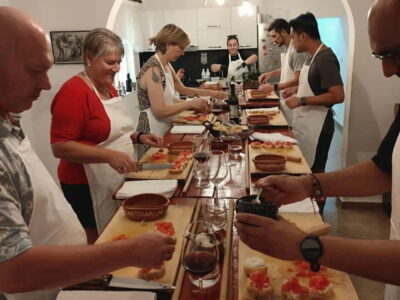
Traditional Cooking Class with Wine & Raki Tasting
Read our review →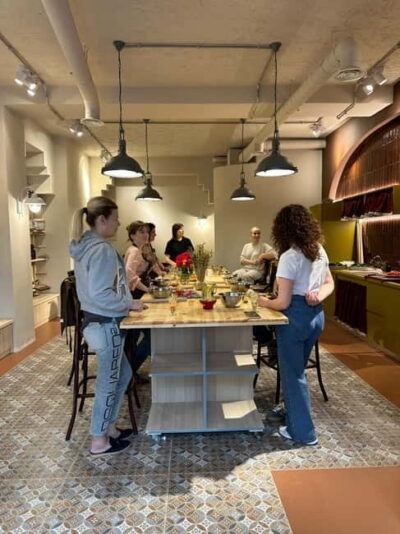
Traditional Albanian Cooking Class in Tirana & Raki Tasting
Read our review →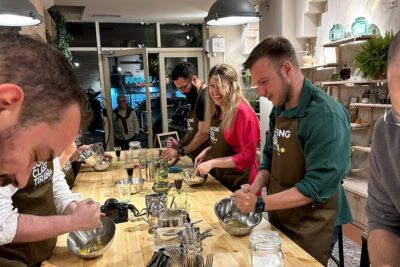
Traditional Albanian Cooking Class in Tirana with Raki Tasting
Read our review →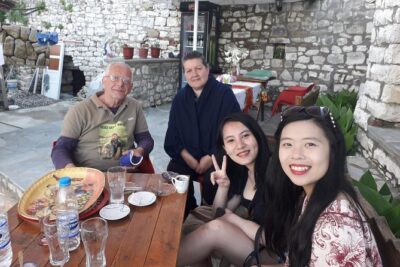
Berat Cooking Class- Traditional Albanian Cooking Class /By Vato
Read our review →
Savor Albanian Cuisine Cooking Class with Mama Nina Berat Castle
Read our review →
Tirana Cooking Class – Traditional Albanian Recipes
Read our review →
Tirana Photo Shoot in Traditional Albanian Costumes
Read our review →Browse the lists this tour appears in