
Reviewed · CITY TOURS
TIRANA Walking Tour: Discover the ever-changing capital city
Tirana’s story comes into focus on foot, one square and street at a time. This walk links Ottoman landmarks, Communist-era power, new cafés, and modern art in a compact route. I like the small group limit of 15 and the chance to hear history from guides such as Gloria and Ilir, who adjust the pace and explanations to the people in front of them.
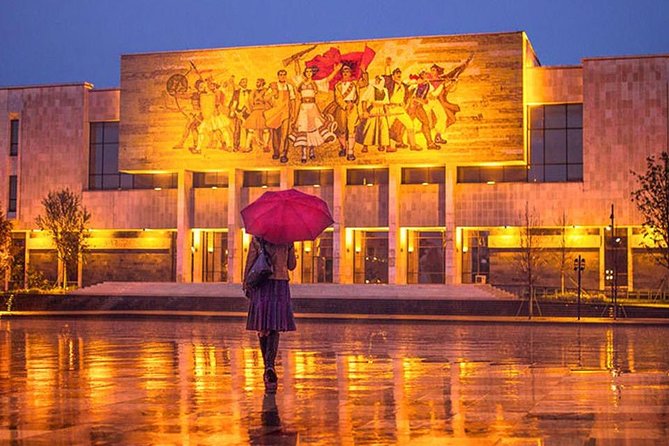
I also like the included Clock Tower and National Historical Museum entry, since both add real value to the $42.10 price. The main drawback is that the National Gallery of Art is currently closed for expansion, and the museum itself can occasionally be shut, so part of the plan may change.
In This Review
- Key points to know before you book
- Why this Tirana walk works so well
- Skanderbeg Square and Tirana’s layered center
- The Clock Tower’s 90 steps and city view
- Et’hem Bey Mosque and Albania’s religious past
- Murat Toptani Street and Tirana Castle
- Tanners’ Bridge and the city before modern roads
- The National Gallery of Art and the Cloud
- Blloku, from party privilege to café culture
- What the $42.10 price really includes
- Timing, walking effort, and group size
- Who will get the most from this walk
- Should you book this Tirana walking tour?
- FAQ
- Where does the Tirana walking tour begin?
- What time does the tour start?
- How long does the experience last?
- Where does the tour end?
- What language is the tour offered in?
- Is admission to the Clock Tower included?
- Is the National Historical Museum ticket included?
- Is admission to the National Gallery of Art included?
- Is hotel pickup included?
- What is the cancellation policy?
Key points to know before you book
- Start at Skanderbeg Square: The tour begins at Tirana’s main public space, surrounded by the city’s most important historic buildings.
- Climb 90 steps: The Clock Tower offers a city-center panorama from a 35-meter Ottoman landmark.
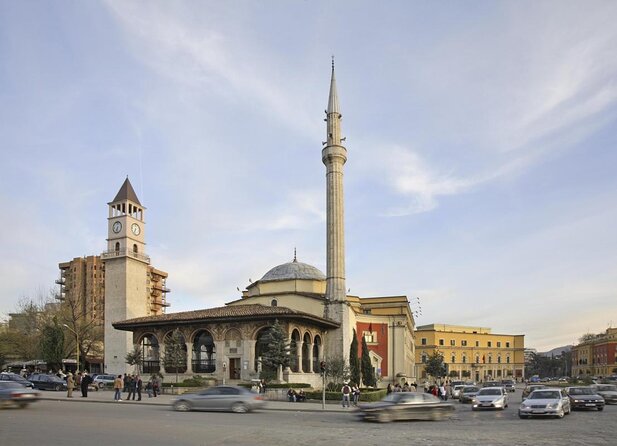
- See a rare surviving mosque: Et’hem Bey Mosque escaped Albania’s Cultural Revolution and contains restored floral designs and colorful frescoes.
- Walk from old bridges to new nightlife: Tanners’ Bridge and Blloku show two very different sides of Tirana.
- Expect strong historical commentary: Gloria and Ilir focus on Albania’s past, Communist rule, religion, and present-day changes.
- Allow three to four hours: The route is active but manageable, with no hotel pickup and a return to the starting point.
Why this Tirana walk works so well
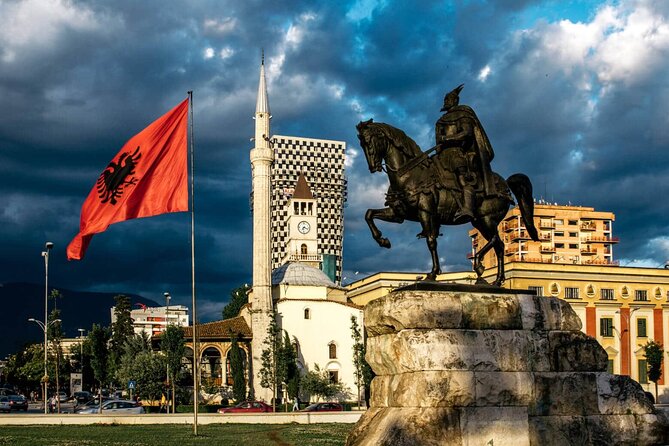
Tirana can seem like a city still deciding what it wants to be. Ottoman buildings sit beside Communist monuments, sleek towers rise around old landmarks, and former party territory now fills with cafés and restaurants. This tour gives you a useful framework for those changes instead of leaving you to puzzle them out alone.
The route is also a good first-day choice. It begins in the center, covers several major sights, and ends back at the Tirana International Hotel. You get an introduction to the city’s layout, political past, religious traditions, and current social life without spending the day inside a vehicle.
The guide is the key part of the experience. Gloria has led visitors through the city with a strong focus on both history and modern life. Ilir is another guide named in the tour experience, and he is especially good at explaining the city and country in clear English. When the group is small, the walk can feel close to private, with room to ask questions and shift attention toward subjects that interest you.
The tour is offered in English, lasts about three to four hours, and normally includes no more than 15 people. That is small enough to hear the guide clearly but not so small that you pay private-tour rates.
A few more Tirana trips to weigh up
- Walking Tour of Tirana
★ 5.0 · 646 reviews - Tirana: Express Walking Tour with a Guide
★ 4.8 · 503 reviews - Tirana Center: Magic Walking Tour French/Italian/English Etc
★ 4.9 · 402 reviews
Skanderbeg Square and Tirana’s layered center
You begin at 9:30 am outside the Tirana International Hotel on Skënderbej Square. This is a practical meeting point, since the square is easy to locate and the tour returns here at the end.
Skanderbeg Square is more than a broad open plaza. It is a quick lesson in Albania’s complicated twentieth century. The square has changed its design and political meaning several times, and the surrounding buildings tell different parts of that story.
Your guide points out the National Historical Museum, National Opera House, Clock Tower, and Et’hem Bey Mosque. Together, they show the Ottoman roots of Tirana, the authority of the Communist period, and the city’s current effort to present a newer public face.
I find this opening especially useful because it gives each later stop a place in the bigger picture. The 30-minute visit is not simply a photo stop. It helps you notice how close together the city’s religious, civic, and political symbols are.
The square itself can feel exposed in strong sun, so bring water and wear comfortable shoes. Food and drinks are not included, although one guide stopped for a drink with a visitor on a hot day and even paid for a local Korça beer. Treat that as a personal kindness, not as part of the advertised tour.
The Clock Tower’s 90 steps and city view
The Clock Tower takes about 20 minutes and includes admission. Built in 1840 during the Ottoman period, it rises 35 meters above the center and was Tirana’s tallest building until 1970.
The climb involves 90 steps. That is not a major athletic test, but the narrow ascent may require care, especially if you dislike enclosed stairs or have limited mobility. The reward is a rare view across the central city.
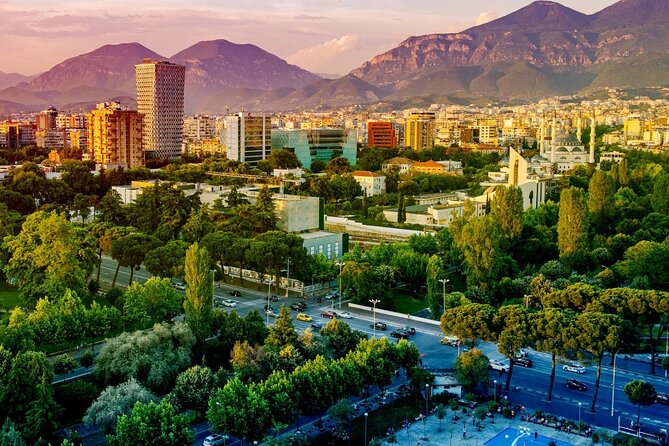
Modern high-rises now surround the tower, and ongoing construction can affect the view. Still, the elevated position gives you a useful sense of Tirana’s shape. You can see how the older center fits among newer buildings, which makes the city’s rapid change easier to understand.
This stop adds more than another old building to your checklist. It lets you look at Tirana from above before continuing on foot. Since the ticket is included, it also helps justify the tour price.
Et’hem Bey Mosque and Albania’s religious past
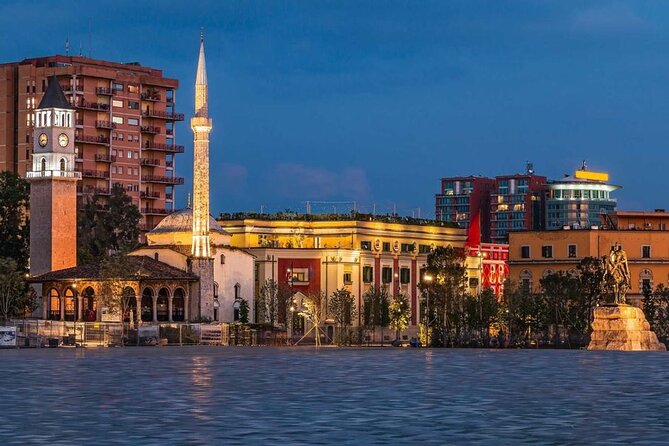
The Et’hem Bey Mosque receives about 15 minutes of the walk. Built in 1823, it is one of central Tirana’s most important historic buildings and the only religious monument described here as surviving the Albanian Cultural Revolution.
That survival matters. During the Communist era, Albania took an extreme position against organized religion, and the mosque’s continued presence makes it an important part of the city’s story. Inside, restored floral patterns and vivid frescoes give the building a softer character than the surrounding stone and concrete might suggest.
Your guide explains the place of Islam in Albania and the more subtle details of the country’s religious past. This is a short visit, so do not expect an extended architectural study. Its value comes from the explanation around it, particularly if you have not yet learned how Ottoman, secular, and Communist forces shaped Albania.
Admission is included. Dress and behavior should be respectful inside a functioning religious site. The tour data does not specify a formal dress code, so follow the guide’s instructions on the day.
Same coast, a completely different kind of day:
- From Tirana: Bovilla Lake & Gamti Mountain Hiking Day Trip
★ 4.9 · 4,397 reviews - From Tirana: Bovilla Lake & Gamti Mountain Hiking Tour
★ 4.9 · 3,003 reviews - From Tirana: Bovilla Lake & Gamti Mountain Viewpoint Hike
★ 4.8 · 2,053 reviews - Tirana/Durres/Golem: Saranda, Ksamil, Blue Eye Day Trip
★ 4.8 · 1,584 reviews
Murat Toptani Street and Tirana Castle
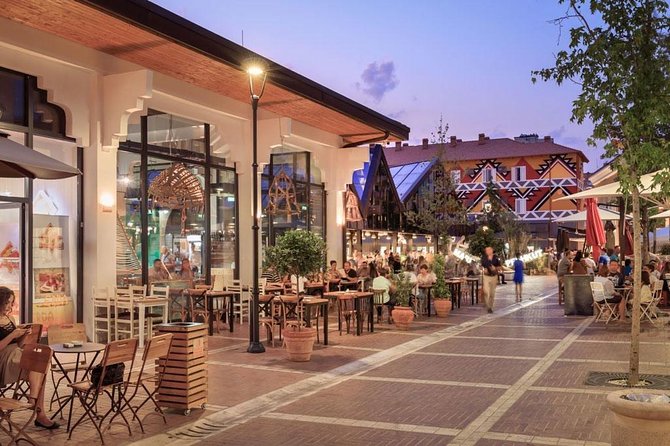
From the central square, the route continues along Rruga Murat Toptani toward Tirana Castle. The walk takes about 20 minutes and has no separate admission fee.
The castle is not an intact fortress waiting behind a grand gate. Excavations in 2001 and 2008 revealed walls linked to the period of Emperor Justinian, from the fourth to sixth centuries, but little of the original structure survives. Wars and destruction took their toll.
That limited remains may disappoint anyone expecting a large medieval monument. Yet the modern use of the area makes the stop worthwhile. Today, the castle zone is filled with cafés, restaurants, art galleries, and artisan activity. It is a place where old traces and present-day city life share the same few streets.
This is one of the tour’s better examples of honest sightseeing. You see what remains, learn what has vanished, and then observe how Tirana has given the site a new purpose. I prefer that to a polished attraction that hides the difficult parts of the past.
Tanners’ Bridge and the city before modern roads
The stop at Ura e Tabakëve, or Tanners’ Bridge, lasts about 10 minutes. This small Ottoman stone footbridge dates from the eighteenth century and lies near the Albanian Parliament.
Its name comes from the farmers and tradespeople who once used it while bringing produce and livestock from the eastern highlands. The term tabakë refers to a trade connected with butchering and tanning. The bridge crossed the Lana stream until the river was diverted in the 1930s, after which the structure fell into poor condition.
A restoration in the 1990s cleaned and rebuilt the original stones. An artificial pond was created on both sides, and the bridge now serves pedestrians rather than carts or animals.
Do not expect a long stop. Ten minutes is enough to look at the bridge, hear its story, and take photographs. Its importance is not size but setting. It shows how Tirana once connected its center with the surrounding highlands, long before the modern road system changed the city.
The National Gallery of Art and the Cloud
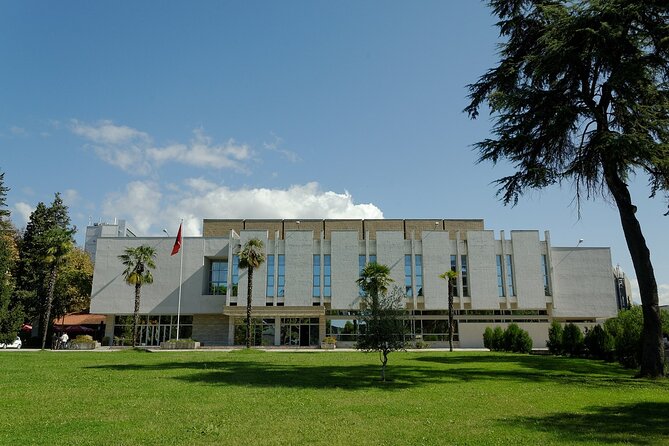
The Albanian National Gallery of Arts receives a brief exterior visit of about 10 minutes. The gallery was founded in 1954 and is known for Albanian figurative art and social-realist works.
At present, the gallery is closed for expansion, so you cannot count on seeing the collection inside. The tour instead focuses on the building’s spare exterior and nearby statues connected to Eastern European Communist leaders, including Stalin and Lenin.
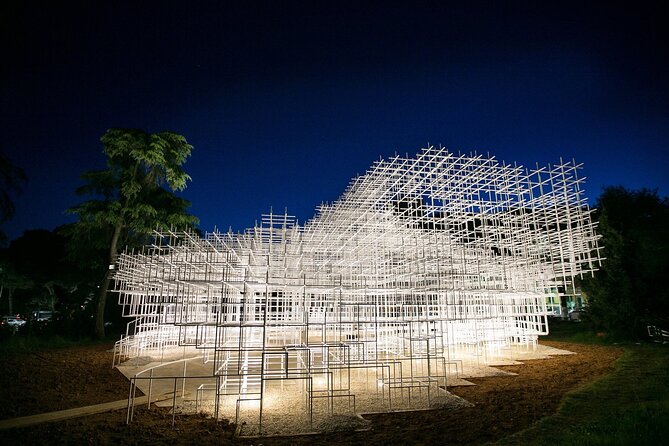
In front of the gallery is REJA, known as The Cloud, designed by Japanese architect Sou Fujimoto. The open structure has hosted film screenings, performing arts events, and live concerts. It gives this part of central Tirana a very different feel from the nearby mosque and Clock Tower.
This is the clearest limitation in the route. If the gallery reopens, it could become a strong museum stop. For now, you receive context rather than an indoor art visit. I would not book this tour mainly for the gallery.
Blloku, from party privilege to café culture
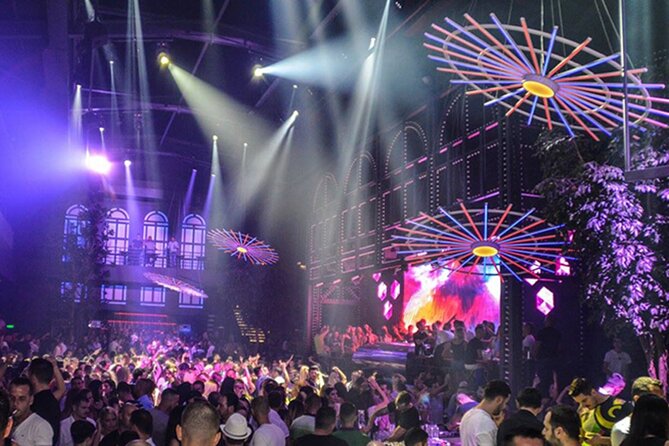
The final major stop is Blloku, visited for about 15 minutes. Today, the district is known for bars, cafés, restaurants, luxury shops, and upscale homes. It is one of Tirana’s main areas for evening social life.
Its earlier role was far less open. During Communist rule, Blloku was closed to the general public and reserved for party leaders. Enver Hoxha’s modest modern villa was at its center, and the district represented privilege in a country where ordinary people had little access to the ruling class.
The same area now contains the office of Albania’s president. That contrast gives Blloku unusual weight. You are not just being shown a fashionable neighborhood. You are seeing how a restricted zone became one of the city’s most public and fashionable districts.
Fifteen minutes is enough for orientation, though not enough to experience Blloku fully at night. If you like the area, return later for a meal or drink. The tour gives you the political background, then lets you decide how much time you want to spend there.
What the $42.10 price really includes
At $42.10 per person, this is not the cheapest way to walk around Tirana. You can see several of the exterior sights on your own for little or no cost. The value comes from the guide’s interpretation, the included Clock Tower admission, and the National Historical Museum ticket.
The route also saves you preparation time. You do not have to research why the mosque survived, how Tanners’ Bridge was used, or why Blloku mattered under Enver Hoxha. A strong guide turns separate buildings into one connected story.
The advertised rating is 4.8 from 13 reviews, with 92 percent recommending the experience. The most consistent praise is for the guides’ clear English, strong command of Albanian history, patience, and ability to make a short city visit feel personal. Gloria and Ilir are the names to look for, though guide assignment may vary.
One practical note matters: the National Historical Museum can occasionally be closed. On one such occasion, the replacement was tea and cake in a nearby café. That is a pleasant solution, but it does not fully replace museum entry. If the museum is a major reason you are booking, confirm its opening status when possible.
Timing, walking effort, and group size
The tour starts at 9:30 am and ends back at the Tirana International Hotel. There is no hotel pickup or drop-off, and food and drinks are not included.
You should expect several hours on foot, with the Clock Tower climb adding 90 steps. Most people can take part, and the activity is near public transportation. Service animals are allowed.
The maximum group size is 15. Some departures may be much smaller. A walk with three people, or even one person, can become almost private and gives you more freedom to ask questions. At the other end, a full group may feel less flexible, though the stated limit remains fairly reasonable for a city walk.
Good shoes and water are sensible. Tirana’s open square and summer heat can make the first part tiring, and the route includes streets, stairs, and standing stops. Since bad weather can cancel the experience, you can choose a different date or receive a full refund in that case.
Free cancellation is available up to 24 hours before the 9:30 am start time. Changes or cancellations made less than 24 hours ahead are not refunded.
Who will get the most from this walk
I would choose this tour if you are visiting Tirana for the first time and want a clear introduction before exploring alone. It suits anyone interested in political history, religious buildings, architecture, and the way a capital city changes after dictatorship.
It is also a good fit for a short stay. In three to four hours, you cover the central square, Ottoman sights, a historic bridge, Communist-era reminders, contemporary art, and Blloku. That is a useful amount of ground without a bus ride or a long transfer.
You may want something else if you prefer long museum visits, leisurely photography, or a slow food-focused walk. The National Gallery is closed, each stop is fairly brief, and the tour does not include meals or drinks.
The experience is especially useful for people who want to ask questions. Gloria and Ilir are described as patient and able to explain both historical events and modern Albania. That personal exchange can be more useful than a standard audio guide, especially in a country whose recent past is not always easy to read from its buildings.
Should you book this Tirana walking tour?
Book it if you want historical context with your sightseeing, especially on your first morning in Tirana. The route is well chosen, the guide is the main asset, and the Clock Tower and museum entry add useful value to the fee.
Do not book it expecting a full National Gallery visit or a deep museum session. Those parts are limited, and the National Historical Museum may be closed on a particular day.
For most first-time visitors, I think the tour earns its place in a Tirana plan. It shows you the city’s Ottoman roots, Communist scars, religious survival, and current café culture in one walk. Afterward, you will know where to return, what you are looking at, and which parts of Tirana deserve more of your own time.
FAQ
Where does the Tirana walking tour begin?
It begins at the Tirana International Hotel, Sheshi Skënderbej 8, Tiranë 1001, Albania.
What time does the tour start?
The tour starts at 9:30 am.
How long does the experience last?
The walking tour lasts approximately three to four hours.
Where does the tour end?
The activity ends back at the original meeting point, the Tirana International Hotel.
What language is the tour offered in?
The tour is offered in English.
Is admission to the Clock Tower included?
Yes. The Clock Tower visit includes admission, and the climb involves 90 steps.
Is the National Historical Museum ticket included?
Yes, the National Historical Museum ticket is included in the tour price.
Is admission to the National Gallery of Art included?
No. The National Gallery of Art visit is currently an exterior stop because the gallery is closed for expansion.
Is hotel pickup included?
No. Hotel pickup and drop-off are not included.
What is the cancellation policy?
You can cancel up to 24 hours before the start time for a full refund. Cancellations or changes made less than 24 hours before the tour are not refunded. If poor weather causes the tour to be canceled, you will be offered another date or a full refund.
Just added around Tirana
- Zipline Tirana Adventure & Petrela Castle – With Transport★ 4.4 · 10 reviews
- Wine Tasting & Vineyards Escape near Tirana★ 4.9 · 8 reviews
- Wonderful Sunset and Dinner in the Castel Of Petrela★ 4.6 · 4 reviews
- Walking Tour in Tirana, Albania★ 3.7 · 28 reviews
- Vlora, Dhermi & Llogara Day Trip from Durrës or Golem★ 5.0 · 5 reviews
- From Tirana: Mount Dajti Adventure, Local Vibes & Cable Car opt★ 4.5 · 6 reviews
- Winetasting tour in Alpeta winery – Roshnik village by 1001 Albanian Adventures★ 5.0 · 26 reviews
- Day Tour to Petrela Castle and Zip Line Albania Adventure★ 5.0 · 10 reviews
City Tours, compared.
Gjirokastra- The Stone City & Blue Eye- The monument of Nature.
Read our review →
Best of Local Food & City Tour of Tirana – Food & Drinks Included
Read our review →
Durres city & Golem beach, Sun & History Day Trip
Read our review →
“Berat & Durres City, Belsh Lake – Day Tour from Tirana”
Read our review →
Browse the lists this tour appears in