
Reviewed · HISTORICAL TOURS
“Tirana to Albania: Tracing a Historical Path Tour”
Tirana’s story is written in sharp contrasts: Ottoman mosques beside communist bunkers, grand squares beside lively cafés, and a former dictator’s residence near a modern stadium. This three-hour walk with Klejdi links those pieces into one readable route, beginning at the Resurrection of Christ Orthodox Cathedral and finishing at the New Bazaar.
I like the way the tour pairs major sights with harder questions about Albania’s past. Bunk’Art 2 and the Postbllok Memorial give real weight to the walk, while the Et’hem Bej Mosque, Tirana Castle, and the market show how daily life continues around those old scars. I also like the guide’s flexibility: Klejdi is praised for speaking French, Italian, English, and Albanian, answering questions carefully, and sometimes staying beyond the planned three hours.
The main consideration is pace. The route covers a lot of ground, and several locations are photo stops or pass-bys rather than full museum visits. At $37, it is a strong introduction to central Tirana, but you should not expect an in-depth tour of every landmark or meals included in the price.
In This Review
- Key points to know before booking
- Why this Tirana walking route works
- Beginning at the Orthodox Cathedral
- Skanderbeg Square and the symbols of central Tirana
- Et’hem Bej Mosque and the Clock Tower
- Bunk’Art 2 and the hard years of dictatorship
- Pedonalja, Tirana Castle, and Saint Paul Cathedral
- The Pyramid and Blloku: from dictatorship to café culture
- The former residence of Enver Hoxha and Postbllok
- Mother Teresa Square and the national stadium
- Namazgah Mosque and Ottoman traces
- Finishing at New Bazaar
- What $37 gets you
- Timing, languages, and comfort
- Who should book this tour?
- Should you book Tirana to Albania: Tracing a Historical Path?
- FAQ
- Where does the tour begin?
- Where does the tour finish?
- How long does the walking tour last?
- How much does the tour cost?
- What is included in the price?
- Are breakfast and lunch included?
- Which languages are available?
- Is the tour wheelchair accessible?
- What should I bring?
- Can I cancel the booking?
Key points to know before booking
- A compact route through many eras: Move from Ottoman Tirana to communist rule and today’s café culture in about three hours.
- Klejdi is the key part of the tour: His French, Italian, English, and Albanian language skills make this a useful choice for mixed-language groups.
- Bunk’Art 2 adds serious context: You get an introduction to political repression, secret police operations, and ordinary life under dictatorship.
- The route ends where Tirana eats: New Bazaar offers fresh produce, souvenirs, and traditional restaurants for a self-funded meal.
- Expect a walking overview, not a string of long museum visits: Several stops are guided from outside or used for photos.
- Start with good shoes: The central route is walkable, but the number of stops means you will be on your feet most of the time.
Why this Tirana walking route works
Tirana can feel confusing at first. The city center has Ottoman traces, Italian-influenced buildings, communist monuments, new towers, religious buildings, and busy commercial streets all close together. A guide helps you read that mixture instead of seeing it as a random collection of buildings.
This tour also gives you a useful first look at the city’s political story. Albania spent decades under an especially strict communist dictatorship, and many public spaces still carry reminders of that period. The route does not treat Tirana as a museum frozen in time. It moves from memorials and former state buildings to Blloku cafés and the New Bazaar, where the city feels social and forward-looking.
Klejdi appears to be the central strength. The repeated praise focuses on his patience, warmth, clear explanations, and willingness to answer many questions. That matters in Tirana, where a short explanation about a building can lead into religion, Ottoman rule, fascist-era planning, communism, or the country’s modern identity.
A few more Tirana trips to weigh up
- From Tirana: Durres History Trip with Beach or Promenade
★ 4.8 · 455 reviews - Guided tour in Tirana – discoveries, history, culture (in FRENCH)
★ 5.0 · 204 reviews - From Tirana: Durres city & Golem beach, Sun & History Day Trip
★ 5.0 · 134 reviews
Beginning at the Orthodox Cathedral
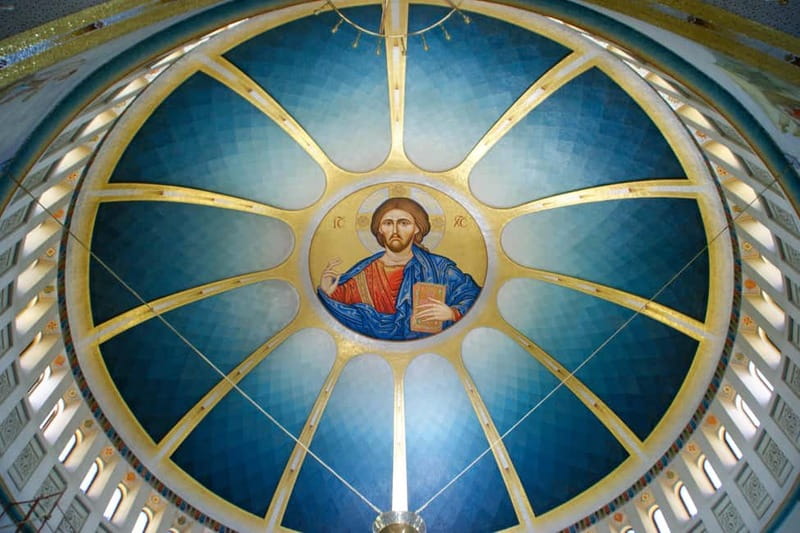
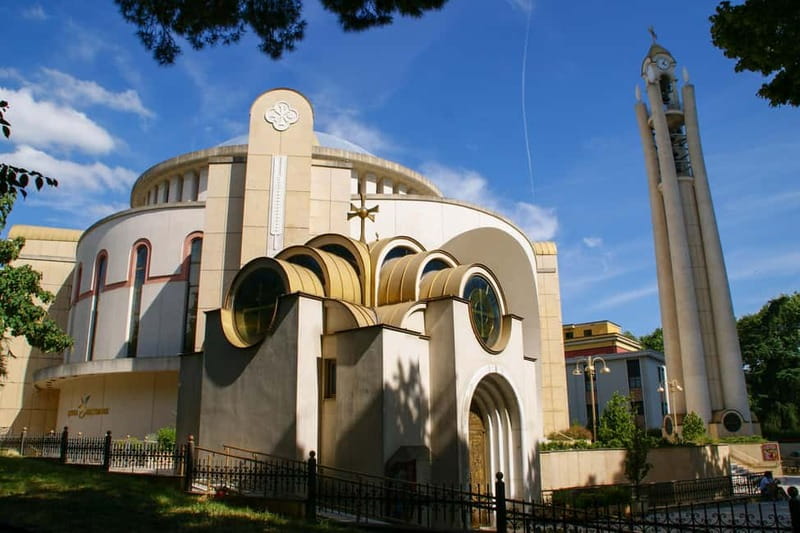
The meeting point is the entrance to Katedralja Ortodokse Ngjallja e Krishtit, also called the Resurrection of Christ Orthodox Cathedral. If the weather is poor, the meeting may take place inside.
The cathedral provides a fitting starting point because it introduces Tirana as a city where several faiths and traditions share the center. You receive the first introduction here, with time for a visit, a guided explanation, and some free time. The stop is not only about the building itself. It sets up the broader theme of the walk: Albania’s public identity has changed many times, and its religious sites remain part of that story.
From here, the group heads toward Skanderbeg Square. The route is on foot, so this first stretch helps you get oriented without the hassle of vehicle transfers.
Skanderbeg Square and the symbols of central Tirana
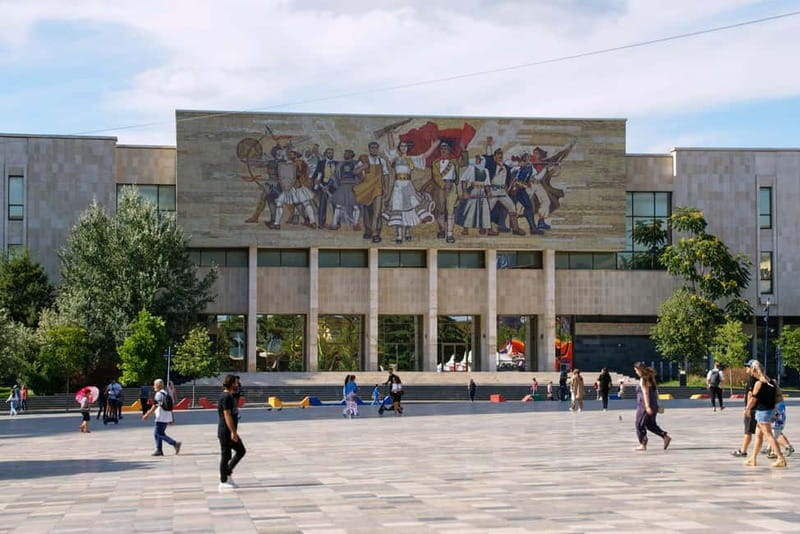
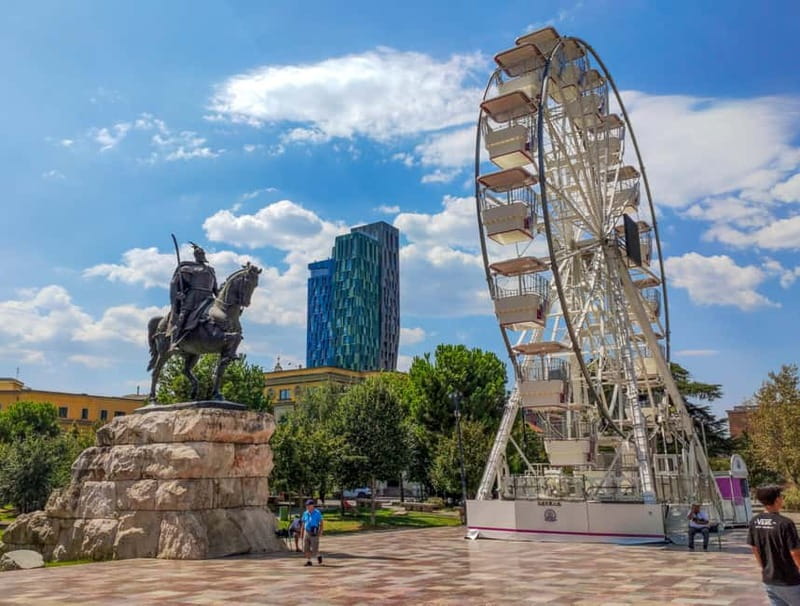
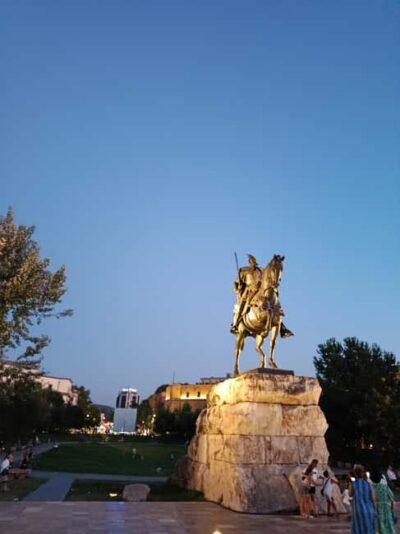
Skanderbeg Square is the city’s main civic space and one of the clearest places to see Tirana’s grand urban planning. At its center is the familiar equestrian statue of Skanderbeg, Albania’s national hero. The statue gives the square its emotional focus, while the surrounding buildings show how different governments shaped the capital.
The National History Museum is one of the main buildings along the square. On this tour, you pass by with a guided explanation rather than treating the museum as a full separate visit. The Palace of Culture, another major landmark, reflects the state-planned character of the area and remains linked to Tirana’s cultural life.
I like this section because you can see the city’s official face in one glance. It is a broad, formal space, but it also serves as a practical reference point. If you spend extra time in Tirana after the tour, Skanderbeg Square is an easy place to return to and use as your base.
The Skanderbeg statue receives its own photo stop and explanation. Listen closely here, since the guide can connect the monument to Albania’s national story rather than leaving it as a simple photo opportunity.
Et’hem Bej Mosque and the Clock Tower
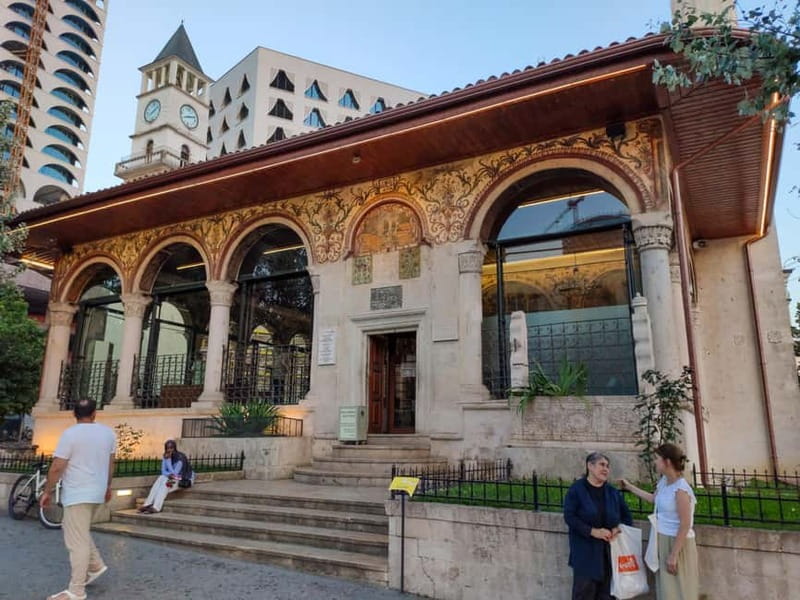
The Et’hem Bej Mosque is one of the most appealing stops on the route. Its Ottoman design and detailed frescoes offer a sharp contrast to the monumental buildings around Skanderbeg Square. You have time to visit, take photographs, and hear the guide explain the site.
The mosque is also valuable because it brings religion into a tour that might otherwise focus too heavily on politics. Albania’s religious life was severely restricted during the communist period, making the survival and renewed public role of historic mosques and churches especially meaningful.
Next to it is the Clock Tower of Tirana. The tower is included as a photo stop and guided walk-by. The tour description also presents it as a place for panoramic views, but the listed itinerary does not promise a full climb. If reaching the top matters to you, ask Klejdi about access and timing before assuming it is part of the three-hour walk.
Same coast, a completely different kind of day:
- From Tirana: Bovilla Lake & Gamti Mountain Hiking Day Trip
★ 4.9 · 4,397 reviews - From Tirana: Bovilla Lake & Gamti Mountain Hiking Tour
★ 4.9 · 3,003 reviews - From Tirana: Bovilla Lake & Gamti Mountain Viewpoint Hike
★ 4.8 · 2,053 reviews - Tirana/Durres/Golem: Saranda, Ksamil, Blue Eye Day Trip
★ 4.8 · 1,584 reviews
Bunk’Art 2 and the hard years of dictatorship

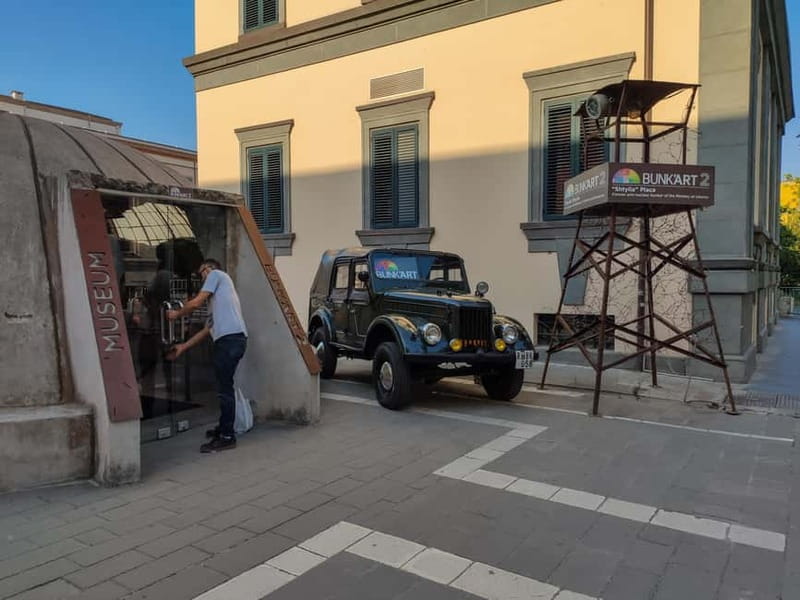
Bunk’Art 2 is one of the most important parts of the tour. The museum occupies a former bunker and deals with Albania under communist rule, including political repression, secret police activity, and the experiences of ordinary people.
Even a short introduction here can change how you see the rest of Tirana. A bunker is not just an unusual structure. It points to the fear and isolation that shaped daily life under Enver Hoxha’s dictatorship. The tour helps connect that period to the public monuments, blocked-off power centers, and memorials you encounter later.
You should note the time limit. The itinerary lists a guided stop and walk rather than a long, independent museum session. If you want to read every display inside Bunk’Art 2, plan a separate visit. For a first introduction, though, this stop gives the walk some seriousness and balance.
Pedonalja, Tirana Castle, and Saint Paul Cathedral
The route continues along Pedonalja, Tirana’s pedestrian area. This is a good change of rhythm after the more formal square and the bunker museum. You can watch everyday city life unfold as the guide points out details along the way.
Tirana Castle offers a more social and commercial stop. You have time to visit, walk around, and shop. The site is useful for seeing how an older historic setting has been adapted for present-day food, retail, and city life. It is less about a preserved medieval world and more about how Tirana uses old spaces now.
Saint Paul Cathedral is another religious stop, with time for a visit and free time. Along with the Orthodox cathedral and Et’hem Bej Mosque, it helps show the range of religious buildings in central Tirana. This three-part religious picture is one of the tour’s quiet strengths.
The Pyramid and Blloku: from dictatorship to café culture
The Pyramid of Tirana is one of the city’s most striking buildings. It was originally built as a museum dedicated to Enver Hoxha, and its current role reflects Albania’s effort to deal with a difficult past while creating new public uses for old symbols.
The tour includes a break and photo stop here. You get the essential story and a chance to study the building, but not necessarily a long interior visit. The Pyramid works best when you consider its changing meaning. A structure once designed to honor a dictator now hosts cultural events and belongs to a younger, more open Tirana.
From there, the walk reaches Blloku. During communism, this was an elite district associated with the ruling class. Today it is known for cafés, restaurants, bars, and boutiques. That change is one of the clearest examples of Tirana’s recent transformation.
The tour description includes breakfast at a stylish café, with Albanian coffee and fresh pastries. Treat this as a suggested stop rather than a meal included in the $37 price. Personal expenses are not included, so you should budget separately for coffee, breakfast, shopping, and lunch.
Blloku is a sensible place for a pause. It breaks up the historical material and gives you a chance to ask Klejdi questions in a less formal setting. The French-language visits received particular praise, and the guide’s ability to adapt to questions appears useful here, where the conversation may move from buildings to modern Albanian life.
The former residence of Enver Hoxha and Postbllok
The walk passes Enver Hoxha’s former residence in Blloku. The building is a reminder that this neighborhood was once closed to ordinary citizens and reserved for the communist leadership. Seeing it after the Pyramid and Bunk’Art 2 helps connect the physical places associated with power.
Next comes the Postbllok Memorial, which offers a direct reflection on authoritarian rule. It is a compact but powerful stop, especially when placed alongside the former residence. One site represents privilege and secrecy. The other asks you to remember the people affected by the regime.
I value this part of the route because it avoids presenting communism as an abstract chapter in a textbook. You see where power lived, where political control was enforced, and how modern Tirana remembers that period. The guide’s role is important here, since a thoughtful explanation can give meaning to a memorial that might otherwise be easy to pass without understanding.
Mother Teresa Square and the national stadium
Mother Teresa Square introduces another side of Tirana’s architecture. The Polytechnic University and Palace of Congresses surround the square, with forms influenced by fascist-era planning and later modernist design.
This is a good place to look up and compare styles. The area feels more formal than Blloku, and its large institutional buildings reflect the ambitions of the capital at different points in the twentieth century. The tour includes a visit, guided walk, and photo stop.
Nearby, you pass Arena Kombëtare, also known as Air Albania Stadium. It is Albania’s national stadium and now serves as a venue for sports, concerts, and dining. The stop is mainly a guided walk-by, so you should not expect a stadium tour or event access. Still, it gives you a look at the modern city beside the older political and religious landmarks.
Namazgah Mosque and Ottoman traces
The Grand Mosque of Tirana, or Namazgah Mosque, is another major religious landmark on the route. The information provided describes it as a future spiritual and cultural center once completed. The tour includes a photo stop, visit, and guided explanation, but the exact level of interior access may depend on the site’s status at the time of your visit.
The route then passes through Sulejman Pasha Square, linked to Tirana’s Ottoman heritage. Nearby is the Kapllan Pasha Tomb, one of the few remaining Ottoman structures in the city. This is a useful reminder that much of Tirana’s older built fabric has disappeared or been altered.
The tomb is not a huge monument, but its value lies in its survival. In a city reshaped by successive rulers and rapid development, a small Ottoman remnant can say as much as a grand building. Klejdi’s explanation is especially useful here, since the site may not be self-explanatory.
Finishing at New Bazaar
The tour ends at New Bazaar, or Pazari i Ri. This is a lively place to finish because it shifts attention from official monuments to ordinary commerce. You can look at fresh produce, browse for souvenirs, and see where local food shopping meets restaurants and cafés.
A traditional Albanian lunch is suggested here, but it is not included. That is worth planning for, since the meal can turn the final stop into a relaxed end to the morning or afternoon. You can also use the market as a starting point for further exploring central Tirana.
The ending is practical as well as atmospheric. After three hours of walking, you are left in an area where you can eat, shop, or continue on foot. The route does not strand you at an isolated attraction.
What $37 gets you
At $37 per person, the price is reasonable if you want a guided orientation to Tirana rather than a series of private admissions. The fee includes the guide and walking tour. It does not include personal expenses, so coffee at Blloku, entry fees if applicable, shopping, and lunch are extra.
The value comes from the route and the interpretation. You see a large number of central landmarks in a short time, and the guide connects them through Albania’s religious, Ottoman, communist, and modern stories. A self-guided walk would cost less, but you would need to research the background and work out the sequence yourself.
The tradeoff is depth. With around twenty listed points, some stops are necessarily brief. National History Museum, the Clock Tower, Bunk’Art 2, Arena Kombëtare, and several other places are not all full-length visits. I would book this for context and orientation, then return independently to one or two sites that deserve more time.
Timing, languages, and comfort
The advertised duration is three hours, with starting times subject to availability. Since the route is long for that time, wear comfortable shoes and expect a brisk walking pace. Weather-appropriate clothing is sensible, and the cathedral provides an indoor meeting option if conditions are poor.
Klejdi guides in Albanian, English, French, and Italian. The French visits received especially strong praise, and Italian-speaking participants also described clear answers and a high level of care. If you have detailed questions, this appears to be the sort of tour where asking them is encouraged.
The activity is wheelchair accessible. Even so, the route includes many urban stops and different types of buildings, so you may want to confirm the practical details of access at specific sites, particularly religious buildings and the Clock Tower.
The booking terms are flexible. You can cancel up to 24 hours before the tour for a full refund, and you can reserve now while paying later. Those options are useful if your Tirana schedule depends on changing arrival times.
Who should book this tour?
I would recommend it to first-time visitors who want to understand Tirana quickly. It suits couples, families with older children, and anyone who prefers a guide who can explain political history without turning the walk into a lecture. The reviews specifically describe successful visits with teenagers aged 14 and 16.
It is also a good fit if you want to compare Tirana’s past and present in one route. You move from national symbols to Ottoman religious art, from a dictatorship-era bunker to cafés in former elite territory, and from memorials to the New Bazaar.
I would be more cautious if your main goal is a slow architectural study or long museum visits. The route has many stops, and the three-hour schedule means you will see some places only from outside or for photographs. Likewise, do not book it expecting breakfast or lunch to be part of the price.
Should you book Tirana to Albania: Tracing a Historical Path?
Book it if you want a well-priced, guide-led introduction to Tirana with serious attention to the communist period. Klejdi’s patient style, language range, and willingness to answer questions add value, especially for visitors who want more than names and dates.
Skip it if you prefer to explore at your own pace or plan to spend a full morning inside Bunk’Art 2, the National History Museum, or the Clock Tower. For most first visits, though, the route gives you a useful mental map and enough historical context to choose your next stops wisely. Bring comfortable shoes, allow extra money for food, and treat the tour as your city orientation rather than the final word on Tirana.
FAQ
Where does the tour begin?
The meeting point is at the entrance of the Resurrection of Christ Orthodox Cathedral, Katedralja Ortodokse Ngjallja e Krishtit. Depending on the weather, the meeting may take place inside.
Where does the tour finish?
The tour ends at New Bazaar, also called Pazari i Ri.
How long does the walking tour last?
The advertised duration is three hours.
How much does the tour cost?
The price is $37 per person.
What is included in the price?
The price includes a guide and the walking tour.
Are breakfast and lunch included?
No. Breakfast at a Blloku café and lunch at New Bazaar are suggested stops, but personal expenses are not included.
Which languages are available?
The guide can conduct the tour in Albanian, English, French, or Italian.
Is the tour wheelchair accessible?
Yes, the activity is listed as wheelchair accessible.
What should I bring?
Bring comfortable shoes and clothing suitable for the weather.
Can I cancel the booking?
Yes. You can cancel up to 24 hours in advance for a full refund. You can also reserve now and pay later.
Just added around Tirana
- Zipline Tirana Adventure & Petrela Castle – With Transport★ 4.4 · 10 reviews
- Wine Tasting & Vineyards Escape near Tirana★ 4.9 · 8 reviews
- Wonderful Sunset and Dinner in the Castel Of Petrela★ 4.6 · 4 reviews
- Walking Tour in Tirana, Albania★ 3.7 · 28 reviews
- Vlora, Dhermi & Llogara Day Trip from Durrës or Golem★ 5.0 · 5 reviews
- From Tirana: Mount Dajti Adventure, Local Vibes & Cable Car opt★ 4.5 · 6 reviews
- Winetasting tour in Alpeta winery – Roshnik village by 1001 Albanian Adventures★ 5.0 · 26 reviews
- Day Tour to Petrela Castle and Zip Line Albania Adventure★ 5.0 · 10 reviews
Historical Tours, compared.
Guided tour in Tirana – discoveries, history, culture (in FRENCH)
Read our review →
Durres city & Golem beach, Sun & History Day Trip
Read our review →
Tirana Walking Tour: History, Culture &Gems by a Passionate Guide
Read our review →
Semi – Private Tour at Cape of Rodon; Hidden Beaches & History
Read our review →
Ancient City of Butrint, UNESCO World Heritage site – A Must
Read our review →Browse the lists this tour appears in