
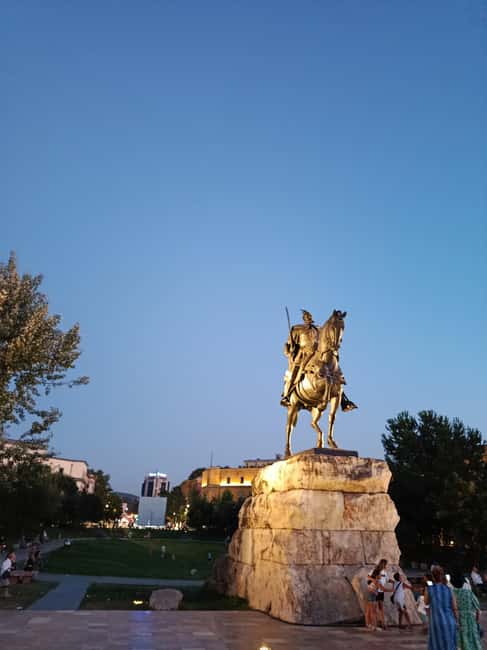
Reviewed · HISTORICAL TOURS
Guided tour in Tirana – discoveries, history, culture (in FRENCH)
Tirana’s story is packed into a small central area: Ottoman mosques, grand state buildings, communist scars, new religious landmarks, and cafés in a former party elite district. This French-language walk connects those pieces clearly, with Max bringing an easy manner, strong French, and plenty of room for questions.
I like the wide historical sweep, which moves from religion and royal-era architecture to secret police surveillance and today’s changing capital. I also like the practical side: you can ask about food, daily life, future sightseeing, and good addresses. The main drawback is pace. You cover many stops in 150 minutes, so several places receive an outside explanation rather than a long indoor visit.
In This Review
- Key points
- A useful first look at Tirana’s many layers
- Starting at Skënderbej Square
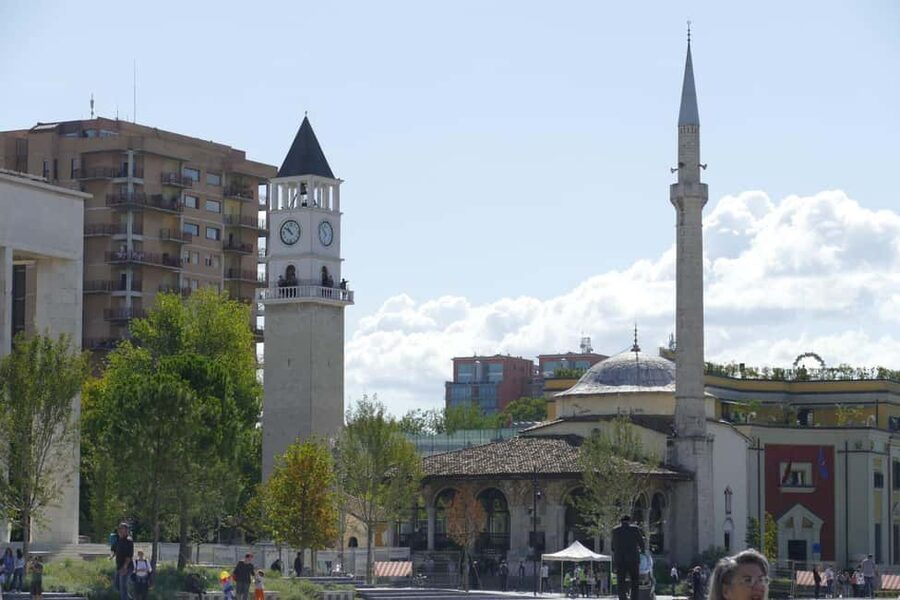
- Et’hem Bej Mosque and the Ottoman chapter
- Bunk’Art 2 and the machinery of fear
- Tirana Castle and the modern city center
- Namazgah Mosque and a newer religious statement
- St. Paul’s Catholic Cathedral
- The Pyramid, from dictatorship symbol to public landmark
- The Prime Minister’s Office and Parliament
- The communist checkpoint and the story of surveillance
- Blloku, from restricted quarter to fashionable district
- The Orthodox Cathedral and a three-faith city
- The House of Leaves and the secret police
- Returning to Skënderbej Square
- Who will get the most from this $11 walk
- Flexible booking and sensible planning
- Should you book the French tour in Tirana?
- FAQ
- What language is the tour conducted in?
- How long does the tour last?
- Where does the tour start?
- Where does the tour finish?
- Are museum entrance fees included?
- Can I cancel the booking?
- Can I reserve now and pay later?
Key points
- Max’s French-language storytelling: A local guide explains Tirana’s history simply and with clear enthusiasm.
- Three major faiths in one walk: Visit a mosque, Catholic cathedral, and Orthodox cathedral.
- Communist Tirana in plain view: See Bunk’Art 2, the checkpoint, the Pyramid, and the former secret police museum.
- Blloku beyond cafés: Learn how this fashionable district once belonged to the communist leadership.
- Useful at the start of a stay: Bring questions about food, sights, neighborhoods, and local customs.
- Good value at $11: The price is modest for a 2.5-hour orientation with a live French guide.
A useful first look at Tirana’s many layers
This tour is less about checking off monuments and more about learning how Tirana became the city you see today. You walk through the center with a guide who joins the dots: religion, monarchy, Italian influence, communist control, and the fast changes of the modern capital.
That makes it especially useful if you have just arrived. You get a mental map of central Tirana, learn which sites deserve more time, and can ask practical questions before planning the rest of your stay. If you take it near the end of your visit, it works as a final explanation of places you have already passed without fully understanding.
The walk is conducted in French. Max is the guide named in the recent booking information, and his French is described as excellent. The tone appears friendly and direct rather than academic. That matters in Tirana, where the key facts can be heavy, especially when the subject turns to surveillance, imprisonment, and the communist regime.
At $11 per person, the value is strong. You are paying less than the cost of many museum entries for a live 150-minute introduction to the center, with access to several religious buildings and time for questions. The trade-off is that indoor museum visits are not included, and food, coffee, and ice cream are extra.
A few more Tirana trips to weigh up
- From Tirana: Durres History Trip with Beach or Promenade
★ 4.8 · 455 reviews - From Tirana: Durres city & Golem beach, Sun & History Day Trip
★ 5.0 · 134 reviews - Tirana Walking Tour: History, Culture &Gems by a Passionate Guide
★ 5.0 · 52 reviews
Starting at Skënderbej Square
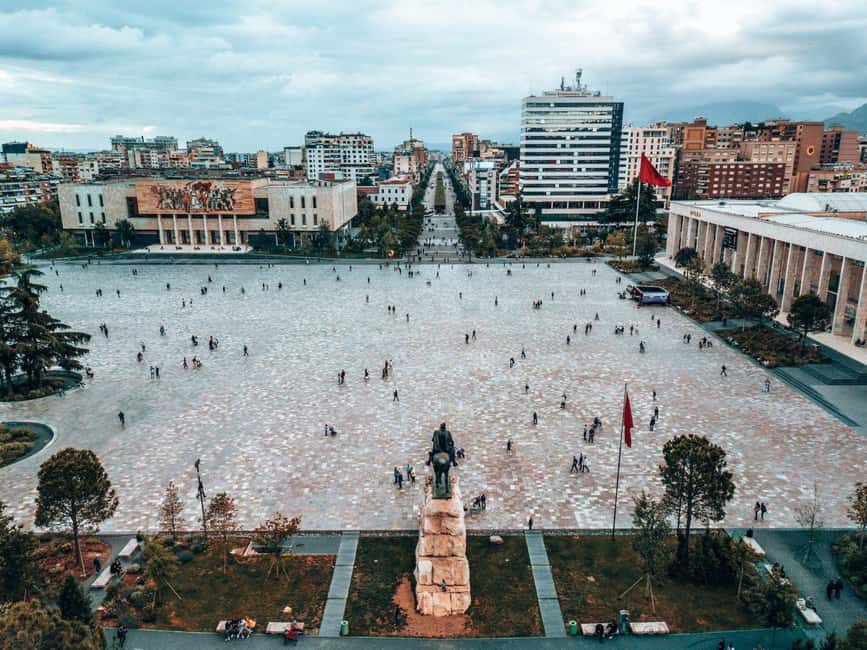
Meet beside the statue of Skënderbej, Albania’s national hero, in front of the National History Museum. This is a sensible starting point because the square is the city’s main reference point and an easy place to find your bearings.
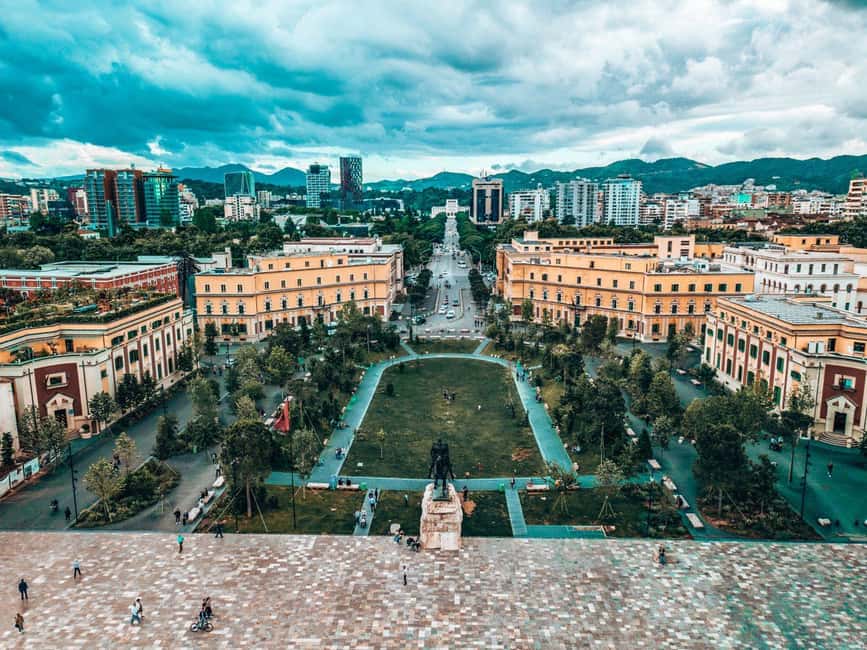
The opening explanation covers the square’s architecture and historical role. You will also hear about the Opera, the National History Museum, and the way Tirana’s buildings have changed over time. The point is not simply to admire façades. You learn how the capital’s public spaces were shaped by different political periods.
Skënderbej Square can feel broad and formal, while the streets around it quickly become more mixed and informal. The contrast gives you an early lesson in Tirana itself. Monumental planning sits beside everyday city life, and old religious buildings share the center with modern construction.
Your guide can also answer practical questions here. Ask where to return for a museum, how to plan the rest of your day, or which parts of central Tirana suit a relaxed evening walk.
Et’hem Bej Mosque and the Ottoman chapter
The Et’hem Bej Mosque is one of the most important early stops. You receive a guided visit lasting about 10 minutes, with attention to the building’s religious and historical meaning.
This is a valuable stop because the mosque helps correct the idea that Tirana is only a communist or post-communist city. Its presence points to the Ottoman period and to Albania’s long connection with Islam. The interior visit also gives the tour a calmer moment after the open square.
Dress and behavior should be respectful in any place of worship. The tour information says the mosque is visited inside, but access can depend on local conditions. Keep your questions ready, especially if you want to understand how religious life changed under communism and how it functions in Albania today.
The short visit will not provide the time for a detailed architectural study. Still, it gives you context before the tour moves toward places that show the harder political chapters of the 20th century.
Bunk’Art 2 and the machinery of fear
At Bunk’Art 2, the group walks past the site while the guide explains its historical role. The museum itself is not included as an indoor visit, so you should not expect a full tour of its exhibitions.
Even from outside, this stop is important. Bunk’Art 2 deals with the communist security system and the pressure placed on ordinary people. A short explanation helps you understand why Albania’s recent past remains visible in central Tirana, not tucked away in a distant archive.
This is one of the places where Max’s conversational style can be useful. You can ask about the communist regime, secret police work, religion, or daily life. The subject can become a list of dates in less skilled hands. Here, the value comes from having someone explain what those institutions meant for Albanian families.
If this theme interests you, plan a separate paid museum visit later. The walk gives you the frame, not the full exhibition.
Same coast, a completely different kind of day:
- From Tirana: Bovilla Lake & Gamti Mountain Hiking Day Trip
★ 4.9 · 4,397 reviews - From Tirana: Bovilla Lake & Gamti Mountain Hiking Tour
★ 4.9 · 3,003 reviews - From Tirana: Bovilla Lake & Gamti Mountain Viewpoint Hike
★ 4.8 · 2,053 reviews - Tirana/Durres/Golem: Saranda, Ksamil, Blue Eye Day Trip
★ 4.8 · 1,584 reviews
Tirana Castle and the modern city center
The route continues to Tirana Castle, only a short walk away. The stop includes historical explanations and time to see the site.
The castle area now connects history with contemporary city life. Its location makes it a useful example of how Tirana reuses older places rather than leaving them sealed off from daily activity. You may find shops and food options here, but purchases are not part of the tour.
This is also a good moment to ask about Albanian gastronomy. The guide is specifically available for questions about local food, and that can help you decide what to try later. Ask for advice based on the type of meal you want, rather than expecting a food tasting during the walk.
Namazgah Mosque and a newer religious statement
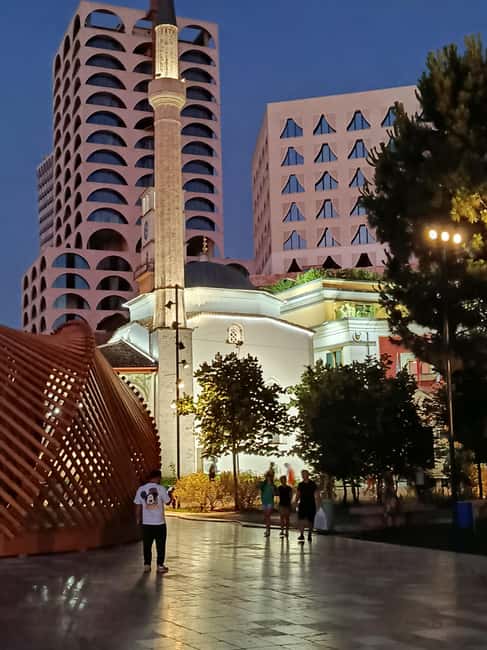
The visit to Tirana’s Grand Mosque, also called Namazgah Mosque, lasts about 10 minutes. You see the interior and its modern frescoes.
Its place in the tour is telling. After the older Et’hem Bej Mosque, this building shows a more recent expression of Islamic life in the capital. The two mosques let you compare different periods, building styles, and ideas about public religion.
The interior visit is brief, so focus on the broad story rather than small artistic details. You will have time to ask how Albania’s religious communities changed during the communist period and how the country’s three main religious traditions appear in modern Tirana.
St. Paul’s Catholic Cathedral
The Catholic Cathedral of St. Paul is another interior stop, followed by a short walk. It adds a Catholic perspective to a tour that has already introduced Islamic architecture.
This matters because Albania’s religious identity is not one-note. The route places a mosque, Catholic cathedral, and Orthodox cathedral within the same central-city experience. You are not just seeing attractive buildings. You are learning how several faiths exist within one national story.
The cathedral visit is short, so the guide’s explanation carries much of the value. If religious history is one of your main interests, ask directly about the differences between Albania’s communities and the effects of the communist ban on religion.
The Pyramid, from dictatorship symbol to public landmark
The Pyramid receives one of the longer explanations, around 20 minutes. You learn about its architecture, its original purpose, and the way its meaning has changed.
Few Tirana buildings show political change as clearly. The Pyramid was linked to Enver Hoxha, Albania’s communist leader, and its design once served an official purpose. Today, it is read in a different way, as a major city landmark shaped by years of argument, reuse, and change.
The guide’s explanation helps you see the building as more than an unusual concrete structure. Look at its scale and position, then consider how a former political monument can remain in public life after the system that created it has gone.
The Pyramid is also a good example of why a walking guide helps. You can take a photograph on your own, but the meaning behind the building is less obvious without context.
The Prime Minister’s Office and Parliament
The route passes the Prime Minister’s Office and the Albanian Parliament from outside. The guide explains their role and place in the capital.
This part is more about civic geography than interior access. You see where national decisions are made and how government buildings fit into the central city. Since the tour does not include entry, anyone hoping for an inside visit should adjust expectations.
The stop also helps tie the communist and modern sections together. Tirana’s political center has changed, but government remains physically present in the same compact part of town. You get a sense of how close the main institutions are to the square, religious buildings, museums, and commercial streets.
The communist checkpoint and the story of surveillance
The communist checkpoint presents installations connected with the former regime. It is a small but meaningful stop because it makes state control feel physical.
This is the kind of detail I value on a city walk. Large monuments explain official power, but a checkpoint suggests how that power entered ordinary movement and daily routines. The guide can explain the communist period in accessible terms and answer follow-up questions about the secret police and restrictions on life.
The tour does not turn the subject into entertainment. The value is in understanding why Albania’s past still shapes conversations about trust, religion, politics, and family memory.
Blloku, from restricted quarter to fashionable district
Blloku is one of Tirana’s most interesting areas, and the tour gives it a historical explanation rather than treating it as a café district.
Under communism, Blloku was associated with the country’s political elite and was not an ordinary neighborhood open to everyone. Today, it is known for restaurants, bars, and urban life. That sharp change makes it a useful place to talk about Albania’s economic and social development.
The guided walk lasts about 15 minutes. You receive advice on places to visit in this well-known part of Tirana, but meals and drinks are not included. Save the neighborhood for later if you want to eat, browse, or return after dark.
I like this stop because it shows how a city’s meaning can change without the streets themselves disappearing. A local guide can point out the difference between Blloku’s current image and its former role, something a casual stroll may not reveal.
The Orthodox Cathedral and a three-faith city
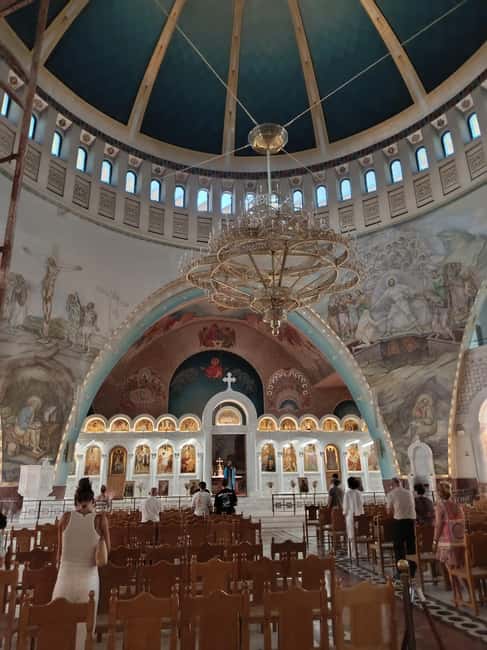
The Resurrection of Christ Orthodox Cathedral is visited inside for about five minutes according to the stated route. The tour highlights the interior, frescoes, and modern architecture.
Along with the two mosques and Catholic cathedral, this stop completes the tour’s look at Albania’s religious life. The building also adds a modern architectural note. Its interior gives you a visual break from the political monuments and concrete structures seen earlier.
There is a timing issue worth noting. One section of the supplied information lists five hours for this cathedral stop, while the full activity is advertised as 150 minutes and the route gives five minutes. Those figures cannot all be correct. If the cathedral visit is important to you, confirm the actual duration before booking.
The House of Leaves and the secret police
The final major stop is the House of Leaves, also known as the museum connected with Albania’s secret police. The experience here is an outdoor visit with historical explanations, not an included indoor museum tour.
The building gives the communist story a human scale. After hearing about state institutions and checkpoints, you reach a place linked directly to surveillance. The guide explains the role of the secret police and why the site matters.
If you want to see the museum’s exhibitions, you will need to return separately and pay any applicable entrance fee. That is not a weakness in the walking tour itself, but it is an important planning point. The guide provides background; the indoor museum would provide the fuller record.
Returning to Skënderbej Square
The tour ends back at its starting point, in the central Skënderbej area. This makes the activity easy to combine with your own plans, since you do not need to arrange transport back from another neighborhood.
The stated duration is 150 minutes. That is long enough to cover a lot of ground, but not long enough for leisurely visits at every stop. Wear comfortable shoes, arrive about five minutes early, and keep your phone available for WhatsApp contact with the guide.
The route includes walking between sites, with short stops of roughly five to 20 minutes. The supplied information does not give a group size, so you should ask if that detail matters to you. A larger group can make questions and movement slower, while a smaller group may allow a more personal exchange.
Who will get the most from this $11 walk
I would choose this tour if you want a French-language introduction to Tirana and prefer a person to explain the city rather than relying only on signs or guidebooks. It suits first-time visitors, history fans, and anyone curious about Albania’s religious mix and communist past.
It is also a practical choice for a short stay. You cover the central sights in one outing and can ask what deserves a return visit. Max’s ability to answer questions about culture, food, religion, and daily life adds value beyond the fixed route.
You may want something else if you prefer long museum visits, detailed architectural study, or a slow food-focused walk. Indoor museum admission is not included, and several stops are viewed quickly. People with limited walking ability should check the route directly before booking, since the activity involves moving between central sites.
The experience is not suitable for people over 95 according to the supplied information. Alcohol and drugs are not allowed.
Flexible booking and sensible planning
You can cancel up to 24 hours before the activity for a full refund, and the reserve-now, pay-later option keeps your plans flexible. Starting times depend on availability, so check the selected date carefully.
I would book it near the beginning of a stay if you want restaurant ideas, museum guidance, and a quick map of the center. Booking it near the end also works if you want to understand the monuments you have already seen.
Bring questions. This tour is designed for conversation, and the best value comes from using that opportunity. Ask about Albanian dishes, religious practice, the communist era, Blloku, or places to visit outside the central square.
Should you book the French tour in Tirana?
Yes, if you want a low-cost, lively orientation with a local French-speaking guide. The 5/5 rating from 204 bookings reflects the strongest points of the experience: clear French, an engaging guide called Max, a broad route, and useful answers for the rest of your stay.
Book with realistic expectations. You will see many important places, but the tour is not a series of long museum visits. At $11 for 150 minutes, it offers unusually good value as a city introduction, especially for French speakers who want history, religion, communism, and everyday Tirana explained in one walk.
FAQ
What language is the tour conducted in?
The live tour guide speaks French. Some content may be presented in its original language.
How long does the tour last?
The activity is advertised as lasting 150 minutes, or two and a half hours.
Where does the tour start?
Meet next to the statue of Skënderbej, in front of the National History Museum at Skënderbej Square.
Where does the tour finish?
The tour returns to the original meeting point at Skënderbej Square.
Are museum entrance fees included?
No. Indoor visits to the museums are not included. The route gives outdoor explanations for Bunk’Art 2 and the House of Leaves, while the religious buildings listed for visits are entered during the walk.
Can I cancel the booking?
Yes. You can cancel up to 24 hours in advance for a full refund.
Can I reserve now and pay later?
Yes. The reserve-now, pay-later option lets you hold a place without paying immediately.
Just added around Tirana
- Zipline Tirana Adventure & Petrela Castle – With Transport★ 4.4 · 10 reviews
- Wine Tasting & Vineyards Escape near Tirana★ 4.9 · 8 reviews
- Wonderful Sunset and Dinner in the Castel Of Petrela★ 4.6 · 4 reviews
- Walking Tour in Tirana, Albania★ 3.7 · 28 reviews
- Vlora, Dhermi & Llogara Day Trip from Durrës or Golem★ 5.0 · 5 reviews
- From Tirana: Mount Dajti Adventure, Local Vibes & Cable Car opt★ 4.5 · 6 reviews
- Winetasting tour in Alpeta winery – Roshnik village by 1001 Albanian Adventures★ 5.0 · 26 reviews
- Day Tour to Petrela Castle and Zip Line Albania Adventure★ 5.0 · 10 reviews
Historical Tours, compared.
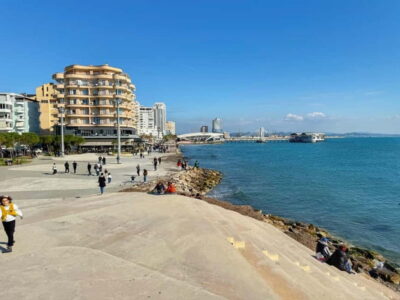
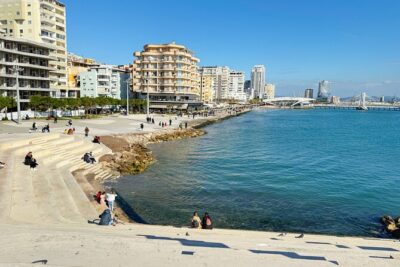
Durres city & Golem beach, Sun & History Day Trip
Read our review →
Tirana Walking Tour: History, Culture &Gems by a Passionate Guide
Read our review →
Semi – Private Tour at Cape of Rodon; Hidden Beaches & History
Read our review →
Ancient City of Butrint, UNESCO World Heritage site – A Must
Read our review →
Browse the lists this tour appears in