
Reviewed · HISTORICAL TOURS
Tirana: A walk through the history of Albania.
Tirana’s story is unusually easy to read on foot. In just 150 minutes, this small-group walk links Skanderbeg Square, Ottoman-era buildings, communist landmarks, and modern Blloku, showing how each period shaped the capital you see today.
I like the tour’s clear four-part structure, and I like its small size, limited to six people. Guides such as Armando can adjust the conversation to your interests, while the included raki tasting adds a simple local touch. The main drawback is the pace: with so many stops, some sites receive more explanation from the outside than a full visit inside.
I also appreciate that the walk does not treat Tirana as an old city frozen in time. You move from mosques and palaces to political museums, parks, cafés, and the city’s modern social center. Be ready to walk for two and a half hours, and note that the route is not suitable for wheelchair users or people with mobility impairments.
In This Review
- Key points to know before booking
- Starting at Skanderbeg Square
- Et’hem Bej Mosque and the Clock Tower
- Bulevardi Dëshmorët e Kombit and the route to Mother Teresa Square
- Blloku and Tirana’s modern social life
- The Orthodox Cultural Center
- House of Leaves and the communist years
- Finishing back at Skanderbeg Square
- Why the small group changes the experience
- What the $30 price includes
- Timing, walking, and practical limits
- Who will get the most from this Tirana walk
- Should you book this tour?
- FAQ
- How long does the Tirana history tour last?
- Where does the tour start?
- Where does the tour finish?
- What language is the tour offered in?
- How many people can join the group?
- Is raki tasting included?
- Is food included?
- Is hotel pickup and drop-off included?
- Is the tour suitable for wheelchair users?
- Can I cancel for a full refund?
Key points to know before booking
- Four chapters of Albanian history: The route covers Illyrian tribes, the Skanderbeg and Ottoman period, independence and national renewal, and the communist years.
- A maximum of six people: The small group allows room for questions and personal interests.
- Armando is one guide to look for: He is described as friendly, well prepared, and good at adding local customs and personal experience.
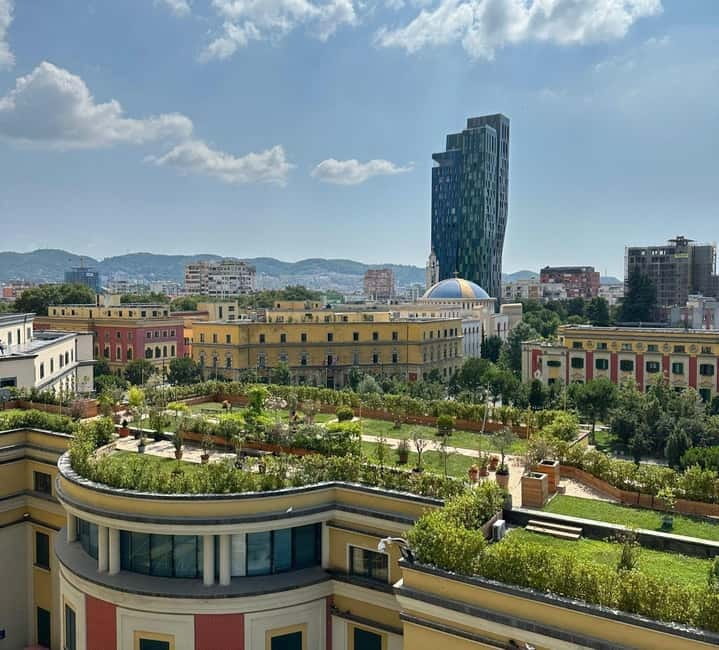
- The route mixes landmarks and daily life: You see the National Historical Museum area, Blloku, parks, religious buildings, and House of Leaves.
- Raki is included: The traditional Albanian spirit gives the tour a local food and drink angle without turning the walk into a full meal.
- Plan for walking: Hotel pickup, food, and transport are not included, and the route is unsuitable for wheelchair users.
Starting at Skanderbeg Square
The tour begins at Sheshi Skënderbej, Tirana’s central square. This is a smart meeting point because it gives you an immediate sense of the city’s scale, open public space, and changing identity.
The square also introduces the national figure at the heart of the tour: Skanderbeg, the medieval Albanian leader whose name appears across the country. From here, your guide sets out the four broad periods used to explain Albania’s past: the Illyrian tribes, the Ottoman period and Skanderbeg era, the Renaissance and declaration of independence, and the communist dictatorship.
That framework matters. Albania’s story can feel crowded with unfamiliar names and turning points, but the four chapters give you a useful map. As you walk, you can place each building or public space into a larger story instead of collecting disconnected facts.
The National Historical Museum is part of the central Tirana setting, with a collection of 6,293 museum artifacts. The tour does not list a dedicated museum entry, so you should treat it as an important landmark and exterior reference unless your guide tells you otherwise. If you want a long museum visit, save extra time for another part of your day.
A few more Tirana trips to weigh up
- From Tirana: Durres History Trip with Beach or Promenade
★ 4.8 · 455 reviews - Guided tour in Tirana – discoveries, history, culture (in FRENCH)
★ 5.0 · 204 reviews - From Tirana: Durres city & Golem beach, Sun & History Day Trip
★ 5.0 · 134 reviews
Et’hem Bej Mosque and the Clock Tower
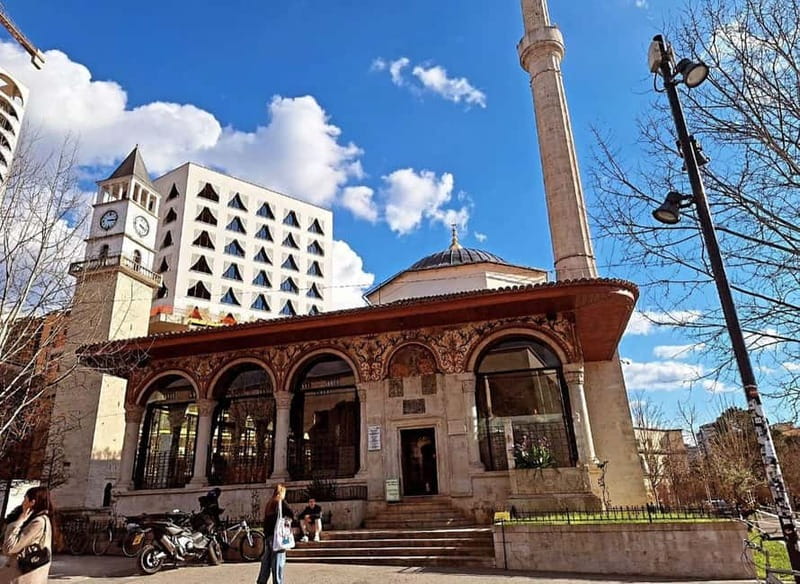
The Et’hem Bej Mosque and nearby Clock Tower bring you into the Ottoman and early modern chapters of Tirana. The mosque is included as a guided sightseeing stop, and it is one of the city center’s key historic buildings.
The pairing is useful because the mosque and tower are close to the central square, yet they represent more than decorative old architecture. Your guide can explain how Tirana developed under Ottoman rule and how religious, civic, and commercial life met around the center.
The Clock Tower is one of the landmarks that helps you read the square. It gives the area a strong visual marker, while the mosque offers a more intimate sense of the city’s older character. Since this is a walking tour rather than a formal religious architecture visit, the depth of the explanation may depend on the guide and your questions.
Dress and behavior should be respectful around the mosque. The supplied details do not promise a full interior visit, so keep your expectations flexible. The value here is the setting and the explanation that links the building to Albania’s Ottoman past.
Bulevardi Dëshmorët e Kombit and the route to Mother Teresa Square
The walk continues along Bulevardi Dëshmorët e Kombit, one of Tirana’s major ceremonial avenues. This section shifts the focus from older central buildings to the city’s public image and national memory.
You then reach Sheshi Nënë Tereza, or Mother Teresa Square. It is a planned civic space with a different feel from Skanderbeg Square, and it helps show how Tirana’s public architecture changed over time.
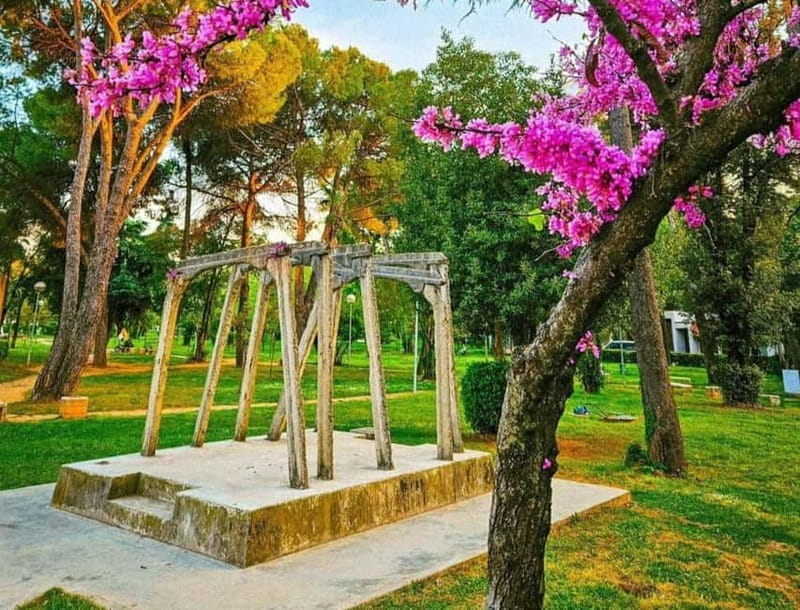
The tour also includes the Grand Park of Tirana. That gives the route some breathing room after the denser central streets. The park is listed as a guided visit, so you can expect your guide to use it as part of the city story rather than as a long nature stop.
The route’s mix is one of its strengths. You are not spending the full 150 minutes looking at façades. The avenue, square, and park show how Tirana functions as a capital, while the guide connects public spaces with national history.
Blloku and Tirana’s modern social life
Blloku provides the sharpest change of mood. This district is associated with Tirana’s café culture, restaurants, nightlife, and contemporary city life. The tour describes it through the idea of la dolce vita, a useful contrast with the political history discussed earlier.
Blloku also carries a strong communist-era connection. It was once a restricted area associated with the country’s political leadership, including the world around Enver Hoxha. Today, it is known for social life and dining, making it a clear example of how a place can change meaning.
I like this stop because it keeps the tour from becoming a procession of monuments. You see how Tirana is lived in now, not just how it was governed in the past. Your guide may also adapt the discussion here if you want to ask about local customs, nightlife, food, or daily life.
The tour does not include food in Blloku, so plan to return later if you want a meal or café stop. You are looking at the district as part of the walking route, not joining a restaurant crawl.
Same coast, a completely different kind of day:
- From Tirana: Bovilla Lake & Gamti Mountain Hiking Day Trip
★ 4.9 · 4,397 reviews - From Tirana: Bovilla Lake & Gamti Mountain Hiking Tour
★ 4.9 · 3,003 reviews - From Tirana: Bovilla Lake & Gamti Mountain Viewpoint Hike
★ 4.8 · 2,053 reviews - Tirana/Durres/Golem: Saranda, Ksamil, Blue Eye Day Trip
★ 4.8 · 1,584 reviews
The Orthodox Cultural Center
The Cultural Center of the Orthodox Church adds another religious and cultural point to the route. It follows the stops connected with Muslim Ottoman heritage and helps widen the picture of Albania’s religious life.
This matters because a short city walk can easily reduce Albania to one historical theme. The inclusion of an Orthodox center suggests a broader look at the capital’s religious and cultural communities.
The supplied information does not provide details about an interior tour, opening hours, or a specific collection. Think of this as a guided visit and contextual stop, with the guide explaining why the place matters within Tirana.
House of Leaves and the communist years
House of Leaves is likely to be the most sobering stop. The museum deals with the brutal regime of Enver Hoxha, Albania’s long communist period, which the tour presents as the darkest chapter in the country’s history.
This is where the four-part structure becomes especially useful. After discussing older rulers, independence, and national identity, you confront a period shaped by political control and fear. The site gives that history a specific address rather than leaving it as a vague paragraph in a guidebook.
The experience may feel heavier than the earlier stops, and that is appropriate. You should not expect every part of the tour to be light sightseeing. House of Leaves gives the walk moral weight and helps explain why modern Albania can feel so intent on change.
The information provided does not promise admission to every museum on the route, and the listed tour length is only 150 minutes. Ask your guide how much time is available inside House of Leaves if this is your main reason for booking. If you want a full museum visit, you may need to return independently.
Finishing back at Skanderbeg Square
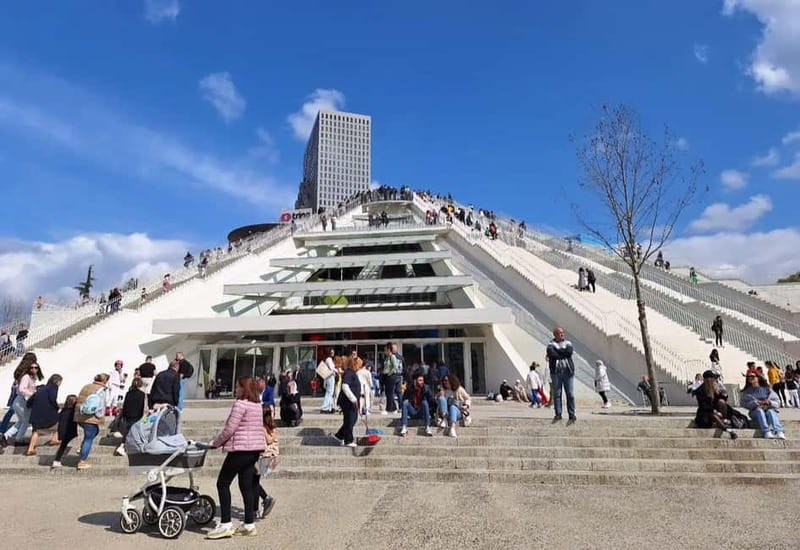
The route ends where it began, at Skanderbeg Square. That circular design is practical and helpful. You finish near the city center instead of being left at an unfamiliar edge of Tirana.
By the end, you have seen a useful cross-section of the capital: the central square, mosque, Clock Tower, national avenues, Mother Teresa Square, Grand Park, Blloku, an Orthodox cultural site, and House of Leaves.
You will not become an expert on Albanian history in two and a half hours. You will, however, have a solid outline and a better sense of how the city’s past appears in its streets. That is the right aim for a first walk.
Why the small group changes the experience
The group is limited to six participants, which is a real advantage for a history walk. You can ask about a detail that catches your attention without trying to speak over a large crowd.
The guide’s role is especially important here because the route covers a lot. One guide, Armando, is praised for being friendly, well prepared, and willing to explain local traditions and small historical details. Another strong feature of the guide style is flexibility: if you are especially interested in one subject, the conversation can be shaped around it.
That does not mean every guide will give an identical tour. A small group gives you a better chance to make the experience personal, but you should still arrive with one or two questions ready. Ask about the period that interests you most, and the walk is more likely to feel tailored rather than scripted.
The English-language guiding is the only language specifically provided. If you need another language, this experience may not suit you.
What the $30 price includes
At $30 per person, the tour offers a reasonably priced introduction to Tirana, especially if you are visiting for the first time. The price includes an English-speaking guide and a tasting of raki, but not food, hotel pickup, or drop-off.
The best value comes from the context. You could walk past Skanderbeg Square, the mosque, Blloku, and House of Leaves on your own, but you would miss the links between them. A local guide helps turn separate sights into a story about political change, religion, public space, and modern life.
The price is less attractive if you want long interior visits at several museums. The route names major landmarks, but a 150-minute walk covering this many places cannot provide a full museum experience at each one.
Raki is a small inclusion, not a reason to book the tour by itself. It is a traditional Albanian alcoholic drink, and the tasting gives you a direct connection to local custom. If you do not drink alcohol, the tour details do not state that an alternative is available, so ask before booking.
Timing, walking, and practical limits
The duration is 150 minutes, and starting times depend on availability. There is no hotel pickup or drop-off, so you need to reach Skanderbeg Square on your own.
Wear comfortable shoes. The route connects several central landmarks, a park, Blloku, and House of Leaves, so you should expect steady walking rather than a single short stroll.
The activity is not suitable for wheelchair users or people with mobility impairments. The supplied details do not describe the exact surface conditions, number of stairs, or rest points, so anyone with limited mobility should contact the provider before reserving.
You can cancel up to 24 hours in advance for a full refund, and the reserve-now, pay-later option gives you some flexibility. Those terms are useful if your Tirana schedule is still shifting.
Who will get the most from this Tirana walk
I would choose this tour for a first visit to Tirana, particularly if you want a clear introduction before exploring museums and neighborhoods on your own. It also suits anyone who prefers a guide who can answer questions instead of a large group following a fixed speech.
History-minded visitors will value the four-period structure and House of Leaves. People interested in present-day Tirana will appreciate Blloku, the parks, and the discussion of local life.
You may want something else if your main goal is a long visit inside the National Historical Museum or House of Leaves. You may also prefer an independent route if you dislike fixed pacing or do not want a two-and-a-half-hour walk.
Should you book this tour?
Book it if you want Tirana explained through its streets, with a local English-speaking guide, a small group, and a route that connects old religious buildings with communist memory and modern city life.
The strongest reasons are the manageable group size, the clear historical structure, and the guide’s ability to respond to personal interests. Armando is a particularly promising guide if his availability matches your date.
Skip it if mobility is a concern, if you want substantial museum time, or if you are looking mainly for food and drink. For most first-time visitors who want their bearings and a useful understanding of Albania, $30 is a fair price for a focused introduction.
FAQ
How long does the Tirana history tour last?
The walking tour lasts 150 minutes, or two and a half hours.
Where does the tour start?
It starts at Sheshi Skënderbej, also known as Skanderbeg Square.
Where does the tour finish?
The tour returns to Skanderbeg Square.
What language is the tour offered in?
The live tour guide speaks English.
How many people can join the group?
The group is limited to six participants.
Is raki tasting included?
Yes. The tour includes a tasting of raki, a traditional alcoholic drink from Albania.
Is food included?
No. Food during the tour is not included.
Is hotel pickup and drop-off included?
No. You need to make your own way to Skanderbeg Square, and hotel transportation is not included.
Is the tour suitable for wheelchair users?
No. The activity is not suitable for wheelchair users or people with mobility impairments.
Can I cancel for a full refund?
Yes. You can cancel up to 24 hours in advance for a full refund. You can also reserve now and pay later.
Just added around Tirana
- Zipline Tirana Adventure & Petrela Castle – With Transport★ 4.4 · 10 reviews
- Wine Tasting & Vineyards Escape near Tirana★ 4.9 · 8 reviews
- Wonderful Sunset and Dinner in the Castel Of Petrela★ 4.6 · 4 reviews
- Walking Tour in Tirana, Albania★ 3.7 · 28 reviews
- Vlora, Dhermi & Llogara Day Trip from Durrës or Golem★ 5.0 · 5 reviews
- From Tirana: Mount Dajti Adventure, Local Vibes & Cable Car opt★ 4.5 · 6 reviews
- Winetasting tour in Alpeta winery – Roshnik village by 1001 Albanian Adventures★ 5.0 · 26 reviews
- Day Tour to Petrela Castle and Zip Line Albania Adventure★ 5.0 · 10 reviews
Historical Tours, compared.
Guided tour in Tirana – discoveries, history, culture (in FRENCH)
Read our review →
Durres city & Golem beach, Sun & History Day Trip
Read our review →
Tirana Walking Tour: History, Culture &Gems by a Passionate Guide
Read our review →
Semi – Private Tour at Cape of Rodon; Hidden Beaches & History
Read our review →

Ancient City of Butrint, UNESCO World Heritage site – A Must
Read our review →Browse the lists this tour appears in