Reviewed · TIRANA TOURS
Tourana – Discover Tirana with a local
Tirana becomes much easier to understand when Florenc links its grand squares, communist-era buildings, new towers, and everyday street life. This is not just a checklist walk. It is a chance to ask why the city looks the way it does, and where local life happens beyond the usual guidebook stops.
I like the hotel pickup in central Tirana, which saves you from finding a meeting point, and I like the clear focus on inexpensive local food. Florenc also brings humor and flexibility, with German and English tours available.
The main limitation is time. Two and a half hours gives you a useful first look, but museum visits and long stops can make the route feel brisk. Museum entry costs extra, and you should carry cash.
In This Review
- Key points at a glance
- Why this Tirana walk is more useful than a simple photo tour
- Skanderbeg Square and the city’s changing center
- Bunk’Art 2 and the difficult communist past
- House of Leaves and stories beyond the postcard view
- The Boulevard of Martyrs and Tirana’s public memory
- The Pyramid, from communist symbol to modern landmark
- The Block and the modern face of Tirana
- Sky Tower, SkyClub, and the best view of the route
- What Florenc adds to the experience
- Is $16 a good price for 150 minutes?
- Who should book this Tirana experience?
- My take: book it for context, not just monuments
- FAQ
- How long does the Tirana walking tour last?
- Which languages are available?
- Is hotel pickup included?
- Are museum tickets included in the price?
- What sights are included on the route?
- What should I bring?
Key points at a glance
- Florenc leads in German or English, with especially strong German reported by several participants.
- Hotel pickup in central Tirana is included, with a request to wait in the lobby 10 minutes early.
- The route connects old and new Tirana, from Skanderbeg Square and the Ethem Bey Mosque to the Pyramid, the Block, and Sky Tower.
- Local food advice is part of the value, including suggestions for cheaper places where local people eat.
- The tour is built around questions, including Albania’s political past, city planning, unusual buildings, and even the Einstein passport story.
- Museum tickets cost an additional 3 to 8 EUR, while the tour itself costs $16 per person.
Why this Tirana walk is more useful than a simple photo tour
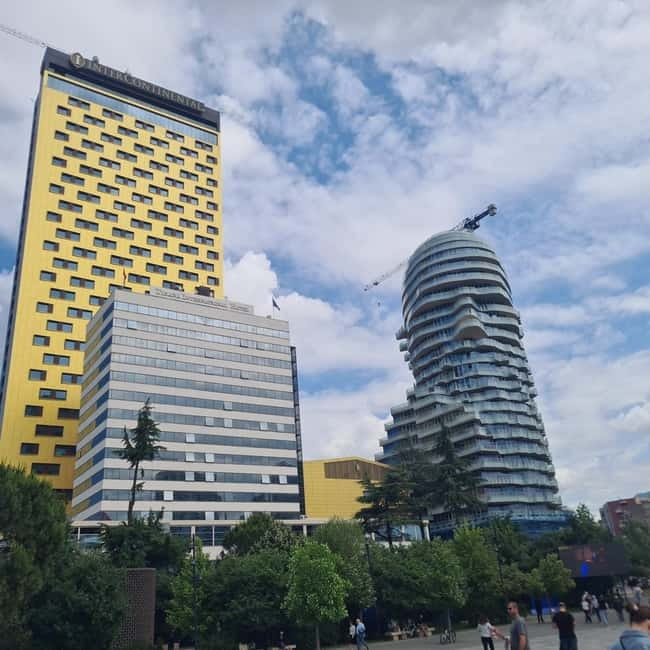
A first walk through Tirana can feel like a series of unrelated sights. One minute you are beside a mosque from the Ottoman period. A few steps later, you are looking at communist architecture, Italian-planned boulevards, modern high-rises, and cafés filled with young Albanians.
Florenc’s approach is meant to connect those pieces. He explains what the Austrians planned for Tirana, what the Italians later put into practice, and how the city continues to change. That sort of context matters because Tirana is not a city you understand from monuments alone.
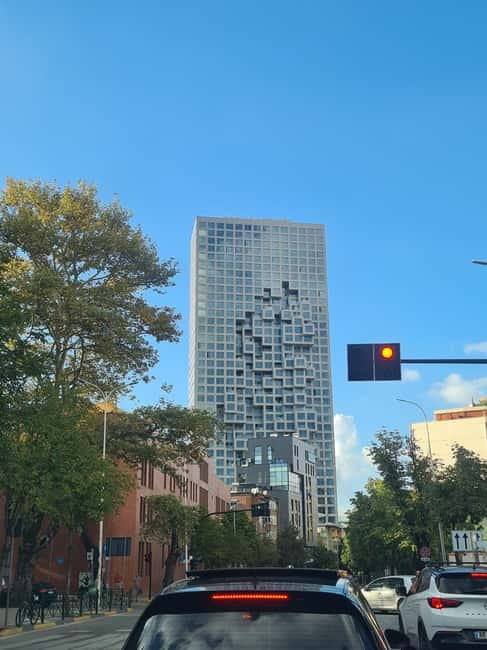
You also get room to ask practical questions. Which building was started by a Russian and finished by the Chinese? Which tower is currently the tallest, with construction still underway? Did Albert Einstein really have an Albanian passport? These are the kinds of questions that make a walk memorable, even when they are not printed on a standard sightseeing route.
The tour is conducted on foot, so you see the city at street level. You can notice the mix of old façades, broad avenues, cafés, traffic, and construction in a way that a bus tour cannot match. Wear comfortable shoes, and expect a city walk rather than a slow museum program.
Other Tirana days people book alongside this one:
- From Tirana: Bovilla Lake & Gamti Mountain Hiking Day Trip
★ 4.9 · 4,397 reviews - From Tirana: Bovilla Lake & Gamti Mountain Hiking Tour
★ 4.9 · 3,003 reviews - From Tirana: Bovilla Lake & Gamti Mountain Viewpoint Hike
★ 4.8 · 2,053 reviews
Skanderbeg Square and the city’s changing center
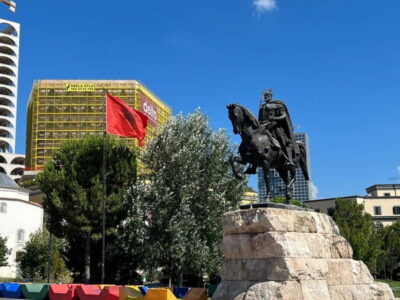
Skanderbeg Square is the natural starting point for understanding Tirana. It is the city’s main public space and a useful place to see several layers of Albanian history gathered close together.
Here, Florenc can set up the story of Tirana before the route moves into individual buildings. The square gives you a broad view of the Opera House, the Ethem Bey Mosque, and other important civic landmarks. It also helps you see how the capital has been planned and reshaped over time.
The Opera House provides a look at the formal, state-facing side of the city. The Ethem Bey Mosque offers a different layer, tied to Tirana’s Ottoman past and religious heritage. The value is not only in taking photographs. It is in learning how these buildings fit into the city’s political and cultural story.
Expect time for photographs and explanations rather than a long interior visit. If you want to explore every building at length, this tour will not replace a separate museum day. Its job is to give you a working map of the center and show you where to return later.
Bunk’Art 2 and the difficult communist past
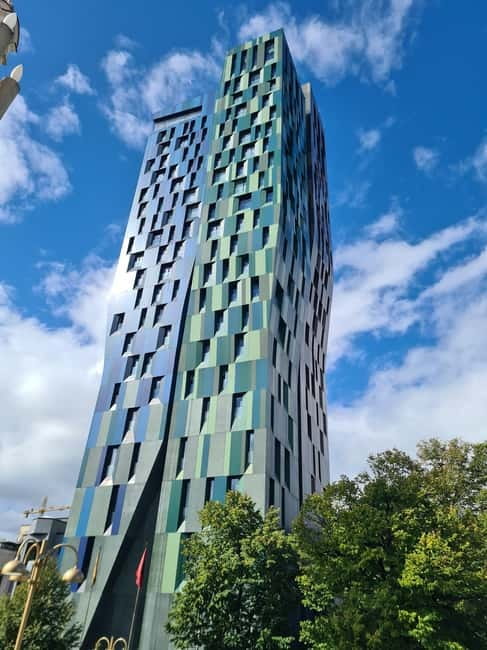
Bunk’Art 2 is one of the most important stops for anyone trying to understand Albania’s 20th century. The museum deals with the country’s communist-era security system and the pressure placed on ordinary people.
The stop can add real weight to the walk. Tirana’s cafés and polished central spaces can make the city feel light and modern, but Bunk’Art 2 points to a much harder recent past. The contrast is part of what makes Tirana interesting.
Museum admission is not included and costs about 3 to 8 EUR. That gives you a choice: pay to enter if you want a closer look, or use the exterior stop and Florenc’s explanation as part of the walking route.
You should allow for the fact that adding museum time may reduce the time available elsewhere. The advertised duration is 150 minutes, so you are getting an overview, not a full museum tour combined with every major sight in depth.
House of Leaves and stories beyond the postcard view
The House of Leaves is another stop tied to surveillance and political control. Its presence on the route reinforces a key point about Tirana: the city’s most important stories are not all decorative or easy.
A local guide is useful here because a building can tell you only so much from the outside. Florenc’s explanations add the social side of the story, including how past systems affected daily life and how those effects still shape the way people understand Albania.
The tour’s strongest comments focus on this kind of practical background. You are not only given dates and names. You get a sense of current social conditions and how the past is discussed in modern Tirana.
Again, entry is extra. If you want to spend serious time inside, consider returning later. On this tour, the stop works best as part of a wider explanation of the city.
Same coast, a completely different kind of day:
- Tirana/Durres/Golem: Saranda, Ksamil, Blue Eye Day Trip
★ 4.8 · 1,584 reviews - Hike Gamti Mountain with Bovilla lake view & canyon- From Tirana
★ 5.0 · 1,280 reviews - Tirana: 2 Hour Guided Hidden Treasures Sightseeing Tour
★ 4.8 · 948 reviews - Berat city UNESCO tour, the Castle & Belshi lake- From Tirana
★ 5.0 · 804 reviews
The Boulevard of Martyrs and Tirana’s public memory
The Boulevard of Martyrs brings the walk into one of Tirana’s major civic spaces. Broad boulevards can look simple at first, but they often reveal how a capital was designed to present power, order, and national identity.
This is where the discussion of Austrian plans and Italian implementation becomes especially useful. Instead of seeing the boulevard as just another long road, you can look at its scale and layout as part of a larger plan for the capital.
The name also points toward Albania’s public memory and political history. Florenc’s role is to explain those connections in a way that stays readable and grounded in the city around you.
There may be traffic, noise, and normal city activity along the route. That is not a flaw, but it means this is an active urban walk, not a quiet heritage circuit. The surroundings are part of the experience.
The Pyramid, from communist symbol to modern landmark
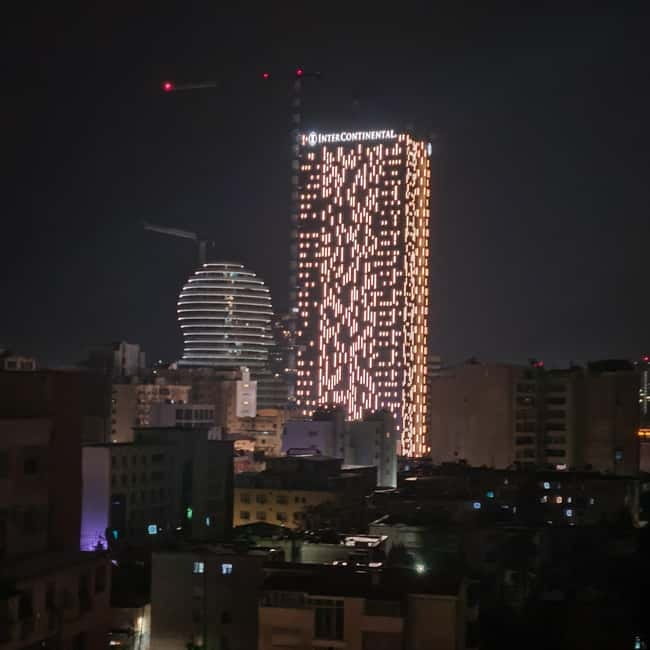
Tirana’s Pyramid is one of the city’s most striking buildings. It carries the weight of Albania’s communist past, yet it has also become part of the city’s newer visual identity.
The Pyramid is a good example of why Tirana resists simple labels. A building can begin with one political purpose, fall into disrepair or uncertainty, and later become a place people photograph, discuss, and reinterpret.
Florenc can use the Pyramid to explain how Tirana handles its old symbols while the capital races toward a newer future. You do not need to know every architectural detail to appreciate the tension between memory and change.
This is a strong photo stop, but the real value is the explanation around it. If you are interested in architecture, politics, or the way cities rewrite their public spaces, pay close attention here.
The Block and the modern face of Tirana
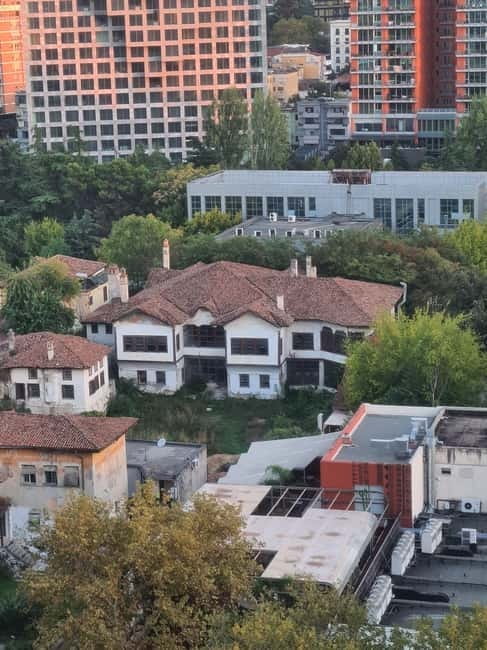
The Block, or Blloku, shows another side of the capital. The area is associated with modern urban life, cafés, restaurants, and a more polished city center.
Its importance is partly historical and partly practical. The district helps you see how Tirana has changed from a restricted political zone into a popular part of everyday city life. Florenc’s comments can help you understand that shift instead of treating the neighborhood as just a place for coffee.
This is also where the food advice becomes especially useful. The tour includes recommendations for Albanian cuisine and inexpensive restaurants. That can save you from choosing a place based only on a central location or a glossy menu.
The advice is not a formal tasting program, so do not book this expecting a food tour. You may receive suggestions and possibly hear about dishes worth trying, but the main activity remains sightseeing. Bring cash, since it is specifically listed as something to have with you.
Sky Tower, SkyClub, and the best view of the route
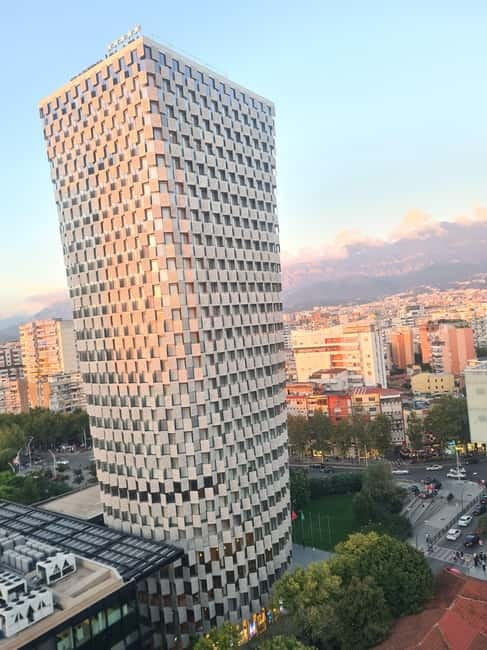
The route includes Sky Tower, and several people have been taken to the SkyClub at the end of the walk. The rotating café offers a broad view over Tirana while you have a drink, although the drink itself is not listed as included.
This is a smart way to finish a city walk. After seeing the streets from ground level, you can look back over the center and understand its shape. The view also makes the contrast between older buildings, broad boulevards, and new construction easier to see.
Do not assume the SkyClub stop is a guaranteed included program element beyond what is arranged with your guide. It appears to have been part of the ending for some groups, so ask Florenc at the start if this matters to you.
The rooftop stop can also affect the pace. A drink and a view are welcome, but if you have a tight schedule, confirm how the final part fits within the 150 minutes.
What Florenc adds to the experience
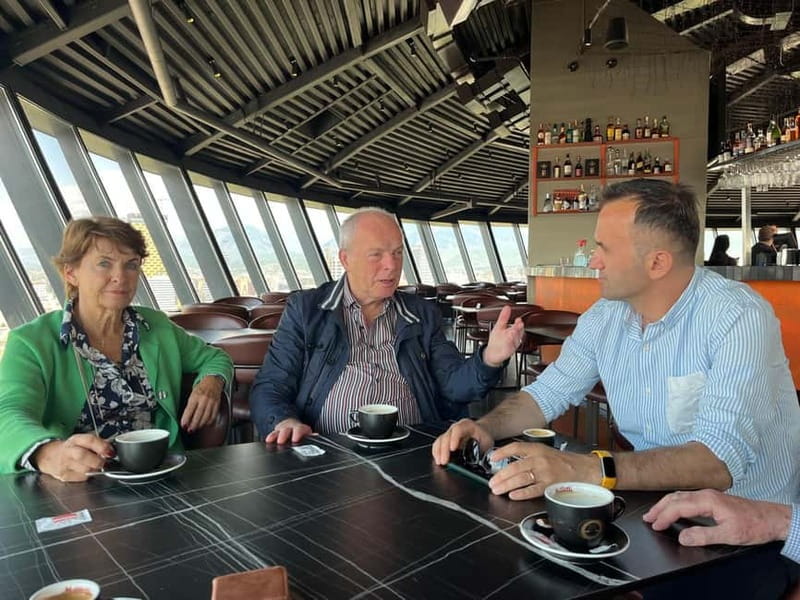
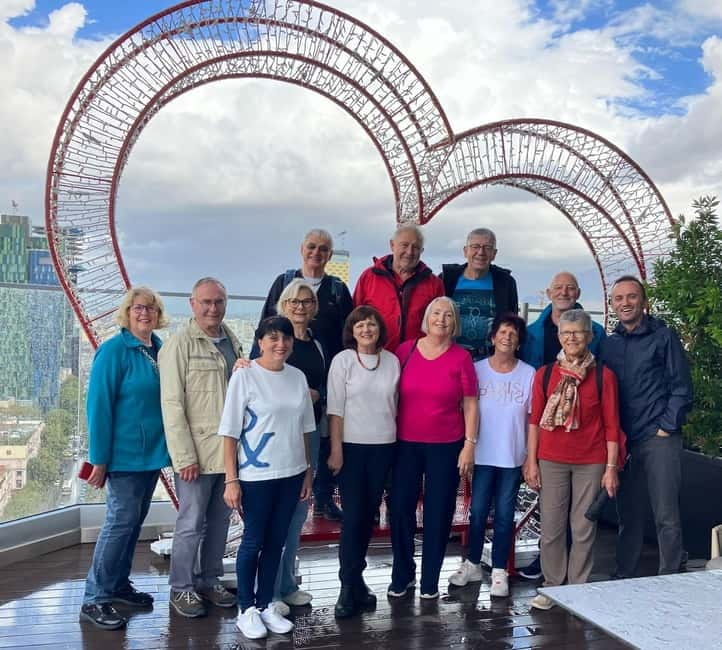
The guide is a major part of the value here. Florenc leads in German and English, and the German feedback is particularly strong. Several German-speaking participants found his language clear and close to fluent, which matters when the subject includes political history, social issues, and architectural details.
His style also seems to suit people who dislike dry lectures. The tour is described as informative, humorous, and accommodating. One group of 14 people was pleased with the experience, while a smaller group benefited from more flexibility.
That flexibility is worth discussing before you start. You can ask about subjects that interest you, such as current living conditions, Albanian history, food, architecture, or unusual facts about public figures. If you prefer a fixed script with no detours, a standard large-group walk may feel more predictable.
For English speakers, the tour also has strong appeal. An English-speaking participant found that Florenc could adapt the walk to personal interests, include food experiences, and show places that would be easy to miss without local help.
Is $16 a good price for 150 minutes?
At $16 per person, this is a low-cost introduction to central Tirana. The price makes sense if you want orientation, local context, and practical advice before exploring more of the city on your own.
The value is not based on paid attractions. Museum tickets are separate, at roughly 3 to 8 EUR, and the tour does not include food or drinks. Instead, you are paying for a guide who can connect the sights, answer questions, and point you toward less expensive places to eat.
That can be useful beyond the two and a half hours. A good restaurant recommendation may help you avoid tourist pricing for the rest of your stay. A clear explanation of the center can also save time when you return to Bunk’Art 2, the House of Leaves, or another museum.
The modest price does come with limits. You should not expect a private, all-day tour with lengthy interior visits. Think of it as a strong first orientation, especially if you have just arrived in Tirana.
Who should book this Tirana experience?
I would choose this tour if you are visiting Tirana for the first time and want the city explained by someone who lives there. It suits couples, families with older children, and small groups who want to ask questions rather than simply follow a flag.
German-speaking visitors have a particularly good reason to consider it, but English speakers are covered too. The tour also suits anyone curious about food, current life, and the relationship between communist history and the modern capital.
It is less suitable if you want a slow museum visit, a dedicated food tour, or a route focused only on architecture. The walk covers many sights, so you will see more places than you study in depth.
The wheelchair-accessible listing is useful, but you should still confirm the practical route with the provider if you have specific mobility needs. City streets, stops, and museum access can vary even when an experience is marked accessible.
Booking is flexible: you can reserve now and pay later, and cancellation is free up to 24 hours before the start. Central hotel pickup is included, and you should wait in your hotel lobby 10 minutes before the scheduled time. Audio recording is not allowed, and alcohol and drugs are prohibited. The activity is not designed for babies under one or people over 95.
My take: book it for context, not just monuments
You should book this tour if you want Tirana to make sense quickly. Florenc’s mix of history, humor, current social detail, food advice, and local flexibility gives the walk more purpose than a simple list of landmarks.
The strongest choice is to take it early in your stay. Use the route to learn the center, decide which museums deserve a return visit, and ask where to eat that night. Keep your expectations realistic: 150 minutes is enough for a clear introduction, not for exhaustive sightseeing.
For $16, the balance is good. You get a local guide, central pickup, major sights, and practical information that can shape the rest of your visit. If you prefer to explore completely alone, you can skip it, but first-time visitors who enjoy conversation and useful local advice should find it a sound start.
FAQ
How long does the Tirana walking tour last?
The tour lasts 150 minutes, or two and a half hours. It includes walking, sightseeing, photo stops, guided explanations, and some free time.
Which languages are available?
Florenc provides the tour in German and English. The activity information lists live guide support in both languages.
Is hotel pickup included?
Yes. Pickup is included from any hotel in Tirana city center. You should wait in the hotel lobby 10 minutes before the scheduled pickup time.
Are museum tickets included in the price?
No. Admission to museums costs an additional 3 to 8 EUR and must be paid separately.
What sights are included on the route?
The route can include Skanderbeg Square, the Opera House, Ethem Bey Mosque, Bunk’Art 2, the House of Leaves, the Boulevard of Martyrs, the Pyramid, the Block, Sky Tower, and other central sights.
What should I bring?
Bring cash. Audio recording is not allowed, and alcohol and drugs are prohibited during the activity.
Just added around Tirana
- Zipline Tirana Adventure & Petrela Castle – With Transport★ 4.4 · 10 reviews
- Wine Tasting & Vineyards Escape near Tirana★ 4.9 · 8 reviews
- Wonderful Sunset and Dinner in the Castel Of Petrela★ 4.6 · 4 reviews
- Walking Tour in Tirana, Albania★ 3.7 · 28 reviews
- Vlora, Dhermi & Llogara Day Trip from Durrës or Golem★ 5.0 · 5 reviews
- From Tirana: Mount Dajti Adventure, Local Vibes & Cable Car opt★ 4.5 · 6 reviews
- Winetasting tour in Alpeta winery – Roshnik village by 1001 Albanian Adventures★ 5.0 · 26 reviews
- Day Tour to Petrela Castle and Zip Line Albania Adventure★ 5.0 · 10 reviews
Tirana Tours, compared.
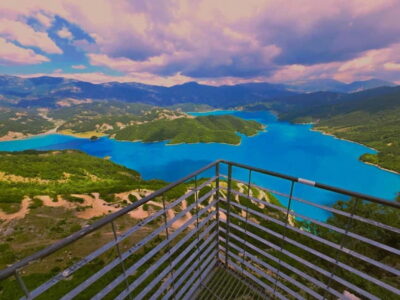
Bovilla Lake & Gamti Mountain Hiking Day Trip
Read our review →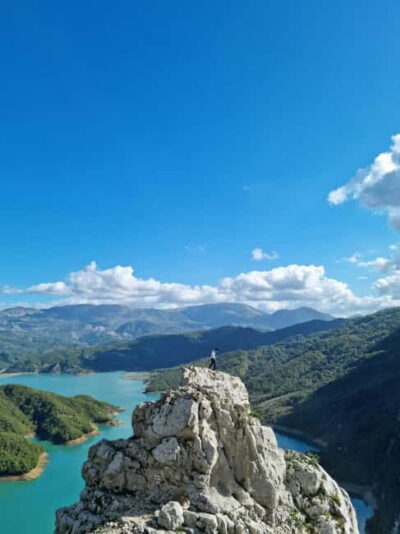
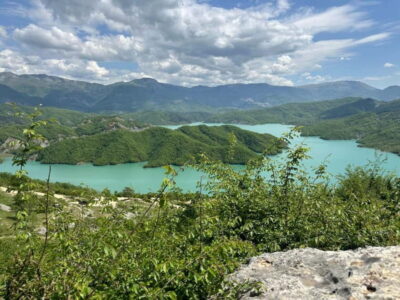
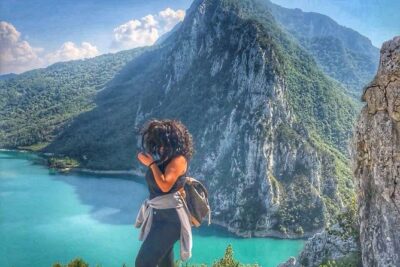
Hike Gamti Mountain with Bovilla lake view & canyon- From Tirana
Read our review →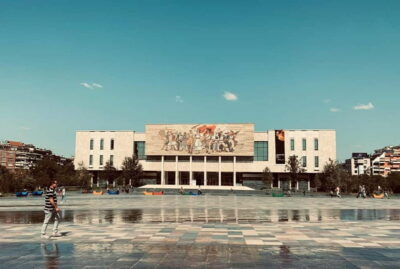
2 Hour Guided Hidden Treasures Sightseeing Tour
Read our review →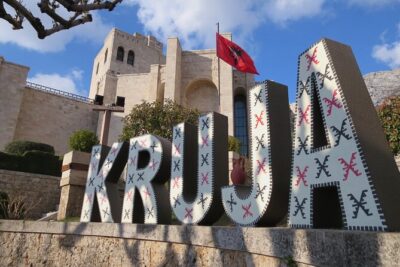
Kruja castle, the old Bazaar & Sarisalltik- Departure from Tirana
Read our review →