Reviewed · PRIVATE
Tirana to Sarajevo / Belgrade; Semi – Private Tour
The best thing about this eight-day Balkan route is its variety. In one trip, you move from Tirana’s food stalls and Ottoman bazaars to Kosovo’s craft towns, Montenegro’s Adriatic coast, and Sarajevo’s layered streets. It is a history-and-food journey, but it also gives you farms, wine country, workshops, and plenty of time on foot.
I like the small maximum group of 10 people, which should make border crossings and city walks less cumbersome than on a large coach tour. I also like the local touches: byrek in a neighborhood market, raki in Tirana, a family-run farm near Lezhë, a Venetian mask workshop, and Turkish coffee in Sarajevo.
The main caution is pace. You cover Albania, Kosovo, Montenegro, and Bosnia and Herzegovina in seven touring days, with long drives and several international borders. The price is also high at $2,549.21 per person, so you should confirm exactly what accommodation is included before paying.
In This Review
- Key points to know before booking
- What this Balkan route does well
- Day 1: Tirana through byrek, markets, and raki
- Day 2: Kruja’s castle and the old road to Prizren
- Day 3: Gjakova crafts, Dečani frescoes, and Rahovec wine
- Day 4: A farm lunch and Shkodra’s Venetian masks
- Day 5: Sveti Stefan and a short taste of Budva
- Day 6: Kotor, Blagaj, and Mostar’s Stari Most
- Day 7: Sarajevo, war memories, and Ottoman coffee
- Day 8: Choose Sarajevo Airport or a Belgrade hotel
- What $2,549.21 buys you
- Who should book this route
- Should you book it?
- FAQ
- How long does the tour last?
- Where does the tour start?
- Where can the tour end?
- How many people are in the group?
- Is transportation included?
- Are meals included?
- Are entrance tickets included?
- What type of accommodation is provided?
- Can the booking be canceled or changed?
Key points to know before booking
- Four countries in one compact route: Albania, Kosovo, Montenegro, and Bosnia and Herzegovina are linked by road, with Sarajevo as the main finish.
- A food-focused first day: Tirana includes byrek, a traditional Albanian meal, seasonal market produce, and grape raki.
- The group is capped at 10: This is semi-private rather than a fully private trip, but it should feel more personal than a standard bus tour.
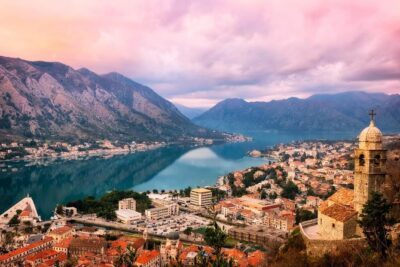
- The Adriatic section is short but scenic: Sveti Stefan, Budva, and Kotor provide coastal views before the road turns inland toward Mostar.
- The final transfer is flexible: You can finish with a drop-off at Sarajevo Airport or at a hotel in Belgrade.
- Meals are mostly your responsibility: Breakfast is included, but lunches, dinners, drinks, snacks, and personal purchases are not.
What this Balkan route does well
This tour is built for you if you want a broad first look at the western Balkans without arranging four countries yourself. The route connects places that are close enough to visit by road but different enough to feel distinct.
You begin with Albanian city life, then move into mountain towns and Kosovo’s historic centers. After that comes northern Albania, the Montenegrin coast, and Bosnia’s Ottoman and Austro-Hungarian streets. The changing architecture is one of the trip’s best features.
The tour also makes good use of local food and small producers. Byrek in Tirana, a farm lunch at Mrizi i Zanave, Rahovec wine country, and coffee in Sarajevo give you more than a string of monuments. These stops help explain how people live and work in the region today.
A professional tour leader accompanies the trip, and private transportation is included. Fuel, road taxes, tourist taxes, and entrance tickets for the listed included sites are covered. That removes a fair amount of daily planning.
Still, this is not a slow holiday. Some stops last only 30 minutes or one hour, and the road days can be long. You should be comfortable getting up early, carrying your things between hotels, walking on cobblestones, and dealing with border formalities.
A few more Tirana trips to weigh up
- Semi-Private Tour of North Macedonia: Ohrid & Struga from Tirana
★ 5.0 · 170 reviews - Private Ohrid Day Tour and Authentic Village from Tirana & Durres
★ 5.0 · 71 reviews - Semi-Private Day Tour of Montenegro: Budva & Kotor from Tirana
★ 5.0 · 71 reviews
Day 1: Tirana through byrek, markets, and raki
The opening day is not a standard monument tour. You meet your local companion in Tirana and explore through food, markets, and ordinary city life. Come hungry, because the plan starts with byrek, the thin pastry filled with cheese, meat, spinach, or other ingredients.
The first market stop is Tregu Çam, a place for everyday shopping rather than polished sightseeing. You can look through clothing, kitchen equipment, fruit, vegetables, and other local goods. Bargaining is part of the experience, though you should keep it friendly and light.
At Pazari i Ri, the New Bazaar, the focus shifts toward prepared food and regional specialties. You sit down for a traditional Albanian meal and taste grape raki. The drink is strong, so take the local humor about its supposed ability to fix everything as cultural color, not medical advice.
You also pass through residential areas, colorful buildings, and a second-hand market. This is useful because Tirana can otherwise seem like a city of major squares and new construction. Here you get a closer look at daily routines.
Free time follows the meal. That matters, since the first day is otherwise organized around food and guided stops. Use it for a walk, a café, or a little independent exploring. The listed visits are free, so the value here comes from the companion, access to local places, and the meal experience rather than admission fees.
Day 2: Kruja’s castle and the old road to Prizren
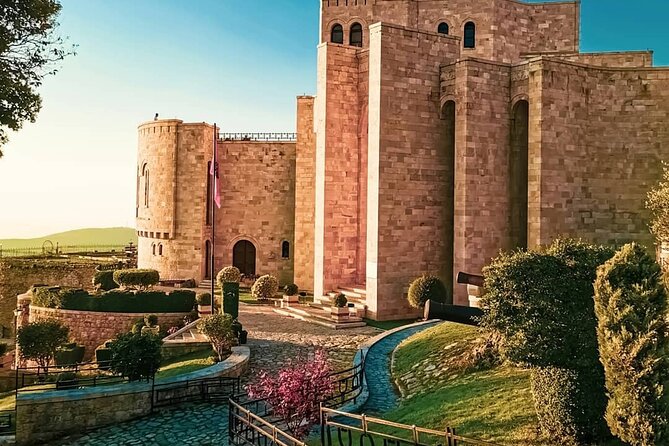
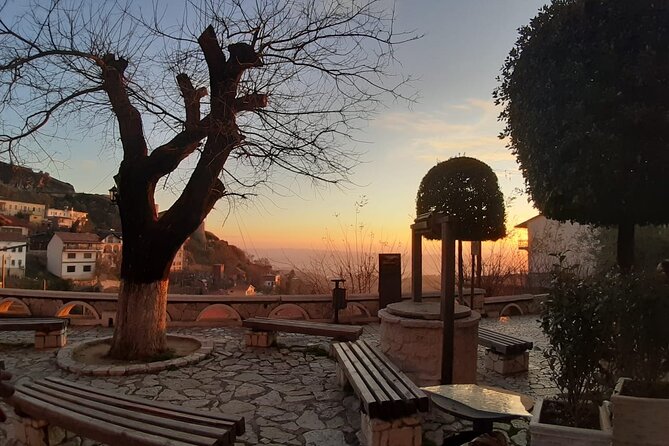
After breakfast, you drive to Kruja, a mountain city tied to Albania’s resistance against Ottoman expansion in the 15th century. The setting is important. Kruja rises on rocky ground at about 560 meters, giving the town a strong defensive position and broad views.
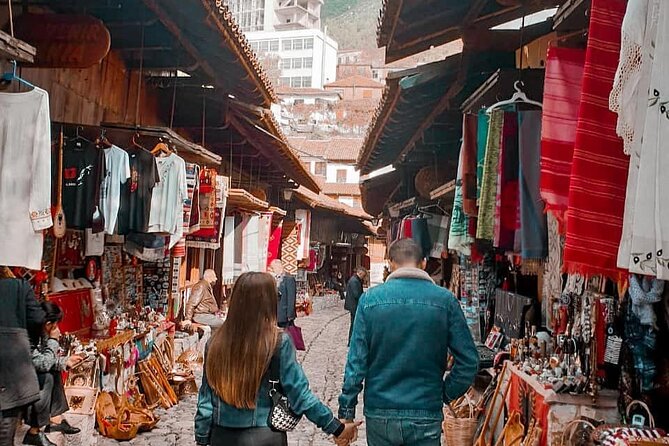
The Medieval Old Bazaar is the first major stop. Its narrow lanes and wooden buildings make it one of the better places on this route for shopping. Look for handmade carpets, jewelry, and other Albanian souvenirs. You can browse without needing to rush through a modern shopping district.
Kruja Castle follows. The fortress dates to the 5th century AD, and the tour includes entrance. A guide leads you along less obvious paths connected with local escape routes from periods when enemies surrounded the castle.
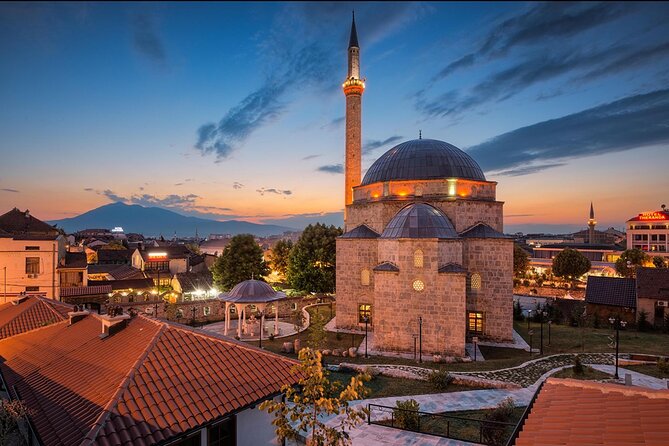
The afternoon brings a border crossing into Kosovo and the town of Prizren. Prizren is a rewarding contrast to Kruja. A river runs through the old center, Ottoman-era houses line the streets, and bridges connect the historic neighborhoods.
You can look for filigree work, a local craft involving precious metals, and spend time wandering rather than simply checking off sights. If your schedule lines up with August, Dokufest gives Prizren an international film focus, though the festival is not part of the tour itself.
The drawback is time. Two hours in Prizren gives you a useful introduction, but not enough for a leisurely museum program, long shopping session, and relaxed meal. Border delays can also affect the afternoon, so keep your expectations flexible.
Day 3: Gjakova crafts, Dečani frescoes, and Rahovec wine
Gjakova offers one of the most practical cultural stops on the route. Its bazaar is described as the oldest and largest in Kosovo, and it has been rebuilt after destruction in several wars. The rebuilt market is not just a pretty street. It supports shops and workshops selling traditional handmade goods.
Take time to watch the artisans if a workshop is open. Seeing a craft in progress gives more meaning to a finished souvenir, and it makes the one-hour stop worthwhile.
The road then leads to the Monastery of Dečani. Its white exterior is easy to recognize, but the major reason for the visit is inside: 14th-century frescoes connected with the Palaeologan Renaissance in Byzantine painting. Orthodox monks still live at the monastery and produce food such as cheese.
This stop carries extra practical importance because it is a religious site. Dress and behave respectfully, and expect the visit to focus on art, worship, and the continuing life of the monastery rather than simple sightseeing.
Before returning toward Prizren, you visit Rahovec Valley, Kosovo’s main wine area. Grapes have been cultivated here since Illyrian times, and the vineyards sit on low hills between roughly 350 and 520 meters. The annual wine festival takes place each September.
The program gives you an introduction to the region’s wine identity, but it does not specify a formal tasting or winery visit. If wine is a major reason for booking, ask the operator what exactly is scheduled at Rahovec.
Same coast, a completely different kind of day:
- From Tirana: Bovilla Lake & Gamti Mountain Hiking Day Trip
★ 4.9 · 4,397 reviews - From Tirana: Bovilla Lake & Gamti Mountain Hiking Tour
★ 4.9 · 3,003 reviews - From Tirana: Bovilla Lake & Gamti Mountain Viewpoint Hike
★ 4.8 · 2,053 reviews - Tirana/Durres/Golem: Saranda, Ksamil, Blue Eye Day Trip
★ 4.8 · 1,584 reviews
Day 4: A farm lunch and Shkodra’s Venetian masks
Mrizi i Zanave is one of the most distinctive stops on the whole trip. This slow-food farm uses regional products and preserves local ingredients. You tour the property, hear how the family business developed, and see how old communist-era buildings were adapted for storage.
The farm’s wider social role is part of its appeal. It created jobs for more than 400 people in the surrounding area, turning local food production into a serious source of work. That is a useful way to understand modern rural Albania, where farming, preservation, hospitality, and employment are closely linked.
You have free time for a traditional lunch or to buy fresh farm products. Lunch is not included, so budget for it. The extra cost is likely worthwhile if you care about regional cooking, but you should not assume that every meal on the route is covered.
In the afternoon, you head to Shkodra, one of Albania’s oldest cities. It gives its name to the large lake shared by Albania and Montenegro. From Rozafa Castle, you can look toward the lake and the three rivers that flow together toward the Adriatic.
Shkodra’s architecture reflects Illyrian foundations, Ottoman influence, and Venetian style. The city also has a surprising artistic specialty: handmade Venetian masks. At the Venetian Art Mask Factory, you see papier-mâché masks made and painted by hand.
The factory visit lasts only 30 minutes, but it is a good change of pace after the castle and road time. The admission ticket is included. If you like buying crafts, this is one of the stronger chances to purchase something tied directly to the place you visited.
Day 5: Sveti Stefan and a short taste of Budva
The route enters Montenegro with a viewpoint near Sveti Stefan. The former fishing village occupies a small island connected to the coast, but the island is now an exclusive residential resort and cannot be visited. The stop is for the view and photographs.
That distinction matters. You should not book this day expecting a full island excursion. You see Sveti Stefan from the coast, then continue toward Budva.
Budva divides neatly into a modern section and an old town. New Budva has offices, shopping malls, restaurants, bars, and contemporary buildings. Old Budva has medieval walls, narrow streets, and churches including St. Ivan and St. Mary.
The planned visit lasts about an hour. That is enough to walk through the old center and get your bearings, but it is not enough for a full beach day or a detailed museum visit. Since the tour does not include beach time as a scheduled activity, pack your expectations around history and a brief coastal stop.
Day 6: Kotor, Blagaj, and Mostar’s Stari Most
Kotor is one of the route’s headline places. The UNESCO-listed old town is a maze of cobblestone lanes, shaped in part by defensive planning. Buildings and churches carry small plaques explaining their dates and former uses.
You visit St. Luke’s Church, a place that has meaning for local ideas of unity. The one-hour stop gives you a compact walk through the old center. Kotor rewards slow wandering, so you may wish the schedule allowed more time.
After crossing into Bosnia and Herzegovina, you stop at Blagaj outside Mostar. The town sits below a cliff beside the blue-green spring of the Buna River, with Ottoman-era buildings nearby. It is one of the more scenic breaks on the route and offers a different mood from the fortified coastal towns.
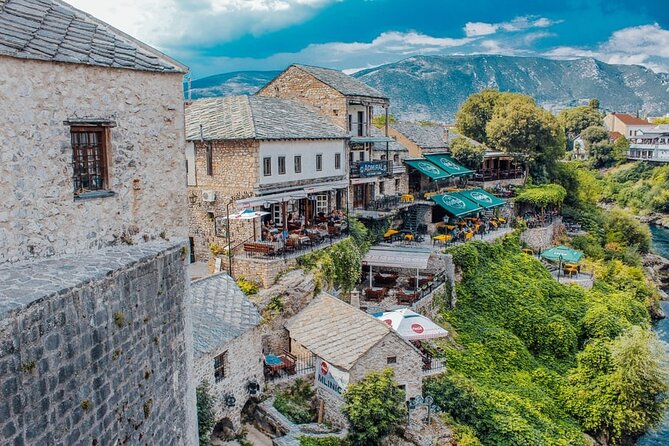
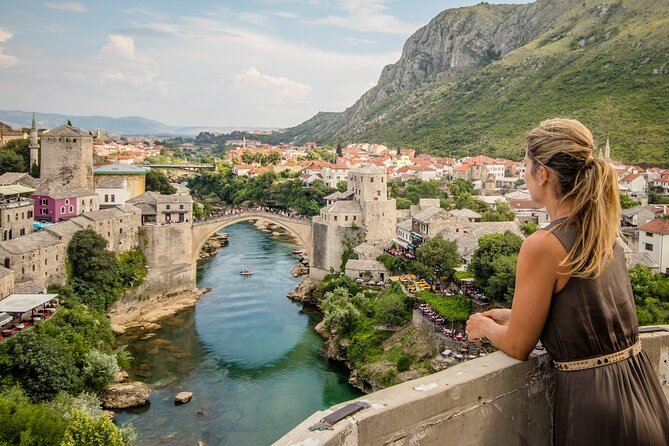
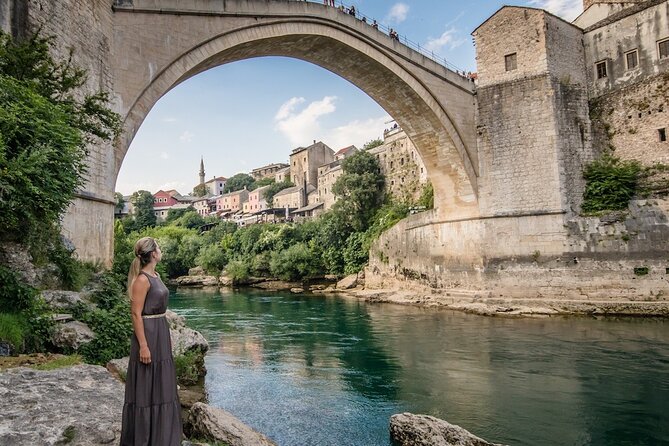
Mostar follows. Stari Most, the Old Bridge, is the main sight. Built in the 16th century in an Islamic architectural style, it is part of the UNESCO site and links the old market streets on either side of the river.
The old bazaar is lively, colorful, and made for wandering. Look for the repeated Don’t Forget message around town, a reminder that Mostar’s beauty exists alongside painful recent events.
Bišćevića Kuća adds a quieter historical layer. This 17th-century riverside house is a fine example of Ottoman domestic architecture. The included entrance lets you see how a wealthy Ottoman family lived, rather than only viewing grand public buildings.
Four stops make this a full day. Kotor, Blagaj, Mostar, and the house each deserve time, but the schedule keeps moving. Wear sturdy shoes and expect uneven stone surfaces.
Day 7: Sarajevo, war memories, and Ottoman coffee
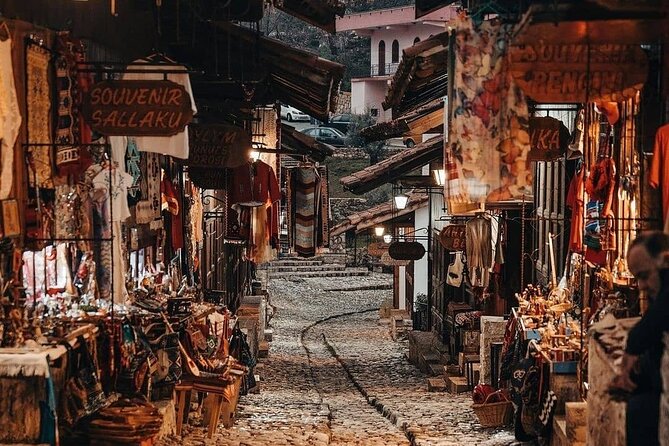
Sarajevo is the emotional and historical high point for many people on this route. The city brings together Ottoman markets, Austro-Hungarian buildings, mosques, churches, and synagogues. Its mix of faiths and architectural eras explains why it is often described as a European Jerusalem.
The walk also includes reminders of the Yugoslav War. Bullet holes and cannon marks remain visible in parts of the city, and some visits involve ruined areas and uneven ground. This is not a polished old-town stroll. It asks you to pay attention to the city’s recent past as well as its earlier centuries.
At Latin Bridge, you learn how the assassination connected with the outbreak of World War I unfolded in Sarajevo. The bridge takes its name from Latinluk, the Catholic quarter on the right bank of the Miljacka River during Ottoman times.
The final scheduled stop is Caffe Divan, where an Ottoman-style coffee or tea is provided. It is a small inclusion, but a good one. After several days of road travel, sitting down with a traditional drink gives you a chance to absorb the city instead of rushing to another monument.
Dinner is on your own. Sarajevo has many restaurants serving local dishes, and the free evening lets you choose your pace. You can make this a final guided-history day or simply walk through the streets and enjoy the atmosphere.
Day 8: Choose Sarajevo Airport or a Belgrade hotel
After breakfast, the trip ends with a transfer to Sarajevo Airport or, based on your preference, a hotel in Belgrade. The Belgrade option is a transfer only. Belgrade sightseeing is not included in the route described here.
Airport drop-off in Sarajevo is free only on the final day. If you need a different airport transfer, you must request a separate quotation. This is worth sorting out before booking, especially if your flight leaves at an unusual time.
The end point makes this tour useful for a larger Balkan trip. You can continue from Sarajevo, or use the Belgrade hotel drop-off as a bridge to Serbia. Just remember that the tour itself does not include a visit to Belgrade.
What $2,549.21 buys you
The price is $2,549.21 per person. At first glance, that is a serious amount for eight days, especially since lunches, dinners, drinks, snacks, souvenirs, and other personal costs are extra.
The value comes from private transportation, a professional tour leader, fuel, road taxes, tourist taxes, included entry tickets, hotel arrangements, and the airport or Belgrade transfer. You are also paying for the time saved by having someone organize a complicated, multi-country route.
The maximum group size of 10 improves the value compared with a large coach trip. You should have less waiting at stops and a better chance to ask questions or adjust the pace slightly. It is still not a fully private trip, so do not expect complete control over every departure and meal.
Accommodation is listed as three-star hotels, with prices based on double, twin, triple, or quadruple occupancy. Solo guests may face a different price, though no single supplement is provided here.
There is one confusing point: the inclusions refer to BB accommodation for one overnight, while also listing seven breakfasts for an eight-day tour. Since the schedule clearly requires several hotel nights, confirm the number of included nights, room arrangements, and any single-room charges in writing.
Who should book this route
I would choose this tour if you want broad regional coverage and prefer a guide to manage driving, borders, hotels, and site visits. It suits people who enjoy history but also want food markets, crafts, wine country, farms, and working studios.
It is a good fit for first-time visitors to the western Balkans who do not want to rent a car. The route crosses several borders, and private transportation removes the need to compare bus timetables or manage unfamiliar roads.
It is less suitable if you want long stays in each city, beach time, nightlife, serious hiking, or a flexible independent schedule. The tour moves quickly, and several stops are introductions rather than full visits.
The company has received strong praise for careful organization and guide quality on its Balkan programs. Guides named Illir and Gerion have been singled out for clear explanations and strong regional knowledge on other routes, but your assigned leader is not specified. If a particular guide matters to you, ask before booking rather than assuming.
The tour is non-refundable and cannot be changed after cancellation. That makes travel insurance and firm date planning especially important.
Should you book it?
Book this tour if you value breadth, local food, and guided context more than a relaxed pace. The combination of Tirana markets, Kruja’s bazaar, Dečani Monastery, Mrizi i Zanave, Kotor, Mostar, and Sarajevo gives you a memorable sweep of the region.
Think twice if the cost feels high for three-star hotels and self-funded meals, or if you want to stay several nights in one place. Before booking, confirm the hotel-night wording, room occupancy, exact guide, and final drop-off details.
For an energetic introduction to four Balkan countries, with a small group and private road transport, this is a strong option. Go in ready for long drives, uneven streets, border delays, and a full calendar, and you will get far more from it.
FAQ
How long does the tour last?
The experience lasts approximately eight days, beginning in Tirana and ending after breakfast on day eight.
Where does the tour start?
The tour starts in Tirana, Albania, with hotel pickup at 9:00 am.
Where can the tour end?
You can be transferred to Sarajevo Airport or to a hotel in Belgrade, depending on your preference.
How many people are in the group?
The tour has a maximum of 10 participants.
Is transportation included?
Yes. Private transportation is included, along with petrol, road taxes, and tourist taxes.
Are meals included?
Breakfast is included, with seven breakfasts listed. Lunches, dinners, drinks, snacks, and personal purchases are not included. The tour also includes one Ottoman-style coffee or tea in Sarajevo on day seven.
Are entrance tickets included?
Entry tickets for the sites listed as included are covered. These include Kruja Castle, the Venetian Art Mask Factory, and Bišćevića Kuća.
What type of accommodation is provided?
Accommodation is listed as three-star hotel lodging, with pricing based on double, twin, triple, or quadruple room occupancy. Confirm the exact number of hotel nights because the accommodation wording is unclear.
Can the booking be canceled or changed?
No. The experience is non-refundable and cannot be changed for any reason after cancellation or an amendment request.
Just added around Tirana
- Zipline Tirana Adventure & Petrela Castle – With Transport★ 4.4 · 10 reviews
- Wine Tasting & Vineyards Escape near Tirana★ 4.9 · 8 reviews
- Wonderful Sunset and Dinner in the Castel Of Petrela★ 4.6 · 4 reviews
- Walking Tour in Tirana, Albania★ 3.7 · 28 reviews
- Vlora, Dhermi & Llogara Day Trip from Durrës or Golem★ 5.0 · 5 reviews
- From Tirana: Mount Dajti Adventure, Local Vibes & Cable Car opt★ 4.5 · 6 reviews
- Winetasting tour in Alpeta winery – Roshnik village by 1001 Albanian Adventures★ 5.0 · 26 reviews
- Day Tour to Petrela Castle and Zip Line Albania Adventure★ 5.0 · 10 reviews
Private, compared.
Semi-Private Tour of North Macedonia: Ohrid & Struga from Tirana
Read our review →
Semi-Private Day Tour of Montenegro: Budva & Kotor from Tirana
Read our review →
Private Ohrid Day Tour and Authentic Village from Tirana & Durres
Read our review →
From Tirana; Semi – Private Day Trip to Berat & Belsh Lake
Read our review →
Semi-Private Day Tour of Theth & Blue Eye from Tirana / Shkoder
Read our review →
Semi – Private Tour of Saranda, Ksamil & Blue Eye from Tirana
Read our review →