Reviewed · TIRANA TOURS
Tirana by locals
Tirana’s story is written in sharp contrasts: an Ottoman mosque beside Italian-style buildings, a former dictator’s neighborhood now filled with cafés, and a strange concrete pyramid that still raises questions. This two-hour walk with a local guide gives you a useful first look at the city without burying you in dates.
I like the route for two clear reasons. First, it connects Tirana’s main sights in a logical walk, from Skanderbeg Square to Blloku. Second, it does not treat Albania’s communist years as a footnote. The Pyramid and House of Leaves give the past real weight.
The main consideration is pace. The tour is advertised as one to two hours, and the listed stops account for only part of that time. The rest is walking and commentary, so this is a compact orientation rather than a long museum visit or a full-day history tour.
In This Review
- Key points to know before booking
- A useful first walk through Tirana
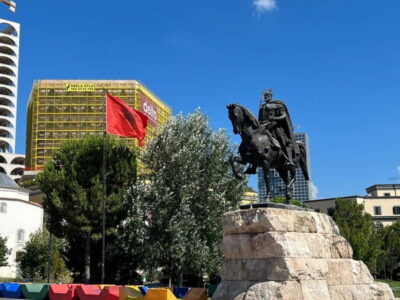
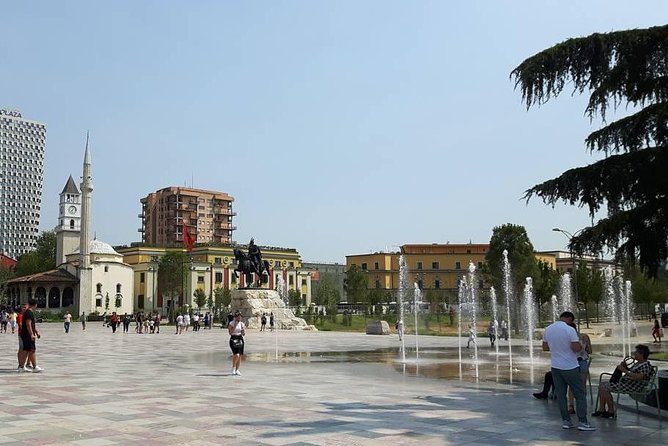
- Skanderbeg Square and the city’s public face
- The Pyramid and Albania’s difficult memory
- House of Leaves and the machinery of surveillance
- Blloku, from restricted district to social center
- The Polytechnic University and modern city life
- What a local guide adds to the route
- Price, timing, and practical value
- Who should book this walk
- Should you book Tirana by Locals?
- FAQ
- Where does the tour begin?
- What time does the tour start?
- How long does the walking tour last?
- Where does the tour finish?
- What is included in the price?
- How many people can join the tour?
- Can I cancel for a full refund?
Key points to know before booking
- Start in the center: Meet at Skanderbeg Square at 9:00 am, then return there at the end.
- See four different sides of Tirana: The route covers central landmarks, communist memory, university life, and the café-filled Blloku district.
- House of Leaves adds depth: This former intelligence building offers the clearest look at surveillance and repression under communism.
- The group is capped at 15 people: That is small enough for questions and easier street-level conversation.
- Guides may vary: Leo and Mimmi are among the guides praised for kindness, professionalism, and personal insight.
- The price is modest: At $17.36 per person, the walk is a low-cost way to get oriented on your first morning.
A useful first walk through Tirana
I see this experience as a city introduction, not a sightseeing marathon. Tirana is easy to cross in a short time, but its buildings and public spaces make more sense when someone explains how power changed hands and how daily life changed with it.
You begin at Skanderbeg Square, the city’s main public space. From there, the walk reaches several key landmarks before moving toward the Pyramid, House of Leaves, Blloku, and the Polytechnic University.
That mix matters. You are not simply checking off monuments. You are moving from Albania’s religious and national symbols to its authoritarian past, then into the social and commercial Tirana of today.
The early start is practical. At 9:00 am, you can take the tour before a full day of independent exploring. It also gives you a chance to ask your guide where to spend more time later.
Other Tirana days people book alongside this one:
- From Tirana: Bovilla Lake & Gamti Mountain Hiking Day Trip
★ 4.9 · 4,397 reviews - From Tirana: Bovilla Lake & Gamti Mountain Hiking Tour
★ 4.9 · 3,003 reviews - From Tirana: Bovilla Lake & Gamti Mountain Viewpoint Hike
★ 4.8 · 2,053 reviews
Skanderbeg Square and the city’s public face
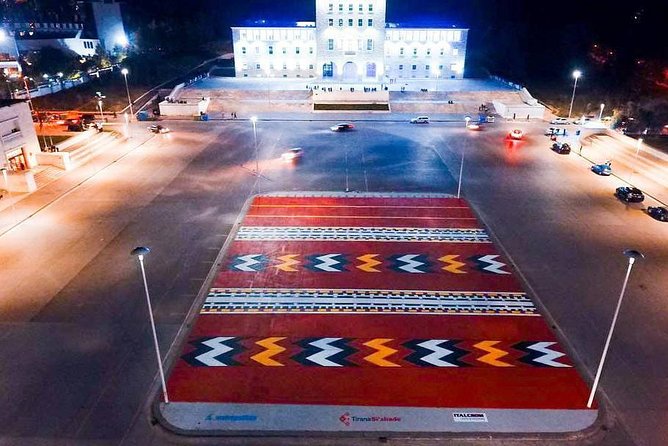
Skanderbeg Square is the natural place to begin. It gathers several of Tirana’s most important buildings into one open setting, making it a good classroom for the city’s changing identity.
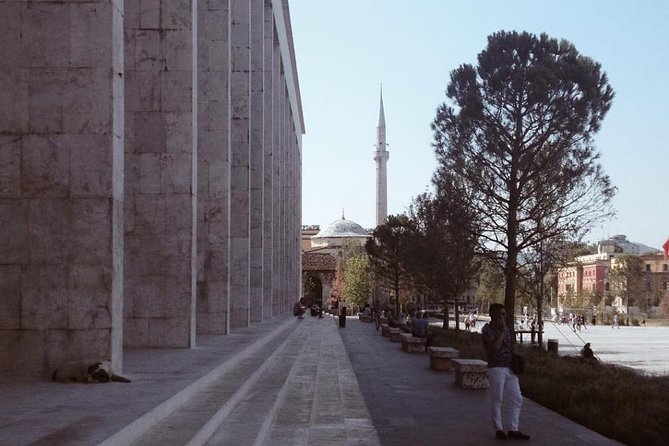
The Et’hem Bey Mosque brings an Ottoman-era presence to the square. Nearby, the Clock Tower gives the center one of its most recognizable markers. These sights help explain that Tirana was not created as a modern capital overnight. Its public center grew through several political and cultural periods.
The National Theatre of Opera and Ballet adds another layer. Its first brick was reportedly put in place by Nikita Khrushchev, the former leader of the Soviet Union. That detail is a small but telling reminder of Albania’s close relationship with the communist world before the country’s later isolation.
You also see the National Bank of Albania. A guide can point out how the buildings around the square reflect different outside influences, including Italian-inspired architecture. This is one reason I like having a local here. A quick photograph gives you the shape of the place, but an explanation helps you read it.
The square is not a long stop. About 10 minutes is assigned to this opening section, so expect a brisk introduction rather than detailed access to every building. The value is in seeing the landmarks together and learning how they fit into Tirana’s story.
The Pyramid and Albania’s difficult memory
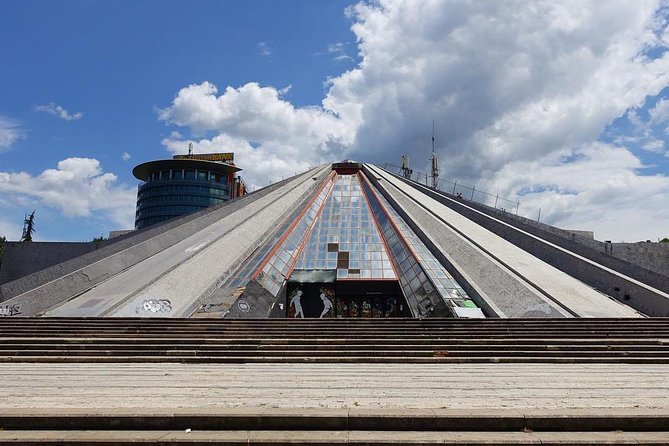
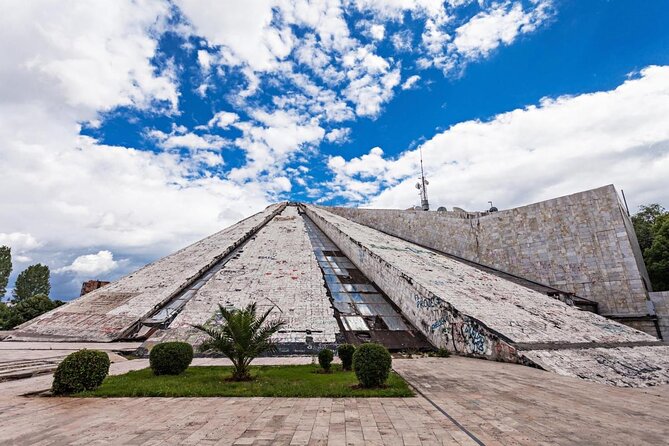
The Enver Hoxha Pyramid is the route’s most unusual sight. It was built as a symbol connected to Albania’s former communist leader, Enver Hoxha, and it has survived repeated attempts by earlier governments to remove it.
That survival is part of the point. The structure is not just an odd piece of concrete. It represents a country still deciding how to handle a painful political past. Some people see it as an eyesore. Others see value in keeping a physical reminder of the period.
You spend about 20 minutes here. That is enough time to look at the building, hear why it matters, and discuss how public memory works in Albania. I would not expect a long architectural lecture, but the stop gives the tour emotional and political weight.
This is also one of the clearest places to see the tour’s balance. You get a monument from the communist era, but you are not asked to view it in isolation. The broader route places it beside mosques, banks, universities, and modern cafés. Tirana’s past is still present, but it shares space with a very different city.
House of Leaves and the machinery of surveillance
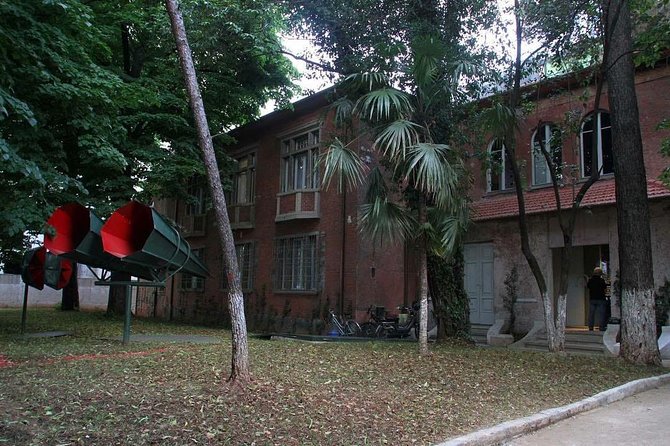
The House of Leaves Museum is the most serious stop on the walk. The building once served as a national intelligence and espionage facility. Its purpose was tied to surveillance during Albania’s communist years.
The museum’s subject is not easy, but it is important. Albania’s communist system affected ordinary life through control, suspicion, and fear. A former intelligence building makes that reality more concrete than a general summary in a guidebook.
The tour description does not give a set time for this stop, so you should not assume you will have a full museum visit. Treat it as an introduction unless your guide confirms otherwise. If you want to study the exhibits at length, plan to return independently and allow extra time.
I like the inclusion of this museum because it moves the tour beyond attractive squares and photo stops. It asks you to think about what life was like when the state watched its own citizens. For anyone interested in twentieth-century Europe, politics, or personal stories behind major events, this is likely the most valuable part of the route.
The museum can also help you understand why the Pyramid remains such a contested object. Both places deal with the same period, but in different ways. One is a large public symbol, while the other reveals the private pressure of the state.
Same coast, a completely different kind of day:
- Tirana/Durres/Golem: Saranda, Ksamil, Blue Eye Day Trip
★ 4.8 · 1,584 reviews - Hike Gamti Mountain with Bovilla lake view & canyon- From Tirana
★ 5.0 · 1,280 reviews - Tirana: 2 Hour Guided Hidden Treasures Sightseeing Tour
★ 4.8 · 948 reviews - Berat city UNESCO tour, the Castle & Belshi lake- From Tirana
★ 5.0 · 804 reviews
Blloku, from restricted district to social center
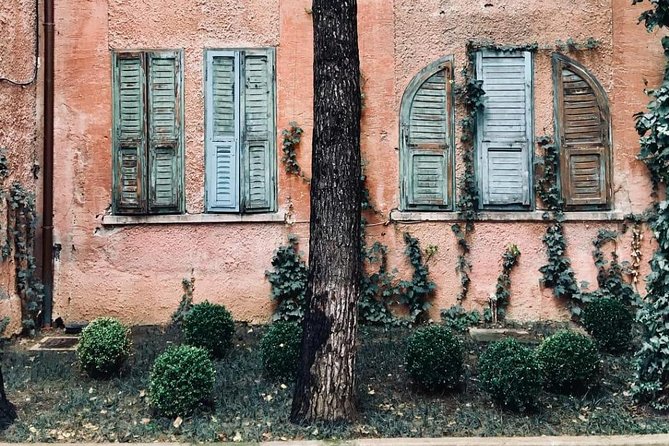
Blloku offers the biggest visual and social change. During Enver Hoxha’s rule, this area was reserved for government officials and ordinary people could not enter. Today, it is known for cafés, boutiques, cocktail bars, and pubs.
That change is easy to understand when you walk the streets. A local guide can explain what the neighborhood meant before it became a popular place to eat and go out. You see how a once-closed political quarter became part of everyday city life.
The stop lasts about 25 minutes and admission is free. That makes it more of a stroll than a formal attraction. You will get a feel for the area, learn about Hoxha’s former villa, and perhaps mark a café or bar for later.
Blloku is also where the tour shifts from history to present-day Tirana. The city is not presented as a museum. People live, work, study, shop, and meet friends here. That ordinary activity is useful context after the heavier discussion at House of Leaves.
Do not expect a food tour or included drink. Alcoholic beverages, lunch, and personal expenses are not part of the price. If you want to sit down in Blloku, you will pay separately.
The Polytechnic University and modern city life
The Polytechnic University of Tirana is the final named stop. Founded in 1951, it is Albania’s oldest and second-largest university, after the University of Tirana. It has about 10,000 students, including young people from Albania, Kosovo, Macedonia, and Montenegro.
You spend around 15 minutes here, and admission is free. The university gives the walk a useful ending because it turns attention toward education and the country’s younger generation.
After mosques, communist symbols, and a former political district, a university shows another side of Tirana. It also helps explain why the city can feel more international than its recent past might suggest.
The stop may be especially helpful if you are curious about how Albania connects with nearby communities in the Balkans. The student population reflects those regional links without requiring a separate excursion outside the capital.
What a local guide adds to the route
The route itself is straightforward. You can find the square, Pyramid, Blloku, and university on a map. The guide’s real value is in explaining what you are seeing and linking one period to another.
The strongest comments about the guides focus on personal qualities: Leo is described as kind, bright, and highly professional, while Mimmi is presented as more than a guide, with a friendly way of showing the city as locals experience it. Guide assignments can change, so you should not book on the assumption that one particular person will lead your walk.
I would use the guide actively. Ask what parts of Tirana changed after communism, how locals view the Pyramid, and which areas are worth revisiting. The walk is short enough that a few good questions can make the experience much more useful.
A group limit of 15 is another plus. It is not a private tour, but it is small enough to hear the guide more easily than in a large crowd. You also have a better chance of asking questions without holding up a long line of people.
Price, timing, and practical value
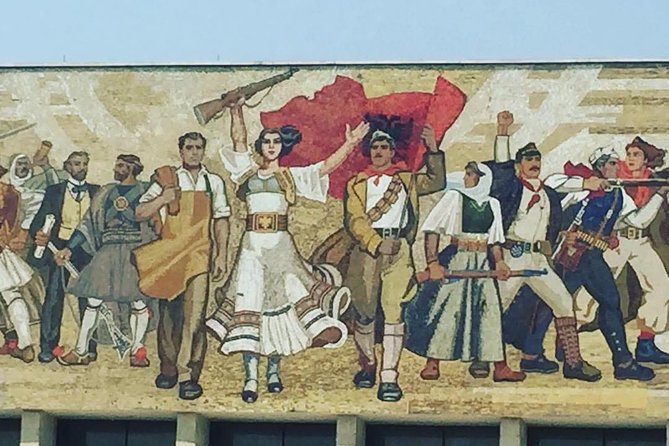
At $17.36 per person, this is an inexpensive introduction to Tirana. The fee covers a professional guide, and the main benefit is interpretation rather than admission to a long list of paid attractions.
The value is strongest if you are arriving in Tirana for the first time. In roughly two hours, you get the city center, major political symbols, a serious museum stop, Blloku, and a university district. That gives you enough context to choose what deserves more time later.
The value is lower if you already know central Tirana well or want a slow, detailed museum tour. The tour is short, and some stops are viewed from the outside or handled as brief introductions. You are paying for a guided framework, not an all-day cultural program.
The advertised duration is one to two hours. Walking time connects the listed stops, and the actual pace may depend on the guide, group, and time spent at House of Leaves. Wear comfortable shoes and expect to remain on foot for the entire activity.
You meet at Skanderbeg Square at 9:00 am. The walk ends back at the meeting point, which is convenient if you want to continue sightseeing from the center. A mobile ticket makes entry simple, and confirmation is provided when you book.
Most people can take part, and service animals are allowed. The tour runs near public transportation. It also requires good weather and a minimum number of participants. If poor weather or low enrollment causes cancellation, you are offered another date or a full refund.
Free cancellation is available up to 24 hours before the start time. Changes or cancellations inside that 24-hour window are not accepted for a refund, so check the local start time before making plans.
Who should book this walk
I would recommend it to first-time visitors who want a quick orientation before exploring on their own. It is also a good fit if you care about modern political history, especially the effects of communism on Albania.
The route suits people who prefer conversation and context to a long list of formal monuments. Blloku gives the walk an easygoing finish, while House of Leaves keeps it from becoming a light stroll with no substance.
It should also work well for solo visitors and couples who want a small-group setting without paying for a private guide. Families with older children may appreciate the clear route, though the serious subject at House of Leaves may need some explanation.
I would hesitate if you have limited mobility and find continuous city walking difficult, since the experience is conducted on foot and no detailed mobility plan is provided. I would also choose something else if your main goal is food, nightlife, or extensive museum time.
Should you book Tirana by Locals?
Book it if you want a compact, affordable introduction to Tirana that explains both the attractive center and the country’s difficult past. The strongest parts are the contrast between Skanderbeg Square, the Pyramid, House of Leaves, and Blloku, plus the chance to ask a local guide how the city works today.
Skip it if you want a private tour, a slow visit inside every attraction, or a full-day program. For $17.36, though, this is a sensible first-morning choice. It gives you a map in your head, several useful historical clues, and a better sense of where to spend the rest of your time in Albania’s capital.
FAQ
Where does the tour begin?
It begins at Skanderbeg Square, Sheshi Skënderbej, in Tirana, Albania.
What time does the tour start?
The start time is 9:00 am.
How long does the walking tour last?
The experience lasts approximately one to two hours.
Where does the tour finish?
It ends back at the meeting point at Skanderbeg Square.
What is included in the price?
A professional guide is included. The price does not include alcoholic beverages, lunch, personal expenses, or optional activities.
How many people can join the tour?
The group has a maximum of 15 participants.
Can I cancel for a full refund?
Yes. You can cancel up to 24 hours before the start time for a full refund. Cancellations or changes made less than 24 hours before the start are not accepted for a refund.
Just added around Tirana
- Zipline Tirana Adventure & Petrela Castle – With Transport★ 4.4 · 10 reviews
- Wine Tasting & Vineyards Escape near Tirana★ 4.9 · 8 reviews
- Wonderful Sunset and Dinner in the Castel Of Petrela★ 4.6 · 4 reviews
- Walking Tour in Tirana, Albania★ 3.7 · 28 reviews
- Vlora, Dhermi & Llogara Day Trip from Durrës or Golem★ 5.0 · 5 reviews
- From Tirana: Mount Dajti Adventure, Local Vibes & Cable Car opt★ 4.5 · 6 reviews
- Winetasting tour in Alpeta winery – Roshnik village by 1001 Albanian Adventures★ 5.0 · 26 reviews
- Day Tour to Petrela Castle and Zip Line Albania Adventure★ 5.0 · 10 reviews
Tirana Tours, compared.
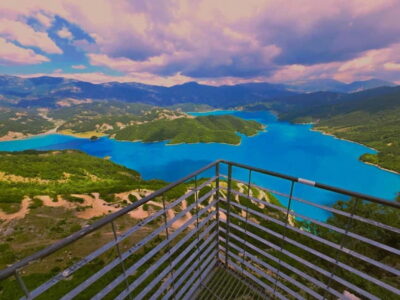
Bovilla Lake & Gamti Mountain Hiking Day Trip
Read our review →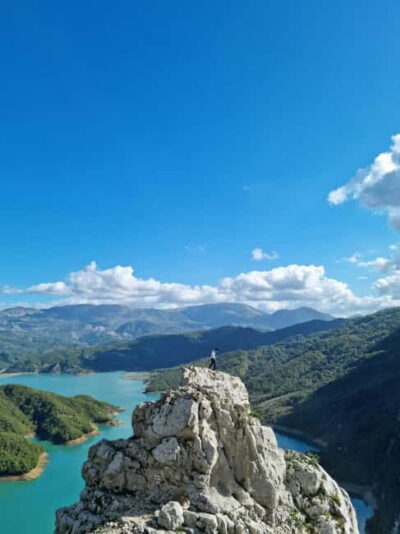
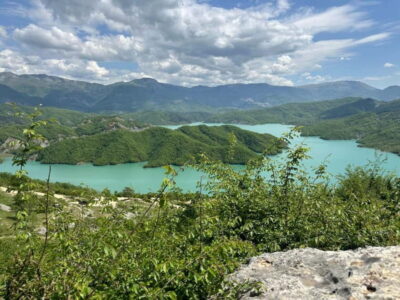
Hike Gamti Mountain with Bovilla lake view & canyon- From Tirana
Read our review →
2 Hour Guided Hidden Treasures Sightseeing Tour
Read our review →
Kruja castle, the old Bazaar & Sarisalltik- Departure from Tirana
Read our review →