
Reviewed · CITY TOURS
Saranda: 2.5-hour walking tour around the city
Saranda’s story comes in compact pieces: a 5th-century synagogue, a communist-era bunker, tiny museums, and a seafront promenade where modern Albania comes into view. This 150-minute walking tour links those pieces with local stories instead of leaving you to guess what you’re looking at.
I like the small-city focus, which lets you cover several central sights without spending a whole day. I also like the guide-led approach, especially with Mira, whose tours have included history, politics, religion, local customs, and useful help for onward trips to Himarë, Ksamil, and Butrint.
The main limitation is scale. Saranda’s museums and ruins are modest, and one museum is described as a one-room display. If you want grand monuments, this may feel light. If you want a quick introduction to the city and Albania’s recent past, it makes good use of your time.
In This Review
- Key points to know before booking
- A fast way to understand Saranda
- The synagogue complex and Saranda’s ancient past
- The bunker: a brief look at Albania’s harder decades
- Inside the Archaeological Museum
- Local life at the Museum of Tradition
- Walking the Saranda Promenade
- What makes the guide important
- How the 150 minutes are best used
- Walking conditions and what to bring
- Who will get the most from this tour
- Should you book it?
- FAQ
- How long does the Saranda walking tour last?
- Where does the tour begin?
- Where does the tour finish?
- What sights are included?
- Are museum entrance fees included?
- Is food or drink included?
- What languages are available?
- What should I bring?
- Is the tour suitable for wheelchair users?
- Can I cancel for a refund?
- Do I have to pay when I book?
Key points to know before booking
- The synagogue complex reveals Saranda’s ancient roots, with remains linked to a 5th-century place of worship.
- The bunker adds a sharp change of subject, moving from antiquity to wartime history and the communist period.
- Museum entry is included, covering both the Archaeological Museum and Museum of Tradition.
- Mira has earned especially strong praise, with guests valuing her personal stories and practical help beyond the scheduled stops.
- The route ends along the Ionian waterfront, with time for a café break and views across the bay.
- Comfortable shoes matter, since this is a walking tour and the route is not suitable for wheelchair users or people with mobility impairments.
A fast way to understand Saranda
Saranda is often treated as a base for beach days, Ksamil, and Butrint. That is sensible, but it can leave the city itself feeling like a place you pass through. This tour gives you a reason to pause.
I would take it near the start of a stay. In two and a half hours, you get a first look at Saranda’s ancient past, its communist-era scars, local customs, and present-day waterfront life. Afterward, you can decide how much time to give the city itself and where to return for a meal or a longer walk.
The tour begins at Saranda Port, a practical meeting point if you arrive by ferry or are staying near the center. The route returns there after a walk through central sights, so you do not need to arrange local transport between stops.
At $23 per person, the value depends on what you want from a city tour. You are paying for a professional guide, admission to two museums, and a focused explanation of places that may otherwise seem small or easy to miss. It is not a bargain if you want a long list of major monuments. It is fair for a short orientation with a local voice.
A few more Sarande trips to weigh up
- Sarande: Blue Eye Kayak and walking tour & Lekursi Castle
★ 4.8 · 278 reviews - Walking Tour of Tirana
★ 5.0 · 646 reviews - Tirana: Express Walking Tour with a Guide
★ 4.8 · 503 reviews
The synagogue complex and Saranda’s ancient past
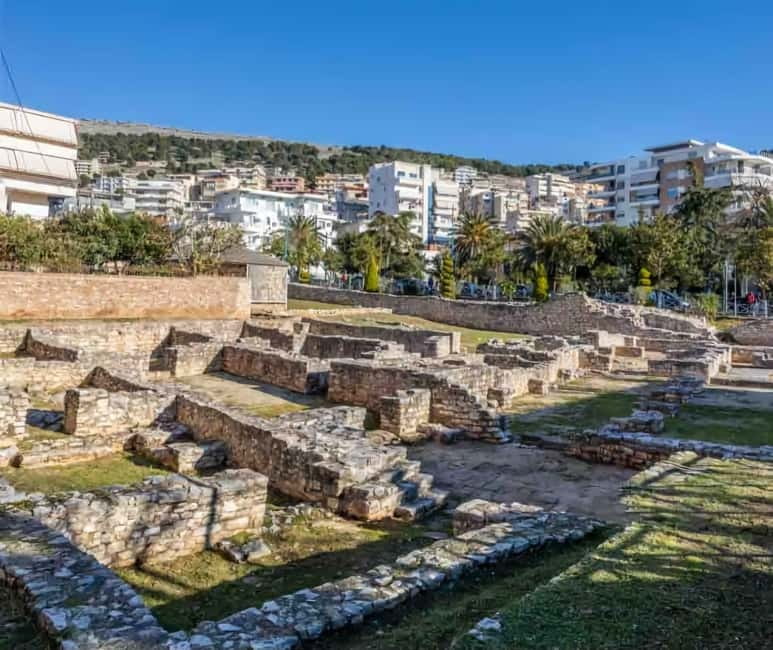
The first major stop is the Sarandë Synagogue, where you see remains associated with a 5th-century synagogue. The visit is guided, which matters here. Ruins without context can be little more than stones and partial outlines, while the guide explains why this site matters and how it fits into the city’s older story.
Do not expect a large archaeological complex. The attraction is compact, and its value comes from the age of the remains and the chance to connect Saranda with a Jewish community from late antiquity. This is a good example of the tour’s basic method: it takes a small site and gives it a wider place in the story of the region.
For you, the stop works best if you enjoy history in fragments. The synagogue is not a grand, intact building, and there is no long gallery of rooms to explore. Still, it offers a memorable contrast with the resorts and restaurants along the waterfront.
Your guide can also help explain how Saranda’s identity has changed over time. The experience is not limited to ancient archaeology. The strongest guide-led moments bring together religion, politics, city growth, and daily life.
The bunker: a brief look at Albania’s harder decades
The next stop is a bunker, mainly used for a photo stop and explanation. It introduces a very different chapter: wartime concerns and the communist regime in the region.
Albania’s concrete bunkers are familiar sights across the country, but familiarity can make them easy to ignore. A guide helps you see the object as part of a political system, rather than simply as an unusual piece of street furniture.
This is a short stop, not a full museum visit. You will not spend a long time inside an extensive military site. Its strength is the change in tone. After the ancient synagogue, the bunker brings you into the 20th century and shows how recent political history still appears in the city.
I appreciate this contrast because it keeps the walk from becoming a string of similar ruins. Saranda’s past is not presented as one smooth story. You move from ancient religious life to modern fear and state control, then into museums focused on archaeology and local tradition.
Inside the Archaeological Museum
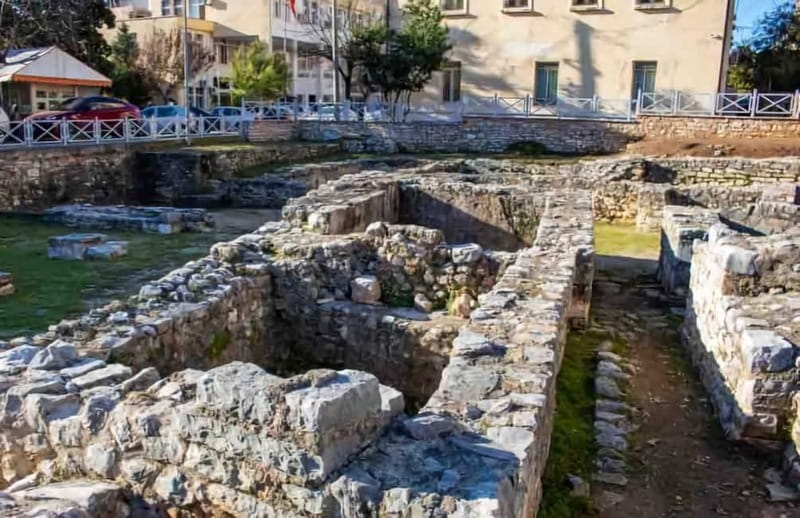
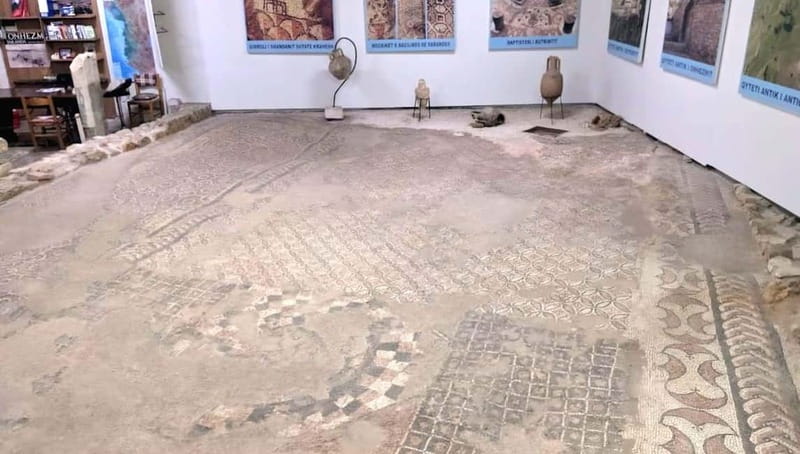
The Archaeological Museum is one of the included admissions, and the guide leads you through the visit. The museum is described as small, with a display that may take less time than you expect.
That is worth knowing before you book. You are not signing up for a major national museum with room after room of famous objects. The benefit is explanation. An informed guide can show you what to notice, explain the purpose of objects, and connect them to the wider area.
One particularly useful point is that the museum can be easy to overlook from the outside. Its unassuming entrance does not suggest much, yet the collection gives the tour another layer. You get to see how local objects and archaeological remains help explain the people who lived here.
The guide’s role is important because the displays may not speak clearly to someone seeing them for the first time. Rather than rushing through on your own, you can ask questions and hear the story behind the pieces. If you enjoy context more than grand interiors, this is one of the better-value parts of the tour.
If you prefer to browse quietly at your own pace, the guided format may feel a little brisk. The tour has several stops to fit into 150 minutes, so museum time is purposeful rather than leisurely.
Same coast, a completely different kind of day:
- Saranda: Lekursi Castle, Blue Eye, Gjirokaster, & More Tour
★ 4.9 · 884 reviews - Sarande: Blue Eye Spring and Lekursi Castle Sunset Tour
★ 4.8 · 798 reviews - Daily Trip To:Blue Eye,Monastery,Gjirokaster&Lekursi Castle
★ 4.9 · 665 reviews - Sarande: Hidden Cave, Gremina, Kakome & Krorez Boat Tour
★ 4.8 · 665 reviews
Local life at the Museum of Tradition
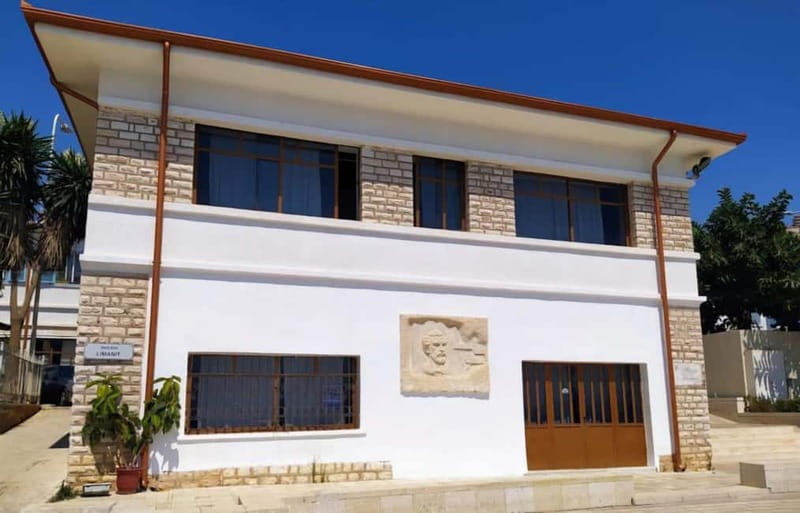
The Museum of Tradition shifts the focus from ancient remains to customs and everyday life. Here, you learn about local practices, household objects, and traditions through time.
This is where Saranda can become more personal. Archaeology tells you about earlier communities, while traditional objects help you picture how people lived, worked, and expressed local identity. The displays are not large, but a good explanation can make ordinary items more meaningful.
A useful strength of the tour is the connection between the objects and Albania’s broader story. The guide does not simply identify each piece. You hear how customs fit into the development of the city and country.
The museum is small enough that the level of explanation matters a great deal. One guide may spend time describing nearly every item, and that can feel slow if you mainly want a quick look. If you enjoy detailed interpretation, you may appreciate the care. If you are watching the clock before a ferry or lunch reservation, tell your guide that you need to keep moving.
The two museum entries are included in the $23 price, which improves the value. Paying separately for tiny museums can feel inconvenient, while having them built into a guided route makes the visits easier.
Walking the Saranda Promenade
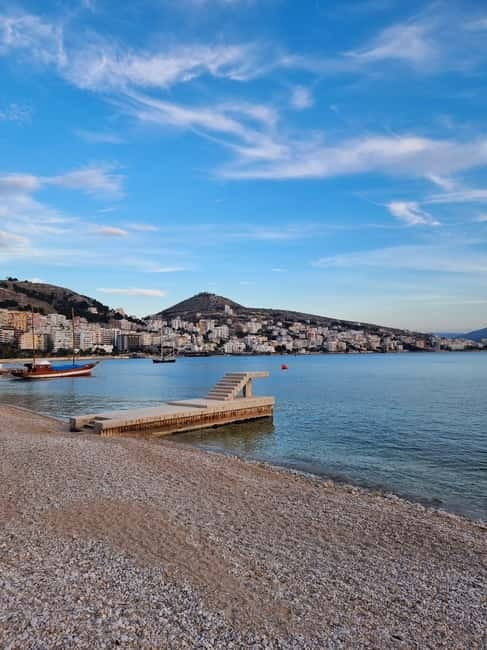
After the indoor stops, the tour heads toward the Saranda Promenade. This is the most relaxed part of the route, with the Ionian Sea, cafes, shops, and the everyday energy of the city around you.
The promenade gives you a useful present-day view of Saranda. You see the city as a place where people meet, eat, shop, and spend time beside the water, rather than only as an archaeological site. The contrast with the synagogue and bunker is the point.
The walk is also a chance to ask practical questions. A good local guide can help you make sense of the city, discuss nearby places, and suggest how to use the rest of your stay. Mira has been especially helpful with onward plans, including information connected with Himarë, Ksamil, and Butrint.
The route includes a stop at a local café, described as a break with time for sightseeing and walking. Food and drinks are not included, so bring some cash or a card if you want to order. The café stop is useful because it gives your feet a rest, but do not expect a full meal as part of the tour.
The waterfront is likely to be the most attractive section for visitors who want photos and a sense of place. Still, it is a public promenade, not a private viewpoint or a special access area. Its value comes from the setting and the guide’s commentary.
What makes the guide important
The sites themselves are not huge. That makes the guide the central reason to book.
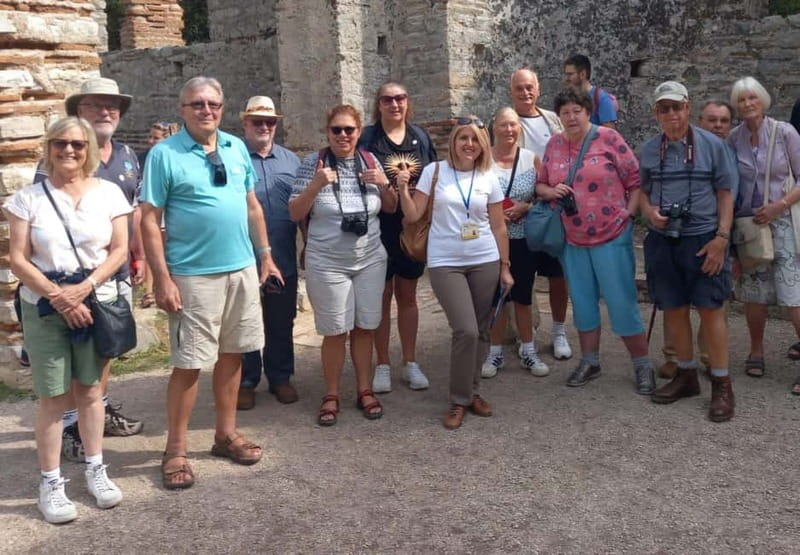
Mira is the named guide praised most strongly in the supplied information. Her approach includes history, politics, religion, and the city’s development. She has also helped with practical matters, such as finding a coach to Himarë and offering advice about Ksamil and Butrint.
That extra help is useful if you are still planning your Albanian Riviera route. A guide who understands how the stops connect can save you time and help you avoid treating Saranda as only a transport hub.
Her style also appears personal. She has been described as warm, attentive, and willing to explain objects in a way that gives them meaning. On one outing, she even arranged small souvenirs, and she helped with bus fares after meeting the same people again on the way to Butrint. Those gestures are not formal inclusions, so you should not book expecting gifts or free transport. They do show the kind of personal care you may receive with a local guide.
Guide quality can vary by departure, and the activity is offered in Albanian and English. If you want detailed explanation, stay engaged and ask questions. The tour works best as a conversation, not as a silent procession from one door to the next.
How the 150 minutes are best used
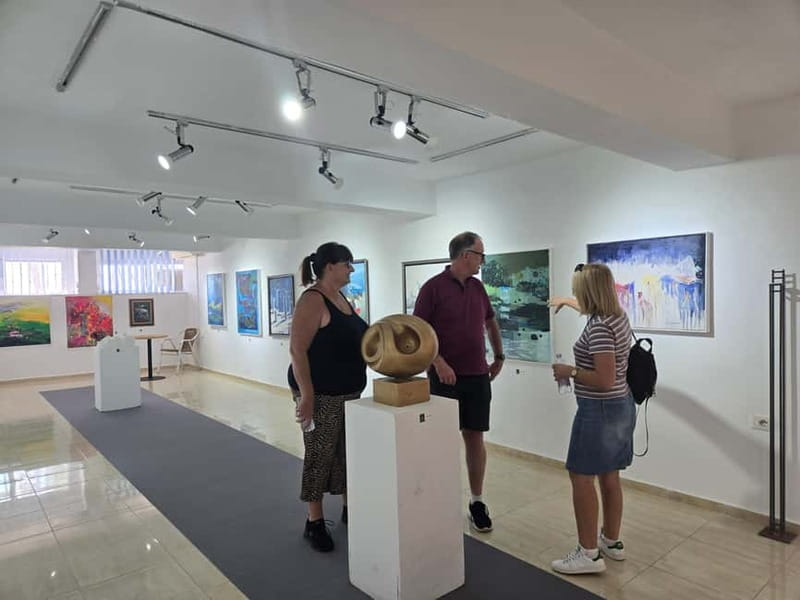
Two and a half hours sounds short, but it is enough for a first look at central Saranda. The route has a clear rhythm:
- Start at the port.
- Visit the synagogue complex.
- Pause at the bunker.
- Enter the Archaeological Museum.
- Visit the Museum of Tradition.
- Walk the promenade.
- Take a café break.
- Return to the port.
You should allow for walking between stops, explanations, museum visits, photographs, and the café pause. This is not a slow, full-day study tour. It is a compact introduction.
One guest described a visit to Lekuresit Castle with Mira, including a fine view over the city and surrounding area. That castle is not part of the stated standard route, so treat it as an occasional addition rather than something guaranteed by this booking. If the castle is important to you, ask before setting out.
The schedule may suit a cruise or ferry arrival, but you should still check the available starting time before booking. The activity lasts 150 minutes, and the meeting point is the port.
Walking conditions and what to bring
You should bring water, sunscreen, and comfortable clothes. Saranda can be sunny, and the route combines outdoor walking with indoor visits. Comfortable footwear is more useful than dress shoes.
The tour is not suitable for wheelchair users or people with mobility impairments. That restriction matters because the experience moves through several locations on foot, and the route may not offer the access needed by every participant.
The activity is offered with a live guide in English or Albanian. Entrance to the Archaeological Museum and Museum of Tradition is included. Food and drinks are not included, so the café break is an opportunity to buy your own refreshments rather than a provided tasting.
The operator offers free cancellation up to 24 hours in advance, and you can reserve now and pay later. Those terms are helpful if your ferry, weather, or wider Albania plans are still changing.
Who will get the most from this tour
I would recommend this walk to you if you are staying in Saranda for the first time and want a quick sense of the city beyond the beach. It also suits anyone interested in Albania’s mix of ancient sites, local customs, religion, and communist-era history.
It is a strong choice for a short stay. You can cover the main central cultural stops without giving up an entire day that might be used for Butrint or Ksamil.
It may also suit you if you like asking questions. The best parts depend on the guide’s stories, so a curious attitude will add a lot.
You may want something else if your priority is major archaeology, grand museum collections, or a long panoramic excursion. Saranda’s attractions on this route are small, and the tour does not promise a full-day trip outside the city.
The $23 cost is reasonable for visitors who would otherwise miss the context behind the sights. The price includes two museum admissions and a professional guide, not meals or transport. You are buying interpretation and convenience more than spectacle.
Should you book it?
Book this tour if you want to understand Saranda in a short window and prefer local explanation to wandering without context. The synagogue, bunker, museums, and promenade create a useful timeline, and Mira’s personal approach can add practical help for the rest of your Albanian Riviera trip.
Skip it if you want a large archaeological site or a full scenic excursion. Saranda’s museums are modest, and the walk is not designed for visitors with mobility limitations.
For most first-time visitors with two and a half hours to spare, I would book it near the start of the stay. You will leave with a clearer sense of what Saranda is, what its small museums contain, and how to plan the next part of your journey.
FAQ
How long does the Saranda walking tour last?
The tour lasts 150 minutes, or two and a half hours.
Where does the tour begin?
The meeting point is the Port of Saranda.
Where does the tour finish?
The walk returns to the Port of Saranda.
What sights are included?
The route includes the Sarandë Synagogue, a bunker, the Archaeological Museum, the Museum of Tradition, the Saranda Promenade, and a local café stop.
Are museum entrance fees included?
Yes. Admission to the Archaeological Museum and Museum of Tradition is included.
Is food or drink included?
No. Food and drinks are not included, though the route includes a café break.
What languages are available?
The live guide is available in Albanian and English.
What should I bring?
Bring sunscreen, water, and comfortable clothes.
Is the tour suitable for wheelchair users?
No. The activity is not suitable for wheelchair users or people with mobility impairments.
Can I cancel for a refund?
Yes. You can cancel up to 24 hours in advance for a full refund.
Do I have to pay when I book?
No. The reserve now and pay later option lets you book without paying immediately.
Just added around Sarande
- Saranda: Wine and raki tasting, local products.★ 4.3 · 4 reviews
- Sarande: Blue Eye & Lekuresi Tour w/ Wine Tasting★ 4.1 · 25 reviews
- GROUP TOUR 7 STOPS SARANDA TO KROREZ FREE DRINK AND UMBRELLA★ 5.0 · 5 reviews
- Sarandë:Boat Tour to Kroreza with snorkelling & umbrellas★ 4.6 · 19 reviews
- Sarandë Seascape: Coves, Cliffs & Caribbean-Blue-Water Bays★ 5.0 · 6 reviews
- Sarandë Velvet Horizons: A Dreamlike Sunset Cruise★ 5.0 · 7 reviews
- Sarandë: Boat Tour to North side of Sarandë★ 4.2 · 7 reviews
- Sarandë: Butrint Archaeological Park and Ksamil Day Trip★ 3.9 · 19 reviews
City Tours, compared.
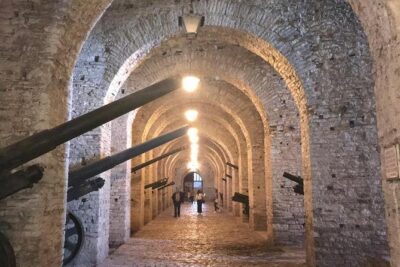
Gjirokastra- The Stone City & Blue Eye- The monument of Nature.
Read our review →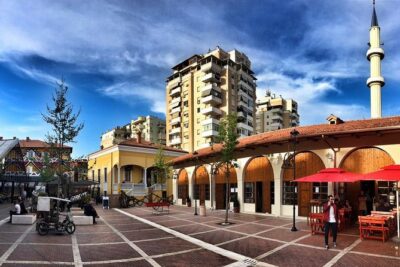
Best of Local Food & City Tour of Tirana – Food & Drinks Included
Read our review →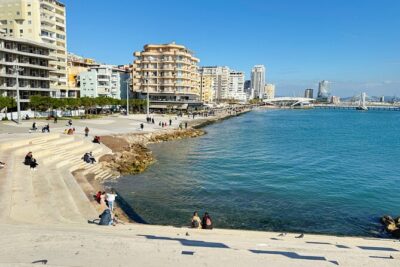
Durres city & Golem beach, Sun & History Day Trip
Read our review →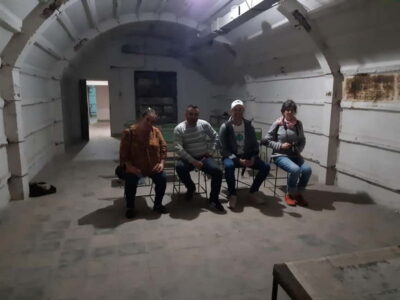

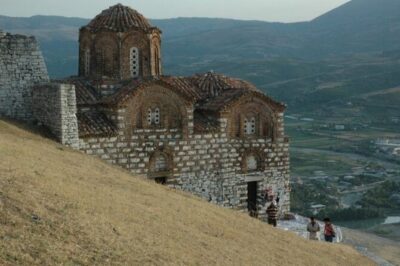
“Berat & Durres City, Belsh Lake – Day Tour from Tirana”
Read our review →
Browse the lists this tour appears in