
Reviewed · FULL-DAY
Full Day Trip to Durres, Apollonia and Ardenica Monastery
Durres, Apollonia, and Ardenica pack more than 2,500 years of Albanian history into one long day. You move from a Roman port and its 20,000-seat amphitheatre to open archaeological ruins and a monastery still used by monks. The contrast between ancient city life and living religious tradition is the real strength of this trip.
I like the small group of no more than six, which gives the guide room to answer questions and adjust the day when practical. I also like that transport, hotel pickup, and entrance fees are included, so you can focus on the sites instead of sorting out local connections. The main drawback is the pace: eight hours is a lot of ground to cover, and the uneven ruins are not suitable for people with mobility impairments.
In This Review
- Key points
- A full day from Roman Durres to rural Apollonia
- Durres and the amphitheatre beneath the modern city
- Apollonia’s ancient streets and open views
- Ardenica Monastery, where the past is still active
- What the guides add to the long day
- Is $212 a fair price for eight hours?
- The practical side of the day
- Who should book this Durres and Apollonia tour?
- Should you book it?
- FAQ
- How long does the tour last?
- What is included in the price?
- Which languages are available?
- How large is the group?
- Are meals included?
- Is the tour suitable for people with mobility impairments?
Key points
- Durres begins the day with Albania’s largest ancient amphitheatre, once built for crowds of up to 20,000 people.
- Apollonia combines major archaeological sites with wide rural views, including the Bouleuterion, Odeon, library, museum, and Saint Mary’s Church.
- Ardenica Monastery is still active, making it more than a monument frozen in the past.
- The guide can add useful context beyond the official stops, with Ilir and Arnir praised for clear explanations, punctuality, driving, and flexibility.
- A six-person maximum keeps the tour personal, though the $212 price makes most sense if you value convenience and guided interpretation.
- Bring a passport and comfortable clothing, and expect uneven ground at the archaeological sites.
A full day from Roman Durres to rural Apollonia
This is not a quick city outing. It is a history-focused road trip across Fier County, beginning in Durres and ending at Ardenica Monastery before returning to Tirana. The route links three places with very different moods, so the day feels varied even though the subject is mainly history.
Your driver-guide picks you up at your hotel, beginning about 15 minutes before departure. The vehicle has air conditioning, an important comfort point during Albania’s warmer months. Since the group is limited to six people, you should have a better chance of hearing the guide clearly and asking about details that catch your eye.
The tour is offered in English or Italian. Guides named in the bookings include Ilir, also written as Illir in one account, and Arnir. Their strengths are useful ones for a long day on the road: punctual starts, confident driving, clear English, and a willingness to discuss Albania beyond the formal site descriptions.
You should think of the tour as a guided overview rather than a slow archaeological study. Each stop has enough time for a proper introduction, but the itinerary covers three major places in eight hours, including driving and a return to Tirana.
A few more Tirana trips to weigh up
- From Tirana: Berat UNESCO & Belshi Lake Full-Day Tour
★ 5.0 · 118 reviews - Berat Full Day Trip from Tirana
★ 5.0 · 103 reviews - From Tirana/Durres/Golem: Prizren and Prishtina Full-Day Tour
★ 5.0 · 67 reviews
Durres and the amphitheatre beneath the modern city
Durres is Albania’s second-largest town and one of the country’s key port cities. Its ancient name was Dyrrachium, and its story reaches back to around the seventh century BC. That long past is not separated neatly from modern life. Ancient remains appear within the present-day city, which makes the visit especially useful for understanding how old Mediterranean towns continue to function.
The main stop is the Amphitheatre of Durrës, the city’s most important ancient monument. It once held about 20,000 spectators and is considered the largest amphitheatre in the Balkan Peninsula. That size tells you something about the city’s importance in Roman times. This was not an isolated provincial outpost. It was a major urban center with the money and population to support large public spectacles.
The amphitheatre also helps explain Durres’s place in the Roman world. The Via Egnatia began here, linking the Adriatic coast with the eastern Mediterranean. Your guide can connect the stones in front of you with the broader movement of soldiers, merchants, officials, and ideas across the Roman Empire.
I find Durres most interesting when you keep both time periods in view. The city was important in antiquity, later served briefly as the capital of the Principality of Albania after the 1912 Declaration of Independence, and now functions as a modern port and coastal center. It is a useful reminder that Albanian history is not only found in remote ruins.
After the amphitheatre, you have a short coffee break by the marina or in the modern center. This is a practical pause rather than a major sightseeing stop. You can rest, get a drink, and shift from the dense city setting to the quieter countryside ahead.
The limitation is time. A quick visit to Durres will not cover every part of the city, and the coffee stop is brief. If you want beaches, long waterfront time, or a detailed look at modern Durres, this is not the right format. If you want the amphitheatre and a clear introduction to the city’s past, the stop earns its place.
Apollonia’s ancient streets and open views
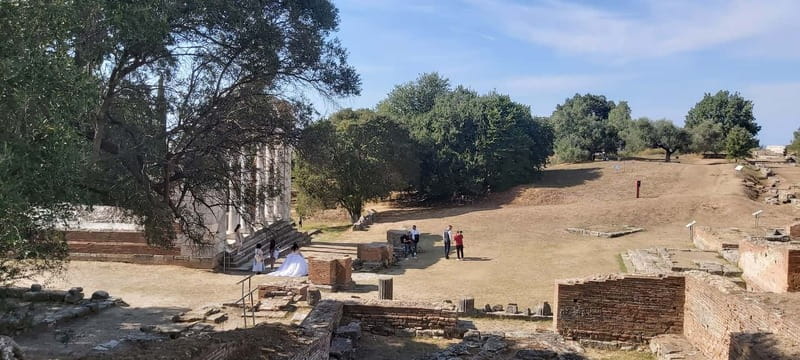
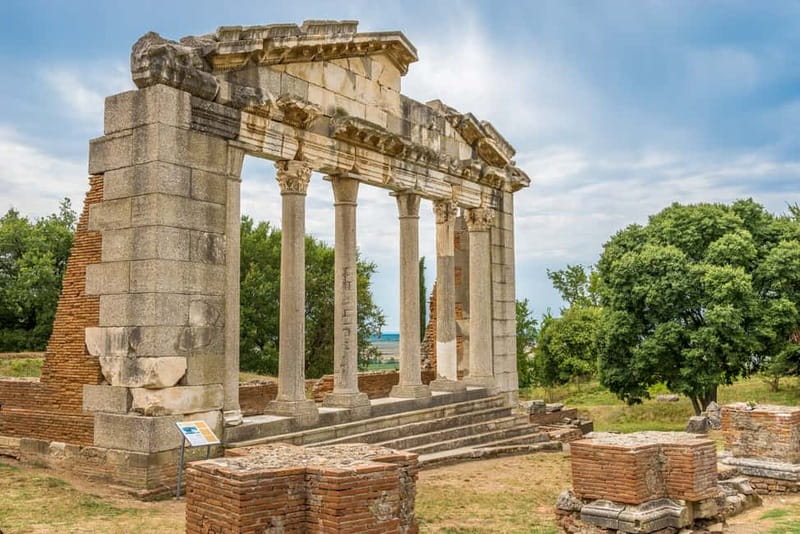
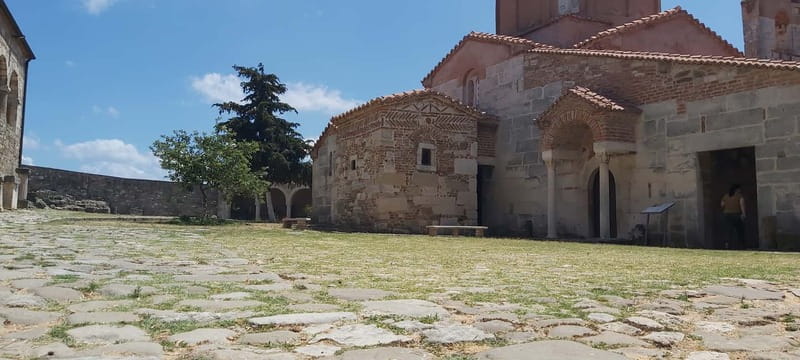
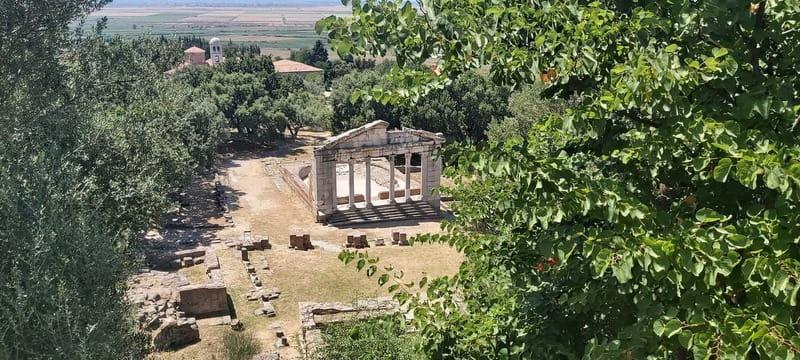
From Durres, the tour continues to Pojan, a village associated with the Apollonia Archaeological Park. Founded around 600 BC, Apollonia became one of the major ancient settlements in the Adriatic region. Its location gives the visit a different feel from Durres. Instead of ruins surrounded by a working city, you walk through a broad archaeological area where the remains sit among open views.
The setting is part of the attraction. You can look across the surrounding countryside and imagine why the site once mattered as a settlement and cultural center. The views also provide breathing room after the urban stop in Durres. This is one of the places where the tour’s aerial-view highlight makes sense, since the open position lets you see well beyond the individual ruins.
Apollonia was known for its school of philosophy and attracted important students. One of the best-known was Augustus, who later became the first Roman emperor. That detail gives the site a strong human connection. You are not only looking at columns and foundations. You are standing in a place where an influential young Roman studied before he ruled a vast empire.
The archaeological park includes several separate points of interest:
- The Bouleuterion, the most photographed monument, was connected with civic life and public decision-making.
- The Odeon reflects the city’s performance and public culture.
- The library points to Apollonia’s role as a center of learning.
- The Archaeological Museum gathers objects that help explain what you see outdoors.
- The Church of Saint Mary shows how the site’s religious life continued long after the ancient city declined.
The Church of Saint Mary and the museum are especially helpful because they add detail to the otherwise open ruins. Outdoor remains can show you a city’s shape, but objects and religious buildings help fill in daily life, beliefs, and later changes.
Apollonia was abandoned in the fourth century AD. That abandonment is part of its power. The site gives you a clear sense of how a major settlement can lose its role, leaving behind public buildings and sacred places while the surrounding countryside carries on.
You should allow for uneven walking here. The tour is not recommended for wheelchair users or people with walking disabilities, and comfortable clothes are essential. This is not a polished indoor museum visit. You will be moving across archaeological ground, and the experience depends on being able to walk between several monuments.
One useful point from the experience is that only part of Apollonia has been explored. That means you will see a meaningful collection of remains, but not a fully uncovered ancient city. I would treat this as an advantage if you enjoy sites that still leave room for questions. If you prefer complete reconstructions and extensive interpretation at every turn, you may find the park less immediately accessible.
Ardenica Monastery, where the past is still active
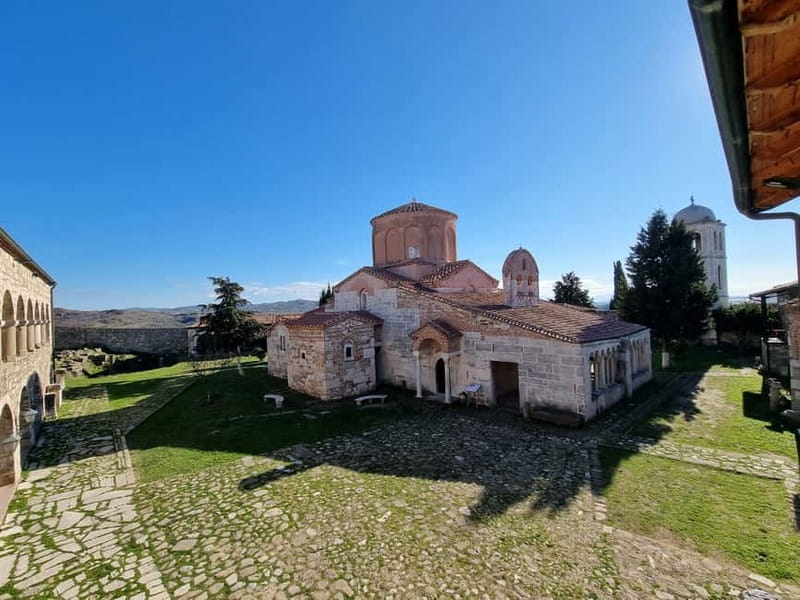
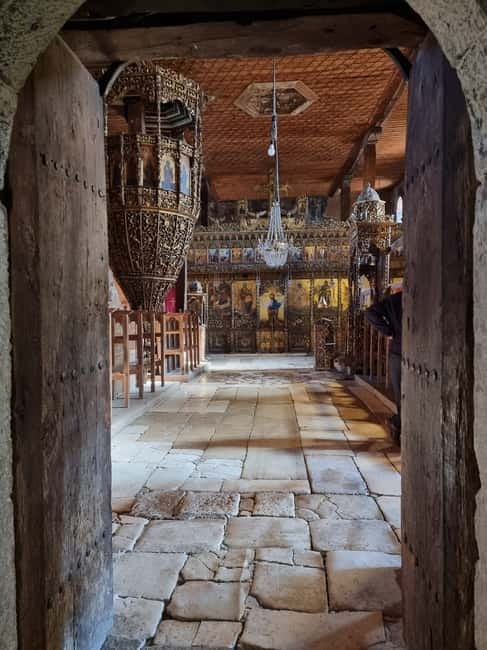
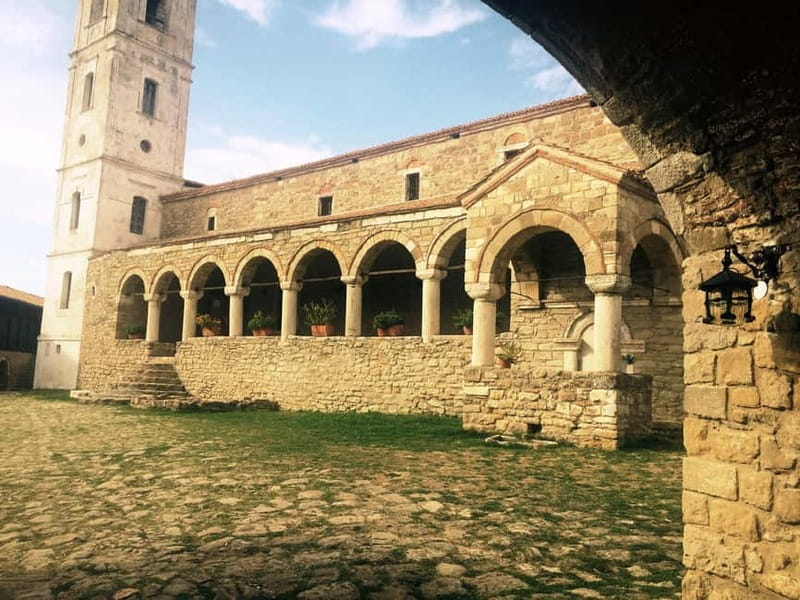
The final major stop is Ardenica Monastery, built in 1282 as an Eastern Orthodox monastery. It is known for its connection with Albania’s national hero, Skanderbeg. His marriage to Andronika Arianiti was celebrated here in 1451, giving the monastery a direct link to one of the most important figures in Albanian history.
Ardenica differs from the two earlier stops because it is not simply an archaeological site. It remains a working monastery where monks still live. That changes how you approach the visit. You are entering a place with an active religious purpose, not just examining an abandoned structure.
The monastery later played an important educational role. In 1780 it began a theological school for clerics in Greek Orthodoxy. It also held a library of 32,000 volumes, all of which were lost in a fire in 1932. The fire is a painful detail, but it helps you understand that historic buildings do not survive untouched. Ardenica’s story includes learning, religious practice, loss, and continued use.
The visit should suit you if you enjoy places where architecture and living tradition overlap. You can pay attention not only to the monastery’s age, but also to the fact that its religious function continues. That makes the stop feel different from walking through the abandoned remains at Apollonia.
Lunch is optional and is not included in the price. The schedule includes free time, so you should expect a chance to eat or rest, but the supplied details do not specify a particular restaurant or menu. Bring enough money for food and drinks, since meals, beverages, personal expenses, and optional activities are separate.
Same coast, a completely different kind of day:
- From Tirana: Bovilla Lake & Gamti Mountain Hiking Day Trip
★ 4.9 · 4,397 reviews - From Tirana: Bovilla Lake & Gamti Mountain Hiking Tour
★ 4.9 · 3,003 reviews - From Tirana: Bovilla Lake & Gamti Mountain Viewpoint Hike
★ 4.8 · 2,053 reviews - Tirana/Durres/Golem: Saranda, Ksamil, Blue Eye Day Trip
★ 4.8 · 1,584 reviews
What the guides add to the long day
A route like this can be tiring if the guide treats it as a list of dates and names. The strongest part of the experience appears to be the human side of the guiding. Ilir was praised for excellent English, safe and capable driving, punctuality, and a broad willingness to discuss Albania and its history. Arnir was described as punctual, friendly, and ready to answer questions.
That matters because the three sites cover different eras and require some linking. A good explanation can show how Durres fit into Roman trade routes, why Apollonia attracted students from far beyond the region, and why Ardenica still matters to Albanian national and religious history.
There is also some flexibility. One guide, Ilir, accepted a request made the day before that added a great deal to the planned day. You should not assume every change will be possible, especially on a tightly timed eight-hour tour, but this suggests it is worth asking early if you have a specific request.
I would use the drive time well. Ask about the road between the coast and the inland sites, Albania’s changing political history, or the role of Greek and Roman culture in the region. The guide’s willingness to discuss topics beyond the monuments can turn a standard sightseeing day into a better introduction to Albania.
Is $212 a fair price for eight hours?
At $212 per person, this is not a budget excursion. The price makes more sense when you count what is included: hotel pickup and drop-off in Tirana, an air-conditioned vehicle, a driver-guide, guided visits in all three locations, and entrance fees to the listed monuments and museums.
The six-person maximum is important to the value. You are not paying only for transportation. You are buying a small-group day with direct access to a guide, rather than arranging separate taxis, entrance tickets, and site explanations yourself.
Still, the value depends on your priorities. If you are comfortable arranging public transport or hiring local rides, you could spend less, but you would give up the convenience of one coordinated route. You would also need to manage connections between Durres, Pojan, Ardenica, and Tirana, which could make a one-day schedule difficult.
Meals and drinks are not included, so add lunch and coffee to your budget. Personal expenses and optional activities are also separate. The price is easiest to justify if you want a history-centered day with minimal planning and a small group.
The practical side of the day
Pickup begins at your hotel about 15 minutes before departure. You should be ready early, since the tour is designed to start on time and cover a large route before returning to the same place in Tirana.
A valid current passport is required on the day of travel. Children must be accompanied by an adult, and unaccompanied minors are not allowed. The tour is not suitable for people with mobility impairments because of uneven surfaces at the archaeological locations.
Wear comfortable clothes and shoes suited to walking outdoors. The information provided does not promise shade, long rest periods, or a particular lunch arrangement, so it is sensible to prepare for a full day out. An air-conditioned vehicle helps during the drives, but it does not remove the need for practical clothing at Apollonia.
The tour offers free cancellation up to 24 hours before departure, with a full refund, and you can reserve now and pay later. Availability depends on the starting time selected, so check the schedule before booking.
Who should book this Durres and Apollonia tour?
I would choose this tour if you have one day available from Tirana and want to see more than the capital. It is especially well suited to people who enjoy ancient sites, religious history, and long conversations with a guide.
It also works well if you value convenience. The route is ambitious, and having one driver-guide handle the transport removes much of the day’s practical work. The small group is another clear benefit for anyone who prefers a quieter outing over a large coach.
I would hesitate if your priority is a relaxed coastal day. Durres receives only a short visit, and the tour continues inland. I would also look elsewhere if walking over uneven archaeological ground is difficult, or if you want long, unstructured time at each site.
Should you book it?
Book this tour if you want a tightly organized history day that links Roman Durres, Greek and Roman Apollonia, and a living Orthodox monastery. The strongest reasons are the small group, included entry fees, hotel transport, and guides such as Ilir and Arnir who can handle both site explanations and wider questions about Albania.
Skip it if $212 feels high for a guided day, if you want to explore at a slow pace, or if you need accessible paths. For the right person, the route offers a useful sweep through Albanian history in a single day, with enough variety to keep the journey from becoming a parade of ruins.
FAQ
How long does the tour last?
The full tour lasts eight hours, including the visits to Durres, Apollonia, and Ardenica Monastery, transport, and the return to Tirana.
What is included in the price?
The price includes transport in an air-conditioned vehicle, hotel pickup and drop-off, a driver-guide, guided tours in all three locations, and entrance fees for the mentioned monuments and museums.
Which languages are available?
The live tour guide is available in English or Italian.
How large is the group?
This is a small-group tour limited to six participants.
Are meals included?
No. Meals and drinks are not included. Lunch is optional during the free time, and you should pay for food and beverages separately.
Is the tour suitable for people with mobility impairments?
No. The tour is not recommended for people with walking disabilities or wheelchair users because the archaeological sites have uneven surfaces.
Just added around Tirana
- Zipline Tirana Adventure & Petrela Castle – With Transport★ 4.4 · 10 reviews
- Wine Tasting & Vineyards Escape near Tirana★ 4.9 · 8 reviews
- Wonderful Sunset and Dinner in the Castel Of Petrela★ 4.6 · 4 reviews
- Walking Tour in Tirana, Albania★ 3.7 · 28 reviews
- Vlora, Dhermi & Llogara Day Trip from Durrës or Golem★ 5.0 · 5 reviews
- From Tirana: Mount Dajti Adventure, Local Vibes & Cable Car opt★ 4.5 · 6 reviews
- Day Tour to Petrela Castle and Zip Line Albania Adventure★ 5.0 · 10 reviews
- Winetasting tour in Alpeta winery – Roshnik village by 1001 Albanian Adventures★ 5.0 · 26 reviews
Full-Day, compared.
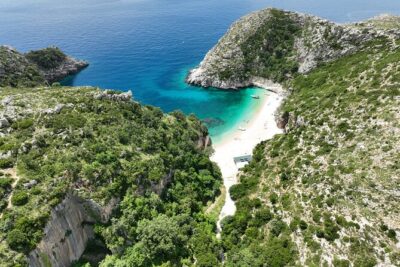
Blue Cave & Grama Bay Full Day Guided Boat Tour
Read our review →
Vlora: Blue Cave and Grama Bay Full-Day Speedboat Tour
Read our review →
Full Day Tour from Tirana to Prishtina and Prizren
Read our review →Browse the lists this tour appears in