
Reviewed · 2-DAY EXPERIENCES
2 Day Tour of North Macedonia & Kosovo from Tirana
Ohrid’s cliffside Church of St. John at Kaneo, set above one of Europe’s oldest lakes, is the visual prize of this fast-moving trip. You then cross into Kosovo and see two very different cities, modern Pristina and Ottoman-era Prizren, before returning to Tirana.
I like the small maximum group of eight, which makes border crossings, city walks, and quick photo stops easier to manage. I also like that transport, hotel, breakfast, fuel, tolls, guide service, and entry tickets are bundled into one price. The tradeoff is real: this is a lot of road in two days, so you get a strong introduction rather than slow, unhurried sightseeing.
In This Review
- Key points to know before booking
- Why this two-day route works from Tirana
- Ohrid and Lake Ohrid: the first-day showstopper
- Skopje after dark and in daylight
- Pristina: Kosovo’s modern capital
- Prizren and the Bistrica River
- Guides, vehicles, and the human side of the trip
- What the $528.62 price really buys
- The pace, physical effort, and best fit
- Should you book this two-day tour?
- FAQ
- Where does the tour start?
- How long does the tour last?
- Which places are visited?
- Is accommodation included?
- What meals are included?
- How many people can join the tour?
- Can I cancel for a full refund?
Key points to know before booking
- Ohrid supplies the postcard views: Walk from Samuil’s Fortress down to Kaneo Bay and the famous cliffside church.
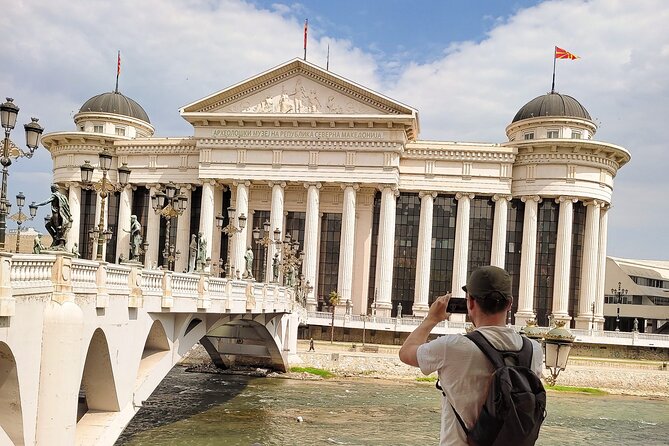
- Skopje gives you the overnight base: See its monumental main square, Old Bazaar, bridges, religious landmarks, and fortress.
- Kosovo adds two contrasting capitals and old towns: Pristina feels modern and energetic, while Prizren is compact, historic, and easy to explore on foot.
- The small group matters: Up to eight people means more personal attention than a large coach tour.
- The price covers many essentials: Private transport, a three-star hotel, breakfast, guide, site tickets, tolls, fuel, and city tax are included.
- Expect a brisk schedule: The route works best for you if seeing several major places matters more than lingering in one.
Why this two-day route works from Tirana
This tour packs three countries into a short trip: Albania, North Macedonia, and Kosovo. That is its main appeal. From Tirana, you can reach places that are awkward to connect by public transport in only two days, while leaving the driving to someone else.
The price is $528.62 per person. That is not a budget day trip, but the comparison is more useful when you count what is included: private transportation, fuel, road tolls, city tax, a guide, entrance tickets, one hotel night, and breakfast. Lunch and dinner are separate, as are personal purchases.
You begin in Tirana at 7:00 a.m., so the first day starts early. The route involves long stretches in the vehicle, but the payoff is access to four major stops across two countries. For a first look at the region, I find that trade reasonable. If you want long café breaks, museum time, or several hours at one church, this schedule will feel tight.
The group limit of eight is one of the practical strengths. A compact vehicle can stop closer to city centers, and a guide can respond to your interests more easily. Several guides have led this route, including Erik, Engjell, Endri, and Xhulio. The quality of your experience will depend partly on who leads your departure, but the guide-driver role is especially useful on a route with several borders and changing city layouts.
A few more Tirana trips to weigh up
- Semi – Private Hiking Tour of Theth & Blue Eye in 2 Days
★ 5.0 · 12 reviews - Explore Thethi, the unknown part of Albania in two days
★ 5.0 · 11 reviews - 2-Day Tour from Tirana to Saranda, Blue Eye, and Butrint
★ 5.0 · 10 reviews
Ohrid and Lake Ohrid: the first-day showstopper
Ohrid is the most scenic stop on the route. The town sits on Lake Ohrid, one of the oldest and deepest lakes in the world, and its old quarter rises above the water in a mix of lanes, churches, stone walls, and viewpoints.
Your visit begins around the Old City and Samuil’s Fortress. The fortress gives you broad views over the lake and the clustered rooftops below. It also helps you understand Ohrid’s shape. The town is not flat, and the route down from the fortress includes slopes and steps, so comfortable shoes are useful.
From the fortress, you descend toward Kaneo Bay. This is where Ohrid’s famous image comes together: blue water, wooded slopes, and the Church of St. John at Kaneo perched on a rocky point. The church appeared on Ohrid’s first postcard, and it is easy to see why. The setting does much of the work, though the building itself is also a fine example of medieval religious architecture.
Ohrid is sometimes called the Jerusalem of the Balkans because of its role in Slavic Orthodox Christianity. At its height in the 11th century, local tradition held that the town had 365 churches, one for every day of the year. You will not see all of them on this tour, but the old churches help explain why Ohrid matters beyond its good views.
The walk ends in the lower part of town, where two sections of Ohrid and two religious traditions meet. That detail gives the visit more weight than a simple lakeside photo stop. You get a sense of the town’s long contact between different communities, faiths, and political powers.
The drawback is timing. Ohrid deserves more than a quick circuit, especially if you want to swim, browse slowly, visit additional churches, or sit beside the lake. Here, the goal is to see the essential old town and viewpoint before continuing to Skopje.
Skopje after dark and in daylight
Skopje is the overnight stop, and it gives you two chances to see the city. Depending on the exact running order, you may explore parts of Skopje after arriving, then continue the city visit the next morning. One especially good option is an evening walk through the central area, when the statues and monuments are lit.
Skopje’s center is filled with large monuments and public sculptures. The city earned the nickname City of Statues, and the main square makes that clear at once. The style is grand and theatrical, quite different from the older quarters nearby.
You will visit the House of Mother Teresa, devoted to the city’s most famous native. The stop adds a personal story to an otherwise monumental center. It also gives you a break from the open square and its oversized public art.
The Vardar River cuts through the city, but its bridges connect rather than separate the two sides. Cross toward the Old Bazaar and the mood changes quickly. Here, you find traditional crafts, local products, small shops, and a stronger sense of the city’s Ottoman-era past.
The Old Bazaar is one of Skopje’s most rewarding areas because it feels like a working neighborhood rather than a display built only for sightseeing. You will have time to walk the lanes and look at the goods on offer, although the exact amount of free time depends on traffic and the rest of the day’s schedule.
Skopje Fortress provides another high viewpoint. From above, you can see the river, central monuments, and the spread of the city. It is a useful stop for orientation, especially after arriving in Skopje in the evening.
The route also includes the Church of St. Clement of Ohrid and Mustafa Pasha Mosque. Together, these sites point to Skopje’s mix of Orthodox Christian and Islamic traditions. The value is not only in the buildings. Your guide can connect them to the city’s changing communities and long history of coexistence.
A three-star hotel is included in Skopje. The Alexander Hotel was used for one departure and was described as clean and comfortable, with a good breakfast. You should treat that as a helpful indication, not a promise of the same property for every date. Breakfast matters here because you have another early start.
Pristina: Kosovo’s modern capital
Pristina changes the rhythm again. It is younger in feel than Prizren and less polished as a sightseeing center, but that is part of its interest. The city combines older religious sites with bold modern symbols of Kosovo’s independence.
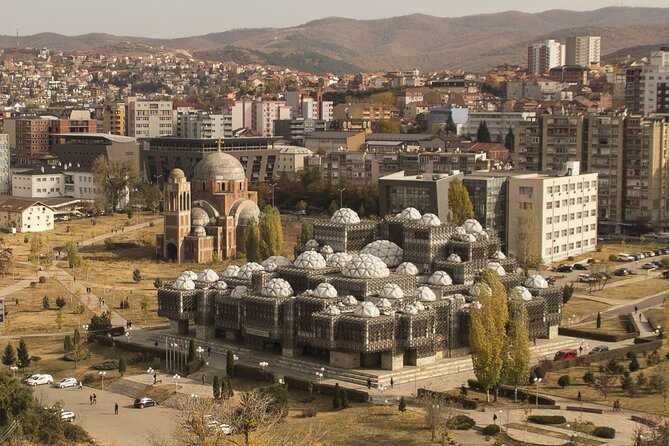
The National Library of Kosovo is one of the first stops. Its unusual design blends Byzantine, Ottoman, and Serbian influences, reflecting the layers of culture found in the city. Since 1982, the building has held more than two million historical and literary works.
You then move through the center to the Newborn Monument. Its message is direct, and it has become one of Kosovo’s best-known symbols of independence. The stop is brief but important because it places modern Kosovo at the heart of the visit, rather than treating the country only as an old-world detour.
The Cathedral of Mother Teresa offers a different view of Pristina. You can take in the city from the top of the cathedral, then walk through the center and see how the capital combines religious buildings, public spaces, shops, and cafés.
Pristina also has a strong Islamic heritage. The itinerary includes the Old Town and Çarshia Mosque, built in 1321 and regarded as the oldest mosque in Pristina. That date helps place the city’s Ottoman and pre-Ottoman layers in context.
Pristina can be the most vulnerable part of a tightly timed route. A festival once made entry difficult, and the stop had to be skipped. That is a useful warning, not a reason to reject the trip. City events, traffic, border delays, or road conditions can force changes, so you should book this knowing that the route may be adjusted.
Same coast, a completely different kind of day:
- From Tirana: Bovilla Lake & Gamti Mountain Hiking Day Trip
★ 4.9 · 4,397 reviews - From Tirana: Bovilla Lake & Gamti Mountain Hiking Tour
★ 4.9 · 3,003 reviews - From Tirana: Bovilla Lake & Gamti Mountain Viewpoint Hike
★ 4.8 · 2,053 reviews - Tirana/Durres/Golem: Saranda, Ksamil, Blue Eye Day Trip
★ 4.8 · 1,584 reviews
Prizren and the Bistrica River
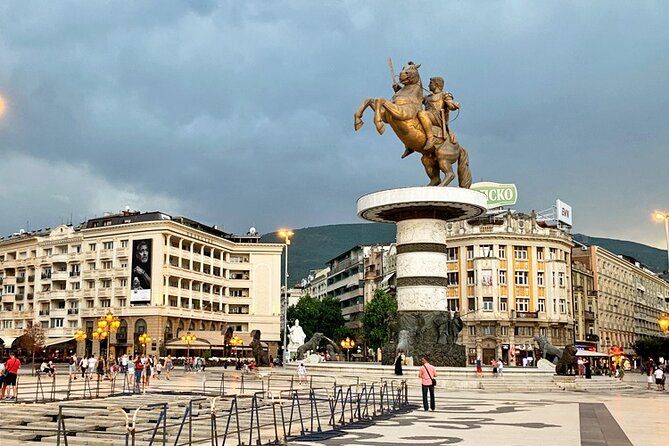
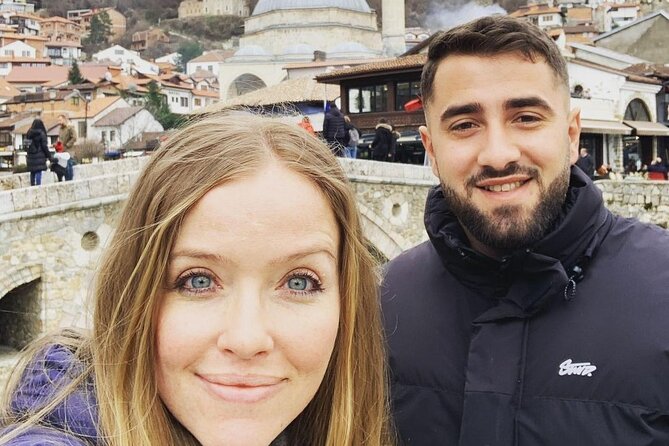
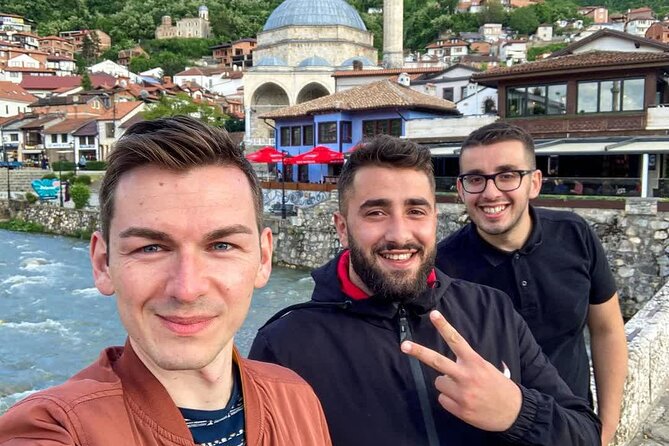
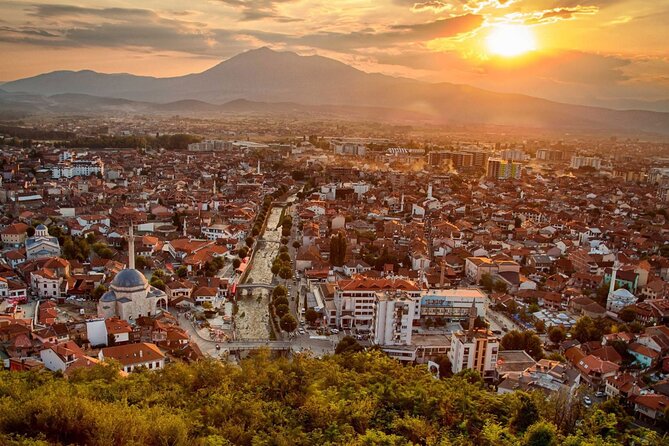
Prizren is likely to feel more immediately charming than Pristina. The city runs along both sides of the Bistrica River, with the fortress above and an old quarter of cobbled streets, shops, mosques, bridges, and cafés below.
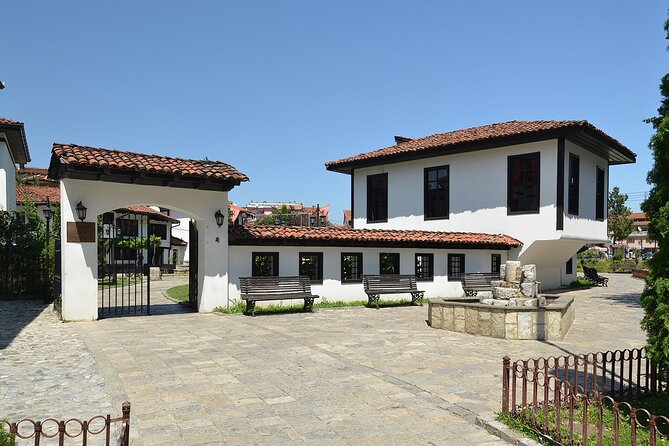
The House of the Prizren League is a key historical stop. The Albanian National League formed here in 1878, an important moment in the movement toward Albanian independence. The building also contains an ethnographic museum, where traditional clothing, household objects, and displays about everyday life add texture to the political story.
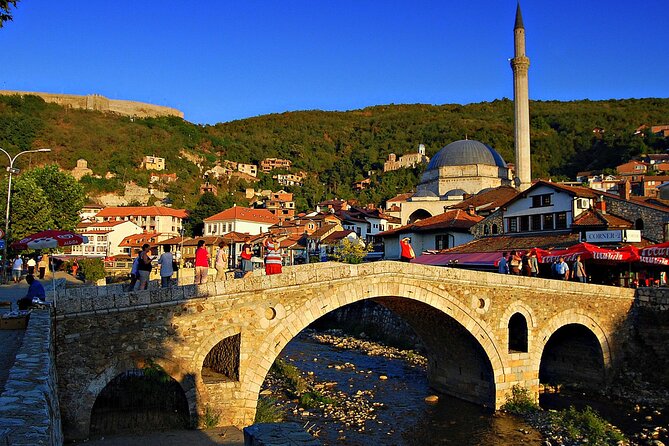
The Stone Bridge of Love makes a pleasant transition into the old center. From there, you reach the Traditional Bazaar, where artisan shops, spice sellers, and cafés line the streets around the Sinan Pasha Mosque.
The mosque is one of Prizren’s central landmarks, both visually and culturally. Its position near the bazaar makes it easy to combine with a walk through the old quarter. You can look for local products, pause for coffee, and take in the mix of Albanian, Ottoman, and Byzantine influences without covering huge distances.
The included traditional lunch is scheduled in Prizren, while dinner and other meals are not included. This is a sensible place for the meal because the city offers local specialties and the stop comes after a morning of driving and sightseeing. Your guide may suggest the restaurant, as Engjell did on one departure, but you should expect to pay for lunch separately.
Prizren is also the place where you may wish for more time. The compact center is easy to enjoy on foot, yet the fortress, museum, mosque, bazaar, and meal can fill the available hours quickly. If you want to browse every shop or sit for a long coffee, you may need to choose between activities.
Guides, vehicles, and the human side of the trip
A good guide-driver makes this route far better. You spend many hours on the road, and the guide’s explanations turn those transfers into useful context instead of dead time.
Erik was praised for being friendly, caring, and fun, as well as for suggesting good places to eat. Engjell was described as passionate and well informed about Balkan culture, and his convenient parking choices helped keep the walking practical. Endri handled an early pickup and drove safely, while Xhulio guided a birthday trip that covered three countries in two days.
Those details point to what matters most here: punctual pickups, calm driving, clear explanations, and smart decisions about where to stop. The route is too full for a guide who only recites facts. You benefit most from someone who can adjust the pace and explain why the region’s borders, faiths, and languages overlap.
The tour is offered in English. Confirmation arrives at booking, pickup is available, and the activity is listed as suitable for most people. It is also near public transportation, though the supplied details do not specify a particular pickup point beyond Tirana. Confirm the exact meeting instructions before departure.
What the $528.62 price really buys
At first glance, $528.62 per person is a serious price for two days. The value becomes clearer when you add private transportation across multiple borders, a guide, hotel accommodation, breakfast, road tolls, fuel, city tax, and entrance tickets.
You are also paying for convenience. Organizing Ohrid, Skopje, Pristina, and Prizren independently would require checking transport connections, finding a hotel in Skopje, arranging local sightseeing, and leaving room for border delays. This tour removes much of that work.
The price does not include lunch, dinner, or personal spending. Budget for at least two lunches or one lunch and snacks, plus any drinks and souvenirs. The traditional lunch in Prizren is a highlight, but it is not part of the prepaid package.
Group discounts may be available. Since the maximum group is eight, the experience can suit couples, families, and small friend groups who want a private-feeling trip without arranging every detail themselves.
The pace, physical effort, and best fit
You need to be comfortable with an early 7:00 a.m. start and long drives. The reward is a wide range of places, but the cost is limited free time at each stop.
Ohrid and Prizren include walking on old streets, slopes, and some steps. Samuil’s Fortress and the route down to Kaneo Bay require more effort than a flat city-square tour. Most people can take part, but anyone with mobility concerns should ask for more detail before booking.
This trip suits you best if:
- You want a first look at North Macedonia and Kosovo from Tirana.
- You prefer private transport to planning several cross-border journeys.
- You enjoy city walks, viewpoints, churches, mosques, monuments, and local food.
- You accept a brisk schedule and do not need long stretches of free time.
- You are traveling as a couple, family, or small group and value a personal guide.
It is less suitable if your main goal is a slow Lake Ohrid holiday, a serious museum visit, or relaxed time in cafés. For those interests, separate overnight stays in Ohrid or Prizren would give you a better pace.
Should you book this two-day tour?
Book it if you want an efficient introduction to three countries and four distinctive cities, and you are willing to trade depth for range. The strongest moments are likely to be Kaneo Bay in Ohrid, Skopje’s Old Bazaar and fortress, Pristina’s unusual National Library and Newborn Monument, and Prizren’s riverfront old town.
I would pay close attention to the schedule before booking and accept that local events may change the order or remove a stop. The tour’s five-star rating from 33 reviews and full recommendation record suggest consistently strong delivery, especially from guides such as Erik, Engjell, Endri, and Xhulio, but your own experience will still depend on traffic and the day’s conditions.
Free cancellation is available up to 24 hours before the 7:00 a.m. start for a full refund. If the minimum group size is not reached and the operator cancels, you will be offered another date or experience, or a full refund.
FAQ
Where does the tour start?
The tour starts in Tirana, Albania, at 7:00 a.m. Pickup is offered, with exact meeting details provided after booking.
How long does the tour last?
The experience lasts approximately two days and includes one overnight stay in Skopje.
Which places are visited?
The planned route includes Ohrid and Lake Ohrid, Skopje, Pristina, and Prizren. The order may change, and a stop can be affected by events or access conditions.
Is accommodation included?
Yes. One night in a three-star hotel is included. The Alexander Hotel was used for one departure, but the hotel may vary by date.
What meals are included?
Breakfast is included. Lunch and dinner are not included, although the itinerary includes a traditional lunch in Prizren.
How many people can join the tour?
The maximum group size is eight people. Group discounts are offered.
Can I cancel for a full refund?
Yes. You can cancel at least 24 hours before the local start time for a full refund. Cancellations or changes made less than 24 hours before departure are not accepted, and the tour requires a minimum number of participants.
Just added around Tirana
- Semi-Private Full Day Tour of Theth & Blue Eye★ 5.0 · 16 reviews
- Rock Climbing in Tirana, Adventure in the Mountains★ 5.0 · 3 reviews
- Quad Tour: Tirana – Bovilla Lake★ 5.0 · 6 reviews
- Raki Tasting and Meze Pairing With Expert in Tirana★ 4.7 · 10 reviews
- Pottery and Wine Workshop in Tirana★ 4.0 · 13 reviews
- Private Day Tour of Saranda Gjirokaster,Butrint from Tirana★ 5.0 · 3 reviews
- Lundër: Lundra Winery Guided Tour with Wine Tasting★ 4.2 · 18 reviews
- Highlights of Tirana & Rakia Tasting★ 4.7 · 15 reviews
2-Day Experiences, compared.
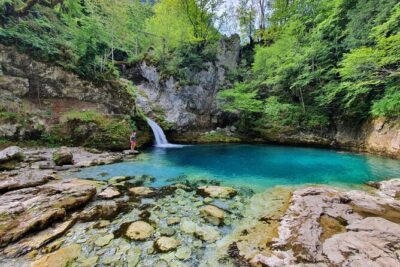
Semi – Private Hiking Tour of Theth & Blue Eye in 2 Days
Read our review →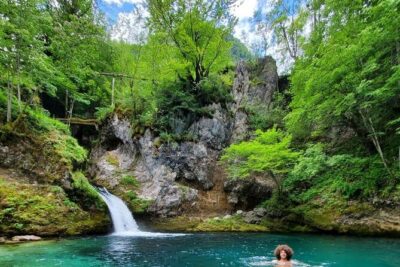
Explore Thethi, the unknown part of Albania in two days
Read our review →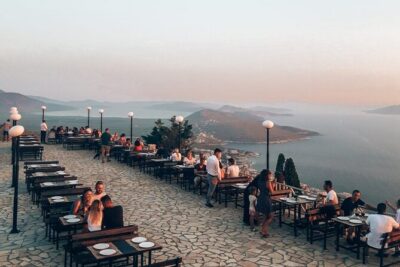
2-Day Tour from Tirana to Saranda, Blue Eye, and Butrint
Read our review →
Browse the lists this tour appears in