
Reviewed · SARANDA TOURS
Hidden Stories of Saranda Communism
Saranda’s sunny seaside image hides a darker past. This tour takes you uphill to Cold War tunnels and bunkers, then connects that period to a ruined Byzantine monastery and a working mosque. The result is a useful history lesson, not just another viewpoint stop.
I like the way the route links physical places to personal stories, especially the risks of secret prayer and the scale of Albania’s bunker-building campaign. I also like the small-group feel suggested by the father-and-daughter guiding team, with Ermal confirming pickup by WhatsApp. The main caution is that the ground can be crumbly, so sturdy shoes matter.
In This Review
- Key points to know before booking
- Why Saranda’s communist past deserves a morning
- Inside the tunnels and bunkers at Gjashte
- The Monastery of the 40 Saints and the cost of atheist rule
- Saranda’s Great Mosque and the return of faith
- The guide makes the difference
- A practical look at the price and timing
- Byrek, dhallë, and the ride back to town
- Who will get the most from this experience?
- Should you book Hidden Stories of Saranda Communism?
- FAQ
- Where does the tour begin?
- Where does the tour end?
- How long does the experience take?
- Is transportation included?
- Is the Monastery of the 40 Saints entrance included?
- What language is the tour offered in?
- What should I wear or bring?
Key points to know before booking
- See real Cold War defenses: Walk through tunnels and bunkers built during Albania’s years of isolation and fear of invasion.
- Connect religion with politics: The Monastery of the 40 Saints and Saranda’s Great Mosque show how faith was suppressed, then returned after 1991.
- Expect local storytelling: Ermal and his family team bring personal, human detail to a difficult chapter of Albanian history.
- Allow for uneven ground: The monastery and hill sites can be rough underfoot. Good shoes are more useful than smart clothes.
- Budget for one small extra: The monastery entrance costs €2 per person, while transport is included.
- Check the start time: The published route begins at 9:00, but the stated operating hours show a Monday afternoon window. Confirm the exact time before setting out.
Why Saranda’s communist past deserves a morning
Many visitors come to Saranda for the sea, the ferries, and easy access to nearby beaches. This experience asks you to look inland and uphill, where Albania’s recent past is easier to read in concrete, stone, and abandoned religious buildings.
From 1944 until his death in 1985, Enver Hoxha ruled Albania through a hard communist system that kept the country isolated from much of the outside world. The tour gives you a basic framework during the drive, then lets the sites do the rest. You are not simply hearing dates in a vehicle. You are walking through places shaped by fear, state control, and religious persecution.
The short drive from Saranda to the nearby hill takes about 15 minutes in an air-conditioned minivan. That matters in warm weather, since the route includes exposed hills and rough paths. Pickup is offered from Saranda, and the advertised meeting point is on Corfu Street in the city.
The full plan takes about 3 to 4 hours, usually from 9:00 to around 13:00. One account of the experience lasted a little under two hours, so the actual length may depend on walking pace, questions, and how much time your guide spends at each site. I would confirm the schedule directly before booking, especially because the supplied opening information lists Monday hours from 1:30 PM to 10:00 PM, which does not match the 9:00 AM itinerary.
Other Saranda days people book alongside this one:
- Saranda: Lekursi Castle, Blue Eye, Gjirokaster, & More Tour
★ 4.9 · 884 reviews - Sarande: Blue Eye Spring and Lekursi Castle Sunset Tour
★ 4.8 · 798 reviews - Daily Trip To:Blue Eye,Monastery,Gjirokaster&Lekursi Castle
★ 4.9 · 665 reviews
Inside the tunnels and bunkers at Gjashte
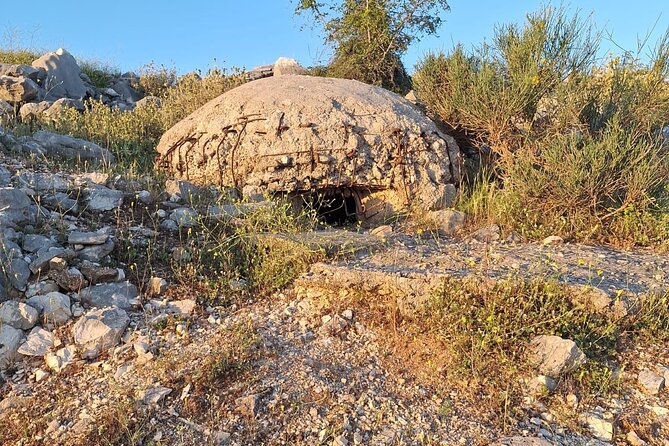
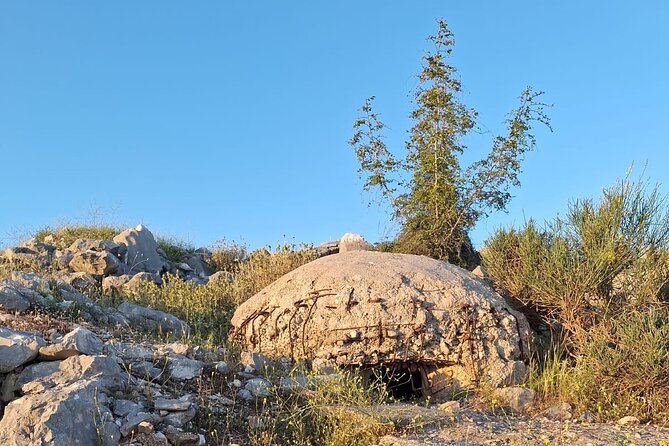
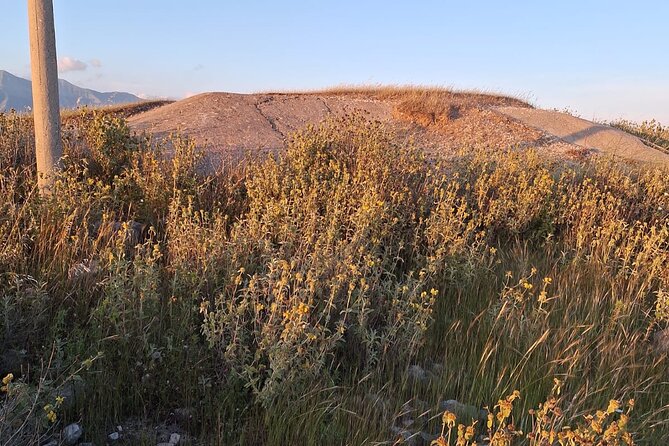
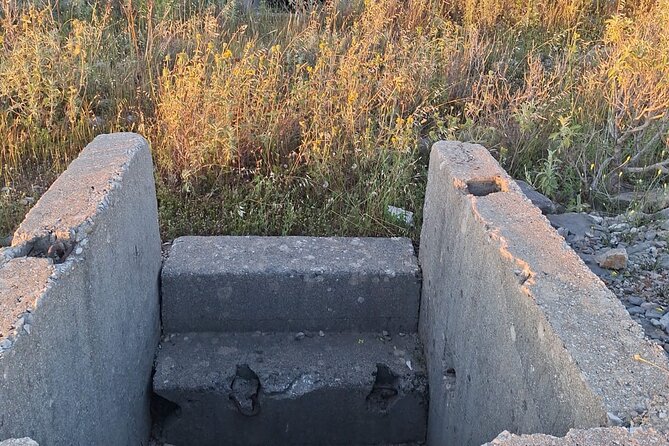
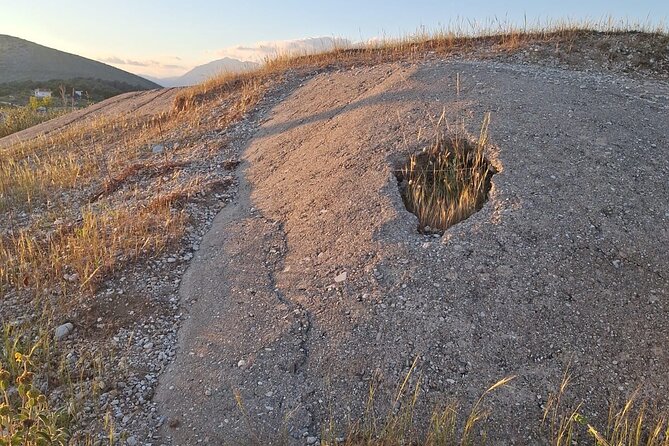
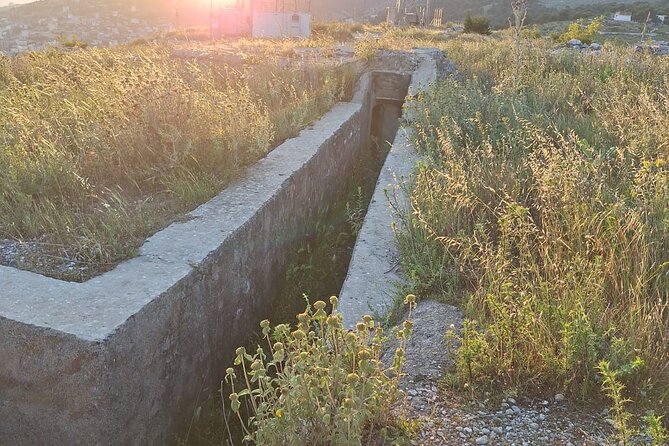
The first major stop is on a hill near Gjashte, where you explore underground tunnels and Cold War bunkers. These are not museum replicas. They are remnants of Albania’s defensive system, built during a period when the government feared invasion from many directions.
The scale of that effort is hard to grasp until you see the structures for yourself. Albania built more than 173,000 bunkers across the country. They were meant to protect soldiers and civilians, but they also became a daily reminder of official fear and state control.
Your guide explains how this system fitted into life under communism. The stories include surveillance, forced labor, and the pressure placed on ordinary people. That personal angle is important. Concrete alone tells you very little. A guide who explains what the structures meant for families, workers, and religious communities turns an abandoned bunker into a piece of lived history.
The tunnels may feel stark rather than polished. That is part of their value, but it also means you should not expect the lighting, flooring, or safety features of a modern museum. Wear shoes with a firm sole and good grip. The rough surfaces also make this a less comfortable choice for anyone who has trouble walking on uneven ground.
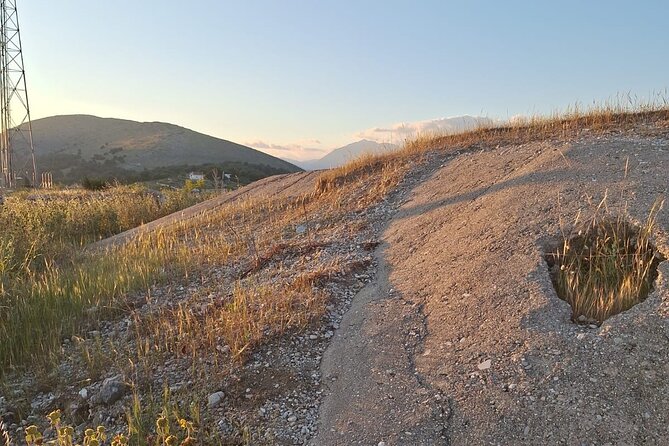
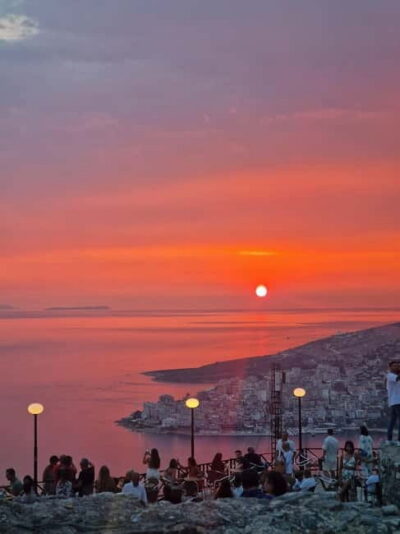
The hill gives you panoramic views toward Saranda and the surrounding area. Those views create a sharp contrast with the subject matter. You can look out over a bright coastal city while standing among structures built for war and suspicion. I find that contrast more effective than a long indoor lecture.
The Monastery of the 40 Saints and the cost of atheist rule
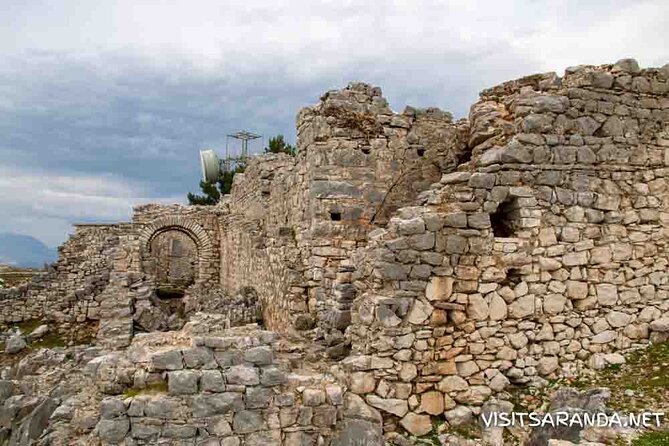
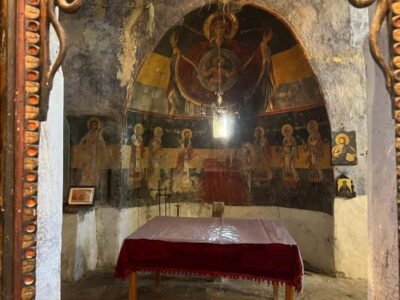
After the bunker visit, the route continues to the Monastery of the 40 Saints. The site dates to the sixth century and is known for its Byzantine architecture and hilltop setting. Today, you see ruins rather than an intact church, but the location still makes clear why the site mattered for centuries.
The communist government declared Albania the world’s first atheist state in 1967. Religious practice was banned, and churches, mosques, monasteries, and other religious buildings were closed, damaged, or put to new uses. At this monastery, the building was repurposed as a military base.
That change from sacred place to military site gives the tour one of its strongest historical links. At the bunkers, you learn how the state prepared for outside enemies. At the monastery, you see how the same system treated religion at home. The two stops are close in time, but they reveal different forms of control.
The visit lasts about 45 minutes. The entrance fee is not included and costs €2 per person. It is a small charge, but you should carry it separately so the price does not come as a surprise.
Take care on the ground here. The site is described as crumbly, and the earlier account specifically recommends good shoes. You may find uneven stones, broken surfaces, and exposed sections rather than a smooth archaeological park. This stop suits you best if you enjoy ruins as they are, with visible wear and limited polish.
The monastery is not likely to satisfy someone seeking a fully restored Byzantine interior. Its value lies in the setting, the surviving structure, and the story of how the communist period changed its purpose. Your guide’s explanation is what gives the ruins their weight.
Saranda’s Great Mosque and the return of faith
The next stop moves from the suppression of religion to its revival. At Saranda’s Great Mosque, you examine Ottoman-influenced design and learn how the building functions as a place of worship.
The guide points out the main architectural features:
- Mihrab: The niche showing the direction of Mecca.
- Minbar: The pulpit used for sermons.
- Ablution area: Known locally as the abdeshane, where worshippers prepare for prayer.
- Minaret: The slender tower associated with the call to prayer.
These details make the stop useful even if you have little background in Islamic architecture. Rather than simply saying that the mosque is attractive, the guide gives you a way to read the building.
The more powerful part is the discussion of secret religious practice during the communist years. Public worship was forbidden, yet some believers continued to pray privately or gather in hidden settings. The stories of hidden prayers and the risks involved show how a policy announced from the capital reached into kitchens, homes, and family life.
The mosque also gives the route a needed sense of change. The tour does not leave you only with repression and ruins. It shows that religious life returned after the fall of communism in 1991. That does not erase the earlier damage, but it helps you understand Albania as a country still working through the effects of that period.
Be respectful here. This is a religious site, not merely an architectural stop. Dress and behavior should suit the setting, and your guide can help you understand what is appropriate during the visit.
Same coast, a completely different kind of day:
- Sarande: Hidden Cave, Gremina, Kakome & Krorez Boat Tour
★ 4.8 · 665 reviews - From Tirana, Durrës & Golem: Saranda, Blue Eye & Ksamil Tour
★ 4.9 · 652 reviews - Sarandë: Boat Tour at Kroreza & Hidden Caves with Snorkeling
★ 4.8 · 608 reviews - Group Tour 7 stops Saranda to Krorez Free Drink and Umbrella
★ 4.9 · 562 reviews
The guide makes the difference
This experience depends heavily on the person leading it. The tour is built around stories of Albanian life, not just a list of buildings, so the guide’s ability to explain local events matters.
Ermal is one named contact connected with the experience. He confirmed pickup time and location by WhatsApp the day before, which is useful in Saranda, where a quick message can prevent confusion. The experience has also been described as a private tour led by a father-and-daughter team. The daughter’s name is not provided, so you should not assume who will lead your particular departure.
I like the family-run feel because it can make a difficult subject more direct and personal. The best moments are likely to come when you ask questions about daily life, religion, surveillance, and the meaning of the bunkers. If you prefer to move quickly and take only photographs, you may get less from the outing.
This is also a good setting for questions you might not ask in a large group. You can ask how the atheist policy affected families, why so many bunkers were built, or what happened to religious buildings after 1991. The published plan leaves room for questions and reflection on the way back to Saranda.
A practical look at the price and timing
At $40.94 per person, the price is fair if you want transport, a dedicated guide, and several connected sites in one half-day. You are paying for more than a ride to a viewpoint. The route combines Cold War remains, a sixth-century monastery, and Islamic architecture, with one historical thread running through all three.
The air-conditioned vehicle adds real value during Saranda’s warmer months. The hill locations are close to the city, but reaching them independently would still require arranging transport and working out where the tunnels and monastery are located. The tour saves that effort and gives you context at each stop.
The €2 monastery ticket is the only listed entrance cost. The optional byrek and dhallë stop is included in the return portion of the itinerary, though the supplied details do not make clear whether the food itself carries an extra charge. Ask before ordering if you want to keep your spending exact.
The schedule begins with a 9:00 pickup, reaches the bunkers at 9:15, visits the monastery around 10:30, and arrives at the mosque at 11:30. You should return to Saranda around 13:00. That timing works well if you have other plans later in the day, such as a ferry, beach visit, or lunch in town.
The timing information needs one warning. The listed Monday opening window of 1:30 PM to 10:00 PM conflicts with the morning route. Since operating details may change, confirm the departure time and day with the provider before you rely on this tour for a tight schedule.
Byrek, dhallë, and the ride back to town
The return to Saranda is not just a drop-off. The plan allows time for questions and an optional taste of byrek with dhallë at a local spot.
Byrek is a familiar Albanian pastry, often filled with cheese, meat, or vegetables. Dhallë is a refreshing yogurt drink. Together, they make a simple local snack rather than a formal meal, so plan another meal if you need something substantial afterward.
I like this ending because it brings the subject back to ordinary life. After hearing about political control and religious persecution, sharing a common snack offers a small reminder that history is also made of daily routines. It is a modest touch, but it fits the tour’s local focus.
The return gives you time to ask about anything that was unclear. Since the experience covers several subjects in a short period, you may want to note down questions as you go. The bunker stop can raise questions about military planning, while the monastery and mosque may lead you toward religion and cultural memory.
Who will get the most from this experience?
I would choose this tour if you want to understand Saranda beyond its waterfront. It suits you especially well if you enjoy recent history, abandoned sites, religious architecture, and local storytelling.
It is also a good option for a short stay. In a few hours, you see three very different places without spending a full day away from Saranda. Pickup, transport, and a guide reduce the planning work.
You should think twice if you need fully accessible paths or dislike rough ruins. The physical demands are moderate, but the ground at the hill sites can be crumbly and uneven. The tour information advises a moderate level of fitness, and that is a sensible guide.
Families with older children may find the subject worthwhile, but the stories of surveillance, forced labor, and religious persecution are serious. Younger children may focus more on the tunnels than the history. The experience is offered in English, and service animals are allowed. It is also near public transportation, though pickup by minivan is part of the plan.
Solo visitors and couples may particularly appreciate the personal scale. The available account describes a private father-and-daughter-led outing, but group arrangements can vary, so confirm the format if that point matters to you.
Should you book Hidden Stories of Saranda Communism?
Book it if you want a thoughtful history outing with real places, a local guide, and a clear connection between Albania’s communist rule and the return of religion after 1991. The bunkers, monastery, and mosque make a strong three-part route, and the $40.94 price is reasonable when you value transport and interpretation.
Bring firm shoes, a little cash for the €2 monastery entry, and a willingness to ask questions. Confirm the exact pickup time because the published morning schedule and Monday operating hours do not fully agree.
Skip it if you want a relaxed beach morning, a polished museum, or easy walking on smooth paths. For everyone else, this is a compact way to see the less obvious side of Saranda, with enough human detail to make the concrete and ruins matter.
FAQ
Where does the tour begin?
The meeting point is in Saranda at Corfu Street, Saranda 9701, Albania. Pickup is offered.
Where does the tour end?
The activity ends back at the meeting point in Saranda.
How long does the experience take?
The planned duration is about 3 to 4 hours, with an expected return around 13:00 for the published morning schedule. One account describes a tour lasting a little under two hours, so confirm the expected duration when booking.
Is transportation included?
Yes. An air-conditioned vehicle is included, and the route uses a minivan for the drive from Saranda to the hill sites and back.
Is the Monastery of the 40 Saints entrance included?
No. The entrance fee is €2 per person and is paid separately.
What language is the tour offered in?
The experience is offered in English.
What should I wear or bring?
Wear sturdy shoes because the hill and monastery areas can be crumbly and uneven. You should also bring €2 per person for the monastery entrance fee.
Just added around Saranda
- Saranda: Wine and raki tasting, local products.★ 4.3 · 4 reviews
- Saranda: Tour in South of Albania (Butrint, Blue Eye, Ksamil)★ 5.0 · 9 reviews
- Wine and Raki tasting tour★ 5.0 · 6 reviews
- Visit the City of Gjirokastra★ 4.5 · 12 reviews
- Visit The Ancient City of Butrint and the Beaches of Ksamil★ 4.5 · 17 reviews
- Visit The National Park of Blue Eye and The Fortress of Lekuresi★ 4.0 · 9 reviews
- Visit Qeparo Village and The Beaches of Himara★ 4.5 · 9 reviews
- Sarande: Private transfers from/to Tirana. 4,8 and 20pax groups.★ 5.0 · 4 reviews
Saranda Tours, compared.
Daily Trip To:Blue Eye,Monastery,Gjirokaster&Lekursi Castle
Read our review →
Hidden Cave, Gremina, Kakome & Krorez Boat Tour
Read our review →
From Tirana, Durrës & Golem: Saranda, Blue Eye & Ksamil Tour
Read our review →
Boat Tour at Kroreza & Hidden Caves with Snorkeling
Read our review →
Group Tour 7 stops Saranda to Krorez Free Drink and Umbrella
Read our review →
Boat Tour to 7 Destinations with Beach Umbrella
Read our review →
Best of Saranda: Blue Eye, Butrint, Ksamil & Lekuresi Castle
Read our review →Browse the lists this tour appears in